

Imagine giving your child a fever reducer. You grab the nearest spoon from the drawer, scoop up what looks like a teaspoon, and hand it over. It feels harmless, maybe even convenient. But that simple act could deliver three times the intended dose-or dangerously little. This isn't just a hypothetical scare tactic; it is a documented public health crisis. Every year, poison control centers receive more than 10,000 calls specifically related to incorrect dosing of liquid medications for children. The culprit? A widespread habit that parents have used for decades: measuring medicine with kitchen cutlery.
The American Academy of Pediatrics (AAP) first issued a formal recommendation against this practice in 1978. Yet, nearly fifty years later, approximately 75 percent of Americans still rely on teaspoons found in their kitchen drawers to measure medicine doses. Why does this dangerous habit persist? And more importantly, what should you use instead to keep your child safe?
The Hidden Danger in Your Kitchen Drawer
We tend to think of a "teaspoon" as a standard unit of measurement. In cooking, rough estimates might not ruin a soup. In medicine, they can harm a child. The core issue is variance. A standard medical teaspoon equals precisely 5 milliliters (mL). However, household teaspoons vary dramatically in capacity. According to data from the Consumer Medication Safety Institute, typical kitchen teaspoons hold anywhere between 3 mL and 7 mL.
This creates a potential variance of up to 40% from the standard measurement. If your doctor prescribes 5 mL of an antibiotic, using a small 3 mL spoon means your child gets only 60% of the needed drug. The infection won't clear, potentially leading to resistance or worsening illness. Conversely, using a large 7 mL spoon delivers 140% of the dose. For sensitive pediatric patients, this overdose can trigger severe side effects, including vomiting, drowsiness, or organ stress.
The risk escalates quickly if you confuse a teaspoon with a tablespoon. A standard medical tablespoon is 15 mL-three times the volume of a teaspoon. Using a tablespoon when a teaspoon was prescribed triples the dose instantly. The Centers for Disease Control and Prevention (CDC) addresses this directly in their "Spoons are for Soup" campaign, which explicitly warns caregivers that kitchen utensils are not calibrated for medical precision.
| Tool Type | Accuracy Level | Standard Volume (Teaspoon) | Risk Factor |
|---|---|---|---|
| Kitchen Teaspoon | Low (3-7 mL variance) | Variable | High (Over/Underdose) |
| Kitchen Tablespoon | Very Low (15 mL fixed) | 15 mL | Critical (3x Overdose) |
| Dosing Cup | Moderate (5 mL increments) | Marked at 5, 10, 15 mL | Medium (Poor for small doses) |
| Oral Syringe | High (0.1 mL precision) | Calibrated in mL | Low (Recommended) |
Why Milliliters Are the Only Standard That Matters
The shift away from household spoons is tied to a broader movement toward metric standardization in healthcare. The FDA, CDC, and AAP now jointly endorse the exclusive use of milliliter (mL) measurements for pediatric liquids. This isn't just bureaucratic preference; it's about clarity and consistency.
Research published in Academic Pediatrics in 2016 highlighted a critical behavioral link: labels matter. When medication bottles used the abbreviation "tsp" or spelled out "teaspoon," nearly one-third (33.3%) of parents considered using a nonstandard kitchen spoon. In contrast, less than 10% of parents chosen kitchen spoons when the label specified "milliliter" or "mL." This represents a 23.3 percentage point difference in absolute risk simply by changing the wording on the bottle.
Dr. Shonna Yin, lead author of an NIH-funded study published in Pediatrics, noted that a major part of the problem is parents confusing medicine spoons with kitchen spoons. Many people assume they are interchangeable. They are not. Errors drop significantly when parents use tools calibrated in milliliters, such as oral syringes and medicine droppers. These devices remove the ambiguity of "approximate" volumes.
Furthermore, many pediatric doses are not neat multiples of 5 mL. A child might need 3.5 mL or 0.5 mL of medication. Standard dosing cups often only have markings for 5, 10, 15, and 20 mL. Trying to estimate half a space on a curved cup is guesswork. An oral syringe, however, features graduated markings that allow precise measurement down to 0.1 mL increments. This precision is vital for maintaining therapeutic levels without toxicity.
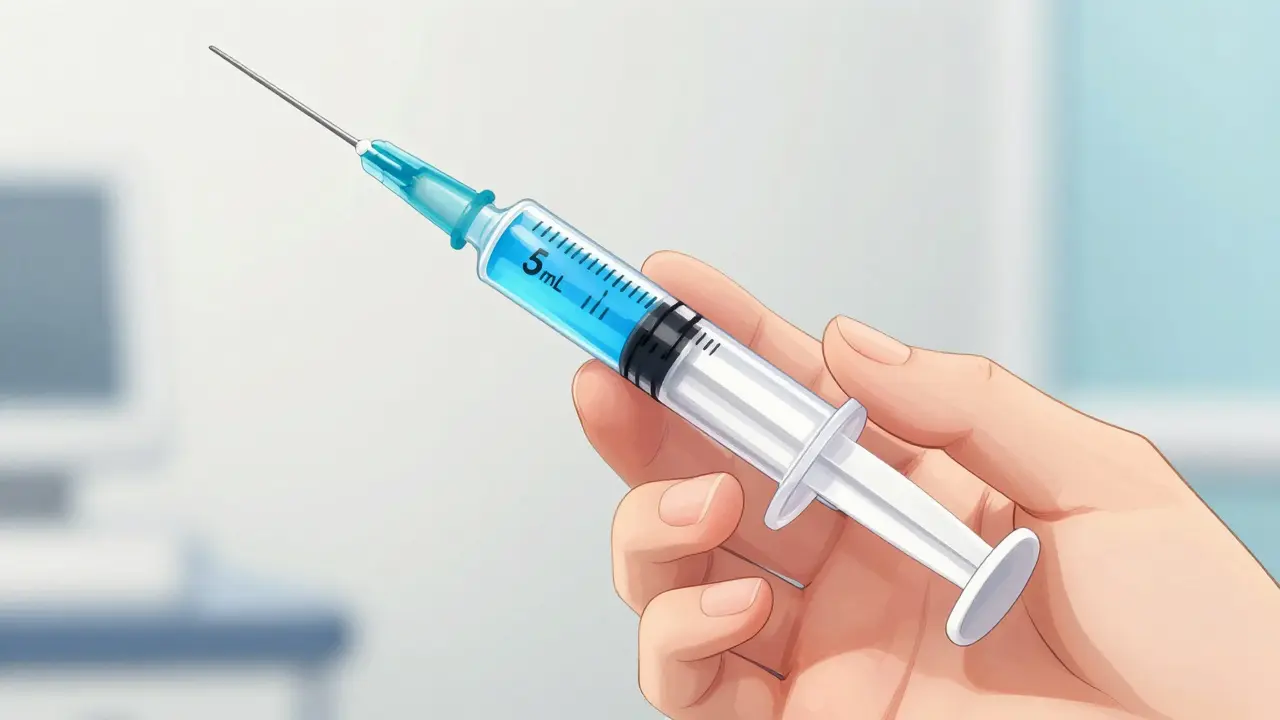
Choosing the Right Tool: Syringes vs. Cups vs. Droppers
If kitchen spoons are off the table, what should be on your counter? Not all medical tools are created equal. Understanding the strengths and weaknesses of each device helps you choose the right one for your child's specific needs.
Oral Syringes: These are widely regarded as the gold standard for accuracy. Studies in Frontiers in Public Health confirm that oral syringes account for the least percentage of imprecise dosing. They are particularly useful for small volumes (less than 5 mL) and for children who are uncooperative. You can gently squirt the medicine between the child's tongue and the side of the mouth, avoiding the back of the throat where gag reflexes are triggered.
Dosing Cups: While better than kitchen spoons, dosing cups have limitations. They are generally accurate for larger doses (e.g., 10 mL or 15 mL) but struggle with smaller amounts. Reading the meniscus (the curve of the liquid) in a wide cup is difficult, especially if you aren't viewing it at eye level. They are also prone to spills during administration.
Medicine Droppers: These are suitable for very small infants requiring tiny doses (often under 1 mL). However, they can be slow to fill and empty, making them impractical for larger volumes. Like syringes, they must be calibrated in mL to be effective.
A key rule from HealthyChildren.org, the official parenting website of the AAP, is to use only the tool that comes with the medicine. If no tool is provided, ask your pharmacist. Do not substitute one brand's cup for another, as designs and calibrations can differ.
Step-by-Step Guide to Safe Administration
Having the right tool is only half the battle. How you use it matters just as much. Follow these steps to ensure every dose is accurate and safe.
- Check the Label First: Look for the dosage in milliliters (mL). If the prescription says "1 teaspoon," clarify with your pharmacist whether this means exactly 5 mL. Modern prescriptions should specify mL directly.
- Gather Your Equipment: Use the oral syringe or dosing cup provided with the medication. If none was included, visit your pharmacy to get one. Most pharmacies provide free oral syringes upon request.
- Prepare the Medicine: Shake the bottle well if instructed. Draw the liquid into the syringe past the required mark, then push the plunger slightly to expel air bubbles until the liquid aligns perfectly with the correct mL line.
- Measure at Eye Level: Hold the syringe or cup horizontally at eye level. Viewing it from above or below distorts the reading, leading to inaccurate doses.
- Administer Gently: Place the tip of the syringe inside your child's cheek, along the gum line. Slowly depress the plunger. Avoid aiming for the back of the throat, which can cause choking or vomiting.
- Clean Properly: Rinse the device with warm water after each use. Allow it to air dry. Do not sterilize unless instructed, as heat can warp plastic and affect calibration.

Common Mistakes to Avoid
Even well-meaning parents make errors. Here are the most common pitfalls that compromise dosing accuracy.
- Using Multiple Tools: Never mix and match. Don't use a syringe to fill a cup, or a cup to fill a syringe. Each transfer introduces spillage and measurement error. Measure directly from the bottle to the administration tool.
- Ignoring Residual Liquid: After squeezing a syringe, some medicine may remain in the barrel or tip. This is normal. Do not try to squeeze out the last drop by forcing the plunger, as this can damage the seal or alter the volume. Trust the calibration marks.
- Estimating "Half" Doses: If a dose requires 2.5 mL, do not try to eyeball half of a 5 mL mark on a cup. Use a syringe with 0.5 mL or 1 mL gradations. Guesswork leads to underdosing, which is particularly dangerous for antibiotics where incomplete treatment breeds resistant bacteria.
- Relying on Memory: Don't assume you know how much "a spoonful" is. Muscle memory is unreliable for medical tasks. Always verify the volume visually against the tool's markings every single time.
What Experts Say About the Future of Dosing
The push for safer dosing is gaining regulatory momentum. The FDA has strengthened its stance, with Commissioner Robert Califf emphasizing in 2023 that standardized dosing tools and clear labeling are essential components of pediatric medication safety. Pharmaceutical manufacturers are increasingly adopting milliliter-only labeling on pediatric medications, though implementation remains inconsistent across the industry.
Healthcare systems are also adapting. Institutions like Aspirus Pharmacy have implemented protocols to ensure all pediatric liquid medications are dispensed with appropriate measuring devices. Olivia Bishop, an Aspirus Pharmacy Resident, explained that using milliliters ensures patients get the correct dose, preventing both the risks of side effects from overdosing and the failure to treat infections due to underdosing.
Looking ahead, we can expect mandatory milliliter-only labeling requirements for all pediatric liquid medications. Integration of dosing education into routine pediatric visits is also becoming standard practice. The goal is to eliminate the cultural reliance on kitchenware for medical tasks entirely.
Can I use a kitchen spoon if I don't have a syringe?
No, you should never use a kitchen spoon for medicine. Household teaspoons vary widely in size, holding between 3 mL and 7 mL, while a medical teaspoon is exactly 5 mL. This variance can lead to significant overdoses or underdoses. If you do not have a syringe, contact your pharmacist immediately. Most pharmacies will provide a free oral syringe or dosing cup upon request.
Why are milliliters (mL) better than teaspoons (tsp)?
Milliliters are a precise metric unit, whereas "teaspoon" is a vague household term that lacks standardization. Research shows that labels using "mL" reduce the likelihood of parents choosing nonstandard kitchen spoons by over 20 percentage points compared to labels using "tsp." Using mL ensures consistent, accurate dosing across different brands and countries.
What is the best tool for measuring small doses (under 5 mL)?
An oral syringe is the best tool for small doses. It offers high precision, often allowing measurement down to 0.1 mL increments. Dosing cups are less accurate for small volumes because their wide shape makes it difficult to read the meniscus accurately. Syringes also allow for gentle administration along the cheek, reducing the risk of choking.
How often do dosing errors occur with kitchen spoons?
Studies indicate that using teaspoons or tablespoons doubles parents' chances of administering an incorrect dose. Nearly 40 percent of parents incorrectly measure their intended dose when using household spoons. Consequently, poison control centers receive more than 10,000 calls annually related to incorrect dosing of liquid medications for children.
Should I wash my oral syringe with soap?
It is generally recommended to rinse oral syringes with warm water after each use and allow them to air dry. Soap can leave residues that might contaminate the next dose or irritate your child's mouth. Check the manufacturer's instructions for specific cleaning guidelines, but avoid harsh chemicals or boiling water, which can warp the plastic and affect calibration.
Paul Diamond
July 7, 2026 AT 01:39The epistemological failure of relying on household cutlery for medical administration is a profound illustration of human cognitive bias. We assume equivalence where none exists, projecting the utility of culinary approximation onto the rigid demands of pharmacological precision. This is not merely a matter of convenience; it is a philosophical error in understanding measurement itself.
Peter Sverla
July 7, 2026 AT 21:27I never really thought about how much the spoons vary until now. Is there any chance that if you buy a specific brand of measuring spoons from the pharmacy they are accurate enough? Or is it strictly syringes only?
Sydney Jarrett
July 8, 2026 AT 21:36Let's be intellectually honest here: the persistence of this archaic practice is a testament to systemic parental negligence and a refusal to engage with basic metric literacy. The data provided by the Consumer Medication Safety Institute clearly delineates the variance, yet we see a collective abdication of responsibility. It is statistically negligent to ignore the 40% variance margin. One must actively seek out oral syringes because the alternative is essentially gambling with pediatric physiology. Stop making excuses for laziness.
Lorena Suarez
July 9, 2026 AT 05:09i totally get why people do it though its just so easy to grab what is right there but yeah reading this makes me want to go throw out all my old cups and get proper syringes thanks for sharing this info
Isis Fleming
July 10, 2026 AT 02:54It is imperative to note that the transition to milliliter-based labeling is not merely a regulatory preference but a critical safety intervention. Healthcare providers should consistently reinforce the use of calibrated devices during every pediatric visit. The ambiguity inherent in 'teaspoon' nomenclature creates an unacceptable risk profile for vulnerable patients.
Ben Murphy
July 10, 2026 AT 23:43The moral decay of society is evident in our willingness to compromise on such fundamental safeguards. To utilize a kitchen utensil for medicine is to demonstrate a lack of reverence for life and a disregard for established medical protocols. One must adhere to the strictest standards of care without exception. Anything less is ethically indefensible.
Fred Stone
July 11, 2026 AT 13:55hey man i used to use those little plastic cups that come with the med but my kid always spilled half of it. switched to syringes last year and honestly it was way easier just squirt it in the side of his mouth like the article said. no more fighting or guessing how much he actually got down. good read tho
Brett Aungst
July 11, 2026 AT 21:30As a pharmacist, I can confirm that oral syringes are indeed the gold standard. We give them out for free almost every time someone picks up a liquid antibiotic or fever reducer. If you don't have one, just ask at the counter. It takes two seconds and saves a lot of headaches later.
Vinay Bairagi
July 13, 2026 AT 19:16In our country, we have far better systems in place for public health education. Here, parents are taught these basics from infancy. It is disappointing to see such widespread ignorance elsewhere, suggesting a lack of disciplined approach to child-rearing and medical compliance in other regions.
Blythe Ward
July 15, 2026 AT 08:28Clearly, the average person lacks the sophistication to understand basic volume metrics 📉. It’s quite amusing how many adults still operate with medieval concepts of measurement. If you can’t manage a simple syringe, perhaps parenting isn’t your forte 😬. Do better.
Casey Eickhoff
July 15, 2026 AT 11:24This is a vital discussion for any caregiver. The distinction between culinary estimation and medical precision cannot be overstated. I appreciate the clear breakdown of tools and their respective accuracies. It serves as a necessary reminder that small details in daily routines can have significant health implications for our children.