
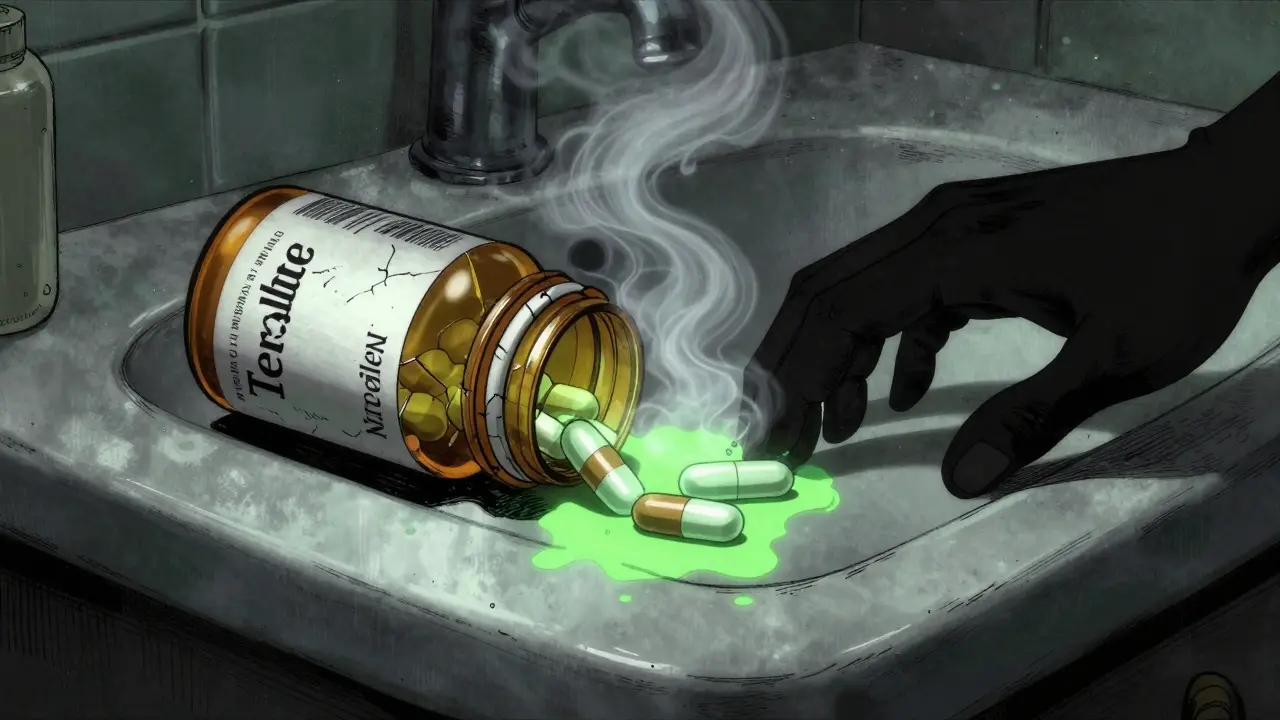
Most people check the expiration date on milk, bread, or yogurt. But how many of you actually check the date on your painkillers, blood pressure pills, or epinephrine auto-injector? You might think, "It’s just a date-how bad could it be?" The truth is, for most pills, it’s not dangerous. But for some, it’s life-or-death.
Expiration Dates Aren’t Just Marketing
The expiration date on your medicine isn’t arbitrary. It’s the last day the manufacturer guarantees the drug will work as intended and remain safe under proper storage. This requirement became law in the U.S. in 1979, after the FDA started forcing companies to prove their drugs wouldn’t break down into harmful substances over time. But here’s the twist: most expired medications don’t turn toxic. A federal program called the Shelf Life Extension Program, run by the FDA and the Department of Defense, tested over 100 drugs stored in ideal conditions. Ninety percent of them were still fully effective five to fifteen years past their expiration date. That’s not a guess. That’s lab-tested data. So why do we still throw out pills that are five years old? Because the rules were never updated to match the science.The Real Danger: When Medicines Break Down
Not all drugs are created equal. Some, when they degrade, turn into something dangerous. The most infamous case happened in 1963, when three people got seriously ill after taking expired tetracycline. Their kidneys failed. It wasn’t the drug itself-it was what it turned into: epitetracycline and anhydro-4-epitetracycline. These compounds are toxic to the kidneys. The packaging back then was nothing like today’s sealed blister packs. Still, this case is the only well-documented example of toxicity from expired medication in over 60 years. But that doesn’t mean you should ignore other drugs. Some break down in ways that make them useless-and sometimes risky.- Nitroglycerin (used for chest pain): Loses half its potency within three months after expiration. If you’re having a heart attack and your nitroglycerin doesn’t work, you could die waiting for help.
- Insulin: After expiration, it starts forming clumps. Your body absorbs less of it. One study showed a 20-30% drop in effectiveness per year. For diabetics, that means dangerously high blood sugar.
- Liquid antibiotics (like amoxicillin-clavulanate): Once opened, they start growing bacteria-even if they’re not expired. After 14 days, the risk of infection from the medicine itself jumps 400%. And if you take it after it’s expired, you’re not just risking treatment failure-you might get a new, harder-to-treat infection.
- EpiPens: Epinephrine degrades fast. A 2017 study found they lose 85% of their potency after one year past expiration. In anaphylaxis, every second counts. A weak EpiPen might not stop your throat from closing.
- Eye drops: Preservatives wear off. After 28 days, even if the bottle says it’s good for six months, you’re risking eye infections. Bacteria grow in the liquid, and your cornea is vulnerable.
- Aspirin: Turns into acetic acid (vinegar) and salicylic acid. At 50% degradation, it can irritate your stomach lining. Not deadly, but not pleasant either.
Storage Matters More Than You Think
Your medicine doesn’t care what the date on the bottle says. It cares about heat, moisture, and light. The FDA says “store in a cool, dry place.” That means 15-25°C (59-77°F) and 35-45% humidity. Where do most people keep their meds? The bathroom. That’s a problem. Bathrooms average 32°C (90°F) and 80% humidity. That’s like putting your pills in a steam room. Nitroglycerin tablets stored in a plastic bottle in the bathroom? They’re dead within weeks. Insulin left on the counter? It’s losing power fast. Even aspirin degrades faster in damp air. The best place? A bedroom drawer. A kitchen cabinet away from the stove. A dark, cool spot. Not the medicine cabinet above the sink.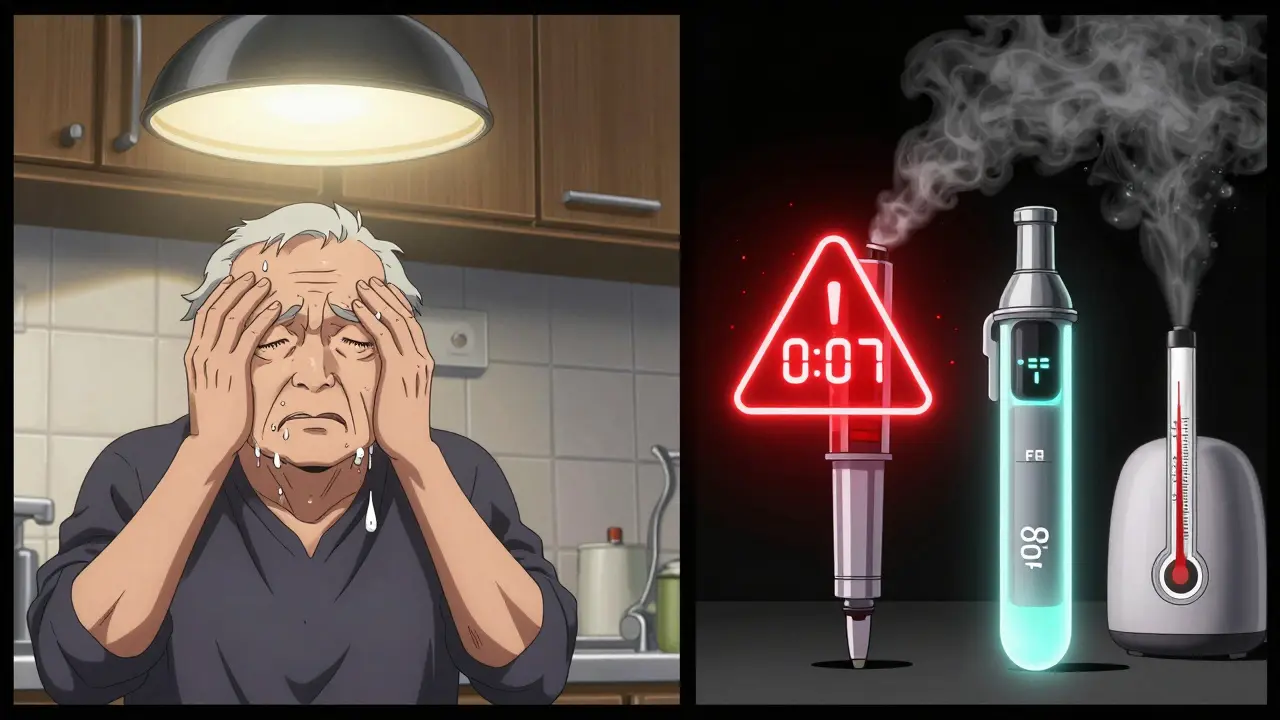
What About Antibiotics? I’ve Taken Expired Ones Before
You’re not alone. A 2023 Consumer Reports survey found 68% of Americans have used at least one expired medication. Most didn’t get sick. Many just noticed their allergy pill didn’t work as well. But here’s the catch: antibiotics don’t just lose strength. They become unpredictable. If you take expired amoxicillin for a sinus infection, the bacteria might not die. They might adapt. You end up with a stronger infection. That’s how antibiotic resistance starts. One Reddit user reported taking expired antibiotics for a tooth infection. No side effects-but the infection came back worse. Another said their child got severe diarrhea after taking liquid amoxicillin three days past expiration. The medicine didn’t kill the bacteria. It just made the gut worse.Why Do Pharmacies Still Say “Never Use Expired Drugs”?
Because the law says so. The FDA, CDC, and DEA all warn against using expired meds. They’re not wrong. But their warnings are broad. They’re protecting everyone-kids who grab pills, seniors who forget, people who don’t know the difference between a pill and a liquid. The Institute for Safe Medication Practices says it plainly: “The vast majority of expired medications pose no toxicity risk.” But they also say: “Don’t risk it with life-saving drugs.” The real issue? Waste. The U.S. spends $8.2 billion a year replacing expired drugs. The Department of Defense saved $1.2 million a year just by extending expiration dates on 10 critical medications. Senator Bernie Sanders introduced a bill in 2024 to update the system. But until then, you’re stuck with the old rules.What Should You Actually Do?
Here’s your practical guide:- Don’t use expired nitroglycerin, insulin, EpiPens, or liquid antibiotics. These aren’t worth the risk.
- For solid pills (ibuprofen, antidepressants, blood pressure meds): If stored properly, they’re likely still effective for years past the date. But if you’re treating something serious-like high blood pressure or epilepsy-replace them. Better safe than sorry.
- Check the appearance. If pills are cracked, discolored, or smell weird, toss them. That’s a sign of breakdown.
- Never trust the smell test. Most people think if it doesn’t smell bad, it’s fine. Wrong. Tetracycline didn’t smell bad before it killed kidneys.
- Dispose of expired meds properly. Don’t flush them. Don’t throw them in the trash where kids or pets can get them. Use a drug take-back program. In New Zealand, pharmacies like Countdown and Priceline offer free disposal bins.
What If You Already Took an Expired Pill?
If you took a single expired ibuprofen or allergy pill? You’re fine. No need to panic. But if you took expired insulin and your blood sugar spiked? Call your doctor. If you used expired epinephrine during an allergic reaction and symptoms didn’t improve? Call emergency services immediately. Don’t wait. If you took expired liquid antibiotics and got diarrhea, fever, or rash? Go to urgent care. It might be an infection from the medicine itself.What’s Changing? The Future of Expiration Dates
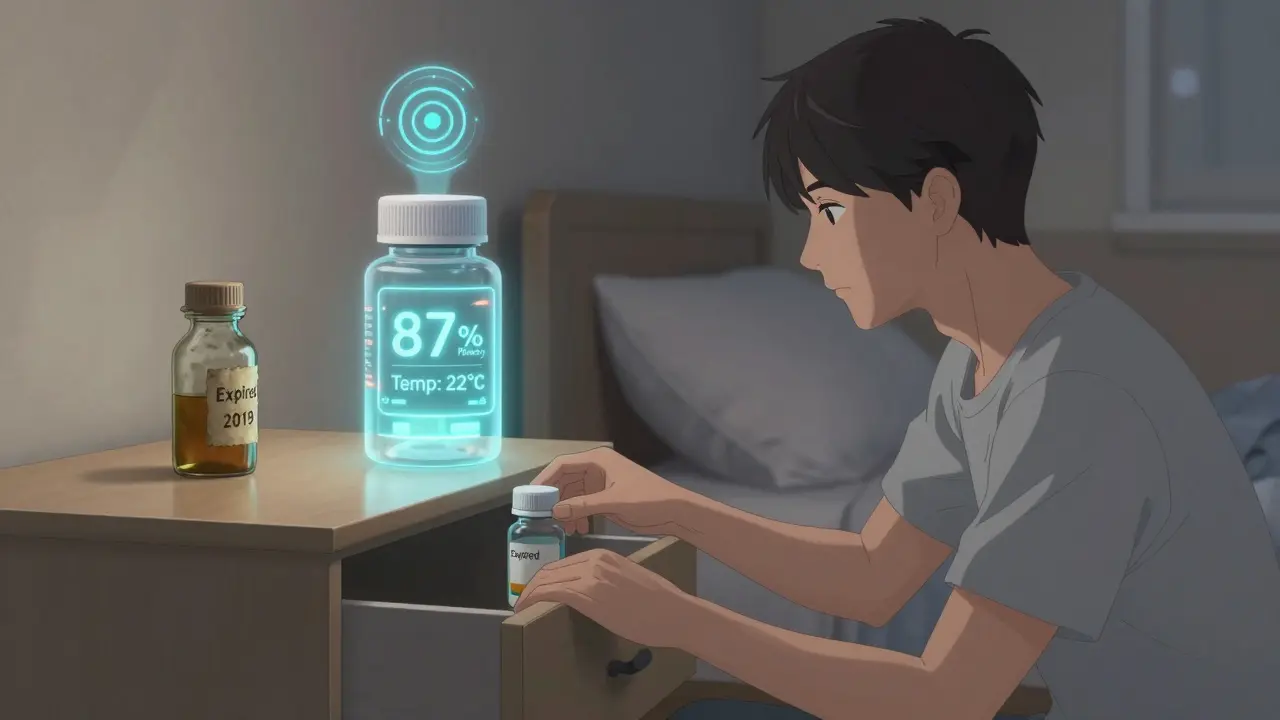
The system is broken. We’re throwing away billions in medicine that still works. At the same time, we’re risking lives by using drugs that should’ve been replaced. Companies like Pfizer and Merck are investing hundreds of millions in smart packaging-bottles with sensors that track temperature, humidity, and real-time drug stability. By 2027, your prescription might have a dynamic expiration date: not printed on the label, but updated in an app based on how you stored it. For now, though, you have to be your own pharmacist. Know your meds. Know your storage. Know your risks.When Expired Medications Become Toxic and Dangerous
It’s rare. But it’s real. And it’s not about the date on the bottle. It’s about the drug, the form, the storage, and the consequence of failure. Most expired pills? Harmless. Just weaker. But if you’re relying on that pill to keep you alive? Don’t gamble.Are all expired medications dangerous?
No. Most expired pills-like ibuprofen, antihistamines, or blood pressure meds-don’t become toxic. They just lose potency. The real danger is with specific drugs: insulin, epinephrine, liquid antibiotics, nitroglycerin, and eye drops. These can fail or degrade into harmful substances.
Can expired medicine make you sick?
It’s rare, but yes. The only proven cases of toxicity from expired drugs are from degraded tetracycline (1963) and clindamycin (2001), both causing kidney damage. Liquid antibiotics can grow bacteria after expiration, leading to infections. Expired insulin or epinephrine won’t poison you-but they might not work when you need them most, which can be deadly.
How long after expiration are pills still safe?
For solid tablets stored in a cool, dry place, many retain 70-90% potency for 5-15 years past expiration, according to FDA studies. But don’t assume this applies to liquids, injections, or critical meds. Insulin and epinephrine degrade within months. Always check the drug type and storage conditions.
Where’s the best place to store medicine at home?
A bedroom drawer or a kitchen cabinet away from heat and moisture. Avoid bathrooms, windowsills, or cars. The ideal environment is 15-25°C (59-77°F) with 35-45% humidity. Most bathrooms are too hot and damp, which speeds up drug breakdown.
Should I throw away expired medications?
Yes-if they’re insulin, epinephrine, liquid antibiotics, eye drops, or nitroglycerin. For other pills, if they’re stored properly and look normal, they’re likely still effective. But if you’re unsure, or the pills are discolored or crumbly, dispose of them. Use a pharmacy take-back program to avoid environmental harm.
Jason Xin
January 30, 2026 AT 06:17My grandma kept her blood pressure pills in the bathroom for 12 years. Still worked. She also had a cat that lived to 23. Coincidence? Maybe. But I’m not throwing out my ibuprofen just because the label says so.
Storage matters way more than the date. A drawer > a steam room any day.
Yanaton Whittaker
January 30, 2026 AT 15:48USA still letting Big Pharma dictate what we can and can’t use? LOL. We’re literally burning billions in perfectly good medicine while people in other countries use it. This is why we’re broke. China and India don’t throw out meds because of a printed date. They use common sense.
Fix the system, not the pills.
Kathleen Riley
January 30, 2026 AT 16:56It is not merely a matter of pharmacological degradation; it is an epistemological failure of regulatory inertia. The expiration date, as a fixed temporal marker, assumes homogeneity of storage conditions, molecular stability, and human behavior-none of which are empirically uniform.
Thus, the categorical prohibition against expired pharmaceuticals, while legally expedient, is epistemologically unsound. We are enforcing a myth of certainty upon a domain inherently probabilistic.
Sazzy De
January 31, 2026 AT 10:52i’ve had expired benadryl for 7 years
used it for a bee sting once
worked fine
no one died
we’re all gonna be okay
Gaurav Meena
February 2, 2026 AT 10:06Bro, I’m from India, we’ve been using expired meds for decades. My uncle took 10-year-old insulin during a trip-survived. We don’t have the luxury of throwing stuff out.
But I agree-epipens and antibiotics? Don’t mess with those. For everything else? Use your head. Store it right, check the color, and don’t be a hero if you’re sick.
Also, bathroom cabinets are the worst. Move it to your nightstand. Simple.
Stay safe 🙏
Jodi Olson
February 3, 2026 AT 17:22There is no such thing as safety in the abstract. Only risk, and our willingness to tolerate it.
The pharmaceutical industry profits from fear. The FDA profits from compliance. The consumer profits from ignorance.
When the date on the bottle becomes more sacred than the integrity of the substance within, we have lost our way.
Amy Insalaco
February 4, 2026 AT 05:26It’s fascinating how the discourse around pharmaceutical expiration is entirely reductive. The FDA’s Shelf Life Extension Program, while methodologically rigorous, operates under controlled environmental parameters-idealized conditions that are statistically irrelevant to the lived experience of the American middle class.
Moreover, the degradation kinetics of tetracycline derivatives are not generalizable to benzodiazepines or beta-blockers. The conflation of pharmacodynamic instability with chemical toxicity is a rhetorical fallacy perpetuated by regulatory bodies to maintain institutional authority.
And yet, we still treat expired medications as if they’re radioactive waste. The cultural anxiety around pharmacological decay mirrors our broader existential dread of entropy itself.
Katie and Nathan Milburn
February 5, 2026 AT 21:00I’ve been a pharmacist for 22 years. I’ve seen people take expired meds. Most of the time, nothing happens. But I’ve also seen the ones who didn’t get better. The ones who came back worse.
It’s not about fear. It’s about responsibility.
If you’re taking something for your heart, your thyroid, your seizures-don’t gamble. The science says it’s probably fine. But you’re not the study. You’re the patient.
Beth Beltway
February 6, 2026 AT 11:40Of course you’re fine taking expired pills. You’re the kind of person who thinks ‘natural remedies’ work and doesn’t wash their hands before eating. You’re not a victim of Big Pharma-you’re a victim of your own stupidity.
And now you’re telling everyone else to do the same? You’re not helping. You’re endangering people. Your ‘common sense’ is just ignorance with a confidence interval.
Marc Bains
February 6, 2026 AT 20:07My cousin in Nigeria uses expired antibiotics because that’s all she can afford. She’s not reckless-she’s resourceful.
But here’s the thing: in the U.S., we have the resources to fix this. We have the labs. We have the data. We just don’t have the will.
It’s not about being scared. It’s about being fair. Why should someone in a low-income neighborhood have to throw out $200 of insulin because the system won’t update a label?
Change the policy. Not the people.
April Allen
February 8, 2026 AT 18:30The real issue isn’t expiration dates-it’s access. If you can’t afford to replace your meds, the ‘don’t use expired’ rule isn’t a safety guideline. It’s a death sentence.
And yet, the system doesn’t adjust. It just punishes the poor for being poor.
Studies show most solid pills retain efficacy for years. So why don’t we have a tiered system? Risk-based labeling? Dynamic expiration based on storage sensors?
We have the tech. We just refuse to implement it because it’s easier to say ‘no’ than to fix the infrastructure.
Sarah Blevins
February 9, 2026 AT 10:51Let’s be clear: the 90% efficacy rate cited in the FDA’s Shelf Life Extension Program applies only to drugs stored under military-grade conditions-sealed, climate-controlled, dark, and inert. Not your bathroom cabinet. Not your car. Not your purse.
Extrapolating that data to civilian use is statistically invalid. The study was never meant to be a public safety guideline.
It was a logistical optimization for the DoD. Not a permission slip for you to keep your 2018 Zoloft.
Bobbi Van Riet
February 9, 2026 AT 22:51my dad took expired aspirin for a headache last week
it tasted like vinegar
he said it worked fine
but then he asked me if i thought it was safe
i told him to stop being weird and just get a new bottle
he’s 74
he doesn’t need to be a chemistry experiment
Holly Robin
February 10, 2026 AT 02:20EVERYTHING IS A CONSPIRACY
the expiration dates? made up by the pharmas to sell more pills
the FDA? in bed with Pfizer
the 'toxic tetracycline' case? a cover-up for radiation poisoning
they don't want you to know you can live on 15-year-old insulin
they're scared you'll figure out the whole system is a lie
and now they're pushing 'smart bottles' so they can track you
they know you're coming for them
they're coming for your meds
save your pills
save your soul
they're watching
and they're charging you $8 for a bottle of ibuprofen that's still good
don't be fooled
they want you weak
they want you buying
they want you afraid
they want you to trust the label
don't trust the label
trust your gut
trust your grandma
trust the pills
they've been waiting for you