
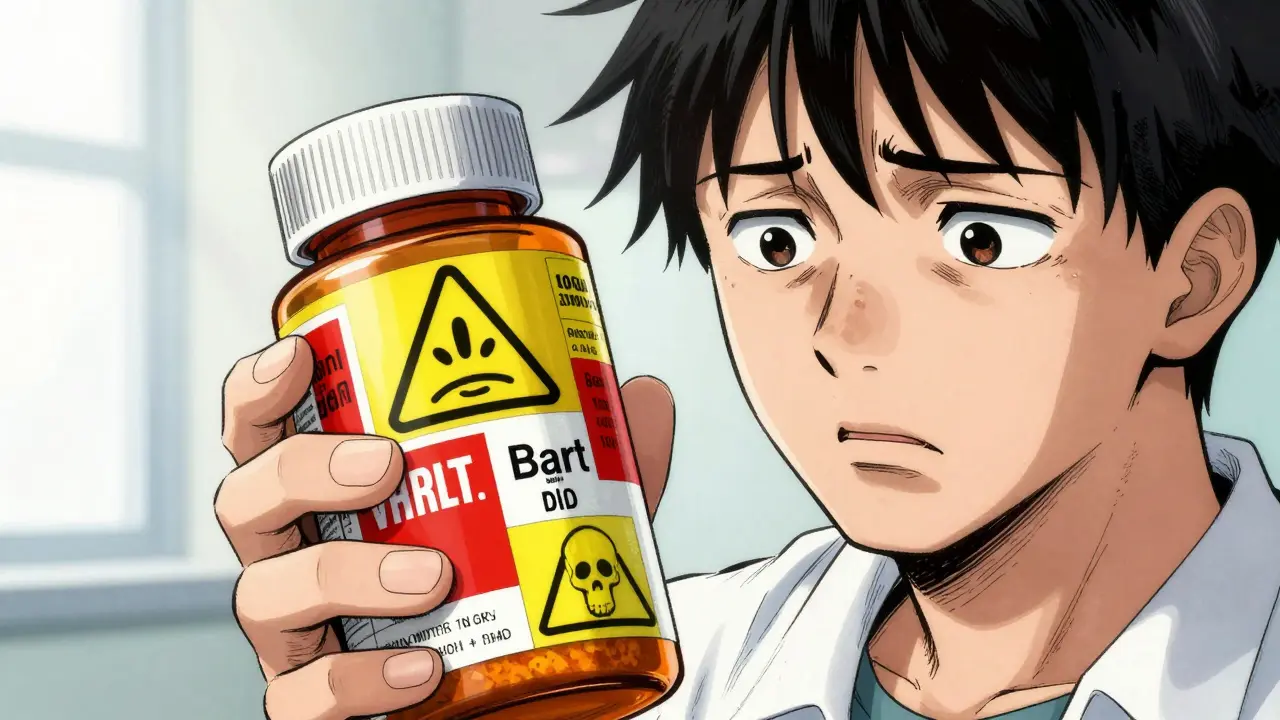
You pick up your prescription. The bottle is covered in stickers. One says "Take with food." Another warns about drowsiness. A third has a symbol you’ve never seen before. It’s easy to feel overwhelmed by the visual noise on pharmacy warning icons are standardized visual elements designed to communicate critical safety information about prescription medications. These aren’t just decorative stickers; they are your first line of defense against serious health risks.
Every year, medication errors contribute to thousands of preventable hospitalizations and deaths. In the United States alone, the FDA identifies these errors as a factor in at least 7,000 fatalities annually. While pharmacists provide verbal counseling, many patients forget details or mishear instructions. That’s where these icons come in. They bridge the gap between complex medical advice and daily patient habits. But here’s the catch: not all icons are created equal, and misunderstanding them can be dangerous.
What Are Pharmacy Warning Icons?
At their core, these icons are standardized visual cues attached to medication containers. In New Zealand, for example, they are known as Cautionary and Advisory Labels (CALs) are small yellow stickers affixed to medicine containers by pharmacists to indicate specific risks. They were developed through collaboration between pharmacy associations, regulatory bodies like the FDA, and safety organizations such as the Institute for Safe Medication Practices (ISMP).
The goal is simple: reduce errors. By using consistent colors, symbols, and text, these labels aim to convey urgency and instruction quickly. For instance, a yellow label might warn that a medication causes drowsiness, advising you to limit alcohol and avoid driving. This system helps patients who have varying levels of health literacy understand critical safety messages without needing to read dense paragraphs of fine print.
| Icon Type / Color | Typical Meaning | Example Instruction |
|---|---|---|
| Yellow Sticker (NZ CAL) | Sedative Effect / Drowsiness | "Do not drive or operate machinery. Limit alcohol." |
| Red Symbol | High Danger / Critical Risk | "Keep out of reach of children." |
| Blue/Green Text | General Recommendation | "Take with food to avoid stomach upset." |
| Radioactive-style Symbol | External Use Only | "For skin application only. Do not ingest." |
Why Standardization Matters (And Why It’s Failing)
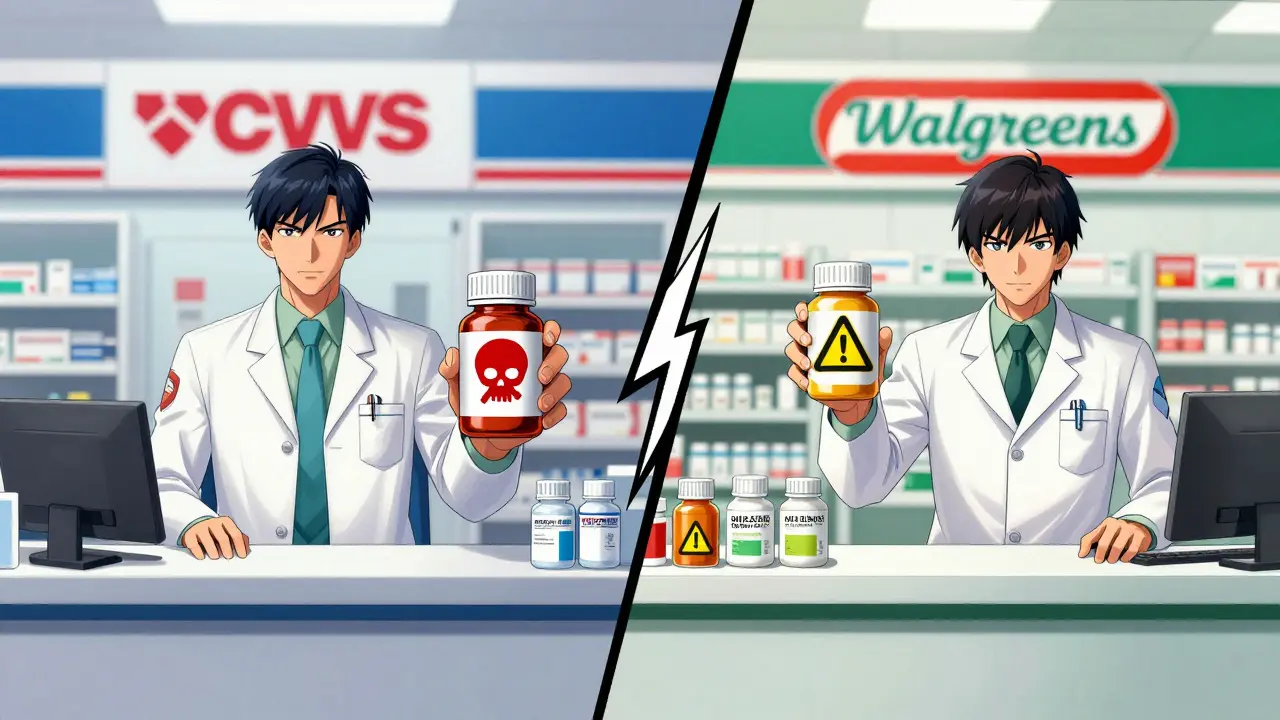
If you live in the United States, you might notice that warning labels look different depending on where you buy your meds. CVS Health uses one set of icons, Walgreens uses another, and independent pharmacies often use yet another. This lack of national standardization is a major problem.
According to a 2022 Commonwealth Fund study, New Zealand’s nationally standardized CAL system shows 22% better patient comprehension than the fragmented U.S. system. The UK also adopted a standardized set of nine warning labels in 2015, which dropped misinterpretation rates from 39% to 17%. In contrast, the U.S. still struggles with inconsistency. Dr. Robert Field, a health policy professor, noted that this fragmentation creates dangerous inconsistencies across a $576 billion market.
When icons vary, patients get confused. If one pharmacy uses a red skull for "dangerous" and another uses it for "allergy risk," the visual language breaks down. The FDA recognized this issue and released draft guidance in September 2022 proposing 12 core standardized icons. As of 2024, major chains are beginning to align with these proposals, but full adoption is still underway.
The Hidden Risks of Misinterpretation
You might think reading a label is straightforward, but research suggests otherwise. A 2019 study published in *U.S. Pharmacist* found that 42% of patients correlate label color with severity-assuming red means danger and green means safe. However, this assumption isn’t always correct. More alarmingly, the same study revealed that 90.7% of participants misunderstood the phrase "For external use only," even though it was written at a first-grade reading level.
Consider the "radioactive" symbol often used for topical creams. Research from the *Journal of Health Communication* (2020) showed that 68.3% of patients with limited health literacy misinterpreted this icon. Some thought it meant the medicine was harmful if touched, while others didn’t realize it strictly prohibited ingestion. In extreme cases, users have taken eye drops orally because they misread the dropper icon as indicating oral administration.
Complex instructions fare even worse. The directive "Do not chew or crush, swallow whole" was misinterpreted as "do not swallow whole" by 57.3% of patients. This double-negative phrasing confuses the brain. When combined with small font sizes-a complaint from 57.8% of respondents in an FDA survey-the risk of error skyrockets.
How Pharmacists Choose Which Warnings to Apply
Pharmacists don’t just slap every possible warning on a bottle. They are trained to select the most relevant ones based on your specific needs. However, this process isn’t perfect. A 2021 study found that 38.7% of pharmacists apply excessive warnings, creating "label clutter." When a bottle is covered in five or six stickers, patients tend to ignore them all, missing the one critical message.
To combat this, many large pharmacy chains now use clinical decision support systems. These tools prioritize the top 1-3 most critical warnings for each prescription. For example, if you are taking a sedative and have a history of falls, the pharmacist will highlight the drowsiness warning over general storage instructions. This targeted approach ensures that the most life-saving information stands out.
New pharmacy technicians typically require 8-12 weeks of supervised practice to master this selection process. They must learn not just the meanings of the icons, but how to match them to individual patient profiles, considering factors like age, literacy level, and other medications being taken.

Tips for Patients to Avoid Medication Errors
Since we can’t rely solely on the icons to save us, what can you do? Here are practical steps to ensure you understand your medication labels:
- Ask for clarification. If an icon looks confusing, ask your pharmacist to explain it in plain English. Don’t assume you know what it means.
- Check for consistency. If you switch pharmacies, compare the new labels to your old ones. Note any changes in symbols or colors.
- Use digital aids. Many pharmacies now include QR codes on labels that link to video explanations. If you’re comfortable with smartphones, scan them to get a visual walkthrough of the instructions.
- Read aloud. Reading the text on the label out loud can help catch double negatives or confusing phrasing that your eyes might skip over silently.
- Limit distractions. Never try to decipher complex medication instructions while multitasking. Sit down, take your time, and ensure you fully understand the dosage and timing.
Remember, the goal is adherence and safety. If you’re unsure, call the pharmacy. It’s far better to make one phone call than to end up in the emergency room due to a misunderstood icon.
The Future of Medication Labeling
The landscape of pharmacy warning icons is evolving. With the FDA’s push for national standardization expected to solidify in 2024-2025, we should see more uniformity across the U.S. Major chains like CVS and Walgreens are already reducing their icon sets to align with federal guidelines.
Beyond standardization, technology is playing a bigger role. Augmented reality (AR) labels are being tested by healthcare giants like Kaiser Permanente. In pilot studies, AR labels increased warning comprehension from 58% to 89%. Imagine pointing your phone at your pill bottle and seeing an animated demonstration of how to take the medicine correctly. While this won’t replace physical stickers anytime soon, it offers a promising layer of safety for tech-savvy patients.
However, we must be cautious of the digital divide. Not everyone has a smartphone or reliable internet access. As pharmacies move toward digital augmentation, they must ensure that traditional, clear, and standardized physical labels remain robust for those who need them most.
Why do my medication labels look different at different pharmacies?
In the U.S., there is no single national standard for pharmacy warning icons. Each pharmacy chain, such as CVS or Walgreens, develops its own set of labels. This leads to variations in symbols, colors, and wording, which can confuse patients who shop at multiple locations. New Zealand and the UK have moved toward national standardization to solve this issue.
What does the yellow sticker on my NZ medication mean?
In New Zealand, the yellow Cautionary and Advisory Label (CAL) typically indicates that the medicine may cause drowsiness or impair your ability to drive or operate machinery. It often advises you to limit alcohol intake. Always read the specific text on the sticker, as meanings can vary slightly by drug class.
Are pharmacy warning icons legally required?
Requirements vary by country. In New Zealand, CALs are mandated by law for certain high-risk medications. In the U.S., while the FDA requires Medication Guides for specific drugs, the use of additional warning icons is largely driven by pharmacy best practices and state regulations rather than a single federal mandate for all prescriptions.
Why do I get so many warning stickers on one bottle?
This is often called "label clutter." Pharmacists may add multiple warnings to cover all potential risks of a medication. However, too many stickers can overwhelm patients, causing them to miss critical information. Ideally, pharmacists should prioritize the top 1-3 most relevant warnings for your specific health profile.
Can I request fewer warning labels?
You can discuss this with your pharmacist. While they cannot remove mandatory legal warnings, they can often choose to highlight the most critical ones and omit less relevant general advice. Clear communication with your pharmacist helps ensure the label reflects your actual needs and understanding.