
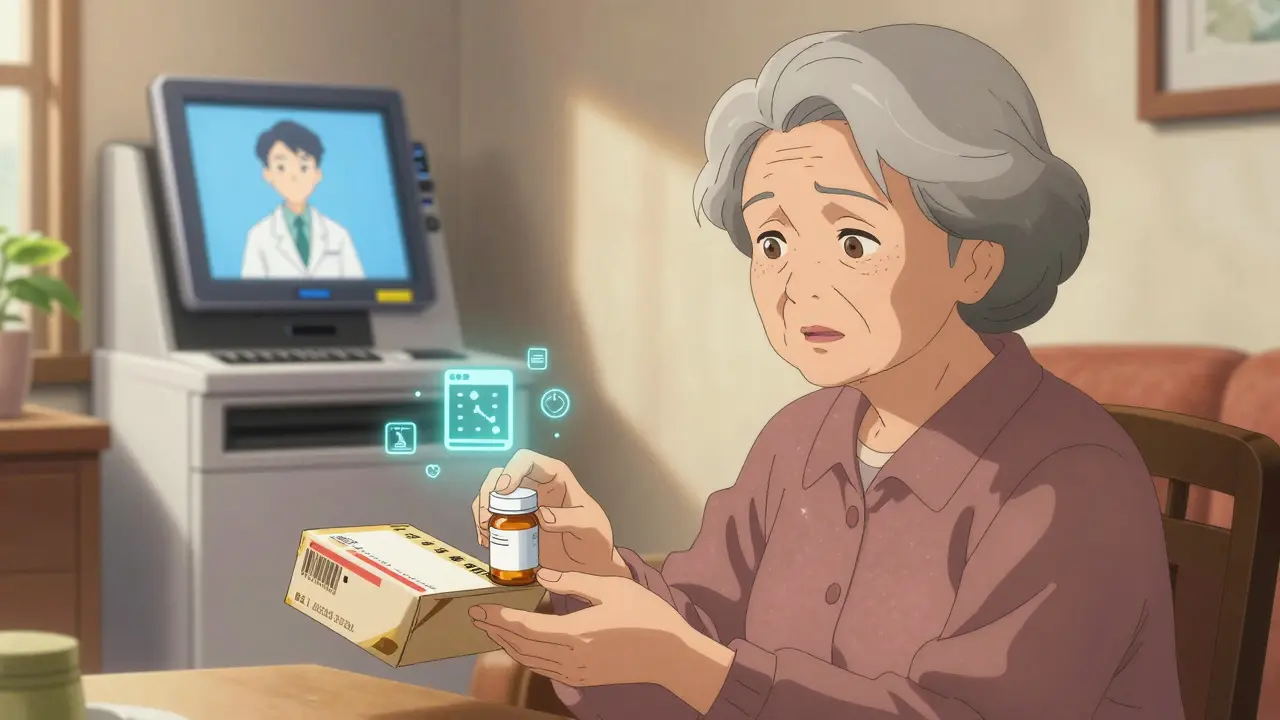
When you pick up a prescription at your local pharmacy in the UK, you might not realize that the medicine you’re given isn’t always the one your doctor originally wrote. That’s because of pharmaceutical substitution - a long-standing practice that lets pharmacists swap branded drugs for cheaper, generic versions. But in 2025, the rules around substitution are changing faster than ever. The NHS is overhauling not just how medicines are dispensed, but how care itself is delivered. And these changes are touching millions of lives - from elderly patients managing chronic conditions to young families relying on community health services.
What Exactly Is Pharmaceutical Substitution?
Pharmaceutical substitution means a pharmacist can give you a generic version of a medicine instead of the branded one your doctor prescribed - as long as the doctor didn’t write "dispense as written" (DAW) on the prescription. This isn’t new. It’s been standard practice since the NHS (Pharmaceutical Services) Regulations 2013. Generic drugs have the same active ingredients, strength, and effect as branded ones. They’re just cheaper because they don’t carry the cost of research, marketing, or patents.
Before 2025, about 83% of eligible prescriptions in England were filled with generics. That number is now being pushed up to 90% by law. The goal? Save money without sacrificing safety. The Department of Health and Social Care (DHSC) estimates this alone could cut NHS spending by hundreds of millions annually. But here’s the catch: not all substitutions are simple. Some medicines - like epilepsy drugs or blood thinners - need extra care. Even tiny differences in how generics are made can affect how they work in the body. That’s why pharmacists still need to use judgment, and why patients should always speak up if they feel something’s off.
The Big Shift: From Hospital to Home
The 2025 NHS reforms aren’t just about pills. They’re about moving care out of hospitals and into homes, clinics, and digital platforms. The government’s mandate is clear: shift care "from hospital to community, sickness to prevention, and analogue to digital." That means fewer emergency visits, fewer long waits for outpatient appointments, and more support for people to stay well at home.
One major example is the move to replace hospital-based diagnostic scans and follow-ups with community diagnostic hubs. By 2027, these hubs are expected to handle 22% of services that used to require a trip to a hospital. Think blood tests, ECGs, or minor imaging - all done closer to where people live. The NHS has allocated £650 million for this alone. For many, it’s a win: less travel, shorter waits, and care that fits into daily life.
But it’s not that simple. A report from the NHS Confederation found that 68% of Integrated Care Boards (ICBs) don’t have enough staff to make this happen. In rural areas, the problem is worse - 42% of trusts lack the clinics, transport, or trained workers needed. Patients in those areas risk being left behind.
Remote Pharmacies: The New Normal?
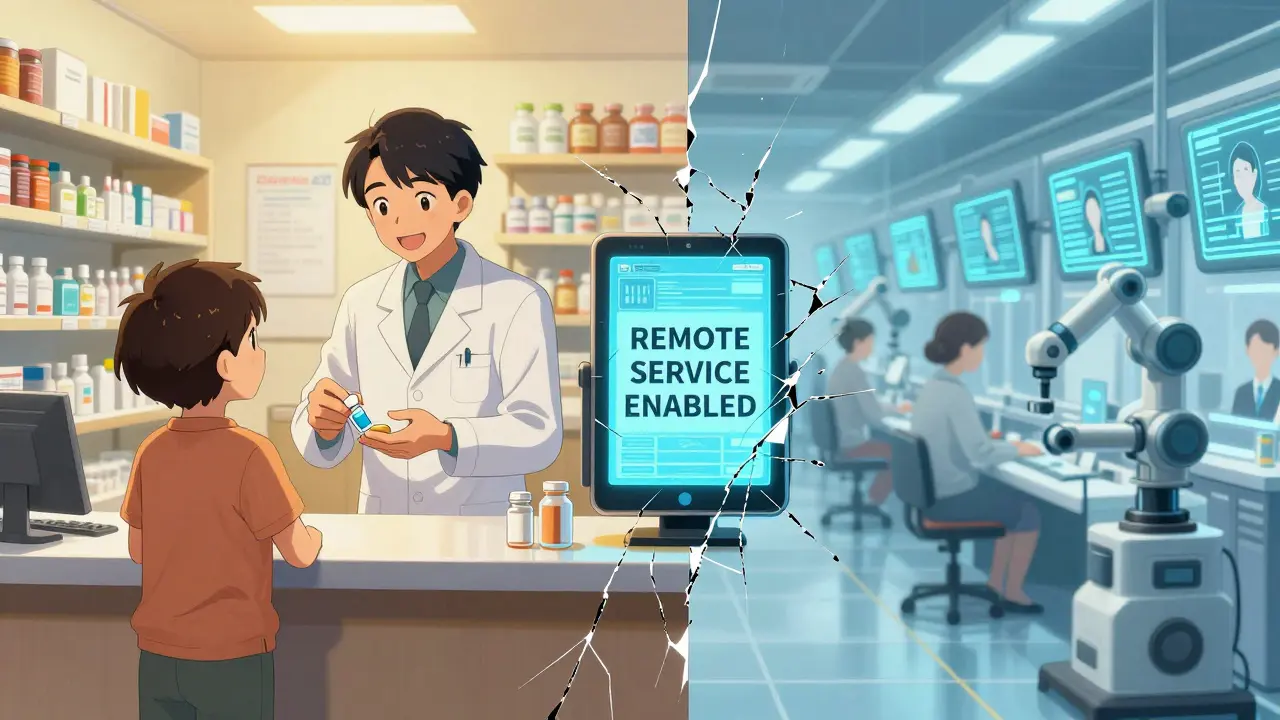
Perhaps the most radical change is the new requirement for Digital Service Providers (DSPs). Starting October 1, 2025, all NHS pharmaceutical services must be delivered remotely. No more face-to-face consultations at the pharmacy counter. Instead, prescriptions are processed digitally, and medicines are sent to patients by post or collected from automated kiosks.
This isn’t just a convenience tweak - it’s a full system overhaul. The old model, where pharmacists talked to patients, checked for interactions, and answered questions, is being replaced by a digital pipeline. The DHSC says this will reduce costs and improve efficiency. But evidence from pilot programs tells a different story. In North West London, medication errors rose by 12% during the remote dispensing trial. One Reddit user, a nurse from Manchester Royal Infirmary, shared how virtual fracture clinics cut unnecessary follow-ups by 40% - but left 15% of elderly patients confused, unable to access care because they didn’t own smartphones or understand how to use video appointments.
Community pharmacies are also struggling. A British Pharmaceutical Industry survey found 79% are worried about the new rules. More than half say they’ll need between £75,000 and £120,000 to upgrade their tech - money most small pharmacies simply don’t have. Some may shut down. Others will merge. Either way, access to local pharmacy services is at risk.
Who Gets Left Behind?
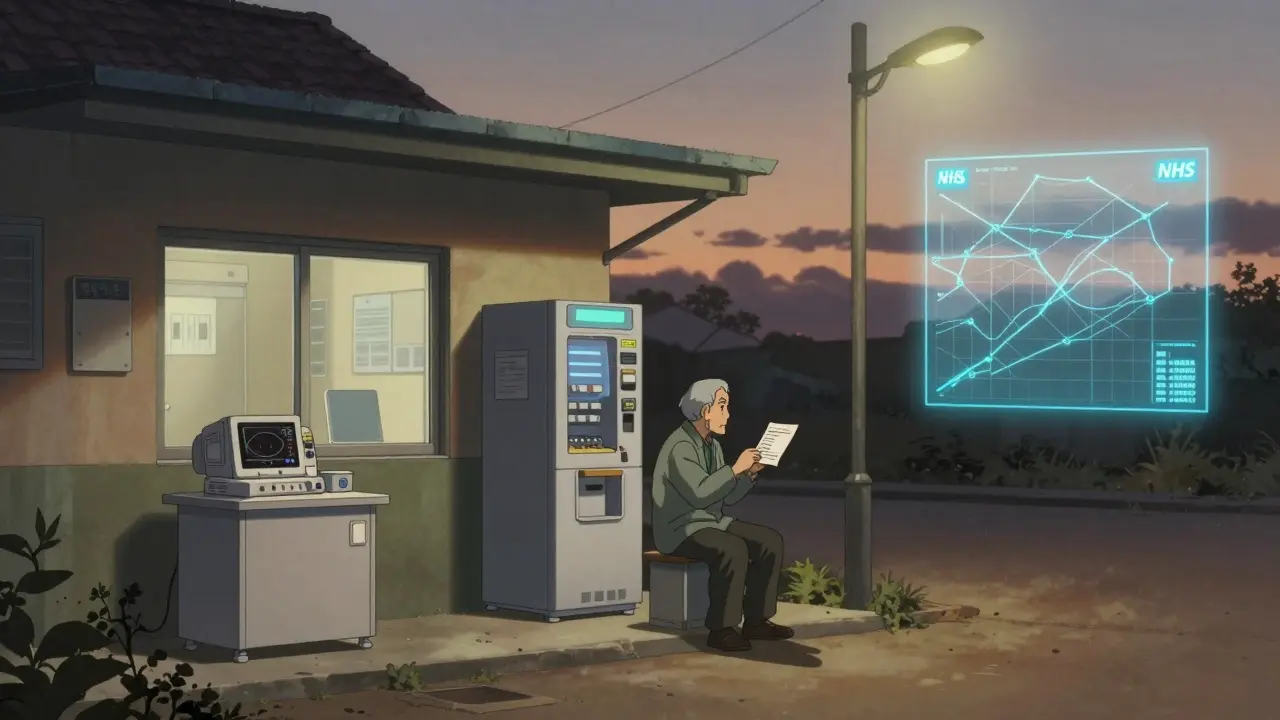
These reforms aren’t neutral. They hit vulnerable groups hardest. Older adults, low-income families, people with disabilities, and those without reliable internet or digital skills are the most affected. The King’s Fund warns that without urgent investment, substitution policies could widen health inequalities by 12-18% in deprived areas. In Greater Manchester, early substitution programs actually made gaps worse before targeted help was added.
There’s also the issue of tax credits. From April 5, 2025, people who previously received tax credits no longer get automatic exemptions for NHS prescription charges or travel costs. That means even if someone qualifies for free meds based on income, they now have to jump through extra hoops. For many, that’s a barrier. One patient in Newcastle told a local paper: "I’ve been getting my asthma inhalers for free for 12 years. Now I’m being asked for proof I still qualify. I don’t even have a computer. How am I supposed to do that?"
The Workforce Crisis
Behind every substitution policy is a person - a nurse, a pharmacist, a community health worker. And right now, there aren’t enough of them.
The NHS needs an extra 15,000 community healthcare professionals by 2030 to handle the shift from hospitals to home-based care. But there’s a 28,000-worker shortfall in these services today. Hospitals are already short-staffed. Community teams are stretched thinner. And with the Carr-Hill formula changing in April 2026 - which will redirect funding to areas with the greatest need - some regions may get more support, while others get less.
Meanwhile, hospital pharmacists are seeing their roles change. The NHS Staff Survey 2025 showed 78% of them are worried about safety under the new remote dispensing rules. Community nurses, on the other hand, are more supportive - 63% back the move to community care. But even they admit it’s not working smoothly yet.
What’s Next? The Road to 2030
The government’s 10-Year Health Plan sets ambitious targets: 45% of outpatient appointments substituted by community or virtual services by 2030, 1.2 million fewer waiting list appointments annually, and £4.2 billion in savings. It sounds great on paper. But the path there is full of potholes.
Success depends on three things: people, infrastructure, and trust. You can’t digitize care if people can’t access the tech. You can’t shift services if there’s no one to deliver them. And you can’t ask patients to trust a system that’s changing faster than it’s explained.
The real test won’t be in budget spreadsheets or digital dashboards. It’ll be in whether a 78-year-old woman with arthritis can get her pain meds without leaving her house. Whether a single parent can get their child’s asthma inhaler without missing work. Whether a rural pharmacy can stay open long enough for the next generation to walk through its doors.
The NHS isn’t just changing how drugs are dispensed. It’s redefining what care looks like. And right now, the system is being asked to do too much, too fast - with too few resources. The question isn’t whether substitution will happen. It’s whether it will help - or harm - the people it’s meant to serve.
Can my pharmacist still give me the brand-name drug if I want it?
Yes - but only if your doctor writes "dispense as written" (DAW) on the prescription. Otherwise, pharmacists are required to offer the generic version unless there’s a clinical reason not to. If you prefer the brand-name drug, ask your GP to include DAW. You may have to pay the full cost if the generic is cheaper.
Are generic drugs as safe as branded ones?
Generally, yes. All generics in the UK must meet strict standards set by the Medicines and Healthcare products Regulatory Agency (MHRA). They must contain the same active ingredient, in the same amount, and work the same way. But for some medicines - like those used for epilepsy, thyroid conditions, or blood thinning - even small differences in how they’re absorbed can matter. That’s why doctors sometimes choose to prescribe only the branded version. Always tell your pharmacist if you’ve had a bad reaction to a generic before.
What happens if I can’t use digital services for my prescriptions?
The NHS is required to make reasonable adjustments for people who can’t use digital services - for example, due to age, disability, or lack of digital access. You should still be able to get your prescription filled in person at a pharmacy that hasn’t fully switched to remote delivery. If you’re being refused, contact your local Integrated Care Board or the NHS complaints team. The law still requires access to care, even if the system is changing.
Will I have to pay more for my prescriptions because of these changes?
For most people, no - prescription charges haven’t changed. But from April 2025, people who previously received tax credits no longer get automatic exemptions for prescription costs or travel to appointments. You’ll now need to apply for financial help separately. If you’re on a low income or have certain medical conditions, you may still qualify for free prescriptions. Check the NHS website or ask your pharmacy for a prepayment certificate, which can save money if you need multiple prescriptions.
How are these changes affecting rural communities?
Rural areas are hit hardest. Many pharmacies there are small, underfunded, and lack the tech to switch to remote dispensing. At the same time, community health services - like mobile clinics or home visits - are under-resourced. A 2025 NHS Confederation report found 42% of rural trusts don’t have the infrastructure to replace hospital services. That means longer travel times, fewer options, and increased isolation for older and disabled residents. Without targeted funding, these gaps will only widen.
Final Thoughts
The UK’s substitution laws are no longer just about saving money on pills. They’re about reshaping the entire health system - moving care out of hospitals, into homes, and onto screens. But technology alone won’t fix a broken system. You can’t substitute compassion with an app. You can’t replace human judgment with automation. And you can’t ask people to trust a system that doesn’t trust them back.
The real challenge isn’t technical. It’s human. Can we build a system that’s efficient - without becoming cold? Can we cut costs - without cutting care? The answer will determine not just how many prescriptions are filled, but how many lives are supported.
Patrick Jackson
March 6, 2026 AT 20:48Susan Purney Mark
March 7, 2026 AT 00:58Amina Aminkhuslen
March 7, 2026 AT 06:26Jeff Mirisola
March 8, 2026 AT 00:52Ian Kiplagat
March 8, 2026 AT 08:52phyllis bourassa
March 10, 2026 AT 08:11Joey Pearson
March 10, 2026 AT 21:59Joe Prism
March 12, 2026 AT 10:11William Minks
March 13, 2026 AT 14:42Tim Hnatko
March 15, 2026 AT 02:26amber carrillo
March 15, 2026 AT 07:40Roland Silber
March 17, 2026 AT 03:08