

Most people think of tuberculosis as a cough that won’t go away. But the real story is more complex - and more dangerous. You can carry TB bacteria for years without ever getting sick. Or you could wake up one day with a fever, night sweats, and a cough that lasts months. The difference? One is latent TB infection, the other is active TB disease. And how you treat each one? Totally different.
Latent TB: The Silent Carrier
Latent TB means the bacteria are in your body - alive, but not doing anything. You don’t feel sick. You don’t cough. You can’t spread it to anyone. Your chest X-ray looks normal. Your lungs aren’t damaged. You’re just a carrier.
This isn’t rare. Around one-quarter of the world’s population has latent TB. In New Zealand, it’s mostly seen in people who came from countries where TB is common - like the Philippines, India, or parts of Africa. The bacteria hide inside granulomas, little clusters of immune cells that lock them in place. It’s not a cure. It’s a truce.
You won’t know you have it unless you get tested. The two standard tests are the tuberculin skin test (TST) and the interferon-gamma release assay (IGRA). Both detect your immune system’s memory of the bacteria. A positive result doesn’t mean you’re sick. It just means you’ve been exposed.
Here’s the scary part: 1 in 10 people with latent TB will eventually develop active disease. That risk jumps to 50% if you’re HIV-positive, on chemotherapy, or taking immunosuppressants for conditions like rheumatoid arthritis or organ transplants. That’s why testing high-risk groups isn’t optional - it’s lifesaving.
Active TB: When the Bacteria Wake Up
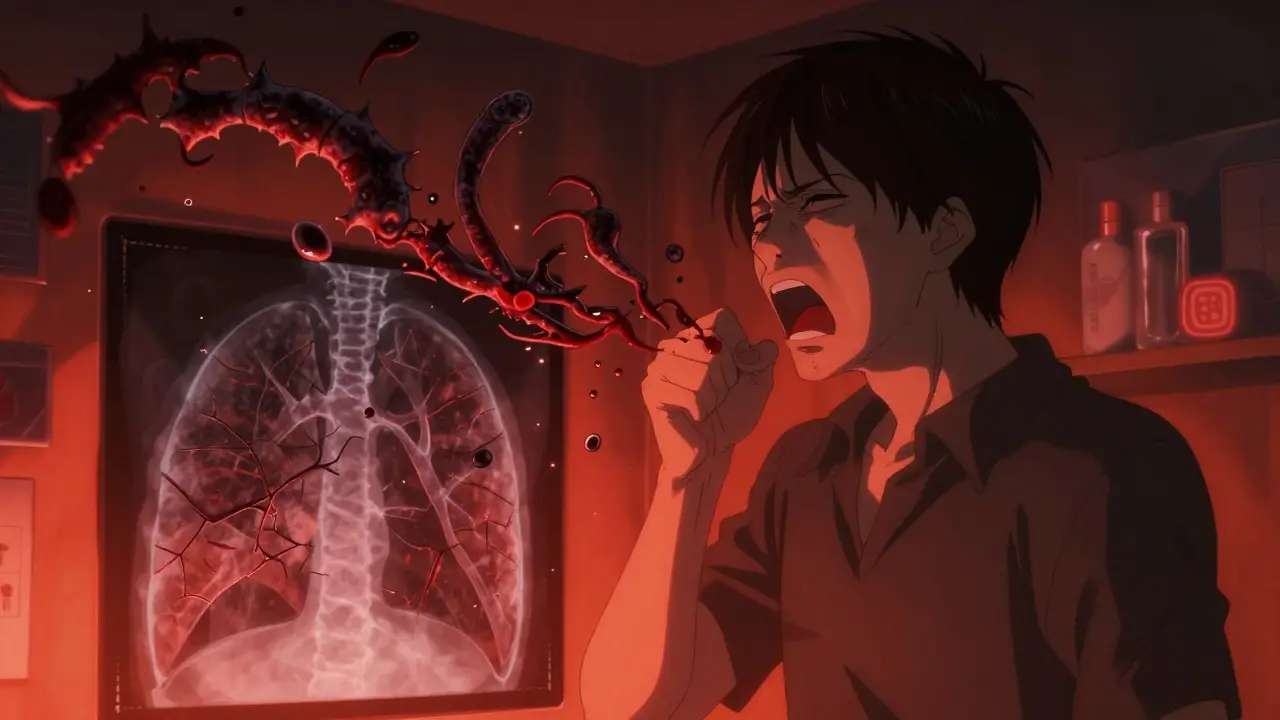
Active TB is when the bacteria break free. They multiply. They destroy lung tissue. They spread through the air.
Symptoms don’t come overnight. They creep in. A cough that lingers past three weeks. Weight loss you can’t explain. Night sweats so bad you change your pajamas. Fever that comes and goes. Fatigue that sticks around. Sometimes, you cough up blood. Chest pain. Loss of appetite.
This isn’t just uncomfortable - it’s contagious. Every time someone with pulmonary TB coughs, sneezes, or even talks, they release tiny droplets into the air. You can catch it just by being in the same room. That’s why public health teams rush to trace contacts when a case is confirmed.
Diagnosis isn’t guesswork. You need lab confirmation. Sputum samples are tested with nucleic acid amplification tests (NAATs) - these can spot TB DNA in hours. Culture is the gold standard, but it takes weeks. Chest X-rays usually show damage: cavities, nodules, or fluid in the lungs. No normal X-ray means it’s not active TB.
And here’s something most people don’t realize: not all active TB is in the lungs. It can spread to bones, kidneys, the brain - even the spine. That’s called extrapulmonary TB. It’s rarer, harder to diagnose, and often missed.
Drug Therapy: The Long Haul
Treating latent TB? One drug. Usually isoniazid. Taken daily for nine months. That’s a lot of pills. People stop. They feel fine. Why keep taking them? That’s why shorter options now exist: three months of isoniazid plus rifapentine, taken once a week. Or four months of rifampin alone. These work just as well - and more people finish them.
Active TB? Not a single pill. You need four drugs at once: isoniazid, rifampin, pyrazinamide, and ethambutol. This combo kills the bacteria fast and stops resistance from forming. After two months, you drop pyrazinamide and ethambutol. You keep isoniazid and rifampin for another four to seven months. Total? Six to nine months of daily pills.
Why so long? Because TB bacteria are slow growers. They hide in low-oxygen zones in the lungs. Most antibiotics can’t reach them. That’s why treatment takes months - not days.
Side effects are real. Liver damage is the biggest worry. Your doctor will check your liver enzymes every month. You might feel nauseous. Your urine might turn orange (that’s rifampin - harmless, but startling). Your vision might blur (ethambutol - rare, but needs monitoring). You need to report these fast.
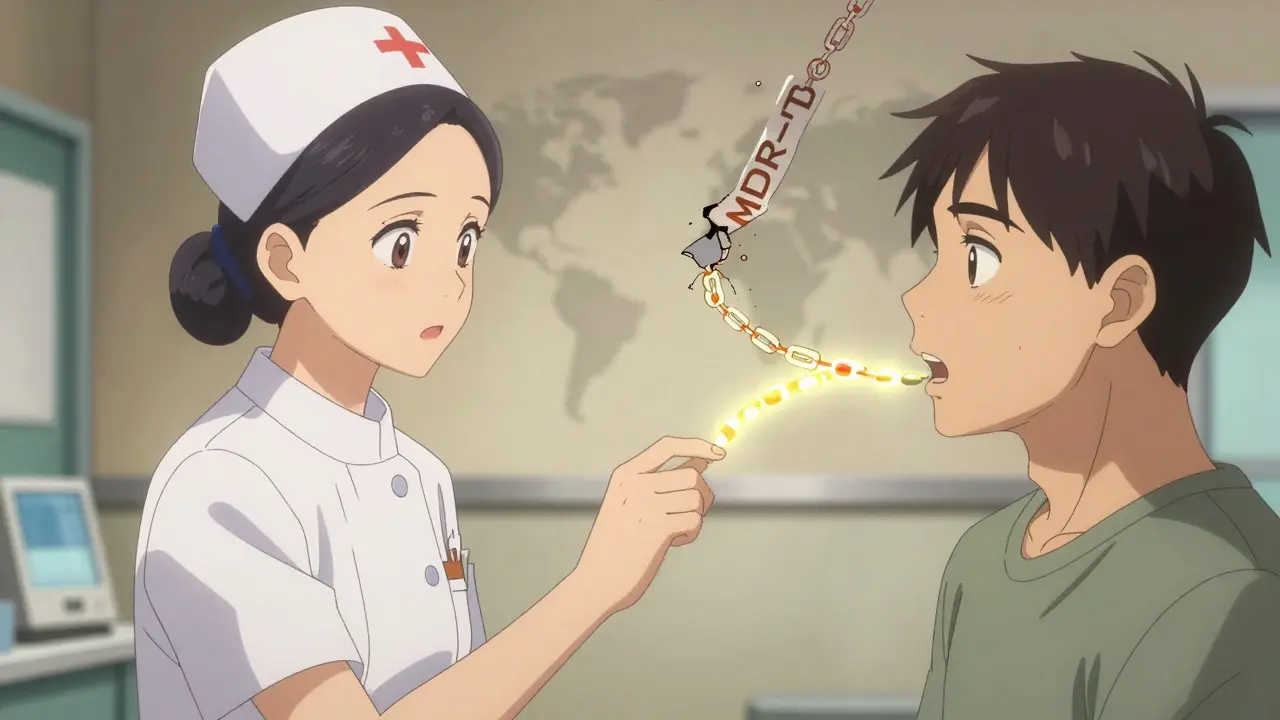
That’s why directly observed therapy (DOT) is standard. A nurse watches you swallow every pill. It’s not about control. It’s about saving lives. Missed doses lead to drug-resistant TB - and that’s a nightmare.
Drug Resistance: The Growing Threat
Multidrug-resistant TB (MDR-TB) means the bacteria don’t respond to isoniazid and rifampin - the two most powerful first-line drugs. Extensively drug-resistant TB (XDR-TB) adds resistance to even more drugs. Treatment for MDR-TB can take 18 months. It uses toxic, expensive drugs. Success rates? Around 60%.
It happens when treatment is interrupted. When people stop pills because they feel better. When clinics run out of drugs. When patients can’t afford transportation to get them. That’s why DOT matters. That’s why latent TB treatment is so important - stopping active TB before it starts cuts resistance at the source.
Who Gets Tested and Treated?
Not everyone needs testing. But if you fit any of these, you should be screened:
- You came from a country with high TB rates
- You live or work in a prison, homeless shelter, or nursing home
- You’re HIV-positive
- You’re on biologic drugs for autoimmune diseases
- You’ve been in close contact with someone diagnosed with active TB
In Auckland, public health teams actively screen refugees and migrants. Schools and hospitals screen healthcare workers yearly. It’s not paranoia. It’s prevention.
What’s Next?
Scientists are working on better tests - ones that can tell if latent TB is about to become active. There are new drugs in trials. Shorter regimens. A vaccine that actually works (the BCG shot doesn’t help adults much). But right now, the best tools we have are simple: test the high-risk, treat the latent, watch the active.
TB isn’t gone. It’s quiet. But it’s still here. And if you ignore it, it will find you.
Can you catch TB from sharing a cup or shaking hands?
No. TB spreads only through the air when someone with active lung TB coughs, sneezes, or talks loudly. You can’t catch it from surfaces, food, or physical contact like handshakes or kissing.
If I had TB as a kid, do I still need treatment now?
If you were treated and completed therapy back then, you likely don’t need anything now. But if you were never treated - or only partially treated - and you’re now in a high-risk group (like HIV-positive or on immunosuppressants), you should be tested for latent infection. Even decades later, reactivation is possible.
Can latent TB turn into active TB years later?
Yes. About 10% of people with latent TB will develop active disease in their lifetime. The risk is highest in the first two years after infection, but it never fully goes away. Weakened immunity - from aging, illness, or medications - can trigger reactivation even 30 years later.
Are TB drugs safe during pregnancy?
Yes. Isoniazid and rifampin are considered safe during pregnancy. Ethambutol is used if needed. Pyrazinamide is used cautiously, mainly in high-risk cases. Untreated TB is far more dangerous to mother and baby than the medications. Always consult a specialist.
Why do I need to take TB drugs for so long if I feel fine?
TB bacteria are stubborn. They hide in places where antibiotics can’t easily reach. Feeling fine doesn’t mean the bacteria are gone. Stopping early lets the toughest bacteria survive and multiply - leading to drug resistance. Completing the full course is the only way to be sure you’re cured.
Eimear Gilroy
February 28, 2026 AT 00:22Really appreciate this breakdown - I work in public health back in Ireland and we see latent TB cases pop up all the time in migrant populations. The IGRA test is way more reliable than TST here now, especially with BCG vaccination history muddying the waters. What’s wild is how often people think ‘I had a cough years ago, I’m fine’ - but reactivation risk never really disappears, especially with aging or new meds. We push testing hard in nursing homes and clinics. It’s not paranoia. It’s math.
Dominic Punch
February 28, 2026 AT 21:21As someone who’s trained nurses in DOT for over a decade - let me tell you, this isn’t about control. It’s about survival. I’ve seen people stop pills after two months because ‘they feel fine.’ Then they come back six months later with MDR-TB. Half the time, they don’t even know they were contagious. We had a guy in Belfast who spread it to his whole family because he skipped his last three months. His wife died. His kids are on treatment now. This isn’t abstract. It’s personal. Every pill matters.
Kenzie Goode
March 1, 2026 AT 17:41Thank you for writing this. I’m an RN in Chicago and we screen all our new hires. I’ve had coworkers cry when they found out they had latent TB - not because they were sick, but because they felt guilty. Like they ‘brought it here.’ But TB doesn’t care where you’re from. It just waits. And we have the tools to stop it before it wakes up. That’s hope. That’s power. Let’s use it.
Martin Halpin
March 2, 2026 AT 21:17Look, I get that you’re trying to sound all scientific and responsible, but let’s be real - this whole latent TB thing is a pharmaceutical marketing ploy. They need you to think you’re ‘at risk’ so you’ll take nine months of isoniazid and then get stuck with liver tests and side effects. Meanwhile, the real problem? Overcrowded hospitals, underfunded clinics, and politicians who ignore TB until someone dies on the news. They don’t want to fix the system - they want you to pop pills. And guess who profits? Big Pharma. Always. The science is shaky, the compliance rates are garbage, and we’re being manipulated into thinking we’re fragile. Wake up.
Christopher Brown
March 4, 2026 AT 16:25Latent TB? In the US? Please. We’ve got real problems - fentanyl, obesity, gun violence. Stop scaring people with 19th-century diseases. If you’re from India or the Philippines, that’s your problem. Don’t bring it here. We don’t need your germs. And stop making us pay for your ‘screening programs.’ Taxpayers didn’t sign up for this.
Sanjaykumar Rabari
March 6, 2026 AT 09:32They say TB spreads through air. But what if it's in the water? Or the vaccines? Or 5G? My cousin in Mumbai got TB after getting the flu shot. They said it was latent. But he never left home. I think they are hiding something. No one should trust hospitals. I don't take pills. I use turmeric. It works.
Lillian Knezek
March 8, 2026 AT 05:53So... let me get this straight. You're telling me the government wants us to take TB pills... and watch us swallow them? 🤔 That's a lot of control. Who's really behind this? Are the pills laced with microchips? Or is this just step one to mandatory health tracking? 😳 I'm not taking anything. Not even if I'm coughing. I trust my crystals more than doctors. 🌟
Haley Gumm
March 8, 2026 AT 11:19Okay, but I have to say - the part about rifampin turning urine orange? That’s wild. I did a rotation in infectious disease and one patient panicked because she thought she was bleeding internally. She cried for an hour. We had to show her a pamphlet. It’s funny, but also tragic. People are terrified of side effects they don’t understand. Maybe we need more plain-language education. Not just ‘take your pills.’ Like… explain why it happens. Make it less scary. 😊
Gabrielle Conroy
March 10, 2026 AT 10:25YES! Exactly!! 🙌 I’ve had patients ask me the same thing - they think orange pee means kidney failure. I always show them a photo of my own urine after taking rifampin (yes, I’ve taken it for prophylaxis - long story 😅). It’s harmless, but the fear? Real. And we can fix that. A simple 30-second video in the waiting room? A handout with emojis? 🟠= safe! 💉= lifesaving! 🤗= you’re doing great! Small things make huge differences. Let’s humanize this. We’re not just treating bacteria - we’re treating humans.
Maranda Najar
March 12, 2026 AT 04:16I used to be a nurse in a refugee camp in Jordan. I saw children with TB so advanced their ribs were visible. I saw mothers weep because they couldn’t afford the bus fare to the clinic. I saw men die because they were told ‘come back next week’ - and never came back. This isn’t theory. This is life. We have the tools. We have the knowledge. What we lack is the will. So don’t talk about ‘latency’ like it’s a trivia fact. Talk about dignity. Talk about justice. Talk about the fact that someone’s life hangs on whether a nurse in Auckland remembers to call them back. Because if you forget? They might not be here tomorrow. And that’s not just medical. That’s moral.