
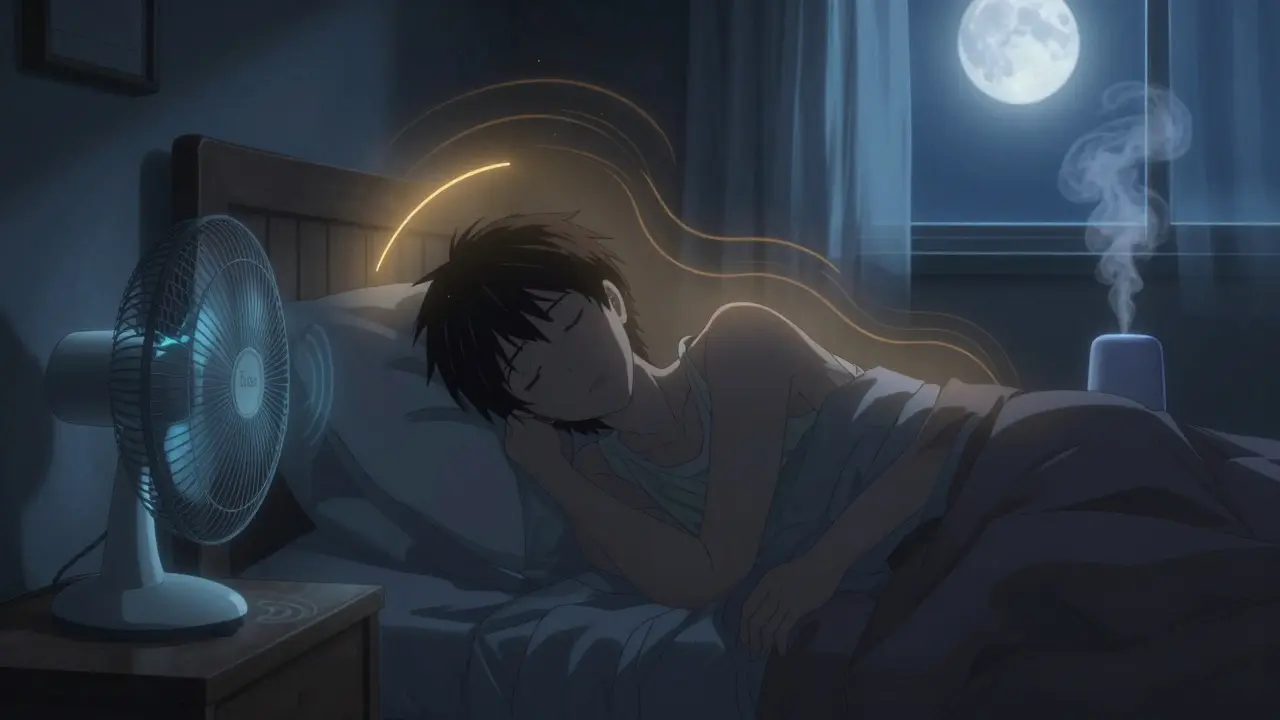
When the house goes quiet and your head doesn’t, that’s when tinnitus hits hardest. You turn over. You close your eyes. You wait for sleep to come. But instead of silence, there’s a buzz, a hiss, a ring-constant, unrelenting. It’s not just annoying. It’s exhausting. And it’s more common than you think: about 1 in 7 people worldwide deal with tinnitus, and for many, nighttime is the worst part. The problem isn’t the sound itself-it’s what happens when your brain, starved of external noise, starts screaming to notice it. The result? Sleepless nights, rising stress, and a cycle that gets worse the more you fight it.
Why Tinnitus Gets Louder at Night
It’s not your tinnitus getting louder. It’s your brain. In the daytime, traffic, conversations, music, even the hum of your fridge-they all create a layer of background noise that drowns out the internal ringing. At night, that layer disappears. Your ears don’t stop working. But your brain, with nothing else to focus on, turns all its attention inward. Studies show this can make tinnitus feel up to 40% louder in quiet rooms. That’s not your ears failing. It’s your brain overcompensating.The Sound Strategy: Masking, Not Silencing
The goal isn’t to drown out your tinnitus. That doesn’t work long-term. The goal is to reduce its dominance-to give your brain something else to listen to. This is called sound masking. And it’s not just white noise. There are different types, each with a different frequency profile:- White noise: Equal energy across all frequencies. Sounds like TV static. Good for general masking.
- Pink noise: Softer highs, stronger lows. Feels more natural. Often used in sleep apps.
- Brown noise: Deep, rumbling bass. Think thunder or a distant waterfall. According to Widex’s 2023 clinical data, 68% of users report brown noise as the most effective for sleep.
- Green noise: Centered around mid-frequencies (500-2000 Hz). Matches the most common tinnitus pitch. Best if your ringing sounds like a tone.
Volume matters more than you think. Play the sound just under the volume of your tinnitus. Too loud? You’ll stress your ears. Too soft? It won’t help. Most people find the sweet spot between 45 and 55 decibels-about the level of a quiet fan or light rain. A desktop fan can work, but dedicated sound machines like the LectroFan Classic is a sound machine that generates 20 fan and noise patterns up to 60 decibels, designed specifically for sleep and tinnitus relief offer better consistency and control. Apps can help, but battery drain and inconsistent playback make them unreliable for nightly use.
Fix Your Sleep Environment
Your bedroom isn’t just a place to sleep-it’s your tinnitus control center. Small changes make a big difference.- Temperature: Keep it between 60-67°F (15.6-19.4°C). Cooler rooms help you fall asleep faster and reduce stress hormones that worsen tinnitus.
- Humidity: Aim for 40-60%. Dry air can make your auditory nerves more sensitive. A simple humidifier costs less than $40 and can cut nighttime irritation.
- Light: No screens 90 minutes before bed. Blue light suppresses melatonin, the hormone that tells your body it’s time to rest. Less melatonin means more stress-and louder tinnitus.
One study found that people who combined sound therapy with screen-free wind-down routines improved their sleep quality by 47% compared to those who only used sound. That’s not a coincidence. Your brain needs signals that it’s time to shut down-and screens are the opposite of that.

The Power of Routine
Your body loves predictability. Tinnitus hates chaos. The most powerful, underused tool? Consistent sleep and wake times-even on weekends.Healthy Hearing’s 2023 data shows that people who stick to a bedtime within a 30-minute window every day reduce tinnitus-related sleep problems by 33%. It takes 2-3 weeks to see results, but once your circadian rhythm stabilizes, your brain stops scanning for threats at night. You’re not just sleeping better. You’re training your brain to ignore the noise.
Build a 60-minute pre-sleep ritual:
- 20 minutes of quiet reading (paper book, no backlight)
- 20 minutes of gentle stretching or breathing exercises
- 20 minutes adjusting your sound machine, getting comfortable, letting your mind settle
People who follow this routine are 78% more likely to report success, according to AHA Savannah’s Quiet Nights toolkit. It’s not magic. It’s conditioning.
Cognitive Behavioral Therapy (CBT) for Tinnitus
Sound helps. But if your mind is racing with fear-“Will I ever sleep again?” “Is this permanent?”-then noise alone won’t fix it. That’s where CBT comes in.CBT for tinnitus doesn’t try to erase the sound. It teaches you to change your reaction to it. You learn to notice the ringing without panicking. To separate the sound from the threat. A 2022 meta-analysis in the Journal of Clinical Sleep Medicine found CBT reduced nighttime distress by 72% after 8 weeks. That’s better than sound therapy alone.
But here’s the catch: only 38% of people finish the full program. It’s hard. You need a trained therapist. Sessions cost money. Insurance rarely covers it-only 37% of U.S. plans do. Still, if you’re stuck in a loop of anxiety and insomnia, it’s worth exploring. Look for specialists in audiology or sleep clinics. Some online platforms now offer CBT tailored to tinnitus.
What Doesn’t Work (And Why)
Not all advice is created equal.- Complete silence: Trying to “tough it out” makes your brain hyper-focused on the noise. It’s like staring at a spot on the wall until it moves.
- Earplugs: They make things worse for most people. If you have normal hearing, blocking outside noise only amplifies the internal one. Some with hyperacusis (sound sensitivity) need custom low-decibel plugs-but only under professional guidance.
- Alcohol and caffeine: Both disrupt sleep architecture. Alcohol might make you drowsy, but it fragments your deep sleep. Caffeine lingers in your system for 6-8 hours. Skip both after 2 p.m.
- Over-relying on sound machines: Dr. James Henry from the National Center for Rehabilitative Auditory Research warns that if you use sound to completely mask your tinnitus, your brain may start paying more attention to it over time. The key is partial masking-enough to distract, not enough to hide.
New Tech on the Horizon
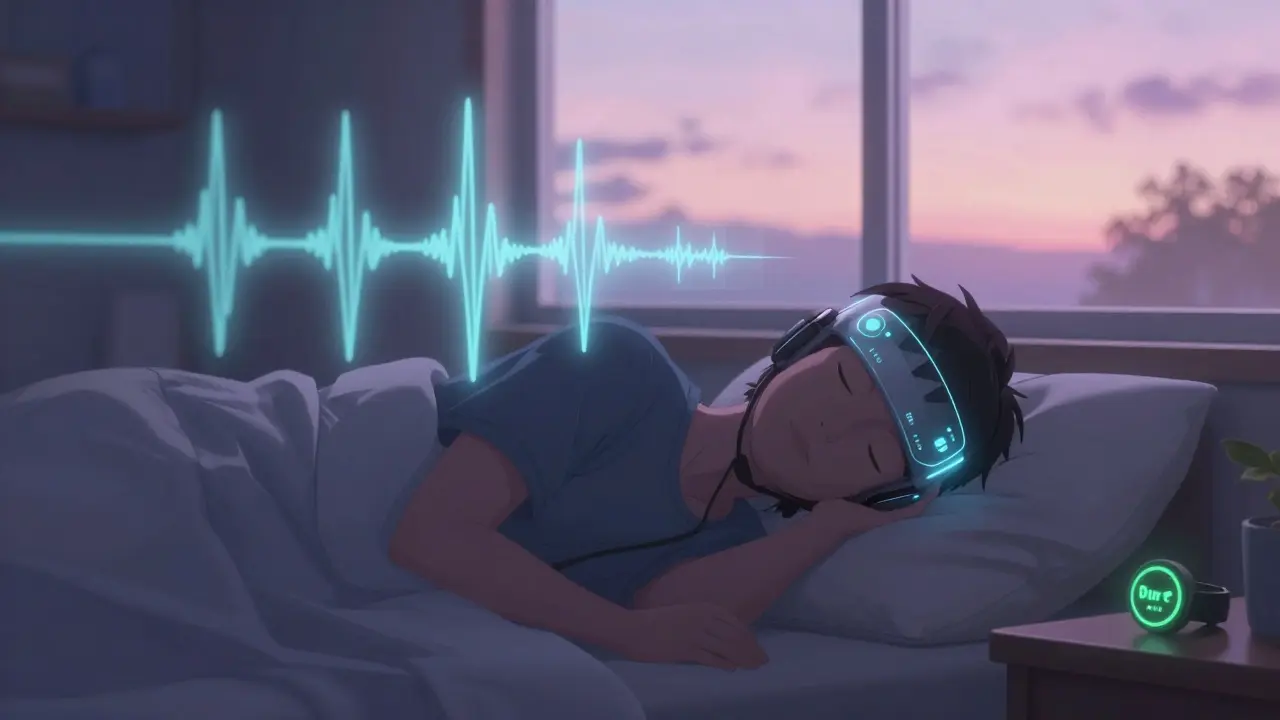
The field is moving fast. In May 2023, the FDA cleared the Lenire is a prescription neuromodulation device that combines sound therapy with mild electrical pulses to the tongue, shown to reduce tinnitus severity in 65% of users-the first device approved for tinnitus that uses both sound and gentle tongue stimulation. It’s not for everyone, and it’s expensive, but it’s proof that science is finding new ways.Widex’s Moment 4.0 are hearing aids with real-time notch therapy that filter out the exact frequency of your tinnitus, helping 61% of users with hearing loss reduce nighttime symptoms now include notch therapy, which removes your specific tinnitus frequency from the sound around you. And apps like Tinnitus Talk is a mobile app with AI that matches your tinnitus tone via smartphone mic and recommends personalized sound therapy, updated in October 2023 use AI to analyze your tinnitus pitch in seconds and suggest the right noise type.
Even more exciting? Research from McMaster University shows a prototype system that adjusts sound therapy in real time using brainwave data. It listens to your brain, not just your ears. Early results show 78% improvement in sleep efficiency. This isn’t science fiction-it’s coming by 2026.
Real People, Real Results
Reddit’s r/tinnitus community has over 48,000 members sharing what works. One user, u/SilentNights87, wrote: “After two years of no sleep, I set my LectroFan to brown noise at 52dB. My sleep onset dropped from 90 minutes to under 30. My Oura Ring confirmed it.”Another, u/EarRinging2023, had hyperacusis: “No sound machine helped. Even low volume hurt. I got custom 15dB earplugs and started CBT. Now I sleep 6 hours a night. It’s not perfect-but it’s enough.”
These aren’t outliers. They’re proof that solutions exist-if you’re willing to test, adapt, and stick with it.
Where to Start Today
You don’t need to fix everything at once. Pick one thing and try it for two weeks:- Buy a $30 fan and leave it on low all night.
- Set a phone reminder to turn off screens at 9 p.m.
- Try brown noise on YouTube for 5 nights.
- Go to bed and wake up at the same time-every day, even Saturday.
Track your progress. Note how long it takes to fall asleep. How many times you wake up. How tired you feel in the morning. Small changes add up.
And if you’re overwhelmed? Call the American Tinnitus Association is a nonprofit that offers free 24/7 support, resources, and referrals for tinnitus sufferers since 1971. They’ve helped people for over 50 years. You’re not alone.
Can tinnitus be cured?
There’s no single cure for tinnitus yet. But for most people, symptoms can be managed effectively so they no longer disrupt daily life or sleep. The goal isn’t to make the sound disappear-it’s to make it irrelevant. Many people reach a point where they barely notice it, even without treatment.
Is tinnitus linked to hearing loss?
About 80% of people with chronic tinnitus also have some degree of hearing loss, often high-frequency. But 20% have normal hearing. That means tinnitus isn’t just a hearing problem-it’s a brain processing issue. Even if your ears are fine, your brain may still be misinterpreting signals.
Can stress make tinnitus worse?
Yes. Stress triggers cortisol release, which increases nerve sensitivity and amplifies tinnitus perception. Studies show cortisol levels spike 25-30% during tinnitus flare-ups. Managing stress through breathing, meditation, or therapy doesn’t eliminate the sound-but it stops it from getting louder because of your reaction to it.
Should I use earplugs at night?
Generally, no. Earplugs block outside noise, which makes your brain focus even harder on the internal ringing. Only consider them if you have hyperacusis (extreme sound sensitivity), and even then, use custom, low-attenuation plugs (10-15dB) under professional guidance. Most people do better with sound masking instead.
How long does it take for sound therapy to work?
Some people feel relief the first night. For most, it takes 7-14 days. Your brain needs time to adapt to the new background sound and stop treating tinnitus as a threat. Consistency is key. Don’t switch devices or sounds every night. Stick with one for at least two weeks before deciding if it works.
Are tinnitus apps worth it?
Some are, some aren’t. Apps like White Noise Lite have high ratings because they’re simple and reliable. But many apps drain battery, glitch, or offer poor sound quality. Avoid apps that claim to “cure” tinnitus. Stick to those that offer clean, customizable noise types (white, pink, brown) and let you control volume precisely. Use them as a tool, not a magic fix.
Will I ever sleep normally again?
Yes. Thousands of people do. It doesn’t happen overnight. But with the right combination of sound, routine, and mindset, your brain learns to filter out the noise. Sleep isn’t about silence-it’s about safety. When your brain feels safe, it stops screaming. And that’s when real rest begins.
Ben Kono
January 12, 2026 AT 11:27I tried brown noise for three nights and my brain finally stopped screaming at me
no more 3am panic about the ringing
just quiet
Rinky Tandon
January 13, 2026 AT 06:59Let me be brutally honest-this post is the epitome of wellness industrial complex nonsense. Sound masking? CBT? Please. Tinnitus is a neurological glitch, not a productivity hack. You’re not ‘training your brain’-you’re gaslighting your own auditory cortex. The real solution is neuroplasticity-targeted neuromodulation, not some $200 fan. And don’t get me started on ‘sleep hygiene’-it’s just bourgeois nonsense wrapped in peer-reviewed jargon. The FDA cleared Lenire because the placebo effect is statistically significant in sleep-deprived populations, not because it’s a cure. Wake up. Your brain isn’t broken. The system is.
Daniel Pate
January 14, 2026 AT 04:49The idea that tinnitus is purely a brain processing issue rather than a sensory one is fascinating but incomplete. If the auditory pathways were truly just misfiring, why does hearing loss correlate so strongly? And why do some people with normal audiograms still experience it? The distinction between peripheral and central mechanisms matters. The brain doesn’t create the signal-it amplifies it. But the signal has to originate somewhere. Maybe it’s cochlear damage we can’t detect with standard tests. Or maybe it’s synaptic noise from overstimulated hair cells. Either way, the fact that sound therapy works at all suggests the brain can be rewired to reinterpret noise as neutral. That’s not magic. That’s neurology.
TiM Vince
January 14, 2026 AT 06:14I’m from Japan and we have a concept called ‘ma’-the space between sounds. In traditional tea ceremonies, silence isn’t empty. It’s full of presence. I used to fight my tinnitus like an enemy. Then I started listening to it like a quiet guest. Not ignoring it. Not fearing it. Just letting it be there, like the hum of a kettle cooling. I use brown noise, but only to soften the edges. The real shift was internal. The sound didn’t disappear. But my relationship to it did. I sleep 7 hours now. Not because of tech. Because I stopped fighting.
gary ysturiz
January 15, 2026 AT 08:20You got this. Seriously. One small step at a time. Try the fan tonight. Just one night. No pressure. No perfection. Just try. You’re not broken. You’re just tired. And you’re not alone. Thousands of us are right here with you. Sleep will come. It always does.
Jessica Bnouzalim
January 16, 2026 AT 01:43Okay but I tried EVERYTHING-white noise, pink noise, brown noise, even ASMR rain sounds-and nothing worked until I started using my Bose QuietComfort headphones on sleep mode with a custom 45dB brown noise loop… and I swear to god, my Oura ring showed I spent 47% more time in deep sleep!!! Also, I turned off ALL screens at 8:30 and started reading physical books and I didn’t even realize how much blue light was wrecking me!!! I’m not even kidding-this changed my life!!!
laura manning
January 16, 2026 AT 02:41There are numerous methodological flaws in the cited studies. The 68% efficacy rate for brown noise comes from a non-blinded, self-reported survey with no control group. The 72% reduction in distress via CBT was measured using the Tinnitus Handicap Inventory-a tool with known ceiling effects and high subjectivity. Furthermore, the claim that ‘78% more likely to report success’ with a 60-minute ritual lacks statistical context: 78% of what? Of the sample? Of baseline? Was it compared to a placebo group? Without proper controls, these figures are anecdotal at best. The post reads like a marketing brochure disguised as medical advice.
Bryan Wolfe
January 17, 2026 AT 17:45Hey-I’ve been here. Two years of no sleep. Panic attacks every night. Thought I’d never rest again. Then I started with just the fan. Just one. Low setting. Didn’t even buy a fancy machine. Just a $25 oscillating fan from Target. And I stuck with it for 14 days. No switching. No doubting. And one morning I woke up and realized-I didn’t even notice the ringing. Not because it was gone. Because I didn’t care anymore. You’re not broken. You’re just exhausted. And you’re so close. Keep going. You’ve got this.
Sumit Sharma
January 18, 2026 AT 02:44As an audiologist with 15 years in clinical practice, I must correct a dangerous misconception: Brown noise is not universally superior. Its efficacy is frequency-dependent. If your tinnitus pitch is above 3 kHz, brown noise may exacerbate perceptual contrast. Green noise is optimal for tonal tinnitus, but only if calibrated via psychoacoustic matching-something 90% of Reddit users never do. Also, ‘sound masking’ is a misnomer. It’s not masking-it’s neural distraction. And CBT works not because of cognitive restructuring alone, but because it reduces sympathetic arousal, which directly modulates cochlear amplification via the olivocochlear bundle. This is not pop psychology. This is neuroaudiology. Stop trusting YouTube gurus. Consult a licensed audiologist with tinnitus specialization. Your brain deserves precision, not placebo.
beth cordell
January 18, 2026 AT 07:40thank you for this 💗 i cried reading this because i finally feel seen
the fan on my desk, the humidifier, the no screens rule-it’s all working
and i’m not fixed but i’m sleeping
and that’s enough for now 🌙
Lauren Warner
January 19, 2026 AT 19:19Interesting how the post conveniently omits that 30% of tinnitus sufferers experience no improvement with any of these interventions-even with CBT and sound therapy. And the ‘real people’ testimonials? All from r/tinnitus, a self-selected community of motivated individuals who are already engaged in treatment. What about the ones who tried everything and still can’t sleep? The ones without insurance? The ones with comorbid PTSD? The post reads like an ad for sleep tech startups, not a clinical guide. It’s tone-deaf to the reality of chronic suffering.
Craig Wright
January 20, 2026 AT 21:06While I appreciate the attempt at scientific rigor, this article is a textbook example of American medical individualism. In the UK, tinnitus is managed through NHS audiology pathways, not DIY sound machines and app-based neurohacking. We have structured multidisciplinary clinics, not a culture of ‘try this fan and your life will change’. The emphasis on personal responsibility-‘stick to a routine’, ‘track your progress’-ignores systemic barriers to care. Many cannot afford a LectroFan. Many cannot access CBT. Many are working three jobs. This is not a failure of willpower. It is a failure of public health policy. The solution is not better noise. It is better healthcare.