
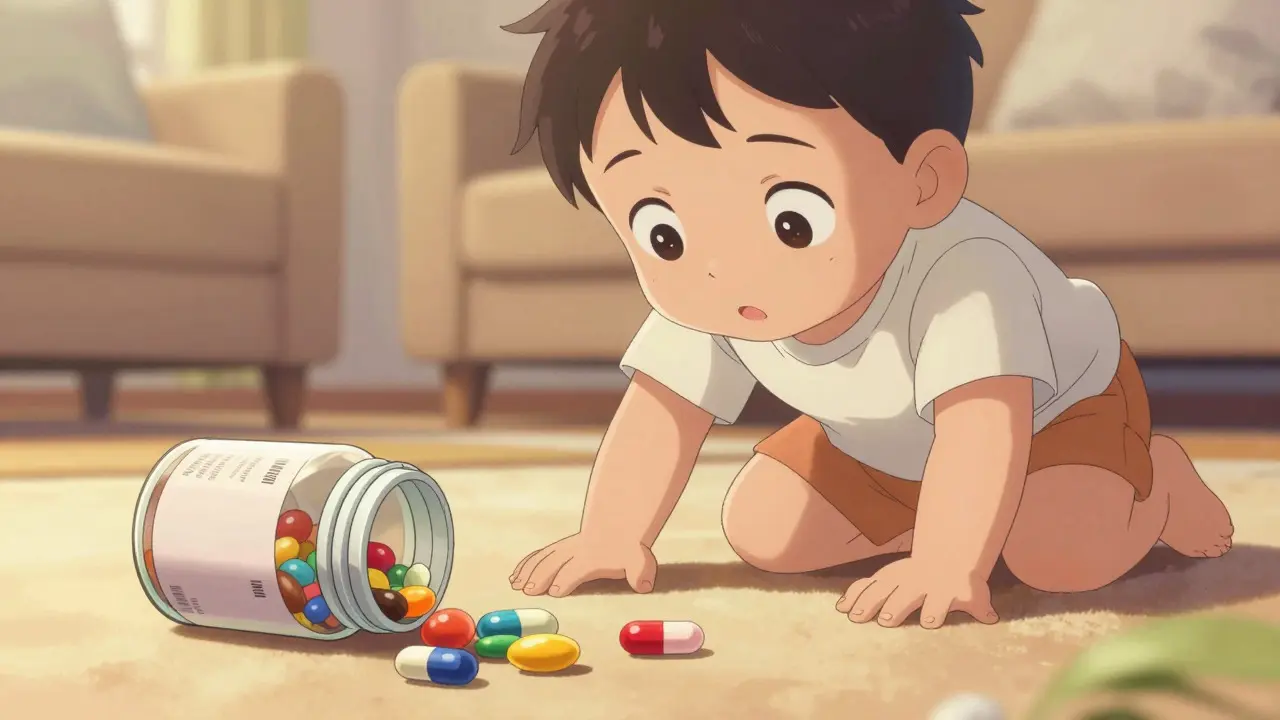
Imagine finding a bottle of colorful pills on the floor. To an adult, it’s just medication. To a curious toddler, it looks like candy. This simple mix-up is behind thousands of emergency room visits every year. In fact, about 50,000 children under five end up in the ER annually for medication safety issues. The good news? Most of these accidents are preventable. By teaching kids age-appropriate rules and storing meds correctly, you can protect them without turning your home into a fortress.
The Core Problem: Why Kids Get Sick from Meds
Children explore the world by putting things in their mouths. It’s how they learn. But when those "things" are opioids, heart medications, or prenatal vitamins, the consequences can be fatal. Even one or two pills of certain adult medications can kill a small child. The Centers for Disease Control and Prevention (CDC) notes that proper storage alone could prevent 67% of incidents involving kids aged 1 to 4. Yet, many parents store meds in bedside tables, kitchen counters, or purses-places kids can easily reach. We often rely on child-resistant caps, but studies show only 29% of parents who use caps actually store meds safely. Locked storage raises that number to 86%. The gap between intention and action is where danger hides.
What is the most common cause of childhood medication poisoning?
Accidental ingestion of adult medications, particularly opioids, heart drugs, and diabetes medications, stored in accessible places like nightstands or purses.
Age-by-Age Safety Rules: What Your Child Should Know
You don’t teach a three-year-old the same way you teach a ten-year-old. The U.S. Food and Drug Administration (FDA) launched the "As They Grow" initiative to help parents match lessons to developmental stages. Here is how it breaks down:
- Age 3: Teach them to give found pills to an adult immediately. Never taste them. If they see another kid touching meds, they should tell a grown-up.
- Age 5: Personalize medicine bottles with stickers so they know whose med is whose. Understand that all meds must stay out of reach of younger siblings. Report if they feel worse after taking a dose.
- Age 6: Start reading labels together. Track timing. Ask doctors questions about why they are taking the medicine.
- Age 7: Learn the full process. Verify labels against instructions. Avoid taking meds in front of toddlers under four, as imitation behavior peaks here.
- Age 8: Know their exact weight. Dosing for kids is weight-based, not just age-based. Knowing this helps them understand why measurements matter.
Dr. Jennifer Lowry from the American Academy of Pediatrics emphasizes that concepts can start as early as age three if presented simply. The key is consistency. Use the phrase "medicine is not candy" every time. Dr. Richard Dart warns that calling medicine "candy" increases ingestion risk by 220%. It creates a dangerous association that lasts years.
Home Storage: Up and Away
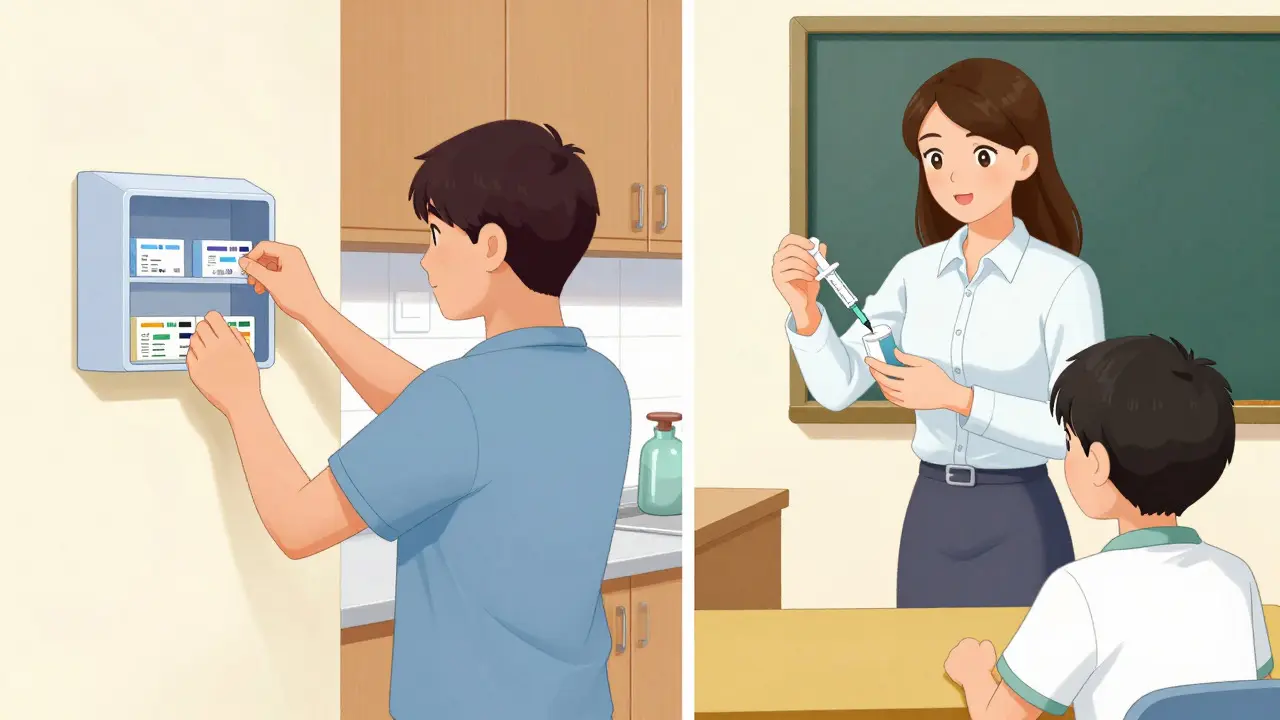
Education fails if the environment isn’t safe. The CDC’s PROTECT Initiative pushes the "up and away" rule. Store medications high up and locked away. A standard child-resistant cap is not enough. Toddlers can open them if given enough time and motivation. Invest in a lock box that meets ASTM F2057-22 safety standards. Keep the Poison Help number (800-222-1222) programmed into your phone. Ninety-one percent of calls to poison control happen within an hour of exposure. Speed saves lives.
Also, watch out for grandparents. Surveys show 79% of grandparents don’t follow storage guidelines when kids visit. Many keep meds in suitcases or purses. Have a gentle conversation with family members before they host your child. It’s not about blame; it’s about creating a unified safety net.
School and Daycare Protocols
Schools play a huge role, especially for kids with chronic conditions like asthma or diabetes. Head Start programs require strict protocols. Staff must complete eight hours of initial training plus annual refreshers. They cover consent, labeling, and side effect recognition. However, gaps exist. Only 39% of U.S. schools have full-time nurses. Rural districts face even bigger challenges, with 68% lacking consistent nursing coverage. This means teachers or aides often handle meds, increasing error risks during transitions between caregivers.
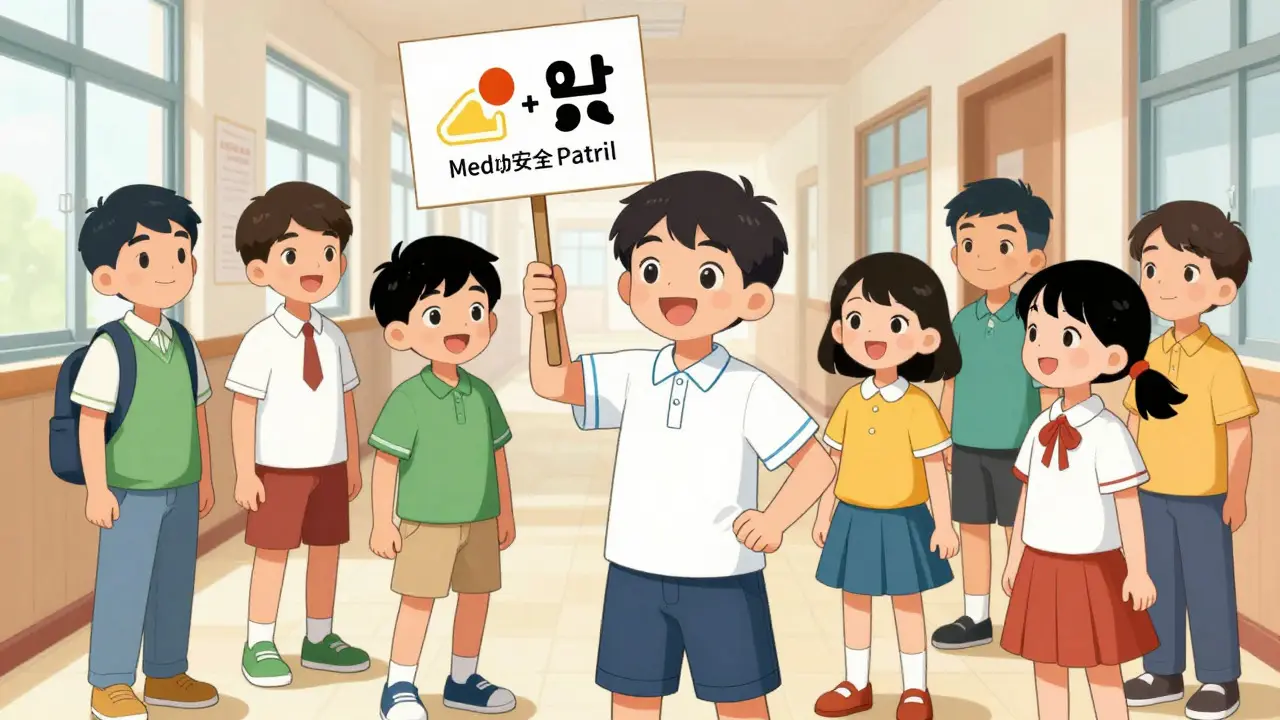
Programs like Generation Rx’s "Medication Safety Patrol" help bridge this gap. Their toolkit includes role-playing activities for grades K-5. Teachers report that 89% of students can correctly identify medicine versus candy after using these materials. Columbus City Schools saw a 34% drop in incidents after implementing this curriculum. If your school doesn’t have a nurse, ask if they use standardized tools like oral syringes instead of household spoons. Household spoons create 40-98% measurement errors. Oral syringes are precise and free at most pharmacies.
| Initiative | Focus Area | Target Audience | Key Resource |
|---|---|---|---|
| FDA "As They Grow" | Developmental milestones | Parents/Caregivers | Age-specific lesson plans |
| CDC PROTECT | Environmental safety | Public/Policy | Locked storage advocacy |
| Generation Rx | Classroom education | Schools/Teachers | Activity sheets/videos |
| Head Start Protocols | Regulatory compliance | Daycare Staff | Mandatory training logs |
Practical Tips for Parents and Educators
Start small. Spend 10-15 minutes a week practicing scenarios. For example, play "store detective" where your child identifies which items are food and which are meds. Use the FDA’s digital platform "Med Safety for Kids" for interactive games for ages 4-10. Always dispose of old meds properly. Flushing isn’t always best; check take-back locations. Document everything. In schools and daycares, 18% of errors come from missing logs. Write down what was given, when, and by whom.
Watch for liquid medications. Brightly colored, flavored liquids are seeing a 45% increase in exposures among under-fives. They look and taste like juice. Treat them with the same caution as pills. And remember, most programs stop teaching at age 10. But prescription misuse peaks at 16. Start conversations early about respect for meds, not just fear of them.
Should I call medicine "candy" to get my child to take it?
No. Calling medicine candy increases ingestion risk by 220%. Always use the word "medicine" to distinguish it from food.
How do I measure liquid medication accurately?
Use an oral syringe with clear dose markings. Household spoons can lead to 40-98% measurement errors.
What should I do if my child swallows a pill?
Call Poison Help at 800-222-1222 immediately. Do not wait for symptoms. Bring the medication bottle if possible.
Are child-resistant caps enough for safety?
No. Only 29% of parents who rely solely on caps store meds safely. Use locked boxes and store meds "up and away."
When should schools involve parents in medication administration?
Always. Written consent is required. Parents should provide labeled meds and clear instructions. Staff should verify details with parents during handoffs.
Veronica Agbanyim
August 1, 2026 AT 05:25It is absolutely shameful how many parents are too lazy to buy a simple lockbox. We keep telling them that child-resistant caps are not foolproof, yet they insist on leaving opioids on the nightstand because it's 'convenient' for their own insomnia. It’s not just an accident waiting to happen; it’s negligence wrapped in ignorance. The statistics about grandparents are particularly damning because it shows a generational refusal to adapt to modern safety standards. If you can’t be bothered to secure your home, maybe you shouldn’t have children. The fact that we still see these preventable ER visits is a testament to our collective lack of responsibility.
Morikeoluwa Ayodeji
August 1, 2026 AT 11:17Hey everyone! Let's shift the focus from blame to action! I’ve been working with families in my community and found that framing medication safety as a 'superpower' for kids works wonders. When we tell a 6-year-old they are the 'Medicine Detective,' they take ownership of the rules. Also, don't underestimate the power of visual cues. Using colored stickers on bottles helps even toddlers distinguish between 'Mom's stuff' and 'Kid's stuff.' Let's support each other in creating safer environments rather than pointing fingers! 🚀
jackie healey
August 2, 2026 AT 20:22I completely agree with the emphasis on storage, but I would like to add a few critical points regarding school protocols, which are often overlooked! First, ensure that all staff members are trained not just in administration, but in recognizing subtle allergic reactions, which can manifest hours after ingestion! Second, digital logging systems have reduced human error by nearly 50% in districts where they are implemented, so push your school board to adopt them! Finally, remember that consistency between home and school is vital; if a child is told one thing at home and another at school, confusion ensues! Let's advocate for better resources!
Fenton Quinn
August 4, 2026 AT 04:20The distinction between fear and respect is crucial here. Fear creates anxiety and secrecy. Respect creates understanding and caution. We must teach children that medicine is a tool, not a toy or a treat. This philosophical shift changes how they interact with their environment.
Lilith Stepanyan
August 4, 2026 AT 08:09Let's be real, most of this advice assumes a middle-class household with disposable income for lockboxes and oral syringes. For low-income families, especially those living in multi-generational homes, 'up and away' is often physically impossible due to space constraints. The article glosses over the systemic issues that make safety a luxury item. It’s easy to preach compliance when you ignore the socioeconomic barriers that prevent it. The data on rural schools lacking nurses isn't just a statistic; it’s a death sentence for some kids with chronic conditions. Stop acting like willpower solves structural inequality.
Tegan Morey
August 6, 2026 AT 07:58That’s a really valid point about accessibility. I’m curious though, do you know if there are any community programs or grants that help provide these safety tools to lower-income families? I’d love to look into supporting something like that locally. It feels like there has to be a bridge between the ideal advice and the reality for struggling households.
charlie student
August 7, 2026 AT 09:09It’s interesting how we view childhood curiosity as a liability rather than a strength. The drive to explore is what makes us human. Perhaps the issue isn’t the child’s behavior, but our failure to design environments that accommodate natural human development without constant danger. We build cars with seatbelts and airbags because we accept risk; why do we treat medicine as an exception to safe design principles?
Gary Browne
August 8, 2026 AT 01:10I bet most of you guys leave your meds out anyway. How many of you actually check the expiration dates on everything in your bathroom cabinet right now? Probably none. You’re all just reading this and nodding along while ignoring the basic hygiene of your own homes. It’s pathetic really. People need to stop making excuses and start cleaning up their act.