
Medication Safety Risk Calculator
This tool helps you assess your home's medication safety based on your storage habits. Answer the questions below to get a personalized risk assessment and actionable recommendations.
Every year, 60,000 children under age five end up in emergency rooms because they accidentally swallowed medicine they found lying around. And it’s not just kids-pets are at risk too. A dog might chew through a pill bottle. A cat could lick residue off a countertop. These aren’t rare accidents. They’re predictable-and preventable.
Why Your Medicine Cabinet Isn’t Enough
Most people think if their meds are in a cabinet, they’re safe. That’s a dangerous assumption. A 2023 CDC survey found that only 22% of households with kids and pets use locked storage. The rest rely on child-resistant caps, which only block 50-80% of children. Even worse, many pets can open those same bottles in under two minutes. VCA Animal Hospitals tested this: 65% of dogs figured out how to open standard pill vials faster than you can make coffee. And it’s not just about the container. Where you store the meds matters more than you think. Nightstands, purses, countertops, kitchen drawers-these are all high-risk zones. Nationwide Children’s Hospital found that 80% of pediatric poisonings happen when kids access meds left in plain sight. Kids as young as 18 months can climb onto furniture to reach them. Pets don’t need to climb-they just sniff and chew.The Real Rules for Safe Storage
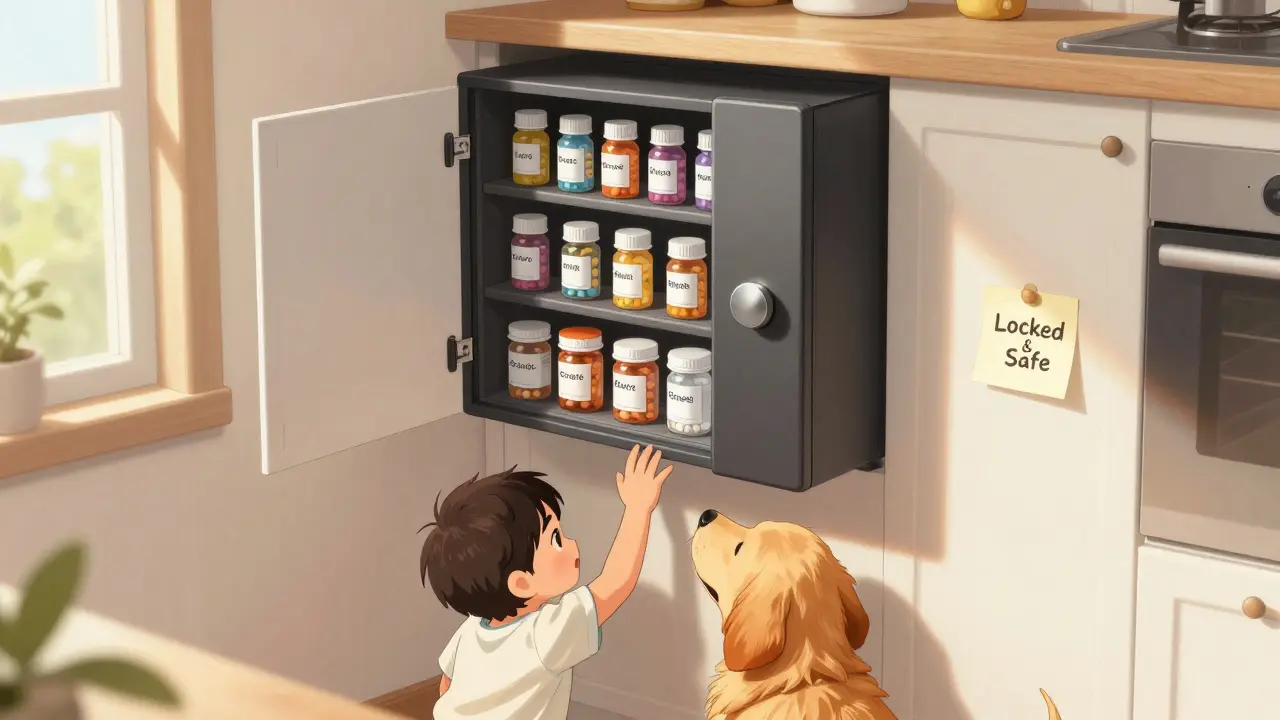
There’s one rule that beats all others: lock it up. Not just any lock. Not a simple latch. A real lock. A key or combination lock that even a teenager can’t easily bypass. The American Academy of Pediatrics says locked storage reduces accidental ingestions by 76%. Other studies show it cuts pediatric poisonings by 92%. Here’s what you actually need to do:- Keep all medications-human and pet-in a locked box or cabinet.
- Mount it at least 4 feet off the floor. Some experts recommend 5 feet, especially if you have toddlers or climbing pets.
- Use a container that meets UL TRTL-30x6 standards if you store opioids or other controlled substances.
- Never leave pills in a purse, on a bedside table, or in a bathroom cabinet. Bathrooms are humid, and humidity ruins medicine.
Human and Pet Medications Must Be Stored Separately
This is the part most people get wrong. You wouldn’t store dog food next to your cereal. So why store pet meds next to your blood pressure pills? Pet medications are often flavored-banana, chicken, peanut butter-to make them easier to give. That makes them irresistible to kids. FDA data shows flavored pet meds increase a child’s risk of accidental ingestion by 300%. And some pet drugs are deadly to humans. A single 5mL dose of veterinary ivermectin (used for heartworm prevention) contains ten times the toxic dose for a child. Veterinary research also warns that topical human medications like 5-fluorouracil cream can kill a cat with just 0.5mg of exposure. That’s less than a drop. And it’s not just cats-horses get dewormer paste that tastes like candy. Dogs have died after eating it, mistaking it for a treat. The CDC says storing human and pet meds in separate locations reduces mix-up errors by 89%. That means one locked box in the bedroom for your pills, and another locked box in the garage or laundry room for your dog’s heartworm pill. Fifteen feet apart, according to updated AAP guidelines in February 2024, reduces errors by 94%.Temperature, Humidity, and Packaging Matter More Than You Think
Medicines aren’t like socks. They degrade. Heat, moisture, and light ruin them. The FDA says 70% of human medications need to be kept between 68-77°F (20-25°C). A quarter need refrigeration. Pet meds are more forgiving-most tolerate 50-85°F-but mixing them together creates problems. If you store both in the same place, you’re either risking your meds going bad or your pet’s meds getting too cold. Humidity is the silent killer. Moisture can degrade 40% of common medications within 30 days. That’s why bathrooms are terrible for storage. Kitchen pantries? Much better. They’re drier, cooler, and less likely to be accessed by curious hands or noses. And never, ever transfer pills to unmarked containers. CDC data shows 35% of medication errors happen because someone poured pills into a spice jar, candy dish, or pill organizer without labeling it. Keep everything in the original bottle with the label intact. That’s how you avoid giving your child the wrong dose-or your dog a human dose of something toxic.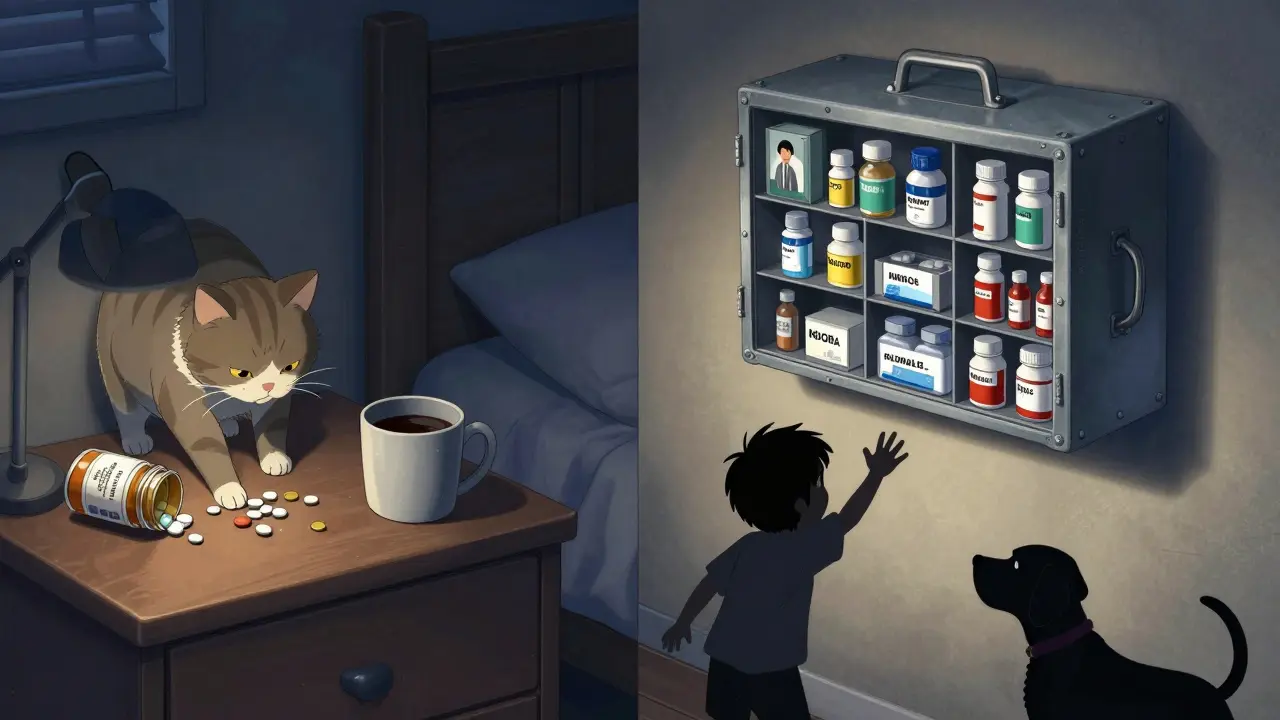
What Storage Solutions Actually Work?
You don’t need to spend hundreds. The minimum effective solution? A $24.99 wall-mounted lockbox tested by Consumer Reports in 2023. It’s small, mounts to the wall, and takes a key or combination. Many families already own something better: an unused gun safe, a toolbox, or even a locked filing cabinet. These work perfectly. One Reddit user shared that after installing a $35 gun safe for meds, their two-year-old stopped climbing onto counters to reach pills. No more scares. No more ER visits. For households with elderly members who struggle with child-resistant caps, install a lockbox at a lower height with an emergency release. That way, adults can still access meds quickly in an emergency, but kids and pets can’t.Common Mistakes and Real-Life Failures
People think they’re safe because they have “child-resistant” packaging. They don’t realize that’s not the same as “child-proof.” Here’s what goes wrong:- Leaving meds on the nightstand because you take them right before bed.
- Storing pet meds near the food bowl because it’s “convenient.”
- Keeping old pills in a drawer because you “might need them again.”
- Flushing meds down the toilet because you don’t know how to dispose of them safely.
How to Make This Stick
Changing habits takes time. The CDC says it takes 21-30 days of consistent practice to make locked storage a routine. Use visual reminders: stick a note on the fridge. Put a lockbox label on the door. Set a weekly alarm to check that everything’s still locked. Do a quick audit every week. Count your pills. Check expiration dates. Toss expired meds at a take-back event. The DEA’s National Take Back Day (October 26, 2024) will have over 11,000 drop-off locations across the U.S. And talk to your pharmacist. Only 55% of pharmacies give clear storage instructions with prescriptions. Ask them: “Where should I keep this?” If they don’t know, ask for the FDA guidelines. You’re not being difficult-you’re being responsible.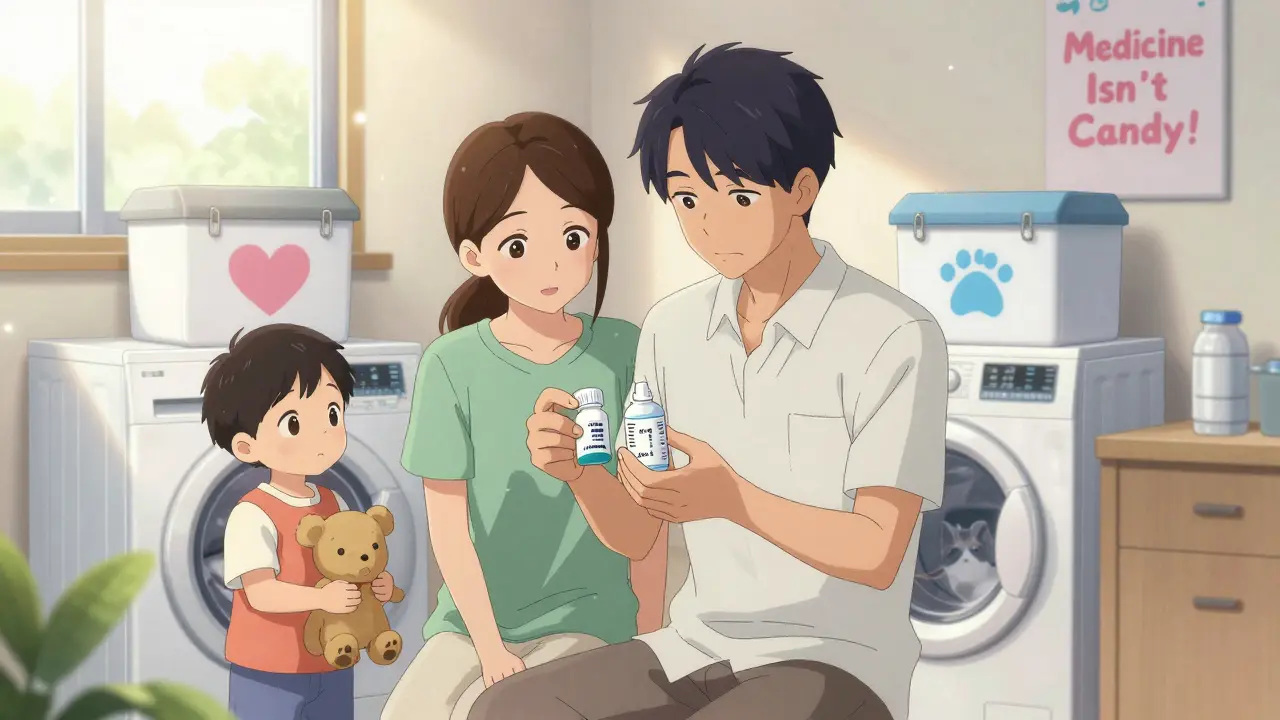
Why This Isn’t Just Common Sense-It’s Science
This isn’t about being paranoid. It’s about physics, biology, and behavior. Kids explore with their mouths. Pets explore with their noses and teeth. Medications are small, colorful, and sometimes sweet. They look like candy. They smell like treats. The science is clear: locked storage works. Separate storage works. Proper labeling works. Temperature control works. The National Safety Council predicts that if every household followed these steps, we could prevent 180,000 emergency room visits every year. That’s not a guess. That’s a projection based on real data from poison control centers, hospitals, and veterinary clinics. You don’t need a fancy system. You don’t need to buy a smart pill dispenser (though they’re coming). You just need to lock it up. Keep it high. Keep it dry. Keep it separate. And never assume someone else will do it for you.What to Do If Something Goes Wrong
If a child or pet swallows medicine they shouldn’t have:- Call Poison Control immediately: 1-800-222-1222 (U.S.) or your local emergency number.
- Don’t wait for symptoms. Don’t induce vomiting unless told to.
- Have the pill bottle ready. Tell them the name, dose, and time ingested.
- For pets, contact your vet or the ASPCA Animal Poison Control Center: 1-888-426-4435.
Can child-resistant caps alone keep kids safe from medicine?
No. Child-resistant caps are designed to slow down kids, not stop them. Testing by the Consumer Product Safety Commission shows they prevent only 50-80% of accidental ingestions. Children as young as 18 months can figure out how to open them. Locked storage is the only reliable method.
Is it safe to store human and pet medications together?
No. Pet medications are often flavored to make them palatable to animals-but that makes them irresistible to children. Some pet drugs, like ivermectin or 5-fluorouracil, are deadly to humans or cats even in tiny amounts. Storing them separately reduces mix-up errors by 89%.
Where’s the best place to store medications at home?
A locked box mounted on a wall or inside a cabinet, at least 4 feet off the ground, in a cool, dry place like a kitchen pantry or bedroom closet. Avoid bathrooms and nightstands-they’re too humid and too accessible.
Do I need to keep every pill in its original bottle?
Yes. The CDC reports that 35% of medication errors happen when pills are moved to unmarked containers like spice jars or pill organizers. Original labels have dosage info, expiration dates, and warnings. Never transfer meds unless you label them clearly and store them securely.
What should I do with expired or unused medications?
Don’t flush them or throw them in the trash. Take them to a DEA National Take Back Day collection site (over 11,000 locations in 2024), or ask your pharmacy if they offer a disposal program. This prevents accidental ingestion and environmental harm.
Are smart pill dispensers worth it for families with kids or pets?
They can help, but they’re not a replacement for locked storage. Smart dispensers are great for reminding adults to take meds, but they don’t stop a curious child or pet from opening the device. The CDC says behavioral habits-like locking meds away-are still the most effective way to prevent poisonings.
Sue Stone
January 23, 2026 AT 11:32Just bought a $25 lockbox after reading this. My toddler was climbing on the counter to reach my insulin. No more scares. Done.
Stacy Thomes
January 23, 2026 AT 16:10MY DOG ATE MY HUSBAND’S HEART MEDS LAST YEAR. He was in the ICU for three days. I didn’t know pet meds could kill humans. I’m crying right now. Lock everything. EVERYTHING. I wish I’d known sooner.
Oladeji Omobolaji
January 24, 2026 AT 21:35In Nigeria, we just keep pills in a high cupboard. No locks. But we also don’t have flavored pet meds. Maybe that’s why we don’t see this problem as much.
Vanessa Barber
January 25, 2026 AT 19:51Lock it up? Really? That’s your solution? What about teaching kids not to touch things? Maybe if we stopped treating them like they’re going to eat everything, they’d learn boundaries.
dana torgersen
January 26, 2026 AT 14:12...i mean, like, i get it, right? meds are dangerous, yes, yes, but... isn’t it kind of... overkill? like, we’re not living in a horror movie. kids are curious, sure, but... locking everything feels... i don’t know... paranoid? maybe we just need to... breathe? and... trust? maybe?
Janet King
January 27, 2026 AT 12:53The CDC data cited is accurate. Locked storage reduces pediatric ingestions by 92%. The American Academy of Pediatrics updated its guidelines in February 2024 to recommend a minimum 15-foot separation between human and pet medications. This is evidence-based, not opinion. Implementation is simple and cost-effective. Please act on this information.
Dawson Taylor
January 29, 2026 AT 12:53Human behavior drives risk. Children explore orally. Pets explore chemically. Medications mimic candy in form and scent. The solution is environmental control, not behavioral correction. The science is settled.
Sallie Jane Barnes
January 30, 2026 AT 12:58You can do this. It’s not hard. Just one box. One lock. One habit. Your child, your pet, your peace of mind - it’s worth it. Start today. You’ve got this.
charley lopez
January 30, 2026 AT 22:15Storage protocols for pharmaceuticals are governed by USP <61> and <62> for microbial limits and stability. Ambient humidity above 60% RH degrades lactose-based formulations at a rate of 0.8% per day. Topical fluorouracil is a vesicant with dermal LD50 of 0.3 mg/kg in felines. The UL TRTL-30x6 standard provides 30-minute resistance to mechanical and thermal intrusion. Compliance is non-negotiable.
Andrew Smirnykh
January 31, 2026 AT 21:43I grew up in a home where medicine was kept in the bathroom. We never had an accident. But I also never had flavored pet meds or toddlers. Times change. Maybe we need to adapt without judgment.
Kerry Moore
February 2, 2026 AT 11:00This is important. I’ve seen families struggle after accidents. I’m sharing this with my book club. We’re going to buy lockboxes for everyone who has kids or pets. Small step. Big impact.
Laura Rice
February 3, 2026 AT 14:39my lil one just turned 2 and she’s a little climber 😭 i used to keep my blood pressure pills in my purse... now they’re in a locked box on the top shelf of the closet. i feel so much better. also, i threw out all the old pet meds i had laying around. thanks for the nudge.
Kerry Evans
February 4, 2026 AT 23:11People who don’t lock up their meds are irresponsible. If your child gets poisoned, it’s not an accident - it’s negligence. Stop making excuses. Lock it. Now.