
When lawmakers rewrite bills on the fly, it’s not just about wording-it’s about power. Between 2023 and 2025, the U.S. House of Representatives overhauled how amendments can be substituted during committee markups and floor debates. These weren’t minor tweaks. They reshaped who gets to change legislation, when, and under what conditions. If you’ve ever wondered why some bills move fast while others stall, the answer often lies in these new substitution rules.
What Exactly Is Amendment Substitution?
Amendment substitution lets a lawmaker replace an existing proposed change to a bill with a completely new version. Before 2023, any member could drop in a new amendment text at the last minute-even if it completely changed the bill’s intent. This was called the ‘automatic substitution right.’ It gave the minority party leverage to insert controversial language, sometimes called ‘poison pills,’ to block bills or force compromises.
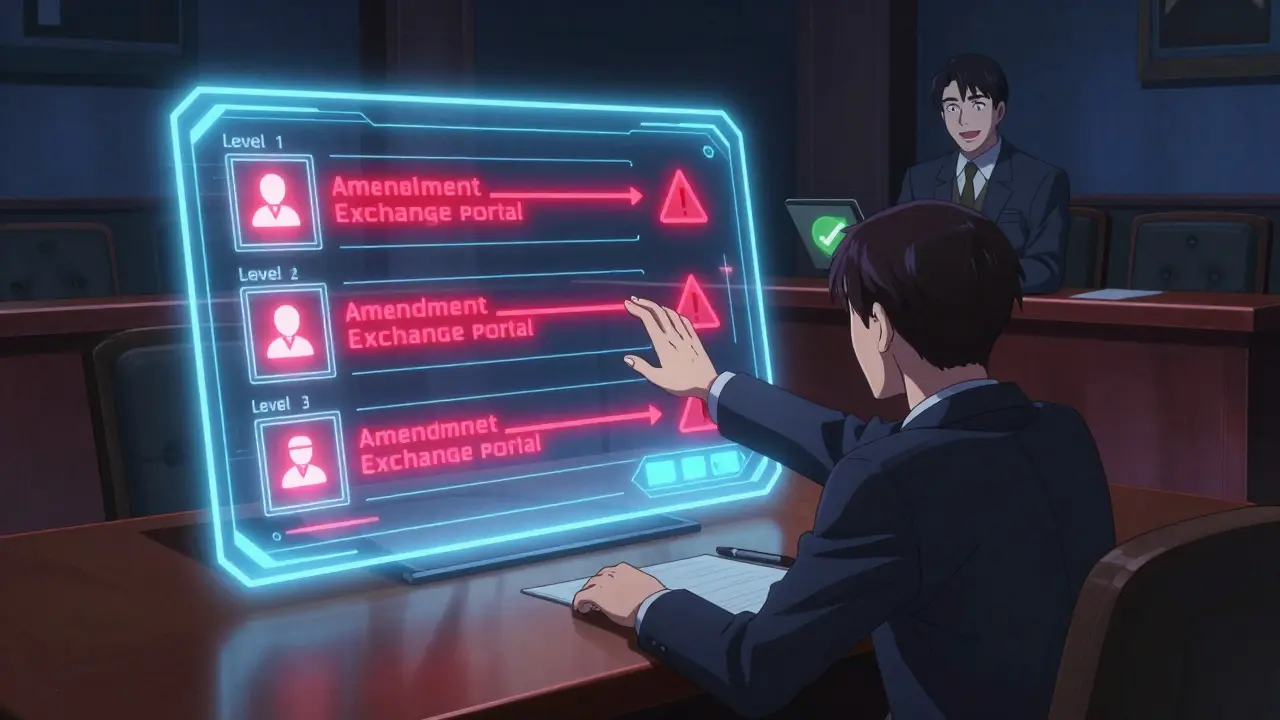
Now, that’s gone. Under the new rules, you can’t just swap out text on the floor. You have to file your substitution at least 24 hours in advance through the Amendment Exchange Portal, a digital system launched in January 2025. You must specify every line you’re replacing, explain why, and classify your change as Level 1, 2, or 3 based on how much it alters the bill’s substance.
The Three Levels of Substitution
The House introduced a new scoring system to sort substitutions by impact:
- Level 1: Minor wording fixes-like correcting typos or clarifying grammar. These need no committee approval.
- Level 2: Procedural or technical changes-like adjusting effective dates or reorganizing sections. These require simple majority approval from the new Substitution Review Committee.
- Level 3: Major policy shifts-adding new funding, removing key provisions, or changing legal standards. These now need 75% approval from the committee, up from 50% before.
This system was designed to stop last-minute surprises. In 2024, over 40% of amendments submitted during committee markups were Level 3 changes filed at the last minute. That number dropped to 12% in the first quarter of 2025.
How the New Review Process Works
Every standing committee now has a five-member Substitution Review Committee: three from the majority party, two from the minority. When someone files a substitution, the committee has just 12 hours to approve or reject it. If they don’t act in time, the substitution is automatically rejected.
This has sped things up. According to the House Rules Committee, amendment processing time dropped by 37% in early 2025 compared to the same period in 2024. Bills are moving out of committee faster. In fact, 28% more bills passed committee markup in Q1 2025 than in Q1 2024.
But speed isn’t the whole story. Minority party members filed 58% more formal objections to rejected substitutions in 2025 than in 2024. That’s not because they’re being more aggressive-it’s because they’re being shut out more often.

Who Wins and Who Loses?
The majority party clearly benefits. The Brookings Institution found that the new rules give the majority 62% more control over substitutions than the 117th Congress had in 2021. The elimination of automatic substitution rights means minority members can’t just drop in a radical amendment and force a vote.
Republican leadership says this brings order. House Rules Committee Chairman Michael Johnson called the old system a “free-for-all” that paralyzed the chamber. A May 2025 survey of 127 committee staff showed 68% of majority party staff rated the new system as “more efficient.”
But minority members say it’s rigged. Representative Pramila Jayapal (D-WA) had her substitution to H.R. 1526 rejected because the portal misclassified her change as Level 3. She argued it was only Level 2-a technical adjustment. The system didn’t care. It flagged it as major policy change, and the committee didn’t approve it in time.
That’s the real problem: the system is automated, and automation doesn’t understand nuance. A 2025 Congressional Research Service report noted that 43% of first-time filers in January 2025 made metadata errors. Even after training, 17% still got it wrong.
Senate vs. House: A Stark Contrast
The Senate hasn’t changed its substitution rules. There’s no portal. No review committee. Just a 24-hour notice requirement. That means Senate amendments can still be swapped out quickly, even on the floor.
The result? Substitution in the Senate is 43% faster than in the House. But it’s also messier. In May 2025, when Congress rushed to pass disaster relief funding, 67% of the amendments in the House needed special rule waivers just to get processed in time. In the Senate, those same amendments moved through without a hitch.
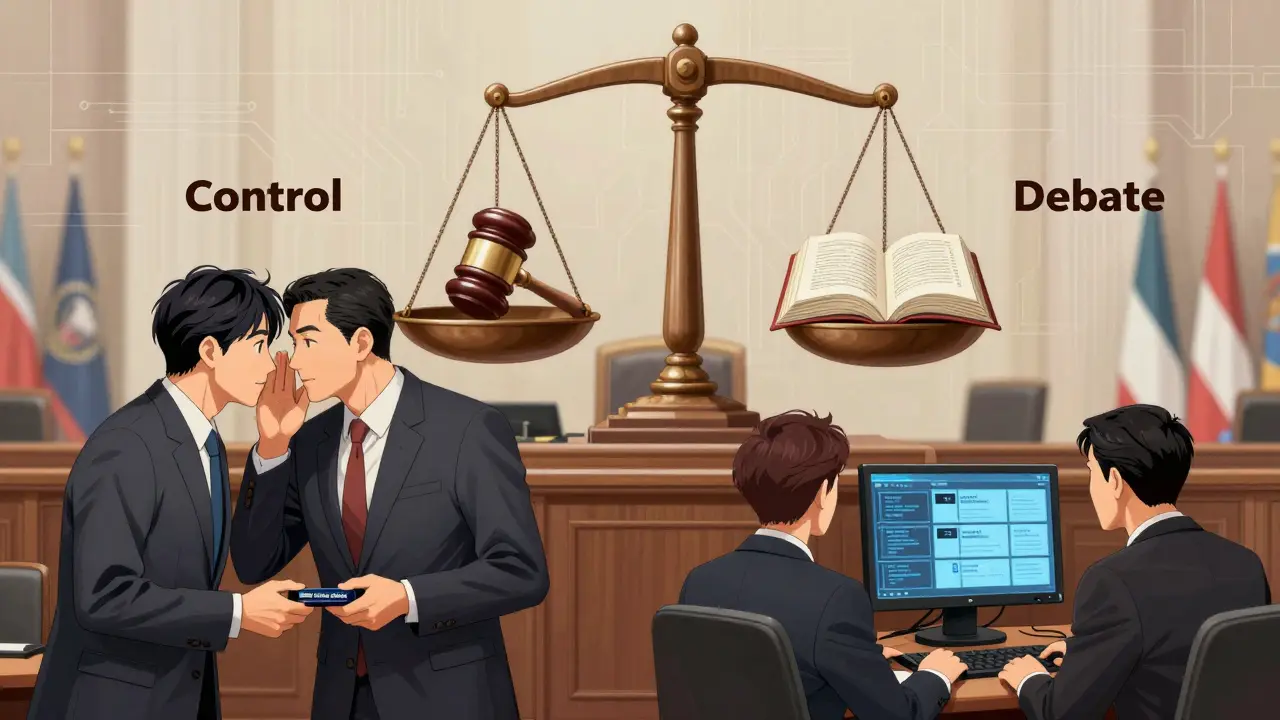
This creates a two-track system. The House prioritizes control. The Senate prioritizes flexibility. And bills often get stuck in the middle.
Real-World Impact on Policy and Lobbying
These changes didn’t just affect how Congress works-they changed how lobbyists work. Major lobbying firms like Quinn Gillespie & Associates restructured their teams in early 2025. Instead of targeting floor votes, they now focus on committee staff. Why? Because substitutions are decided in committee, not on the floor.
Lobbying spending shifted too. In the first half of 2025, committee-specific lobbying increased by 29%, while floor lobbying dropped. Firms now hire former committee clerks and train lobbyists to understand the Amendment Exchange Portal’s metadata requirements.
Even state legislatures took notice. Between 2023 and 2025, 78% of statehouses adopted similar substitution restrictions, according to the National Conference of State Legislatures. The trend is clear: centralized control is winning over open debate.
Legal and Democratic Concerns
Not everyone sees this as progress. The Constitutional Accountability Center filed an amicus brief in May 2025 arguing the new rules violate the First Amendment by restricting lawmakers’ ability to propose changes. Others worry about the Constitution’s Presentment Clause, which requires bills to be presented to the President exactly as passed by Congress. If substitutions are too tightly controlled, critics say, the final bill might not reflect the true will of the chamber.
And then there’s transparency. The House doesn’t publish what the Substitution Review Committee says during its 12-hour review window. That’s why Representative Jim Jordan and others introduced the Substitution Transparency Act (H.R. 4492) in June 2025. It would require all committee deliberations to be made public within 72 hours. The bill is still in committee.
What’s Next?
The rules are still being tweaked. In July 2025, the House Rules Committee revised the Level 3 classification guidelines after bipartisan complaints about inconsistent rulings during the energy policy markup. But the core structure remains: majority control, digital filing, strict timelines.
The Brennan Center warns this could backfire after the 2026 elections. If the House flips parties, the new majority might scrap the whole system. The Heritage Foundation, meanwhile, believes these changes are here to stay.
One thing’s certain: if you’re tracking legislation now, you need to know more than just the bill number. You need to know if it’s being amended under the old rules or the new ones. And you need to know whether the change was Level 1, 2, or 3-and whether the committee had time to approve it.
The legislative process isn’t broken. It’s just different. And if you’re not paying attention to the details in the Amendment Exchange Portal, you’re missing the real story behind every bill that passes.
What is the Amendment Exchange Portal?
The Amendment Exchange Portal is a digital system launched in January 2025 that requires all amendment substitutions in the U.S. House of Representatives to be filed electronically at least 24 hours before committee markup. It enforces metadata standards, including line-by-line change tracking, justification, and classification of substitution severity (Level 1, 2, or 3).
How do Level 1, 2, and 3 substitutions differ?
Level 1 substitutions are minor wording fixes and require no approval. Level 2 are procedural changes like reorganizing sections and need a simple majority vote from the Substitution Review Committee. Level 3 are major policy changes, like adding funding or removing key provisions, and now require 75% committee approval-up from 50% before 2025.
Why was the automatic substitution right eliminated?
The automatic substitution right, which allowed any member to replace an amendment without approval, was eliminated to reduce last-minute, disruptive changes-often called ‘poison pills’-that could derail bills. House leadership argued it was necessary to restore efficiency and prevent minority obstruction.
Do these rules apply in the Senate?
No. The Senate still allows substitution with only a 24-hour notice and no formal review committee. This makes the Senate process faster but less controlled than the House’s new system.
How has the new system affected minority party influence?
Minority party influence has declined significantly. A Brookings Institution analysis found minority input in the amendment process dropped by 41% based on historical adoption rates. Minority staff report 83% of them view the system as restrictive, while 68% of majority staff rate it as more efficient.
Are there any legal challenges to these rules?
Yes. The Constitutional Accountability Center filed an amicus brief in May 2025 arguing the rules unconstitutionally restrict representative speech under the First Amendment. Some lawmakers also warn the system may violate the Presentment Clause by limiting how amendments are considered before a bill is sent to the President.
What’s the Substitution Transparency Act?
H.R. 4492, introduced in June 2025, would require the House Substitution Review Committee to publicly release its deliberations within 72 hours of making a decision. The bill is currently in the House Oversight Committee and aims to increase accountability in a system critics say lacks transparency.
siva lingam
January 22, 2026 AT 23:02Don Foster
January 24, 2026 AT 11:32Luke Davidson
January 24, 2026 AT 18:46Karen Conlin
January 24, 2026 AT 19:48Heather McCubbin
January 25, 2026 AT 01:39Amelia Williams
January 26, 2026 AT 15:42Viola Li
January 26, 2026 AT 19:13Sharon Biggins
January 27, 2026 AT 19:38John McGuirk
January 29, 2026 AT 10:52Michael Camilleri
January 29, 2026 AT 22:41Phil Maxwell
January 30, 2026 AT 16:21