

Rebound Congestion Recovery Planner
Customize Your Plan
Your Healing Roadmap
Daily Action Checklist
Select your methods and click "Generate" to see your personalized path to clear breathing.
You spray it. Your nose clears instantly. You breathe easy for a few hours. Then, the blockage returns-harder than before. So you spray again. Before you know it, you are using that little bottle three or four times a day, and your nose feels permanently stuffed. If this sounds familiar, you aren't just dealing with allergies or a cold. You are likely trapped in a cycle known as rhinitis medicamentosa, also called rebound congestion or medication-induced rhinitis.
This condition is not a mysterious new illness. It is a direct result of overusing topical nasal decongestants like oxymetazoline (found in brands such as Afrin), phenylephrine, or xylometazoline. These sprays work by shrinking swollen blood vessels in your nasal passages. But when you use them for more than three to five days, your body rebels. The blood vessels lose their ability to regulate themselves and swell up even bigger once the drug wears off. This creates a dependency loop where you need the spray just to breathe normally.
The good news? It is reversible. The bad news? Breaking the habit requires patience and a solid plan. Here is how to understand what is happening to your nose and exactly how to fix it.
Why Your Nose Gets Stuck on Decongestants
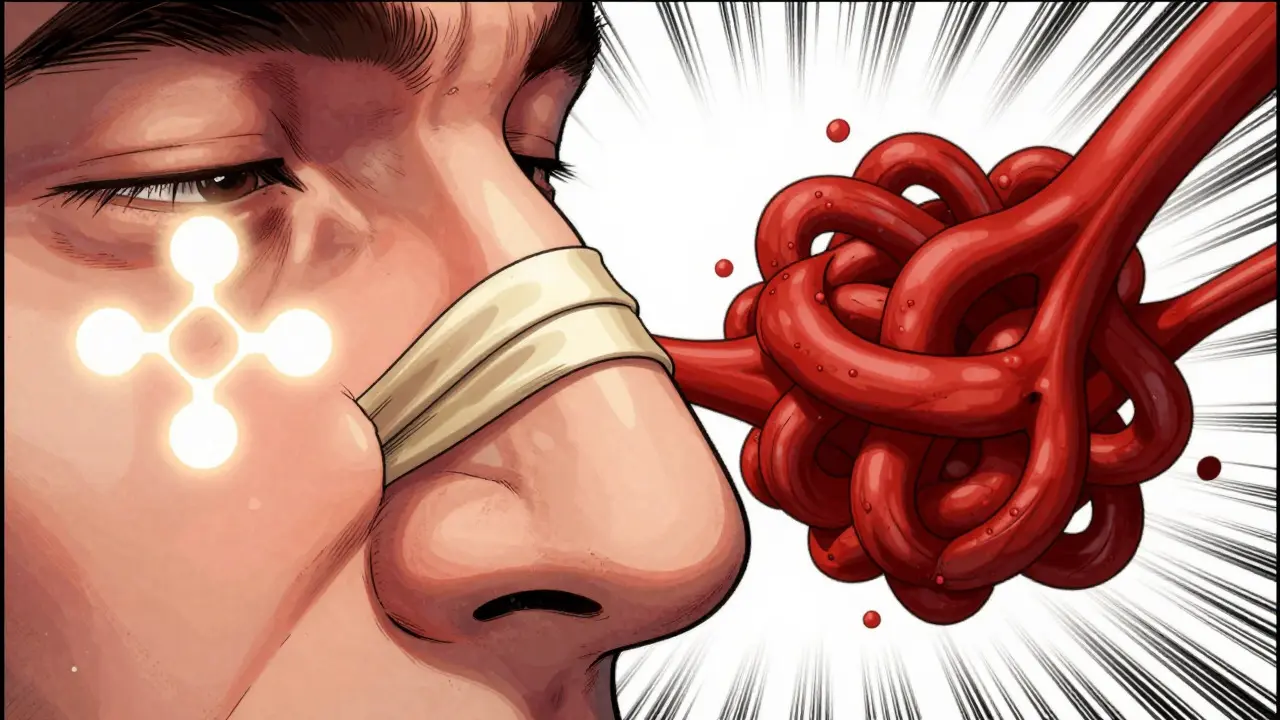
To fix the problem, you first need to understand the mechanism. Think of the blood vessels in your nasal lining like elastic bands. When you have a cold or allergies, these bands stretch out (vasodilation), causing swelling and congestion. Topical decongestants force those bands to snap tight (vasoconstriction), opening up your airways immediately.
However, elasticity has limits. According to data from the National Center for Biotechnology Information (NCBI), prolonged exposure to these vasoconstrictors causes the receptors on your blood vessels to become desensitized. After about three to seven days of daily use, the vessels stop responding naturally. They stay constricted only while the drug is active. As soon as the medication fades, they rebound into severe vasodilation. This is why the congestion feels worse after each dose.
This phenomenon was first clinically described in the 1950s, but it remains a massive issue today. The Cleveland Clinic estimates that approximately 10% of people who use these sprays beyond recommended durations develop full-blown rhinitis medicamentosa. In the United States alone, there are an estimated 500,000 diagnosed cases annually. The physical signs are distinct: your nasal mucosa becomes red, granular, and eventually pale and edematous (swollen with fluid). In severe, long-term cases, the tissue can become atrophic and crusty.
Recognizing the Signs of Rebound Congestion
How do you know if your stuffy nose is caused by a virus or by your own medication? Look for these specific patterns:
- The Time Factor: Have you been using a nasal spray containing oxymetazoline, phenylephrine, or xylometazoline for more than three to five days?
- The Frequency Creep: Did you start spraying twice a day, then move to every four hours, and now feel the urge to spray constantly?
- The Absence of Other Symptoms: Unlike a cold or sinus infection, rhinitis medicamentosa typically presents with congestion but without significant runny nose (rhinorrhea) or fever.
- Nighttime Struggles: Many patients report severe difficulty sleeping, mouth breathing, and dry mouth because the congestion peaks when they lie down.
If you check these boxes, your nose is likely dependent on the spray. Continuing to use it will not solve the problem; it will only deepen the cycle. The NHS warns that using these sprays for longer than one week makes stuffiness significantly worse, with clinical evidence showing that 92% of users who exceed ten days develop some degree of rebound congestion.
The Two Main Strategies to Quit
Stopping the spray is the only way to cure rhinitis medicamentosa. There is no magic pill that fixes the underlying receptor damage overnight. However, going "cold turkey" can be miserable. Most experts agree on two primary methods for discontinuation, and your choice depends on your pain tolerance and lifestyle.
Method 1: The One-Nostril Approach
This is often considered the most humane way to quit. Recommended by physicians at Mayo Clinic, this method involves stopping the spray in one nostril completely while continuing to use it in the other. You keep the second nostril clear so you can still breathe somewhat comfortably during sleep and daily activities.
It usually takes about five to seven days for the first nostril to heal and regain its natural function. Once that side is clear, you stop the spray in the second nostril and go through the same process. While this extends the total timeline to roughly two weeks, patient surveys indicate that 63% of people find this approach manageable compared to only 41% who attempt to stop both sides simultaneously.
Method 2: Cold Turkey Discontinuation
Some people prefer to rip the band-aid off. You stop using the spray in both nostrils at the same time. Expect the first three to five days to be difficult. You may experience severe congestion, poor sleep, and headaches. However, many patients report that the intensity drops sharply after day five. This method is faster but requires strong support systems, such as sleeping propped up on extra pillows or using a humidifier.
Managing Withdrawal Symptoms
Quitting the spray doesn't mean you have to suffer in silence. Several evidence-based interventions can ease the transition and speed up healing.
Intranasal Corticosteroids
This is the gold standard for managing withdrawal. Drugs like mometasone furoate (Nasonex) or fluticasone propionate (Flonase) reduce inflammation in the nasal tissues without causing rebound effects. Clinical studies show that using these steroids consistently for two to four weeks during withdrawal reduces symptoms by 68% to 75%. Start using the steroid spray a few days before you stop the decongestant, and continue it throughout the healing process. Remember, these medications take time to build up effectiveness, so consistency is key.
Saline Nasal Irrigation
Simple salt water rinses are incredibly effective. A systematic review published in the Journal of Allergy and Clinical Immunology found that saline irrigation provided symptomatic relief for 60% of patients. Use a neti pot or squeeze bottle to flush out mucus and irritants. Aim for every two hours during the first few days of withdrawal. This keeps the nasal passages moist and helps clear the crusty debris that forms in advanced cases.
Oral Corticosteroids (For Severe Cases)
If your congestion is debilitating, a doctor might prescribe a short course of oral steroids, such as prednisone. A 2021 multicenter trial showed an 82% efficacy rate for a five-day tapering dose. This is a powerful tool but should be used cautiously due to potential side effects like mood changes and blood sugar spikes. Always consult a healthcare provider before starting oral steroids.
| Strategy | Effectiveness | Pros | Cons |
|---|---|---|---|
| Cold Turkey | High (if adhered to) | Fastest resolution | Severe initial discomfort, high relapse risk |
| One-Nostril Method | High | Manageable symptoms, better sleep | Takes longer (up to 2 weeks) |
| Intranasal Steroids | 68-75% symptom reduction | Reduces inflammation, safe for long term | Takes days to become fully effective |
| Saline Irrigation | 60% symptomatic relief | No side effects, soothing | Does not treat underlying inflammation directly |
| Oral Prednisone | 82% efficacy | Rapid relief for severe cases | Potential systemic side effects, prescription required |

Preventing Relapse and Future Issues
Breaking the cycle is hard work, and relapse is common. Data from the Cleveland Clinic shows that 22% of patients return to decongestant use if they don't receive structured counseling, compared to only 7% who do. To stay on track, follow these rules:
- The Three-Day Rule: Never use topical decongestant sprays for more than three consecutive days. Mark your calendar or set a phone reminder.
- Read the Labels: The FDA updated regulations in December 2022 to require clearer warnings on OTC packaging. Look for bold text stating "DO NOT USE MORE THAN 3 DAYS."
- Avoid Oral Decongestants with Caution: While oral pills like pseudoephedrine don't cause local rebound congestion in the nose, they can raise blood pressure and heart rate. Dr. David Stucky at Harvard Medical School notes that 1 in 7 patients with hypertension experienced significant blood pressure elevation when using these orally. Use them sparingly and only if your cardiovascular health allows.
- Use Saline First: The American College of Allergy, Asthma, and Immunology recommends trying saline irrigation before reaching for any decongestant. Studies show this simple step can reduce the incidence of rhinitis medicamentosa by 40%.
If you ignore these guidelines, the risks escalate. Chronic overuse increases your risk of developing nasal polyps by 15% after six months. These benign growths can further obstruct airflow and may require surgical removal.
When to See a Doctor
Most cases of rhinitis medicamentosa resolve within two weeks of quitting the spray. However, seek professional medical advice if:
- Your congestion persists for more than three weeks despite stopping the decongestant and using steroid sprays.
- You experience facial pain, fever, or thick yellow/green discharge, which could indicate a bacterial sinus infection.
- You have underlying conditions like uncontrolled hypertension or glaucoma, which can complicate treatment options.
Doctors can also explore emerging treatments. For instance, low-dose capsaicin nasal sprays are showing promise in clinical trials, with success rates around 70% in phase 2 studies at institutions like Massachusetts Eye and Ear Infirmary. Additionally, nasal antihistamines like azelastine are being investigated as alternatives, offering a 65% efficacy rate in early trials.
How long does it take to recover from rebound congestion?
Recovery typically takes between 7 to 14 days after stopping the offending nasal spray. The first 3 to 5 days are usually the most difficult, with severe congestion. Symptoms generally improve gradually after day 5, with most people experiencing significant relief by the end of the second week.
Can I use Flonase while quitting Afrin?
Yes, absolutely. Intranasal corticosteroids like fluticasone (Flonase) or mometasone (Nasonex) are the recommended first-line therapy during withdrawal. They help reduce inflammation without causing rebound effects. Start using them a few days before you stop the decongestant for best results.
Is rhinitis medicamentosa permanent?
No, it is not permanent. It is a functional disorder caused by medication overuse. Once the decongestant is discontinued and the nasal mucosa heals, normal function returns. However, chronic overuse for many months can lead to structural changes like nasal polyps, which may require additional treatment.
What is the best way to sleep with rebound congestion?
Sleep with your head elevated using extra pillows to reduce blood flow to the nasal tissues. Use a cool-mist humidifier in your bedroom to keep the air moist. Saline sprays right before bed can also provide temporary relief. Avoid alcohol and sedatives, which can worsen congestion.
Do oral decongestants cause rebound congestion?
Generally, no. Oral decongestants like pseudoephedrine affect the whole body and do not typically cause the localized rebound effect seen with topical sprays. However, they carry other risks, such as increased blood pressure and insomnia, so they should be used with caution and limited duration.