
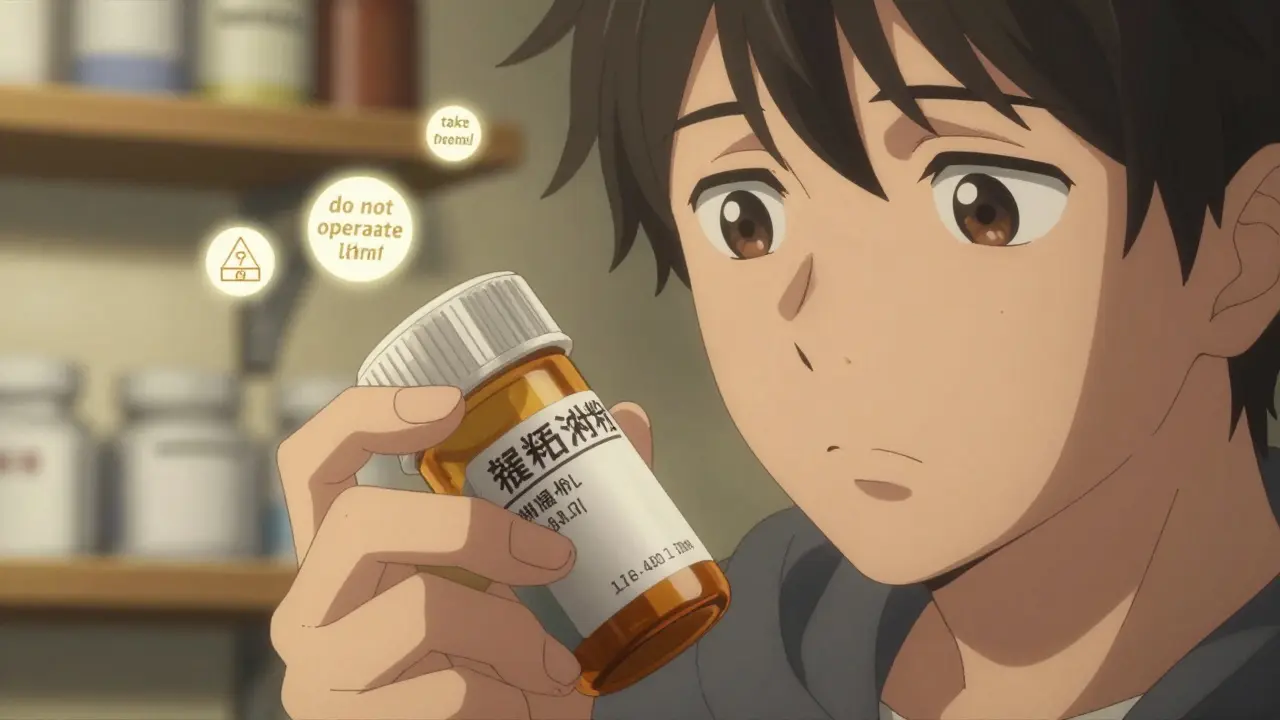
Why Reading Medication Labels Matters More Than You Think
Every year, thousands of people end up in emergency rooms because they took the wrong dose of medicine-sometimes too much, sometimes too little. It’s not because they’re careless. It’s because they didn’t understand what the label actually said. Medication labels aren’t just fine print. They’re your safety guide. Whether you’re picking up a prescription at the pharmacy or grabbing a bottle of pain relief from the shelf, reading the label carefully can mean the difference between feeling better and ending up in the hospital.
What’s on a Prescription Label?
Prescription labels follow strict rules set by the U.S. Food and Drug Administration (FDA). They must include 16 specific sections, but you only need to focus on a few key ones to stay safe.
- Your name - Always check this first. A mix-up here can be deadly.
- Medicine name - Both the brand name and the generic name are listed. If you’ve been prescribed amoxicillin, make sure that’s what’s in the bottle.
- Dosage and directions - This tells you exactly how much to take and how often. For example: "Take one tablet by mouth every 8 hours." Never guess. If it says "take with food," do it. If it says "take on an empty stomach," skip the snack.
- Expiration date - Medicine can lose strength or become unsafe after this date. Most pharmacies set expiration dates one year after dispensing, even if the bottle says longer.
- Warnings - This section warns you about side effects, interactions with other drugs, alcohol, or foods. If it says "do not operate heavy machinery," don’t drive.
For some medications-like insulin, blood thinners, or cancer drugs-the label will include special instructions. These might say you need a blood test before taking it, or that you must avoid certain other medicines. Always read these carefully. The FDA requires these high-alert drugs to use plain language so you don’t miss critical info.
What’s on an Over-the-Counter (OTC) Label?
OTC medicines like ibuprofen, cough syrup, or antacids follow the "Drug Facts" format. It’s standardized across all brands, so once you learn it, you can read any OTC label with confidence.
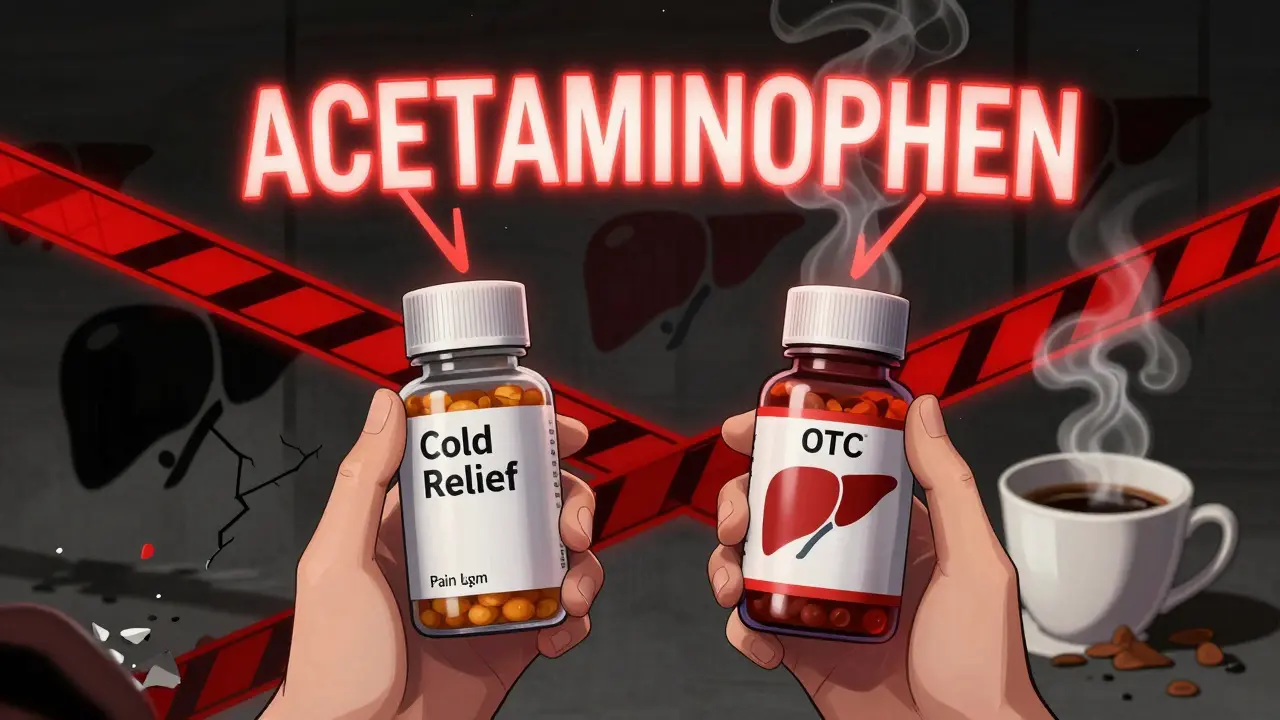
- Active ingredients - This tells you what’s actually in the medicine. For example, Tylenol and many cold medicines contain acetaminophen. If you take both, you could overdose without realizing it.
- Purpose - What the medicine is for. "Pain reliever," "cough suppressant," etc.
- Uses - Symptoms it treats. "Relieves headache, fever, and minor aches." Don’t use it for something it’s not meant for.
- Warnings - This is where most people skip. It tells you when NOT to take the medicine. "Do not use if you have liver disease," or "May cause drowsiness." These aren’t suggestions-they’re safety rules.
- Dosage - How much to take, how often, and how long to wait between doses. "Take 1 tablet every 4 to 6 hours. Do not exceed 6 tablets in 24 hours." Stick to it.
- Inactive ingredients - Things like dyes or flavorings. If you’re allergic to certain additives, check here.
- Other information - Storage tips, like "keep at room temperature" or "protect from moisture."
How to Read Dosage Instructions Without Making a Mistake
Dosage isn’t just "take two pills." It’s about timing, amount, and form. Here’s how to get it right:
- Look for the unit - Is it in milligrams (mg), milliliters (mL), or tablets? Never assume. A liquid labeled "350 mg per 5 mL" means each teaspoon-sized dose (5 mL) has 350 mg. If your doctor asks for 700 mg, you need two of those doses-not the whole bottle.
- Watch for "every X hours" vs. "X times a day" - "Take every 6 hours" means four times a day. "Take three times a day" usually means morning, afternoon, and bedtime-not spaced evenly. Ask if you’re unsure.
- Check for weight-based dosing - Especially for kids. Many children’s medicines say "use based on weight." If your child weighs 20 kg, don’t guess. Look up the chart on the label or ask the pharmacist.
- Use the right tool - Never use a kitchen spoon. A teaspoon can hold anywhere from 2.5 to 7.3 mL. That’s a huge difference. Always use the oral syringe or dosing cup that came with the medicine. Pharmacies give them out for free.
One common mistake? People think "take as needed" means they can take it whenever they feel like it. That’s wrong. "As needed" usually means "only if symptoms are present," and often comes with a daily limit. For example: "Take 1 tablet every 4 to 6 hours as needed for pain. Do not exceed 8 tablets in 24 hours."
What You’re Probably Missing: The Hidden Dangers
Most people don’t realize that many medicines contain the same active ingredient. Take cold medicine and pain relievers together? You might be doubling up on acetaminophen. That’s the leading cause of accidental liver failure in the U.S. The Cleveland Clinic found that 27% of medication-related ER visits happen because people took multiple products with the same ingredient.
Another hidden risk? Storing medicine wrong. Heat, moisture, and light can break down drugs. Keep pills in a cool, dry place-not the bathroom cabinet. Liquid antibiotics? Some need refrigeration. Check the label. If you don’t, the medicine might not work.
And don’t ignore the expiration date. Just because a pill looks fine doesn’t mean it’s still safe. After expiration, potency drops. Some medicines, like insulin or liquid antibiotics, can become toxic.

What’s Changing on Labels (2025 and Beyond)
The FDA is making labels easier to understand. Starting in 2024, many prescription and OTC packages will include QR codes. Scan it with your phone, and you’ll get a video showing how to take the medicine, what side effects to watch for, and even a dosage calculator.
By 2027, high-alert medications-like blood thinners, insulin, and opioids-will have standardized color-coding and icons. Red means "high risk." A skull and crossbones means "serious warning." No more guessing what the small print means.
Also, more labels are using plain language. Instead of "administer orally every 12 hours," you’ll see "take one pill every 12 hours." It’s a small change, but it helps millions of people who struggle with medical jargon.
What to Do If You’re Still Confused
You don’t have to figure it out alone. Pharmacists are trained to explain labels. Walk up to the counter and say: "I’m not sure how to take this. Can you show me?" They’ve seen it all. They won’t judge you.
Also, ask your doctor or nurse to write down the instructions in your own words. Many clinics now give you a printed sheet with the dosage, timing, and warnings in simple language. Keep it next to your medicine.
If you’re caring for an elderly parent or young child, set phone alarms for doses. Use a pill organizer with clear labels. If you’re ever unsure, don’t guess. Call the pharmacy. Or wait. Better safe than sorry.
Final Reminder: The Five Rights of Safe Medication Use
Healthcare professionals use this checklist every time they give medicine. You should too:
- Right person - Is this medicine for you?
- Right drug - Does the name match what your doctor prescribed?
- Right dose - Did you measure it correctly?
- Right route - Is it meant to be swallowed, applied, or injected?
- Right time - Are you taking it at the right intervals?
If you check all five every time, you’re doing better than most people. And you’re protecting yourself-and your family-from avoidable harm.