

Protein-Drug Interaction Calculator
How Protein Affects Your Medication
Protein competes with medications for transporters in your gut and blood-brain barrier. The article explains how high-protein meals can reduce drug effectiveness by 30-50% for medications using LNAAT transporters.
When you take your morning medication, you might not think twice about what you ate for breakfast. But if you’re on drugs like levodopa for Parkinson’s, that scrambled egg or Greek yogurt could be cutting your medicine’s effectiveness in half. This isn’t a myth or a vague warning - it’s backed by years of clinical research and real-world patient outcomes. Protein doesn’t just build muscle; it can block your drugs from working the way they’re supposed to.
How Protein Blocks Medication Absorption
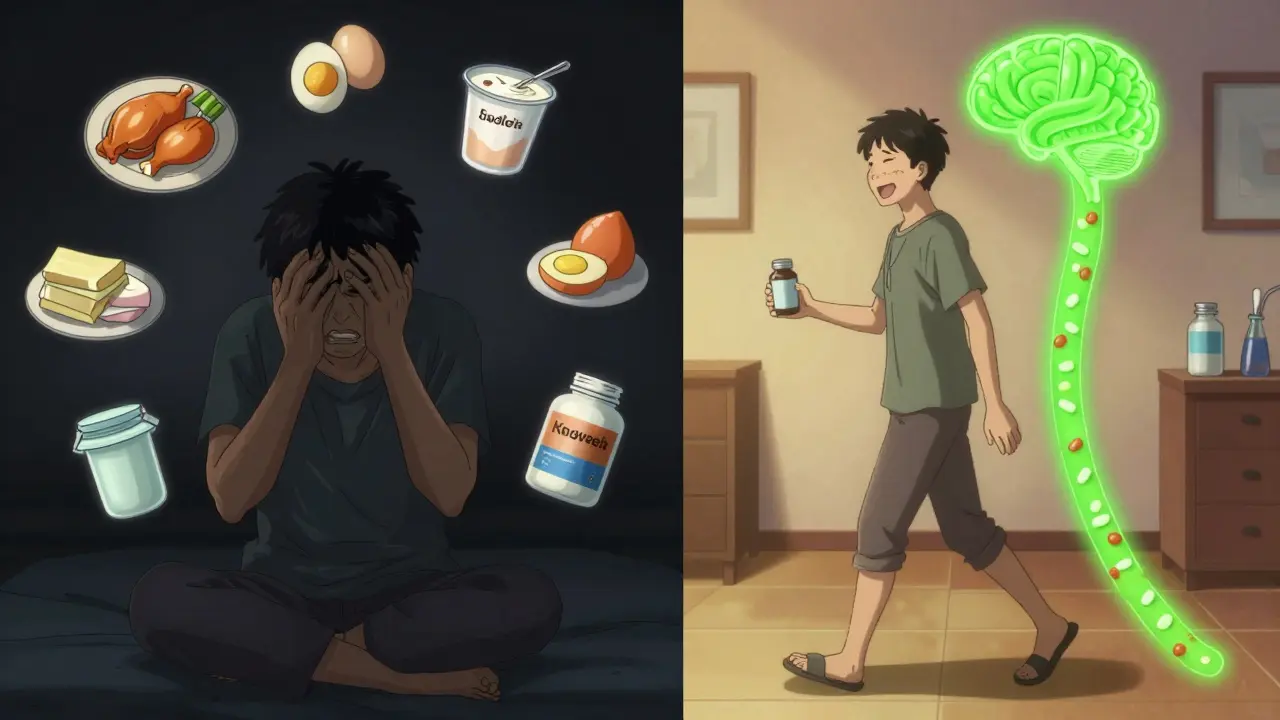
The body doesn’t treat all nutrients the same way when it comes to absorbing drugs. Protein-rich meals flood your bloodstream with amino acids - the building blocks of protein. These amino acids use special transporters in the gut and blood-brain barrier to get where they need to go. The problem? Many medications, especially levodopa (used for Parkinson’s), use the exact same transporters. It’s like a traffic jam at a single-lane bridge: amino acids and drugs are trying to cross at the same time, and the amino acids usually win.
Studies show that a high-protein meal can reduce levodopa absorption by 30% to 50% in about 60% of Parkinson’s patients. That means instead of getting the full dose your doctor prescribed, you might be getting less than half. The result? More ‘off’ time - periods when symptoms like tremors, stiffness, and slowness return because the drug didn’t reach the brain in enough quantity.
This isn’t just about Parkinson’s. Other drugs affected include certain antibiotics (like penicillins), antiepileptic medications, and even some antidepressants. The key factor is whether the drug relies on large neutral amino acid transporters (LNAATs). If it does, protein is a silent saboteur.
Why Not Just Eat Less Protein?
It sounds simple: cut out the meat, skip the cheese, avoid beans. But here’s the catch - your body needs protein. Cutting it too low can lead to muscle loss, fatigue, and weakened immunity. A 2024 study in the Journal of Parkinson’s Disease found that 23% of patients who followed a strict low-protein diet (<0.8g per kg of body weight) developed noticeable muscle wasting within 18 months.
That’s why experts don’t recommend slashing protein intake. Instead, they recommend redistributing it. The goal isn’t to eliminate protein - it’s to time it so it doesn’t interfere with your meds.
The Protein Redistribution Strategy
The most effective solution is called protein redistribution. It means shifting most of your daily protein intake to one meal - usually dinner.
Here’s how it works:
- Take your levodopa 30 to 60 minutes before breakfast and lunch - meals that contain 15 grams of protein or less.
- Keep breakfast and lunch light on protein: oatmeal, fruit, toast, or a small smoothie (under 5g protein).
- Save the chicken, fish, eggs, tofu, and dairy for dinner - when you’re not taking your main doses of medication.
Research from the Michael J. Fox Foundation shows this approach can increase ‘on’ time (when symptoms are controlled) by 2.5 hours per day. One patient on Reddit, u/ParkinsonsWarrior, reported going from 5.2 hours of ‘off’ time daily to just 2.1 hours after switching to this method - verified by their wearable sensor.
Even better, protein redistribution doesn’t mean you’re starving. The Parkinson’s Foundation recommends keeping total daily protein intake between 0.8 and 1.0 grams per kilogram of body weight - the same as for healthy adults. You’re not cutting protein; you’re just moving it to a time when it won’t interfere.
What About Other Medications?
Levodopa is the most studied, but it’s not the only one. Here’s a quick look at other drugs affected:
| Medication Class | Effect of High-Protein Meals | Recommended Timing |
|---|---|---|
| Levodopa / Carbidopa | 30-50% reduction in absorption | Take 30-60 min before meals |
| Penicillin-class antibiotics | 15-20% reduced absorption | Take 1 hour before or 2 hours after meals |
| Carbidopa-levodopa enteral (Duopa) | No interaction (bypasses stomach) | Can be taken with meals |
| Some antiepileptics (e.g., gabapentin) | Reduced brain uptake | Take on empty stomach if possible |
| Thyroid hormone (levothyroxine) | Reduced absorption with any food | Take on empty stomach, 30-60 min before breakfast |
Not all drugs are affected. Drugs classified as BCS Class I (high solubility, high permeability) like ibuprofen or atorvastatin show little to no change with protein intake. But if your drug is BCS Class III (high solubility, low permeability), protein is a real risk. Always check with your pharmacist or doctor - don’t assume.
Why Doctors Often Miss This
Here’s the uncomfortable truth: most clinicians don’t ask about diet when prescribing these drugs. A 2024 American Society for Nutrition paper found that 68% of doctors never discuss protein timing with patients starting levodopa. The European Medicines Agency’s 2024 review found that 61% of drug labels don’t even mention protein interactions - even when the data is clear.
Dr. Alberto Espay, a leading neurologist, calls this an ‘underutilized strategy.’ He points out that protein redistribution has Level B evidence - meaning solid, repeatable clinical results - yet it’s still not standard practice. Why? Because it’s easier to prescribe more pills than to teach a new eating pattern.
Patients notice the gap. On the Parkinson’s Foundation Forum, 57% of users said they struggled at first to time their meds with meals. But 78% improved significantly after working with a dietitian who specialized in Parkinson’s.

Real-Life Challenges
Knowing what to do is one thing. Doing it every day is harder.
- Dining out: 63% of patients say restaurant meals make timing impossible. A grilled chicken salad might have 40g of protein. A ‘healthy’ wrap? 20g. You can’t always read the nutrition label.
- Hidden protein: Granola bars, protein shakes, and even some breads have 5-7g of protein per serving - enough to interfere. Always check labels.
- Meal prep: Planning low-protein lunches takes effort. Many patients use apps like ProteinTracker for PD (developed by Johns Hopkins) to log meals and avoid surprises. Users report 40% fewer timing errors.
One patient, u/TremblingHands, tried a strict low-protein diet and lost muscle. She switched to Duopa - a gel delivered directly into the small intestine - and gained 8 pounds in 3 months. That’s the kind of real-world insight you won’t find in a textbook.
What’s New in 2025?
The science is moving fast. In March 2025, a study in Nature Medicine showed that specific probiotics can reduce protein competition for drug transporters by 25%. This could lead to future supplements designed to help meds absorb better.
The FDA is also drafting new labeling rules. By 2026, you may see a ‘Protein Interaction Score’ on drug packaging - similar to alcohol warnings. That’s a big deal. It means manufacturers will finally be required to tell you clearly if protein affects their drug.
And new tools are emerging. Time-restricted eating - limiting protein intake to a 8-hour window (e.g., 12pm-8pm) - improved levodopa efficacy by 32% in a 2025 study. Personalized algorithms, now in Phase II trials at Massachusetts General Hospital, could predict your ideal protein timing based on your metabolism, weight, and medication schedule.
What You Can Do Today
You don’t need to wait for new tech. Here’s what works right now:
- Take levodopa (or other affected drugs) 30-60 minutes before eating - especially breakfast and lunch.
- Choose low-protein snacks: fruit, rice cakes, applesauce, or 100% whole grain bread (check labels - some have 2g protein per slice).
- Save meat, dairy, eggs, legumes, and protein powders for dinner.
- Use an app like ProteinTracker for PD to log meals and avoid surprises.
- Ask your pharmacist: ‘Does this drug interact with protein?’ Don’t assume they know - many don’t.
- If you’re struggling, ask for a referral to a registered dietitian who works with Parkinson’s or chronic illness.
It’s not about perfection. It’s about awareness. One patient said it best: ‘I didn’t realize my protein shake was undoing my medication. Now I drink it after dinner - and I can walk again.’
Can I still eat meat if I’m on levodopa?
Yes - but timing matters. Eat meat at dinner, not breakfast or lunch. Keep protein intake under 15 grams during your medication window. A 3-ounce chicken breast has about 25g of protein - too much for a morning meal. Save it for your evening meal when you’re not taking your main doses.
Does protein affect all medications the same way?
No. Only medications that rely on specific amino acid transporters - like levodopa, some antibiotics, and certain antiepileptics - are affected. Drugs like ibuprofen, aspirin, or statins are not impacted by protein. Always check with your pharmacist or look up your drug’s food interaction profile.
What if I can’t take my medication before meals?
If nausea or stomach upset forces you to take meds with food, choose a low-protein snack: a banana, a few crackers, or a small serving of applesauce. Avoid cheese, yogurt, eggs, or meat. If you’re still struggling, talk to your doctor - alternatives like Duopa (an intestinal gel) bypass the stomach entirely and aren’t affected by protein.
How do I know if my medication is affected by protein?
Check the patient information leaflet for phrases like ‘take on an empty stomach’ or ‘avoid high-protein meals.’ If it’s not clear, ask your pharmacist directly: ‘Is this drug affected by dietary protein?’ If you’re on levodopa, carbidopa, or certain antibiotics, assume it is - and confirm.
Is there a test to see if protein is blocking my medication?
No direct blood test exists, but you can track your symptoms. If you notice more ‘off’ time after meals - especially after eating meat, eggs, or dairy - and your symptoms improve when you take meds before eating, protein is likely the culprit. Wearable sensors (like Kinesia One) can also objectively measure movement changes. Work with your doctor to correlate timing and symptoms.
Jinesh Jain
March 13, 2026 AT 04:02Interesting read. I never connected protein intake with my dad’s Parkinson’s meds until now. He’s always had his eggs at breakfast and wonders why he’s so stiff by noon. This makes a lot of sense.
douglas martinez
March 13, 2026 AT 23:09Thank you for sharing this clinically grounded insight. The interaction between dietary amino acids and LNAAT-dependent medications is underdiscussed in primary care. Patients deserve clear guidance on timing and distribution of protein intake throughout the day.
Sabrina Sanches
March 14, 2026 AT 00:49I’ve been telling my neurologist for months that my meds don’t work after my protein smoothie and she just nodded like it was a myth
Sally Lloyd
March 14, 2026 AT 11:56Did you know the pharmaceutical companies know this? They don’t tell you because if you took your meds on an empty stomach, you’d need more frequent doses and they’d sell more pills. Protein is just the convenient scapegoat.
Emma Deasy
March 15, 2026 AT 04:53OMG. I’ve been suffering for YEARS. My doctor said ‘just take it with food’ - but I didn’t realize that ‘food’ meant ‘protein bomb.’ Now I’m terrified. My tremors are back. I’m not sleeping. I think I’m being sabotaged by my own breakfast.
tamilan Nadar
March 15, 2026 AT 22:36In India we eat dal and rice with every meal. I wonder if this affects how our people respond to levodopa. Maybe that’s why some of us don’t report as many side effects - we’re not eating eggs or whey protein shakes. Just curious.
Adam M
March 16, 2026 AT 15:48Stop eating protein. That’s the solution.
Rosemary Chude-Sokei
March 17, 2026 AT 17:56This is such an important point. I’ve worked with several patients who were non-responsive to their Parkinson’s medication until we adjusted their protein timing. The body’s nutrient transport system is incredibly precise - and easily disrupted. A simple shift to evening protein intake can make a dramatic difference.
Noluthando Devour Mamabolo
March 18, 2026 AT 09:56As a clinical nutritionist, I’ve seen this LNAAT competition mechanism in action. The key is chrono-nutrition - redistributing 70% of daily protein to the evening meal. This minimizes daytime absorption interference while maintaining nitrogen balance. Also, consider supplementing with low-competition amino acids like glycine or taurine.
Leah Dobbin
March 18, 2026 AT 10:01How quaint. You’re all assuming this is about biology. The real issue is that Big Pharma doesn’t want you to know that you can manage your condition with diet alone - and they’ve been funding studies to obscure this for decades. Protein isn’t the villain. Profit is.
Ali Hughey
March 19, 2026 AT 00:02THEY KNOW. They’ve known since the 80s. I read a leaked internal memo from a major pharma company that said: ‘Patients who restrict daytime protein show 47% better symptom control - but we must not publicize this as it reduces pill consumption.’
They’re not just ignoring this - they’re suppressing it. Your ‘doctor’ was trained by their curriculum. Your ‘research’ is curated by their grants. Your ‘breakfast’ is part of the system.
Don’t trust the system. Eat protein at midnight. Take your meds at dawn. And tell no one.