
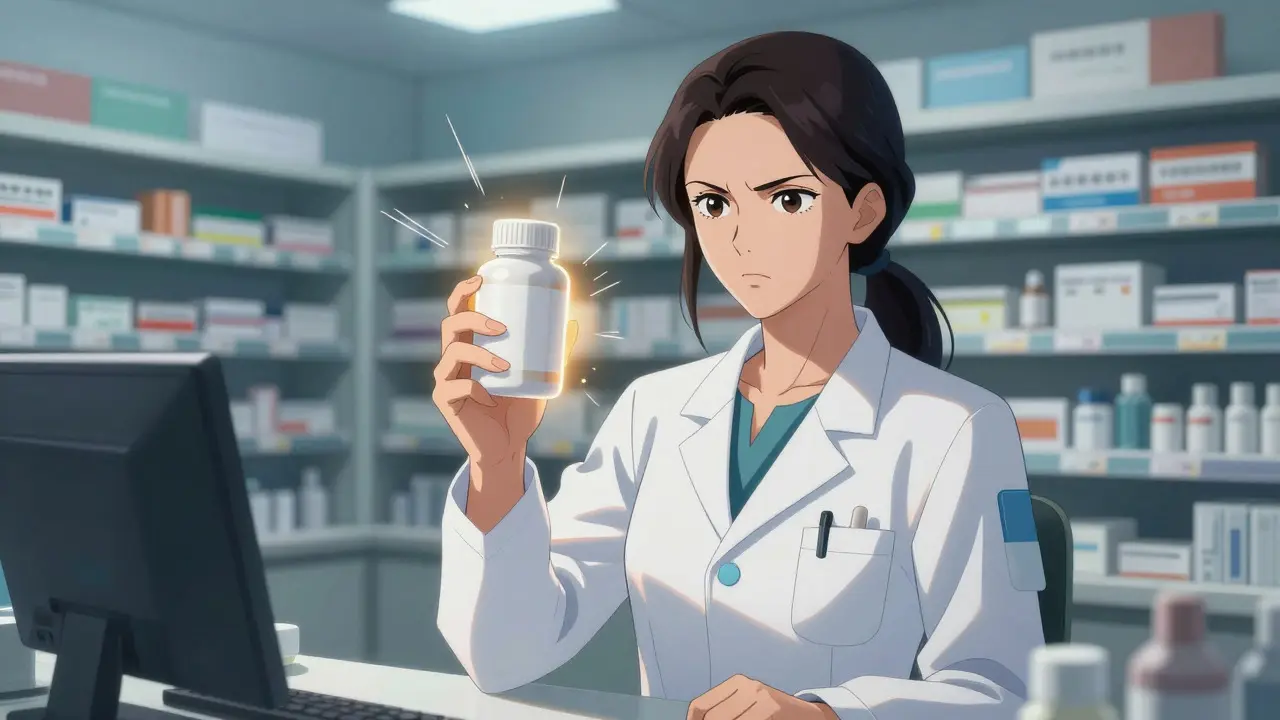
Imagine handing a patient a pill that looks exactly like the prescription they need, but inside is just chalk or an under-dosed active ingredient. For pharmacists, this isn't a hypothetical scenario; it's a daily risk. With global law enforcement uncovering over 6,400 incidents of pharmaceutical counterfeiting in 2024 alone, the role of the pharmacist has shifted from simple dispenser to frontline detective. Counterfeit drug detection is no longer a niche skill-it’s a core competency required to keep patients safe.
The stakes are high. Criminal organizations now target everything from common painkillers to complex oncology drugs and biologics. Since the passage of the U.S. Drug Supply Chain Security Act (DSCSA) in 2013, the industry has moved toward digital tracking, but human vigilance remains the final barrier. This article breaks down how modern training programs equip pharmacists with the tools, technology, and knowledge to spot fakes before they reach the patient.
Why Pharmacist Education on Counterfeits Is Critical Now
You might think that if a drug comes from a reputable wholesaler, it must be genuine. That assumption was safer ten years ago than it is today. The Pharmaceutical Security Institute reported that in 2024, 2,428 distinct medicines were affected by counterfeiting, illegal diversion, or theft across 136 countries. These aren't just cheap generics sold on shady websites; they are sophisticated imitations slipping into legitimate supply chains.
The Partnership for Safe Medicines identifies pharmacists as the “last line of defense.” Why? Because while manufacturers and distributors handle bulk logistics, the pharmacist is the one interacting directly with the patient at the point of care. If a box arrives with a slightly off label, or a price seems too good to be true, the pharmacist is often the first to notice. Without specific training, these subtle red flags can easily be missed, leading to patient harm or loss of trust in the healthcare system.
Modern Training Approaches: From Classroom to AI
Gone are the days when detecting fakes meant making phone calls to verify paper certificates. Modern training integrates advanced technology with practical protocols. Two primary approaches dominate the current landscape: academic curriculum integration and technology-assisted point-of-care verification.
- Academic Competency-Based Curricula: In 2021, the International Pharmaceutical Federation (FIP) and the World Health Organization (WHO) launched a bilingual curriculum (English and French) focused on substandard and falsified (SF) medical products. Piloted in Cameroon, Senegal, and Tanzania with 355 pharmacy students, this program proved that structured academic training significantly improves foundational knowledge. As of 2025, WHO is finalizing an updated toolkit to expand this model globally, with a new focus on online counterfeit sales.
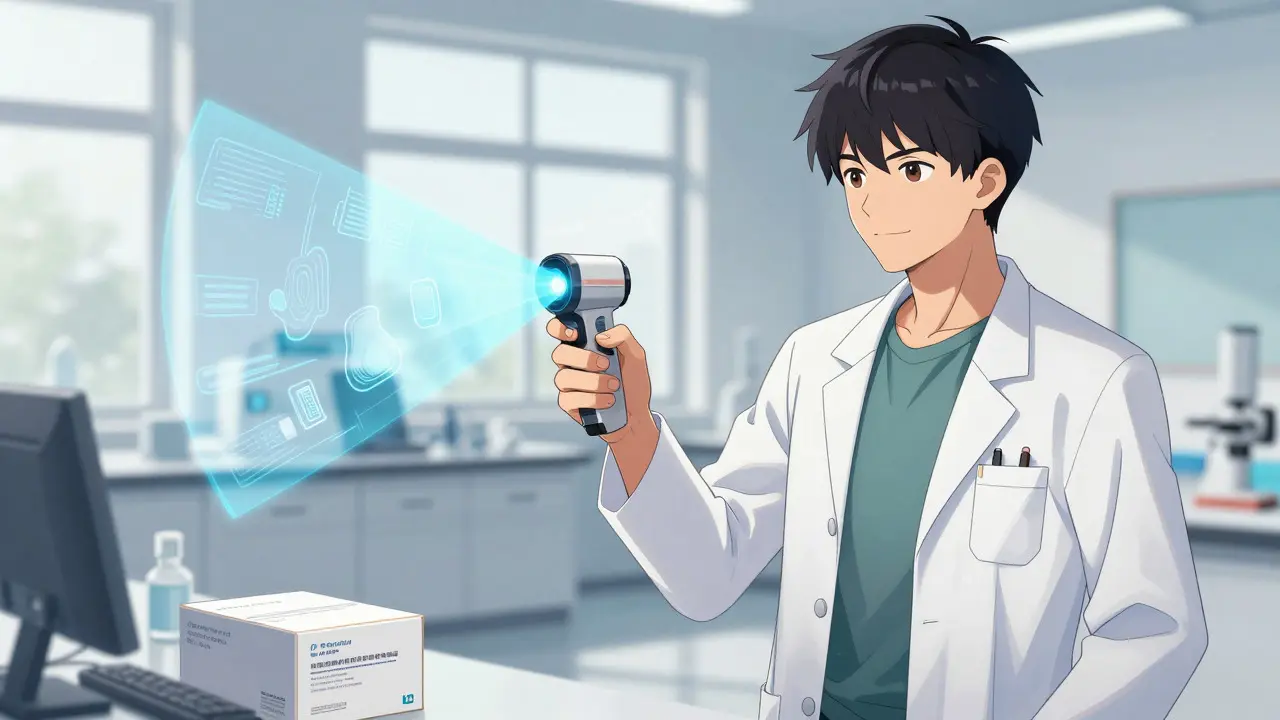
- Technology-Integrated Verification: Companies like RxAll provide handheld devices that use spectral analysis and AI-powered algorithms. These tools allow pharmacists to scan a medication and verify its authenticity within seconds. This shifts the burden from memory-based recall to data-driven confirmation, reducing human error.
- Regulatory Compliance Courses: In the United States, courses like the Medicare Fraud, Waste, and Abuse (FWA) certification address regulatory requirements. While CMS no longer mandates a specific course format after 2019, many employers still require training within 90 days of hire to ensure staff understand legal liabilities.
Key Detection Protocols Every Pharmacist Must Know
Training isn't just about knowing *that* counterfeits exist; it's about knowing *how* to identify them in real-time. Experts from Pfizer’s Anti-Counterfeiting Program and the Authentication Solution Providers' Association (ASPA) emphasize three core behaviors:
- Price Skepticism: Be wary of medications offered at prices drastically below the wholesale acquisition cost. If a specialty drug is available for half the usual price without a clear explanation, pause and investigate.
- Channel Verification: Specialty drugs typically distribute through limited, authorized channels. Always verify the distributor against the manufacturer’s official website. If a supplier isn’t listed, the product is likely diverted or fake.
- Physical Inspection: Look for inconsistencies in packaging, font alignment, batch numbers, and seal integrity. While less effective for high-tech fakes, physical checks remain a quick first-line filter.
Nakul Pasricha, President of ASPA, notes that “a continued immersive awareness and education programme is crucial for healthcare workers so that they can be vigilant towards the presence of a counterfeit product.” It’s not a one-time lesson; it’s a habit of mind.
Comparing Major Training Platforms
Not all training is created equal. Depending on your setting-academic, community pharmacy, or hospital-the right tool varies. Here’s how the leading options stack up:
| Program/Platform | Type | Key Feature | Best For |
|---|---|---|---|
| FIP/WHO Curriculum | Academic | Bilingual, competency-based, focuses on SF products | Pharmacy students & developing nations |
| RxAll Platform | Technology-Assisted | Handheld spectral analysis devices, AI verification | Community pharmacies needing instant verification |
| TrainingNow.com FWA | Online Compliance | 45-minute mobile-friendly course, CEU credit | U.S. staff meeting CMS/regulatory deadlines |
| Pfizer Anti-Counterfeiting | Industry-Led | Product-specific awareness, global law enforcement collab | Specialty drug handlers & large health systems |
Notice the difference in scope. The FIP/WHO model builds long-term knowledge, while RxAll offers immediate tactical capability. A comprehensive strategy often combines both: foundational education for understanding *why* things go wrong, and tech-enabled tools for solving *what* went wrong in a specific case.
The Role of Technology in Speeding Up Verification
Time is money in pharmacy, but safety is non-negotiable. Traditional verification methods involved examining physical papers and making phone calls, which could take hours. Today, AI-powered algorithms have changed the game. Devices using spectral analysis can detect subtle chemical differences between genuine and counterfeit drugs instantly.
This speed is critical during busy shifts. When a pharmacist can confirm authenticity in seconds rather than minutes, the workflow stays smooth, and patient confidence increases. Moreover, these platforms often include community features where pharmacists share experiences and best practices, turning isolated incidents into collective intelligence.
Global Challenges and Future Trends
While the U.S. boasts the most advanced tracking system via DSCSA, implementation remains inconsistent globally. Many developing countries lack comparable infrastructure, making the WHO’s expanded toolkit even more vital. The future of counterfeit detection lies in addressing the online threat. Since 2021, online sales of substandard products have surged, and the upcoming WHO toolkit will specifically target this vector.
Looking ahead, expect greater integration of machine learning in verification tools. As criminals get smarter, using better packaging and mimicking batch codes, static training won't cut it. Continuous learning, updated regularly with new threat profiles, will be the standard. Additionally, patient education is becoming part of the pharmacist’s toolkit, helping consumers recognize risks and protect themselves outside the pharmacy walls.
Frequently Asked Questions
How long does it take to complete basic counterfeit detection training?
Basic online compliance courses, such as the Medicare FWA certification, can be completed in as little as 45 minutes. However, comprehensive programs involving hands-on technology practice or academic curricula may take several weeks to months, depending on the depth of study and required proficiency levels.
What is the most reliable way to verify a suspicious medication?
The most reliable method combines channel verification and technological scanning. First, check if the distributor is authorized by the manufacturer. Second, use spectral analysis devices or QR code scanners linked to the manufacturer’s database to confirm the product’s identity and batch history.
Do I need special certification to use AI-powered detection devices?
Most AI-powered handheld devices require minimal technical certification beyond basic operation training. However, employers often mandate completion of a vendor-specific onboarding module to ensure accurate interpretation of results and proper reporting procedures for any discrepancies found.
How often should pharmacists update their counterfeit detection knowledge?
Experts recommend annual refresher training at minimum. Given the rapid evolution of counterfeit techniques and the release of new WHO toolkits, staying updated every six months is ideal for those handling high-risk specialty drugs or operating in regions with higher counterfeit prevalence.
Are online-purchased supplements also considered counterfeit drugs?
Yes. The term “substandard and falsified (SF) medical products” includes dietary supplements, vitamins, and herbal remedies. Interpol’s Operation Pangea XVI in 2025 highlighted the seizure of millions of counterfeit doses, including non-prescription items, emphasizing that online platforms are a major vector for all types of SF products.