
Pharmaceutical Supply Chain Risk Estimator
Supply Chain Configuration
Risk Assessment Result
- ● Shortage Probability: -
- ● Efficacy Loss Risk: -
- ● Recovery Time: -
Configure the supply chain parameters above to estimate disruption risks.
The Invisible Backbone of Your Medicine Cabinet
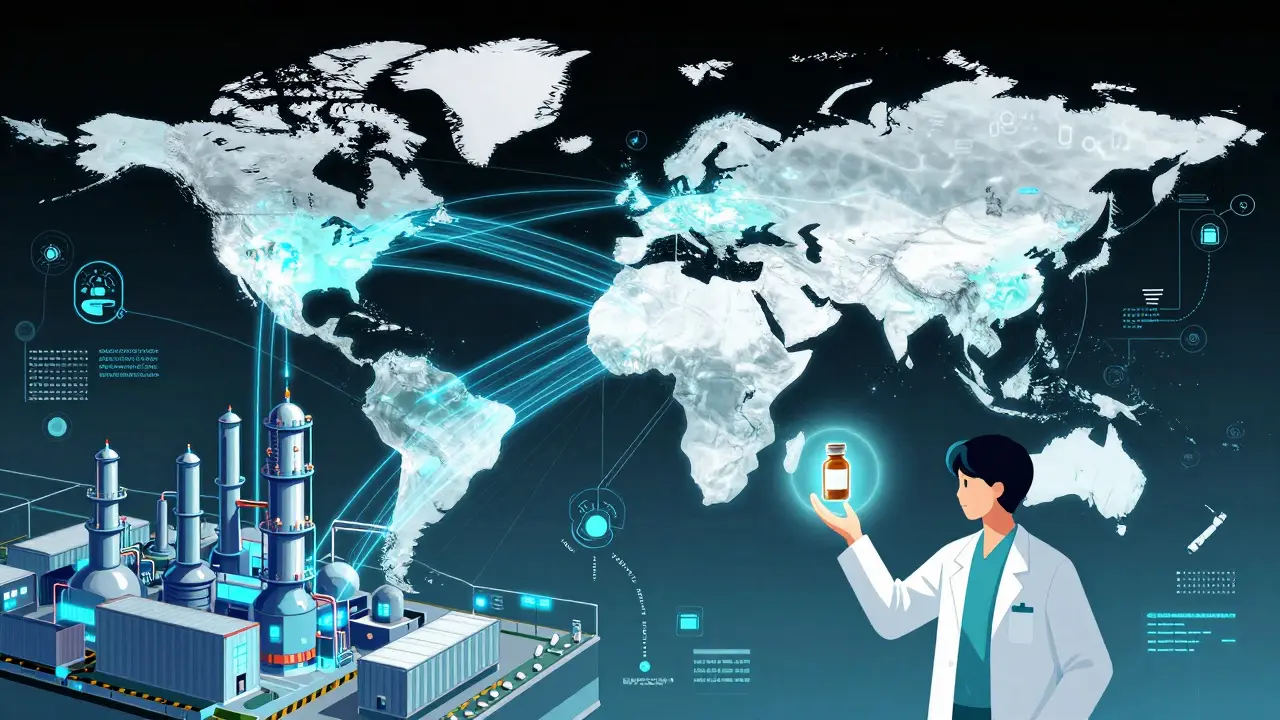
You probably don't think about the journey your medication takes before it lands in your hand. You see a pill bottle or an injection vial, and you assume it is safe, effective, and ready to use. But behind that simple transaction lies a massive, complex network known as the pharmaceutical supply chain, which is the global system responsible for manufacturing, distributing, and delivering medications while maintaining their integrity and safety. As of late 2025, this network spans over 180 countries and includes roughly 30,000 manufacturing facilities serving nearly 8 billion people worldwide (WHO 2024). It is what experts call the 'invisible backbone' of healthcare, ensuring that life-saving drugs reach patients without error.
When this system works, it is miraculous. When it fails, the consequences are immediate and often dangerous. We are not talking about delayed packages here; we are talking about compromised efficacy, counterfeit drugs, and treatment interruptions that can be fatal. The core value of this entire industry is safeguarding public health. If a vaccine loses potency because it sat in a hot truck for two hours, it doesn't just fail to work-it might give false immunity. If a cancer drug is substituted with a generic equivalent due to a shortage, the patient’s blood levels of the active ingredient might drop below therapeutic thresholds. These aren't theoretical risks. They are happening right now.
Why Pharmaceutical Logistics Are Different
If you’ve ever ordered a book online, you know that if it arrives late, it’s annoying. If a heart medication arrives late, it’s a crisis. Pharmaceutical supply chains face regulatory requirements that are strict legal standards governing how drugs are handled, stored, and tracked to ensure safety that are 3.2 times more intense than those for general consumer goods (HDA 2023). This isn't bureaucracy for the sake of it. It's because the margin for error is zero.
- Tight Inventory Buffers: Unlike clothes or electronics, drugs expire. Pharmaceutical companies operate with 47% less inventory buffer than other industries because they cannot stockpile products indefinitely. This makes them incredibly sensitive to sudden spikes in demand or disruptions in raw material supply.
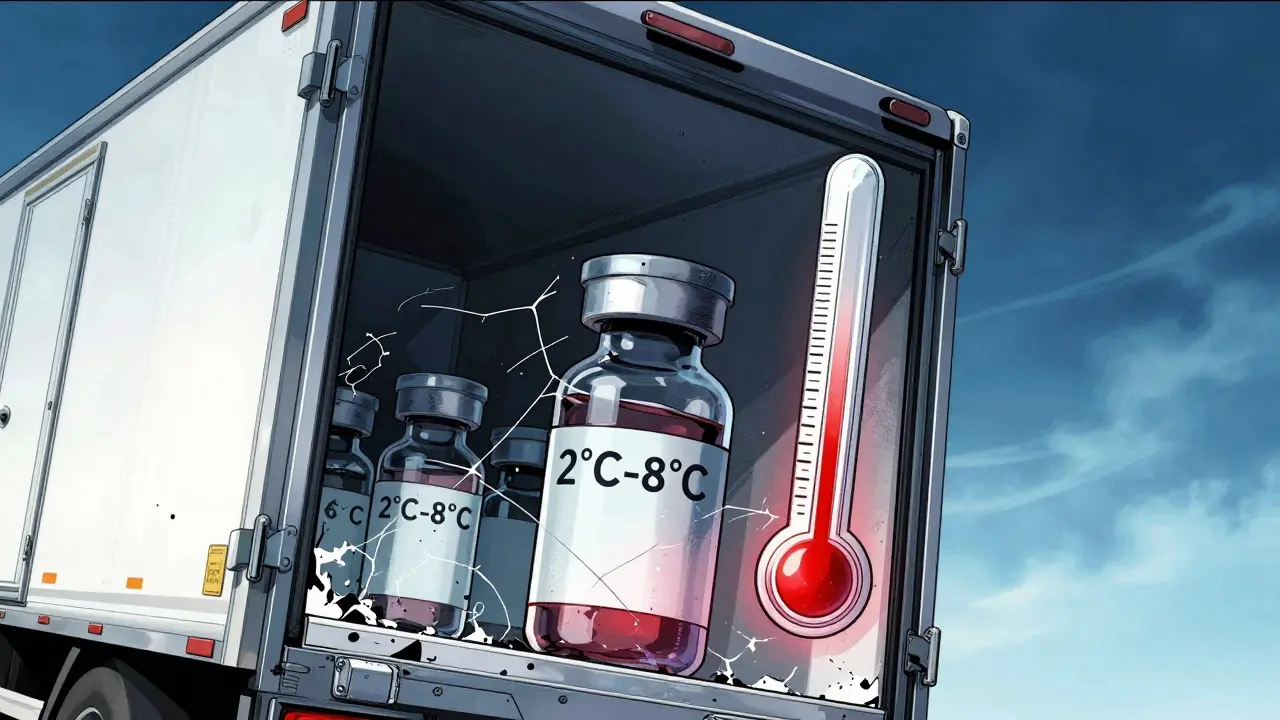
- Cold Chain Complexity: Temperature control is non-negotiable. According to Pharmaceutical Commerce (2024), 72% of biologics-complex drugs made from living organisms-require storage between 2°C and 8°C. Another 15% need ultra-cold storage below -60°C. A single break in this "cold chain" can render millions of dollars worth of medicine useless overnight.
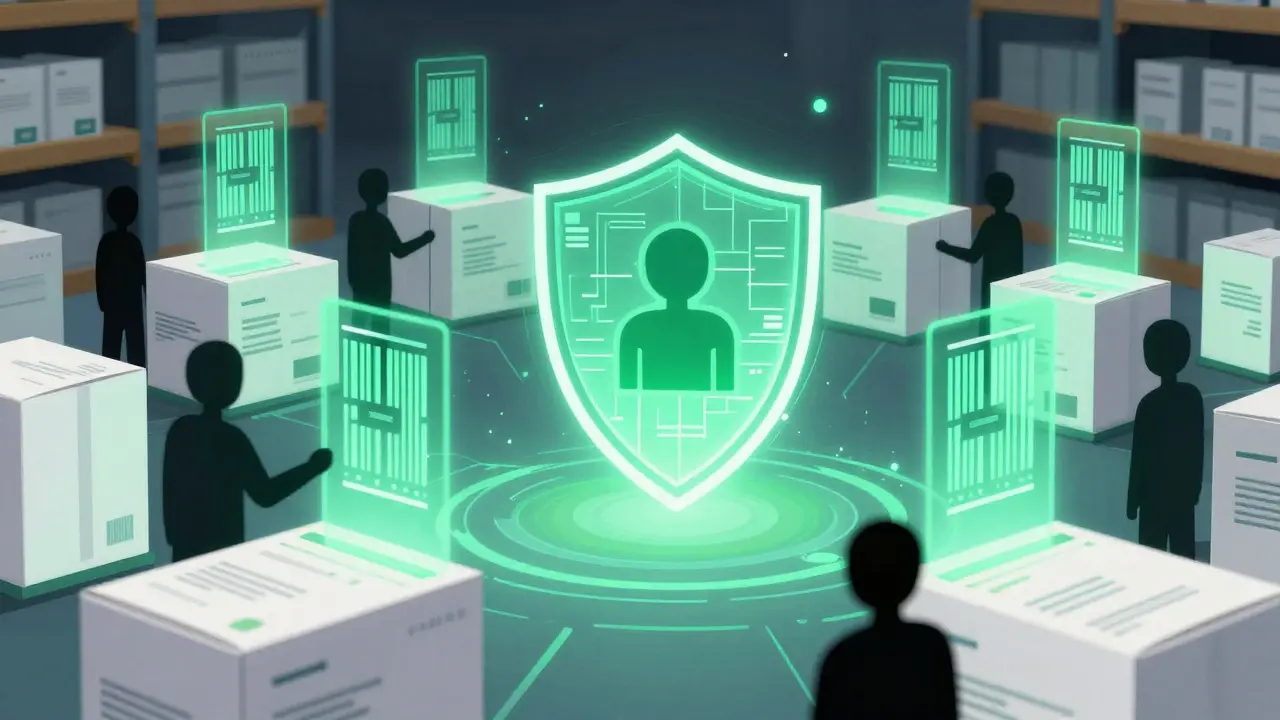
- Traceability Mandates: The FDA’s Drug Supply Chain Security Act (DSCSA) requires full product tracing. By November 2023, 100% of prescription drugs had to be serialized with 2D data matrix barcodes. This allows every unit to be tracked from the factory floor to the pharmacy shelf, preventing counterfeits from entering the legitimate stream.
Despite these safeguards, the system is fragile. During the first six months of the COVID-19 pandemic, drug shortages increased by 300% (Patel et al., 2023). The system excels at routine operations but struggles dramatically when faced with global shocks.
The Human Cost of Supply Chain Failures
Data points tell one story, but patient experiences tell another. When supply chain quality drops, patients pay the price. Let’s look at what happens on the ground.
In 2024, Hurricane Helene disrupted operations at Baxter’s plant in North Carolina. The result? More than 80% of healthcare organizations across the nation faced shortages of critical IV fluids and medications (Becker's Hospital Review, 2024). Surgeries were delayed. Treatments were postponed. For a patient relying on daily infusions, a delay isn't an inconvenience; it's a health risk.
Consider the case of multiple sclerosis treatments. On RateMDs, patients reported waiting 42% longer for specialty medications during the 2023-2024 shortage periods. One patient shared a harrowing experience: "My Tysabri infusions were delayed 17 days due to supply chain issues, resulting in two new brain lesions visible on MRI." That is a direct link between a logistical failure and permanent neurological damage.
Substitutions are another major issue. When a specific brand is unavailable, pharmacists must switch to alternatives. The American Hospital Association’s 2024 survey found that 68% of hospitals experienced medication substitutions due to shortages. Worse, 29% reported adverse patient reactions from these switches. Nursing forums are filled with stories of insulin brands being swapped mid-treatment, causing dangerous blood sugar fluctuations that send patients to the ER.
| Disruption Type | Frequency / Prevalence | Patient Safety Impact |
|---|---|---|
| Drug Shortages | 300% increase during crises | Delayed surgeries, disease progression (e.g., MS lesions) |
| Temperature Excursions | Reduced by 42% with monitoring | Loss of drug efficacy, potential toxicity |
| Forced Substitutions | 68% of hospitals affected | Adverse reactions in 29% of cases |
| Cybersecurity Incidents | 74% tied to third-party vendors | Hospital service halts, inability to dispense meds |
Technology as a Safety Net
So, how do we fix a system that is inherently fragile? Technology is playing a huge role. The biggest leap forward has been in track-and-trace systems. Blockchain implementation for pharmaceutical tracking has jumped by 37% since 2020 (Qualityze 2024). Major pharma companies are spending an average of $12.7 million annually on these upgrades.
Why blockchain? Because it creates an immutable ledger. Once a drug batch is recorded as leaving the factory, every scan at every warehouse adds a verified entry. If a counterfeit batch enters the system, it won’t match the digital record, and it gets flagged before it reaches a pharmacy. Real-time monitoring systems now cover 68% of high-value shipments, which has helped reduce temperature excursions by 42% (Vizient 2025).
However, technology isn't a magic wand. Implementing these systems is expensive and slow. Hospitals report an average 8.3-month timeline and $450,000 initial investment to get comprehensive track-and-trace up and running (Qualityze 2024). Plus, integrating these new digital tools with legacy systems is a headache for 76% of hospitals. And let’s not forget the human element: supply chain managers need 120+ hours of specialized training just to understand DSCSA compliance measures (George & Elrashid, 2023).
Geopolitics and Global Vulnerability
We cannot talk about supply chain quality without talking about geography. The global pharmaceutical market is worth $1.5 trillion (Statista 2025), but its foundation is uneven. A staggering 78% of global Active Pharmaceutical Ingredient (API) production comes from just two countries: China and India (Trading Economics 2024).
This concentration creates a massive single point of failure. If political tensions rise, trade restrictions tighten, or natural disasters strike in these regions, the rest of the world feels it immediately. Emerging economies are hit hardest. Caribbean hospitals, for example, face a supply chain pressure index of 8.1, indicating severe vulnerability compared to the efficiency goal of -0.5 (UNCTAD 2024). For developing nations, 89% rely heavily on imported pharmaceuticals, making them highly susceptible to shipping cost volatility and global disruptions.
Gartner’s 2025 report identifies pharmaceuticals as the third most vulnerable sector to disruption, right after semiconductors and aerospace. The average time to recover from a disruption is 14.2 days. In the world of acute care, two weeks without essential medicines is an eternity.
What Comes Next?
The future of pharmaceutical supply chain safety hinges on resilience. The FDA’s 2024 guidance mandates 100% electronic tracing by November 2025, and currently, 62% of manufacturers are already compliant (HDA 2024). We are also seeing the rise of AI-driven demand forecasting, which is projected to reduce shortages by 35% by 2027. By predicting surges in demand before they happen, companies can adjust production schedules proactively rather than reactively.
But challenges remain. Cybersecurity is a growing threat, with 74% of healthcare cybersecurity incidents in 2023 linked to third-party vendors (Censinet 2024). If a software provider like CrowdStrike goes down-as it did in 2024, disrupting 759 hospitals-the entire distribution network grinds to a halt. Medication errors related to supply chain issues continue to harm 1.5 million Americans annually, costing $77 billion (Censinet 2024).
McKinsey projects a 22% reduction in critical drug shortages by 2030 thanks to advanced technologies. However, they warn that geopolitical tensions could increase supply chain vulnerability by 18% in the same period if we don’t diversify manufacturing locations. The path forward requires not just better tech, but smarter global cooperation and diversified sourcing strategies.
How does the cold chain affect medication safety?
The cold chain refers to the temperature-controlled supply chain required for certain medications, particularly biologics. About 72% of biologics need to be stored between 2°C and 8°C, while 15% require ultra-cold storage below -60°C. If the temperature fluctuates outside these ranges, the chemical structure of the drug can degrade. This means the medication may lose its effectiveness entirely or, in some cases, become toxic. Real-time monitoring systems have reduced these temperature excursions by 42%, but breaks in the chain remain a significant risk for patient safety.
What is the Drug Supply Chain Security Act (DSCSA)?
The DSCSA is a U.S. federal law designed to prevent counterfeit, stolen, contaminated, or otherwise harmful products from entering the legitimate drug supply. It mandates that all prescription drugs be serialized with unique identifiers, such as 2D data matrix barcodes. By November 2023, 100% of prescription drugs had to be traceable at the package level. This allows regulators and pharmacies to verify the authenticity of every unit before it is dispensed to a patient.
Why are drug shortages so common during global crises?
Pharmaceutical supply chains operate with very low inventory buffers-47% less than other industries-because drugs have short shelf lives and cannot be stockpiled indefinitely. Additionally, the manufacturing of Active Pharmaceutical Ingredients (APIs) is highly concentrated, with 78% coming from China and India. During global crises like pandemics or geopolitical conflicts, demand spikes unexpectedly while supply lines are disrupted. This combination leads to severe shortages, as seen during the early months of COVID-19 when shortages increased by 300%.
How do medication substitutions impact patient health?
When a specific brand-name drug is unavailable, pharmacists often substitute it with a generic alternative or a different brand. While generics are usually bioequivalent, subtle differences in inactive ingredients or absorption rates can affect patients. The American Hospital Association reported that 29% of hospitals saw adverse patient reactions due to forced substitutions. For sensitive conditions like diabetes or epilepsy, even small changes in how the body absorbs the drug can lead to dangerous fluctuations in blood sugar or seizure activity.
What role does blockchain play in pharmaceutical safety?
Blockchain provides an immutable, decentralized ledger for tracking drugs throughout the supply chain. Each time a drug moves from manufacturer to distributor to pharmacy, a digital record is added and cannot be altered. This transparency helps identify and eliminate counterfeit drugs before they reach patients. Since 2020, blockchain implementation in pharma has increased by 37%, with major companies investing millions annually to integrate this technology into their track-and-trace systems.