
NSAID & Blood Thinner Risk Calculator
Your Medication Profile
Select your current medications to see estimated risk levels.
Risk Assessment
Select your medications and click Calculate to view your personalized bleeding risk estimate.
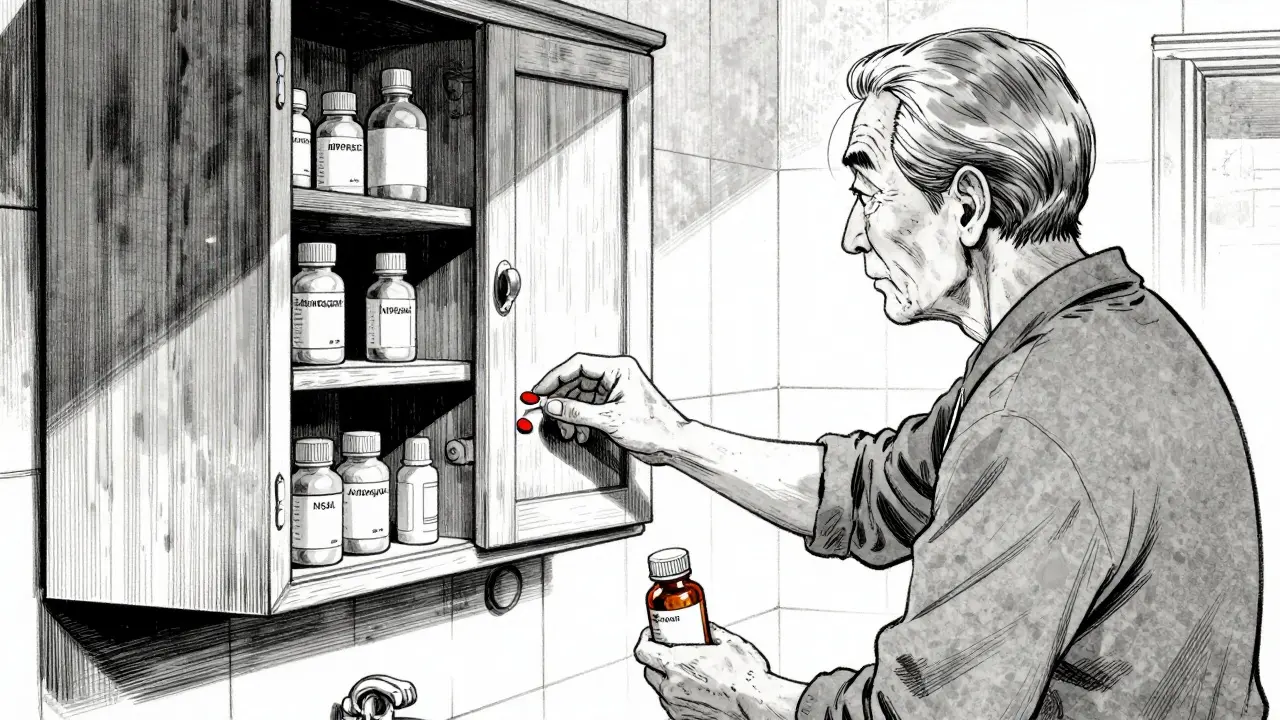
It is a common scenario in households across the country. You have been prescribed blood thinners, also known as anticoagulants, to protect your heart or prevent strokes. Then, you develop a stiff knee or a toothache. Without thinking twice, you reach for the ibuprofen or naproxen sitting in your medicine cabinet. It seems harmless enough. After all, these are over-the-counter drugs available at any pharmacy.
However, this routine action creates a silent but severe danger. Combining nonsteroidal anti-inflammatory drugs (NSAIDs) with blood thinners significantly increases your risk of life-threatening bleeding. Recent data shows that approximately 15-20% of patients on oral anticoagulants use NSAIDs without medical supervision. This isn't just a minor side effect; it is one of the most dangerous medication interactions in modern medicine, particularly for older adults managing arthritis while taking drugs for atrial fibrillation.
How the Interaction Works
To understand why this combination is so risky, you need to look at what each drug does inside your body. They attack your body's ability to stop bleeding from two different angles, creating a multiplicative effect rather than just an additive one.
Blood thinners like warfarin or direct oral anticoagulants (DOACs) work by targeting coagulation factors. These are proteins in your blood that form clots to seal wounds. By inhibiting these factors, the drugs prevent dangerous thrombus formation in your veins or arteries.
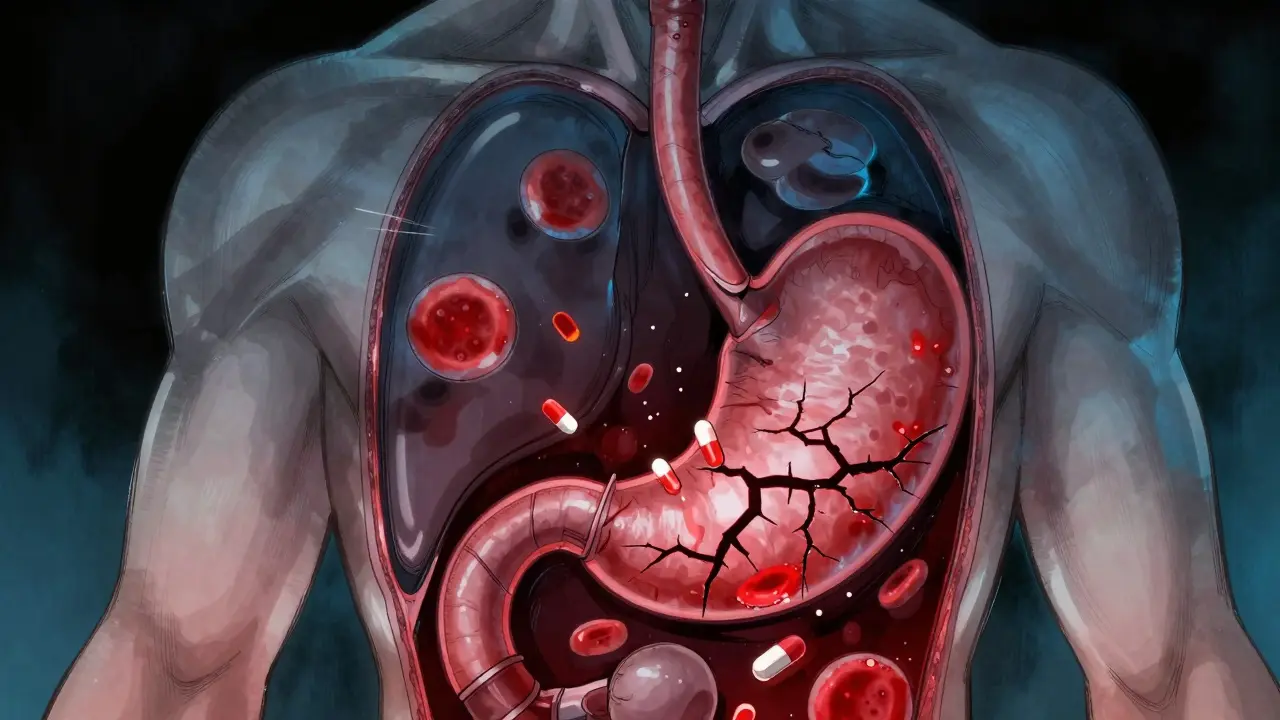
NSAIDs, on the other hand, inhibit cyclooxygenase (COX) enzymes. This reduces platelet aggregation, meaning your platelets cannot stick together effectively to form the initial plug in a wound. Furthermore, NSAIDs damage the gastric mucosa, the protective lining of your stomach. When you combine these effects, you strip away both the mechanical and chemical defenses your body uses to control hemorrhage. The U.S. Food and Drug Administration (FDA) recognized this severity in 2009, mandating bleeding risk warnings on all over-the-counter NSAID labels.
The Specific Bleeding Risks
The statistics behind this interaction are stark. A 2024 Danish nationwide cohort study published in Circulation revealed that combining NSAIDs with anticoagulants increases the overall bleeding risk by 2.09 times. But the risk is not uniform across all body parts or all types of painkillers.
| Risk Factor | Increase in Risk | Confidence Interval |
|---|---|---|
| Intracranial Hemorrhage | 3.22 times higher | 2.5 - 4.1 |
| Gastrointestinal Bleeding | 2.24 times higher | 1.9 - 2.6 |
| Anemia from Bleeding | 2.8 times higher | 2.3 - 3.4 |
| Urinary Tract Bleeding | 1.57 times higher | 1.2 - 2.0 |
| Pulmonary Bleeding | 1.36 times higher | 1.1 - 1.7 |
Not all NSAIDs carry the same weight of risk. According to the same study, diclofenac increases bleeding risk 3.3 times, while naproxen increases it 4.1 times. Ibuprofen appears slightly less aggressive at 1.79 times, but "less aggressive" still means nearly double the baseline risk. The American College of Cardiology confirmed these findings in 2024, noting a >2-fold increased risk of hospitalization for bleeding events when any oral anticoagulant is paired with NSAIDs.
Warfarin vs. DOACs: Which Is Safer?
If you must take a blood thinner, the type matters when considering pain management options. Warfarin, a vitamin K antagonist, shows the highest absolute bleeding risk when combined with NSAIDs. Research from the Journal of the American Heart Association (2022) reported a hazard ratio (HR) of 3.8 for warfarin users taking NSAIDs.
Direct Oral Anticoagulants (DOACs) generally present a lower, though still significant, risk profile. Here is how they compare:
- Rivaroxaban: HR 2.1
- Dabigatran: HR 2.3
- Edoxaban: HR 2.0
- Apixaban: HR 1.9
Even among the safer options, apixaban still nearly doubles the bleeding risk when mixed with NSAIDs. Some might consider selective COX-2 inhibitors like celecoxib as a safer alternative because they pose a lower gastrointestinal bleeding risk (HR 1.4). However, this is still substantially higher than avoiding NSAIDs entirely. Experts warn that no NSAID is truly safe in this context.
Safe Alternatives for Pain Relief
Avoiding NSAIDs leaves many patients, especially those with arthritis, in a difficult position. Approximately 37% of older adults report reduced mobility when they discontinue NSAIDs due to inadequate pain control. So, what are your options?
Acetaminophen (commonly known as Tylenol) is the only analgesic proven safe for use with anticoagulants. Studies show no increased bleeding risk when used at standard doses (up to 4,000mg per day). However, you must be cautious about liver toxicity if you have hepatic impairment or consume alcohol regularly.
For chronic conditions like osteoarthritis, physical therapy is a highly effective non-pharmacological intervention. A 2023 Cleveland Clinic study found that 68% of patients reported adequate pain control after four weeks of NSAID discontinuation combined with physical therapy. Topical treatments, such as diclofenac gel, may also offer localized relief with minimal systemic absorption, though you should still consult your doctor before applying them.

Expert Consensus and Warnings
The medical community is unified in its stance on this issue. Dr. Deepak L. Bhatt from Harvard Medical School notes that while the combination is common among older adults with arthritis, it raises bleeding risks especially in the digestive tract. Professor Robert Storey of the University of Sheffield stated clearly in 2023 that avoiding NSAIDs in combination with oral anticoagulants is the safest strategy.
The American Heart Association’s 2022 scientific statement concluded that NSAID use should be avoided in patients requiring long-term anticoagulation, except for brief periods at the lowest effective dose. While a 2021 NIH-funded study suggested some protection when proton pump inhibitors (PPIs) were used concurrently, this does not negate the fundamental risk. Relying on PPIs alone is not a substitute for avoiding the interaction entirely.
Practical Steps for Patients
If you are on blood thinners, you need a systematic approach to pain management. The American College of Chest Physicians recommends a three-step protocol:
- Avoid NSAIDs completely whenever possible. This is the gold standard.
- If essential, use the lowest dose of ibuprofen (≤400mg/day) for the shortest duration (≤3 days). Always co-prescribe a PPI like pantoprazole (80mg daily) to protect the stomach.
- Monitor closely. If you are on warfarin, monitor your INR weekly. NSAIDs can increase INR by 0.8-1.2 points on average, pushing you into a dangerous range.
Be aware of hidden sources of NSAIDs. Many cold medicines, dental prescriptions, and combination pain relievers contain ibuprofen or naproxen. In patient surveys, 47% of people didn’t know NSAIDs were contraindicated with blood thinners. Always check labels and inform every healthcare provider, including dentists, that you are on anticoagulants.
Can I take acetaminophen with blood thinners?
Yes, acetaminophen (Tylenol) is considered safe to take with blood thinners at standard doses (up to 4,000mg per day). Unlike NSAIDs, it does not interfere with platelet function or damage the stomach lining. However, high doses can affect the liver, so consult your doctor if you have liver issues.
Which NSAID is the least dangerous with warfarin?
There is no truly safe NSAID to combine with warfarin. However, studies suggest that celecoxib (a COX-2 inhibitor) has a lower risk of gastrointestinal bleeding compared to non-selective NSAIDs like naproxen or diclofenac. Ibuprofen carries a moderate risk, but all NSAIDs significantly increase bleeding complications.
What are the signs of internal bleeding?
Signs include unusual bruising, nosebleeds that won't stop, coughing up blood, vomiting blood or material that looks like coffee grounds, black or tarry stools, and severe headaches or dizziness. If you experience any of these while on blood thinners and NSAIDs, seek emergency care immediately.
Do topical NSAIDs cause the same risk?
Topical NSAIDs, such as diclofenac gel, have much lower systemic absorption than pills, meaning less drug enters your bloodstream. This may reduce the risk of major bleeding events. However, you should still consult your physician before using them, as individual risk factors vary.
Why do doctors sometimes prescribe NSAIDs anyway?
In rare cases where pain is severe and unmanageable by other means, a doctor might prescribe a short course of NSAIDs with strict monitoring and stomach protection (PPIs). This is a calculated risk based on immediate quality of life versus potential bleeding hazards, but it is never the first choice.