

When you're constantly fighting off sleep during the day-even after a full night’s rest-you're not just tired. You might have narcolepsy. It’s not laziness. It’s not poor sleep hygiene. It’s a neurological condition where your brain can't properly control when you're awake or asleep. People with narcolepsy experience excessive daytime sleepiness (EDS) so intense that sleep attacks happen multiple times a day, often without warning. These aren't just yawns or drowsiness. They’re sudden, uncontrollable episodes of falling asleep that last 15 to 30 minutes, followed by brief clarity before the cycle starts again.
What Narcolepsy Really Looks Like
Narcolepsy doesn’t just mean sleeping too much. It’s a disruption in the brain’s sleep-wake switch, tied to a loss of hypocretin (also called orexin), a chemical that keeps you alert. About 70% of cases are Type 1 narcolepsy, which includes cataplexy-sudden muscle weakness triggered by strong emotions like laughter or surprise. Imagine laughing so hard you collapse, unable to move, but fully conscious. That’s cataplexy. The other 30% have Type 2, with EDS but no cataplexy.
Most people with narcolepsy don’t sleep well at night either. Even if they spend eight hours in bed, their sleep is broken into fragments-waking up four to six times. This leads to chronic sleep deprivation, even though they’re in bed longer than most. Around 60% also experience sleep paralysis: waking up unable to move, often with terrifying hallucinations of someone in the room or a pressure on the chest. These aren’t dreams. They’re real sensory experiences happening as the brain jumps between sleep and wake states.
Diagnosis isn’t simple. It requires a sleep study at night (polysomnography), followed by a daytime multiple sleep latency test (MSLT). You’re given five chances to nap, two hours apart. If you fall asleep in under eight minutes and enter REM sleep in two or more of those naps, that’s diagnostic. Or, if your spinal fluid shows hypocretin levels below 110 pg/mL, that confirms Type 1 narcolepsy. Most people wait years for a diagnosis because doctors mistake it for depression, ADHD, or just burnout.
Stimulants Are the First-Line Treatment
There’s no cure for narcolepsy. But there are treatments that help people live normal lives. The main goal? Keep you awake during the day. That’s where stimulants come in. Not the kind you think of from college cram sessions. These are carefully dosed, medically approved drugs designed to target the brain’s wakefulness systems without the crash or addiction risks of street drugs.
Modafinil (brand name Provigil) is the most commonly prescribed. It doesn’t work like caffeine. It gently boosts dopamine and interacts with the hypocretin system to promote alertness. In clinical trials, 70% of users saw a 5-point drop on the Epworth Sleepiness Scale-a major improvement. People report feeling “clear-headed” and “energized without the jitters.” It’s taken once in the morning, and most people tolerate it well. Side effects? Headaches, nausea, or anxiety in a small number. Only 5% stop taking it due to side effects.
Armodafinil (Nuvigil) is the longer-lasting cousin of modafinil. It’s the R-enantiomer, meaning it stays active in your body for 15 hours instead of 12. That means one daily dose can cover your whole day. In a 2019 trial, 65% of patients on armodafinil had ESS scores below 10-the threshold for normal daytime sleepiness. Many patients switch to it after modafinil stops working as well over time.
Traditional stimulants like methylphenidate (Ritalin) and amphetamines (Adderall) are more powerful. They work faster and harder, making them useful for severe EDS. But they come with trade-offs. About 45% of users stop taking them within a year because of side effects: increased heart rate, high blood pressure, appetite loss, irritability, or even emotional numbness. In one study, 80% of patients reported better wakefulness-but 45% couldn’t stick with it. These drugs are also tightly controlled because of abuse potential. Prescriptions require special forms and are monitored closely.
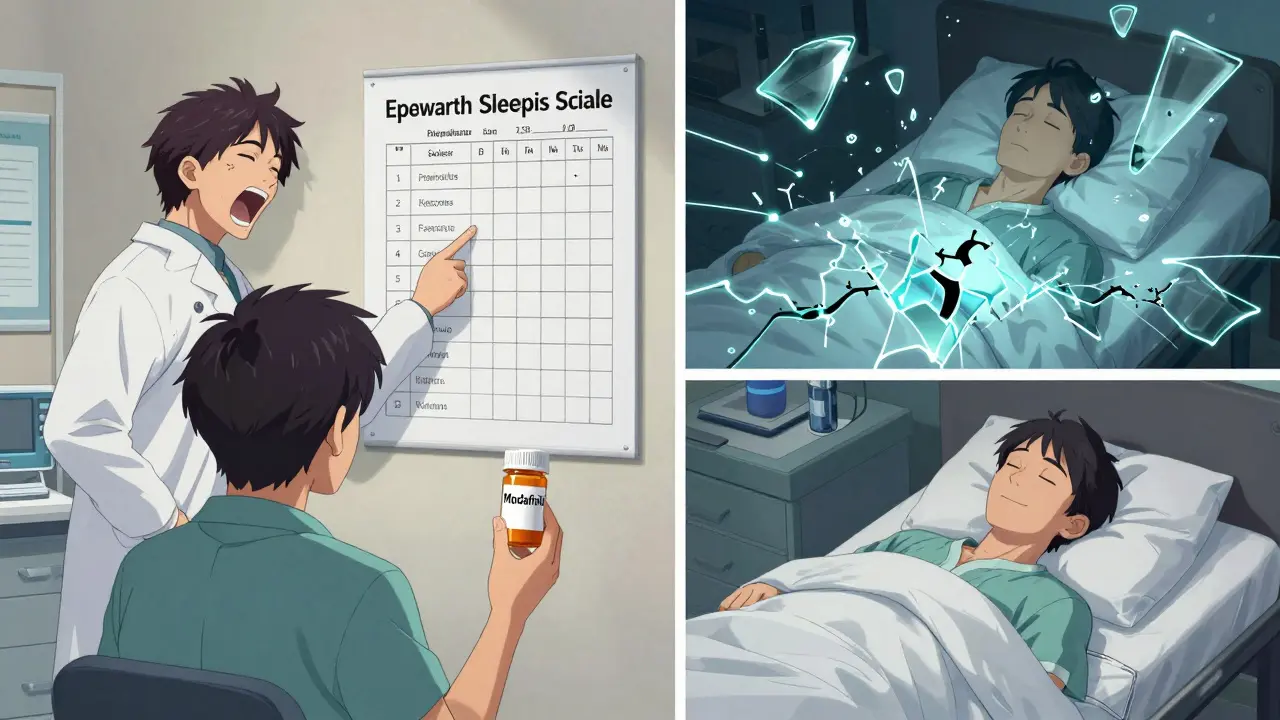
How Different Treatments Compare
Choosing the right stimulant isn’t one-size-fits-all. It depends on how bad your sleepiness is, your health history, and how you respond to side effects.
| Medication | Dose Range | Onset/Duration | ESS Improvement | Common Side Effects | Discontinuation Rate |
|---|---|---|---|---|---|
| Modafinil | 200-400 mg/day | 1-2 hours / 12 hours | 5.2 points | Headache, nausea, anxiety | 5% |
| Armodafinil | 150-250 mg/day | 1-2 hours / 15 hours | 6.1 points | Headache, insomnia | 7% |
| Methylphenidate | 10-60 mg/day | 30 mins / 4-6 hours | 7.8 points | Appetite loss, increased BP, jitteriness | 35% |
| Adderall | 5-60 mg/day | 30 mins / 4-8 hours | 7.8 points | Emotional blunting, insomnia, weight loss | 45% |
| Pitolisant | 17.8-35.6 mg/day | 2-4 hours / 12-15 hours | 6.1 points | Headache, nausea, insomnia | 12% |
| Solriamfetol | 75-150 mg/day | 1-2 hours / 12-15 hours | 7.5-9.8 points | Hypertension, dry mouth | 8% |
Modafinil and armodafinil are preferred for most patients because they’re safer. Traditional stimulants are reserved for those who don’t respond-or have severe EDS (Epworth score above 16). Newer drugs like pitolisant and solriamfetol are gaining ground. Pitolisant doesn’t affect dopamine directly, so it’s less likely to cause abuse or cardiovascular issues. Solriamfetol gives strong wakefulness without the crash, but it can raise blood pressure, so it’s not for people with heart problems.
Real Stories, Real Challenges
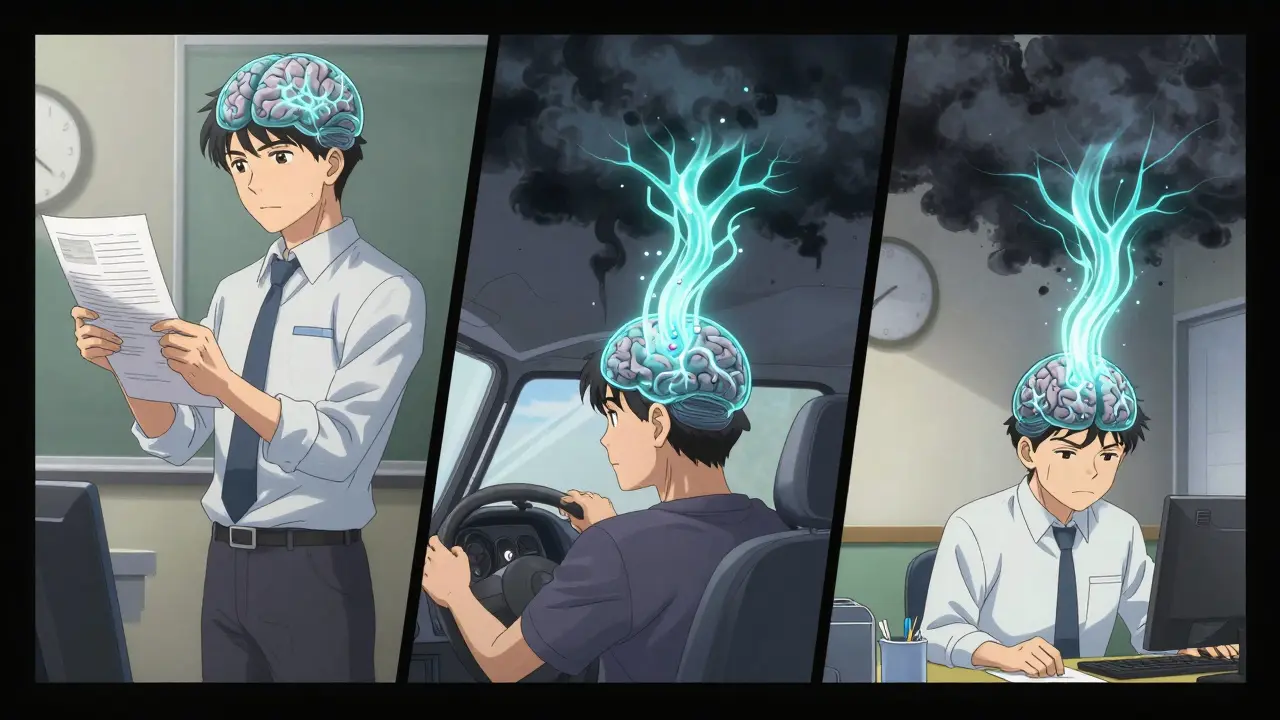
Sarah Johnson, a 34-year-old teacher, used to fall asleep grading papers. Her ESS score was 18-severe. After switching from modafinil to armodafinil 250 mg, her score dropped to 6. She now teaches full-time, drives, and lives independently. She’s not cured, but she’s functional.
Others aren’t so lucky. A 2023 survey of over 1,200 people on the Reddit narcolepsy forum showed that 68% experience “rebound fatigue” by late afternoon. No matter the drug, the effect fades. Many take a second dose in the afternoon, but that risks insomnia. Some switch drugs every few years as tolerance builds. Others stop taking stimulants altogether because the side effects outweigh the benefits.
Insurance is another hurdle. In the U.S., getting approval for armodafinil or pitolisant can take two weeks or more. About 78% of patients report delays in getting their meds, forcing them to go without or switch to cheaper, less effective options. Generic modafinil costs around $400/month. Brand-name pitolisant? $850. Many patients pay out of pocket-or go without.
What’s Next?
Current treatments manage symptoms. They don’t fix the root problem: the loss of hypocretin-producing cells. That’s why researchers are chasing disease-modifying therapies. One drug, TAK-994, showed promise in trials-boosting wakefulness without side effects. But development was paused due to liver toxicity. Another, JZP-258 (a lower-sodium version of oxybate), is under FDA review and could help patients who can’t tolerate the high salt content in current oxybate formulations.
The future may lie in restoring hypocretin. Scientists are exploring cell replacement therapies and immune-modulating drugs to stop the autoimmune attack that destroys these neurons in Type 1 narcolepsy. But those are still years away. For now, stimulants remain the best tool we have.
Monitoring and Long-Term Care
Treatment isn’t just about taking pills. It’s about tracking progress. Doctors recommend monthly Epworth Sleepiness Scale checks, quarterly blood pressure monitoring, and annual heart health reviews-especially if you’re on traditional stimulants. Many patients don’t realize their dose needs adjustment. One study found 42% stayed on a suboptimal dose for over six months because they didn’t report declining effectiveness.
Behavioral strategies help too. Scheduled short naps (15-20 minutes) during the day can reduce sleep attacks. Avoiding alcohol, heavy meals, and caffeine late in the day improves nighttime sleep. Workplace accommodations under the ADA-like flexible hours or nap breaks-can make a huge difference in quality of life.
But the biggest barrier isn’t medication. It’s awareness. An estimated 100,000 people in the U.S. alone have narcolepsy and don’t know it. If you’re constantly falling asleep during the day, even after sleeping well, talk to a sleep specialist. Don’t assume it’s stress. Don’t wait for a crisis. Diagnosis changes everything.
Can stimulants cure narcolepsy?
No. Stimulants only treat the symptom of excessive daytime sleepiness. They don’t restore the lost hypocretin neurons or fix the underlying neurological cause. Narcolepsy is a lifelong condition requiring ongoing management, not a cure.
Why is modafinil preferred over Adderall?
Modafinil has a much better safety profile. It’s less likely to raise blood pressure, cause anxiety, or lead to dependence. Adderall is more effective for severe cases, but its side effects-like emotional blunting, appetite loss, and cardiovascular strain-make it unsuitable for long-term use in many patients. Guidelines recommend modafinil as first-line for this reason.
Do all narcolepsy patients need stimulants?
Most do, especially for excessive daytime sleepiness. But some patients manage with scheduled naps, good sleep hygiene, and non-stimulant drugs like pitolisant or sodium oxybate (for cataplexy). However, stimulants remain the most effective option for EDS in the majority of cases.
What happens if I stop taking my stimulant?
Excessive daytime sleepiness returns quickly-often within hours. Sleep attacks, fatigue, and brain fog come back at previous levels. Stopping abruptly doesn’t cause withdrawal, but it does mean losing the ability to function safely during the day. Never stop without consulting your doctor.
Are there non-drug treatments for narcolepsy?
Yes. Scheduled short naps (15-20 minutes) during the day, maintaining a consistent sleep schedule, avoiding alcohol and heavy meals before bed, and using workplace accommodations can significantly improve daily function. But these are supportive measures-they don’t replace medication for most patients with moderate to severe EDS.
Michelle Jackson
March 16, 2026 AT 15:27Suchi G.
March 18, 2026 AT 05:21becca roberts
March 18, 2026 AT 20:14Paul Ratliff
March 18, 2026 AT 20:56SNEHA GUPTA
March 19, 2026 AT 12:26David Robinson
March 20, 2026 AT 06:44gemeika hernandez
March 20, 2026 AT 18:58Srividhya Srinivasan
March 22, 2026 AT 13:08Stephen Habegger
March 23, 2026 AT 08:00Justin Archuletta
March 23, 2026 AT 15:44Sanjana Rajan
March 23, 2026 AT 15:53Kyle Young
March 23, 2026 AT 18:55Aileen Nasywa Shabira
March 24, 2026 AT 20:18Kendrick Heyward
March 25, 2026 AT 20:55