
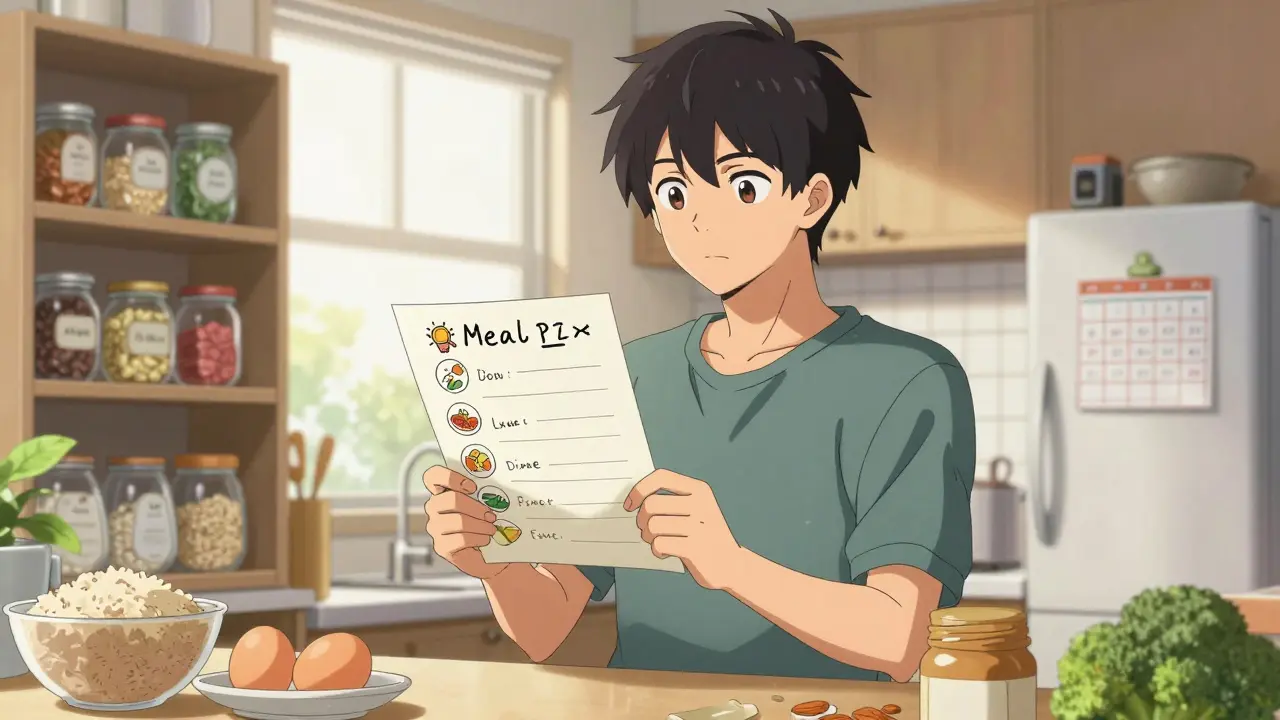
Trying to lose weight but always ending up with takeout or snacking on whatever’s in the fridge? You’re not alone. Around 41.9% of adults trying to lose weight say the biggest problem isn’t willpower-it’s lack of planning. The truth is, if you don’t know what you’re eating tomorrow, you’re leaving your progress to chance. Meal planning for weight loss isn’t about starving yourself or buying expensive diet foods. It’s about knowing exactly what’s on your plate, when, and why-so you can lose weight without feeling deprived.
Why Meal Planning Actually Works
Studies show people who plan their meals eat 150-200 fewer calories a day than those who don’t. That’s not magic. It’s structure. When you know your breakfast, lunch, dinner, and snacks are already decided, you stop making impulsive choices. You’re not deciding in the moment whether to grab a bag of chips or a banana-you’ve already picked the banana.
One Harvard study found that people using structured meal plans lost 7.3% of their body weight in six months. Those who just counted calories without planning lost just 3.1%. The difference? Planning cuts down on mindless eating, reduces food waste, and saves time. You’re not just eating less-you’re eating smarter.
What Makes a Good Meal Plan Template?
Not all templates are created equal. A good one has five key parts:
- Calorie targets-typically 1,200 to 2,500 calories per day, depending on your size, activity, and goals. Most effective plans split this into 400-calorie breakfasts, 500-600 for lunch and dinner, and 150-200 for snacks.
- Real recipes-not vague ideas like “grilled chicken.” You need actual ingredients and portion sizes.
- Categorized grocery lists-organized by store section (produce, dairy, pantry, etc.). This cuts shopping time by over 12 minutes per trip.
- Pantry tracker-so you don’t buy five more cans of beans you already have.
- Progress space-a place to check in weekly. Did you stick to your plan? Did you feel satisfied?
Templates that skip any of these five pieces are like a car with no brakes. You might move forward, but you won’t stop when you need to.
Free vs. Paid Templates: What’s Worth It?
You don’t need to spend money to start. Government sites like Nutrition.gov and MyPlate.gov offer free, science-backed templates based on the Mediterranean diet. They’re solid for beginners but lack personalization. If you’re vegan, gluten-free, or just hate oatmeal for breakfast, you’ll need more.
Commercial templates vary wildly:
- Canva has over 180 visually appealing templates. Great for people who like color-coding and customizing. But you have to manually track calories-no built-in math.
- 101Planners offers printable weekly booklets used by over a million people. Their templates include pre-filled grocery lists and space to note hunger levels. User surveys show 83% still use them after six weeks.
- Plant Based With Amy (by Amy Shepherd) offers calorie-specific plans (1,500, 1,800, 2,200) with vegan options. Popular with people avoiding animal products. Costs $14.99-$29.99 per plan.
- Notion is a digital powerhouse. You can link recipes, track macros, sync across devices, and even scan barcodes. But it takes 4+ hours to set up right. Only for tech-savvy users.
Here’s the catch: free templates often fail because they’re too rigid. One Reddit user wrote: “The 1,500-calorie plan left me starving by 3 PM.” That’s not your fault-it’s the template’s. The best plans let you swap meals, adjust portions, and skip a day without guilt.
How to Build Your Own Meal Plan (Step by Step)
Here’s how to start-even if you’ve never planned a meal before.
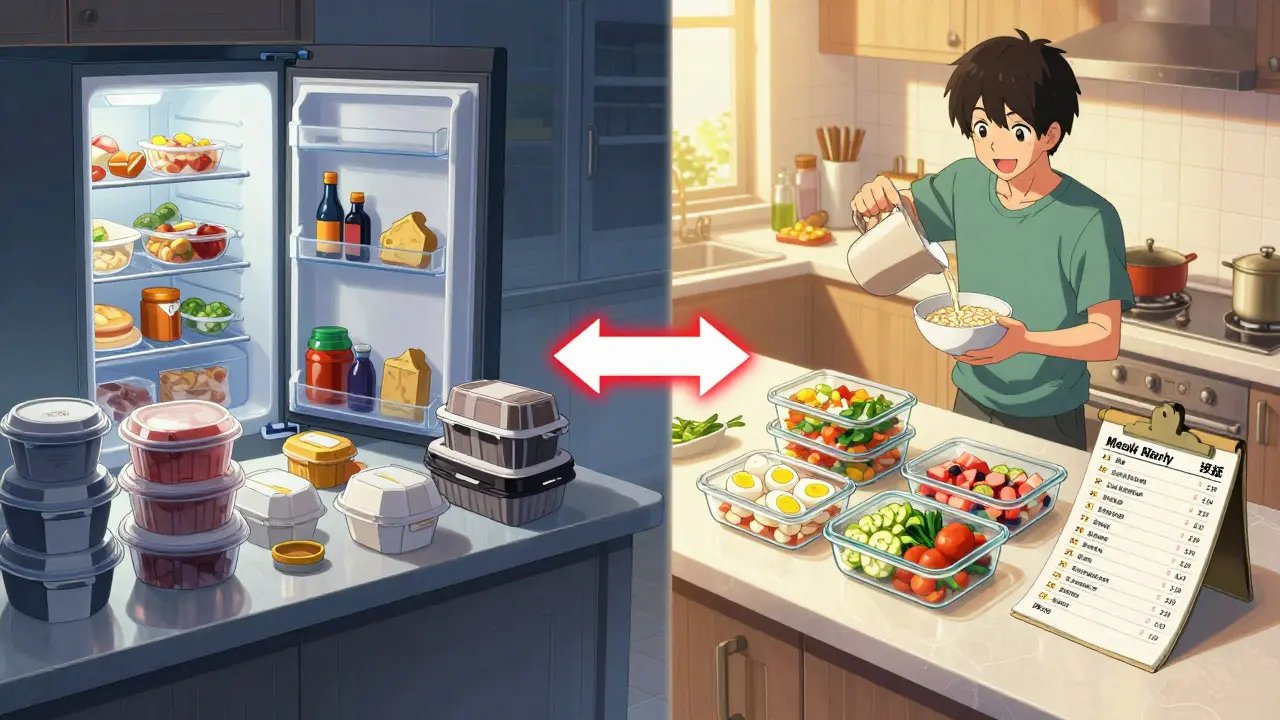
- Check your pantry. Look at what you already have. No need to buy more if you’ve got rice, canned beans, frozen veggies, eggs, or oats. This alone saves most people $28.50 a week, according to USDA data.
- Pick 3 meals you already know how to make. Start with comfort foods you love. Chicken stir-fry? Oatmeal with berries? Lentil soup? Build around these. You’re not starting from zero.
- Assign calories. Aim for 400 for breakfast, 500-600 for lunch and dinner, 150-200 for snacks. Use free apps like MyFitnessPal to estimate calories if you’re unsure.
- Fill in the gaps. If your lunch is rice and beans, add a side of steamed broccoli. If your snack is yogurt, add a handful of almonds. Protein and fiber keep you full longer.
- Make the grocery list. Group items by aisle: produce, dairy, meat, canned goods, spices. This isn’t just convenient-it cuts impulse buys by 29% according to Consumer Reports.
- Plan prep time. Spend 90 minutes on Sunday chopping veggies, cooking grains, boiling eggs. You’ll thank yourself on Tuesday night when you’re tired and hungry.
Don’t try to do this perfectly. Do it consistently. Even one week of planning gives you a huge edge.
Common Mistakes (And How to Avoid Them)
Most people quit meal planning because they make the same mistakes over and over.
- Over-planning. Trying to plan 14 meals a week? You’ll burn out. Start with 5-7. Master those. Then add more.
- Ignoring snacks. Over half of people who quit say they were too hungry between meals. Always include two snacks. Hard-boiled eggs, cottage cheese, apple with peanut butter-simple, filling, low-calorie.
- Buying everything fresh. Frozen vegetables, canned tuna, and dried beans are cheaper, last longer, and are just as nutritious. Don’t feel pressured to buy only “fresh.”
- Not adjusting for hunger. If you’re still hungry after a meal, add more veggies or protein. If you’re full, stop. Your plan is a guide, not a prison.
- Throwing away food. 38% of planned meals end up wasted because people bought too much. Stick to your list. If you buy extra, eat it first.
Real Results: What People Actually Achieve
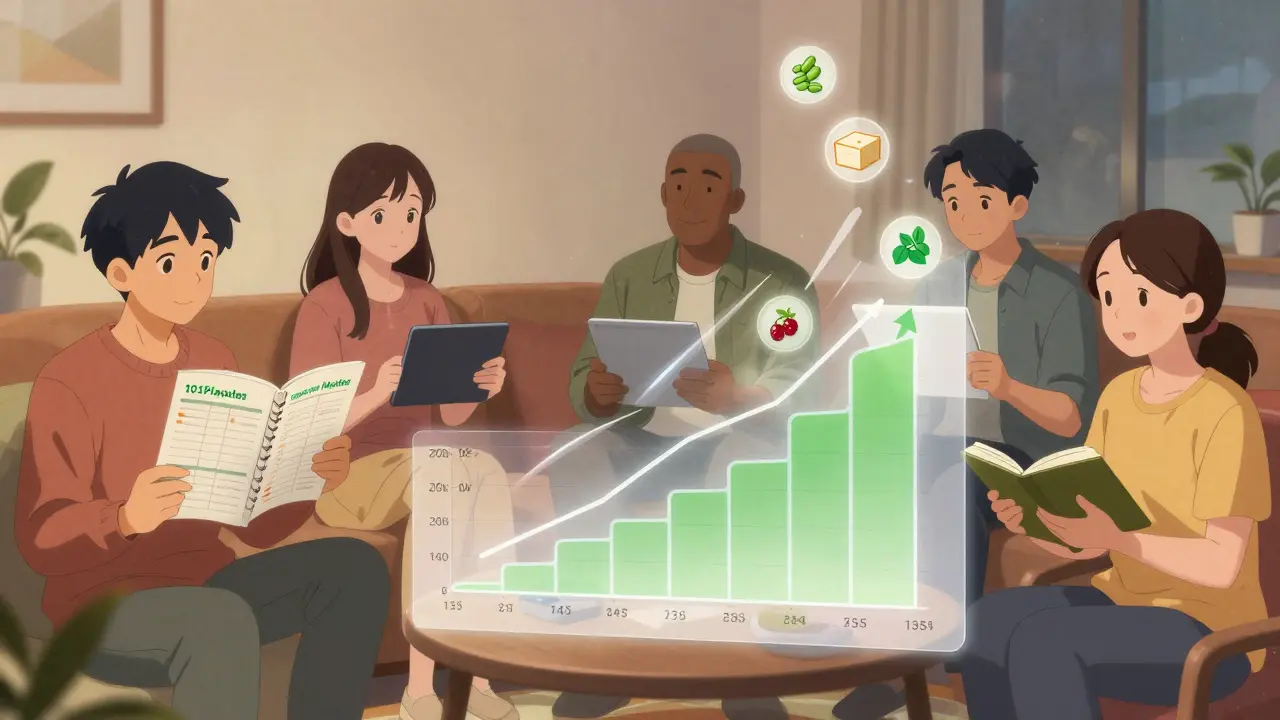
Reddit’s r/loseit community has over 2.4 million members. One user, u/HealthyHabitJenny, used a printable 101Planners template and lost 18 pounds in three months while cutting her grocery bill by $47 a week. Another, u/MealPrepMaster89, lost 72 pounds over 11 months using a template with macro tracking.
These aren’t outliers. They’re people who stopped guessing and started planning. They didn’t buy special supplements or join a gym. They just knew what they were eating-and stuck to it.
What’s Next? The Future of Meal Planning
Technology is catching up. Apps like Lose It! now use AI to predict your grocery needs based on your eating habits. Notion added barcode scanning to track pantry items. By 2025, some tools will connect to glucose monitors to show how your meals affect your blood sugar.
But the core hasn’t changed. Whether you’re using a paper template or an app, the secret is the same: know what you’re eating before you eat it. That’s how you lose weight without feeling like you’re on a diet.
Start Today. No Fancy Tools Needed.
You don’t need a subscription. You don’t need a fancy app. Grab a notebook or open a blank document. Write down what you’ll eat tomorrow. Breakfast, lunch, dinner, two snacks. Then write down what you need to buy. Go to the store. Cook it. Eat it. Repeat.
That’s it. No magic. No gimmicks. Just planning.
If you do this for one week, you’ll already be ahead of 80% of people trying to lose weight. And if you keep going? You’ll not only lose weight-you’ll finally feel in control of your eating habits for good.
Can I meal plan if I’m vegetarian or vegan?
Yes. Many templates, like those from Plant Based With Amy, are designed specifically for plant-based diets. Focus on beans, lentils, tofu, tempeh, whole grains, nuts, and seeds for protein. Most grocery lists include plant-based swaps like almond milk, nutritional yeast, and chickpea pasta. Just make sure you’re getting enough iron, B12, and omega-3s-consider fortified foods or supplements if needed.
How many calories should I eat to lose weight?
For most adults, 1,200-1,800 calories per day leads to steady weight loss. Women typically start at 1,500, men at 1,800. But it depends on your size, age, and activity. Use a free online calculator to estimate your needs. Never go below 1,200 without medical supervision. The goal is a 500-calorie daily deficit-that’s about 1 pound lost per week.
Do I need to weigh my food?
Not always. For beginners, measuring with cups and spoons is fine. But if you’re not losing weight after two weeks, start weighing protein portions (chicken, fish, tofu) and carbs (rice, pasta). A 3-ounce chicken breast is about the size of a deck of cards. One cup of rice is roughly the size of a tennis ball. Accuracy matters more than perfection.
What if I eat out or get invited to dinner?
Plan for it. If you know you’re eating out, make your other meals lighter. Choose grilled over fried, ask for sauces on the side, and fill half your plate with vegetables. Don’t skip meals to “save” calories-that leads to overeating later. One unplanned meal won’t ruin your progress. Consistency over weeks and months matters far more than one day.
How long does it take to get good at meal planning?
Most people find their rhythm in 2-3 weeks. The first week feels overwhelming. Week two, you start recognizing patterns. By week three, you’re grabbing ingredients without thinking. It becomes automatic. Don’t expect perfection. Expect progress. Even planning three meals a week is better than none.
Are meal planning apps better than paper templates?
It depends on you. Apps track calories and sync across devices, which helps if you’re tech-savvy. But paper templates are simpler, less distracting, and don’t require batteries. Studies show printable templates have higher long-term use-83% still use them after six weeks. If you’re not sure, start with paper. You can always switch later.
Stuart Shield
January 5, 2026 AT 14:37Man, I used to be the king of midnight snack raids-chips, ice cream, whatever was cold and tasty. Then I tried the 101Planners template last January. No magic, just structure. I started with just 3 meals a week. Now I’m 32 pounds lighter and actually enjoy grocery shopping. Who knew planning could feel like a hobby? 🙌
Jeane Hendrix
January 7, 2026 AT 00:55ok so i’ve been using notion for meal planning and it’s kinda a beast to set up but once you get the database linked to myfitnesspal and barcode scanner? it’s like having a personal nutritionist in your pocket. macros auto-calculate, pantry updates in real time, and i can even tag meals as ‘high energy’ or ‘comfort food’ for mood tracking. it’s not for everyone but if you’re into systems? this is the endgame. 🤖📊
Katie Schoen
January 7, 2026 AT 23:33Free templates are great until you realize they assume you like oatmeal at 7am and have 90 minutes to prep meals on Sunday. I’m a single mom who works nights. My ‘meal plan’ is usually ‘what’s in the freezer before I pass out.’ But I stole the grocery list hack from this post-organized by aisle? Game changer. Saved me 17 minutes last week. That’s 17 minutes I didn’t cry in the dairy section.
Cam Jane
January 8, 2026 AT 14:33Just want to say-this post is gold. Seriously. The part about snacks being the #1 reason people quit? So true. I used to think snacks were cheating. Nope. They’re survival. Now I keep hard-boiled eggs, string cheese, and sliced bell peppers ready. No more 3pm sugar crashes. Also-frozen veggies are your BFF. They’re cheaper, last forever, and taste just as good. Don’t let anyone make you feel bad for using them. You’re not lazy-you’re smart.
Isaac Jules
January 10, 2026 AT 12:3090% of these ‘templates’ are just glorified grocery lists with calorie counts slapped on. You think people don’t know how to count calories? They do. What they don’t know is how to deal with emotional eating. No spreadsheet fixes trauma. Stop pretending meal planning is the answer-it’s just a bandaid on a bullet wound. 🤡
Amy Le
January 12, 2026 AT 07:10USA has the most advanced food culture in the world, yet we’re obsessed with ‘templates’ and ‘plans’ like we’re in some kind of dystopian diet cult. In France, people eat what they want, stop when full, and live longer. Why are we so obsessed with controlling every bite? Maybe the problem isn’t the plan-it’s the mindset. 🇺🇸❌
Susan Arlene
January 13, 2026 AT 23:48started with a napkin. wrote down eggs, toast, apple. did it for 3 days. then added chicken and broccoli. now i dont even think about it. its just… what i do. no apps. no color coding. just me and my hunger. sometimes i skip a meal. sometimes i eat pizza. its fine. the plan is just a suggestion now. not a rule.
Ashley S
January 15, 2026 AT 04:48This is why America is falling apart. People need to be told what to eat like they’re five years old? We used to just eat food. Now we need color-coded charts and barcode scanners? Get off your phone. Go outside. Eat a real meal. Stop turning food into a math problem.
Rachel Wermager
January 15, 2026 AT 11:31Let’s be real-most people don’t understand macronutrient distribution. A 1,500-calorie plan with 40% carbs is going to spike insulin and trigger cravings. You need a protein leverage threshold of at least 25% protein to maintain satiety. And if you’re not tracking leucine content in plant proteins, you’re not building muscle. Also, fiber intake below 25g/day is clinically insufficient for gut microbiome diversity. So… your template’s probably useless unless it’s macro-optimized and microbiome-aware.
Dana Termini
January 17, 2026 AT 08:19I used to think meal planning was boring. Then I tried doing it with my sister-we each picked one meal to cook each week, swapped recipes, and ate together over Zoom. Turns out, planning became a way to connect. I lost 12 pounds, but more importantly, I stopped eating alone. Food doesn’t have to be a chore. It can be a quiet kind of love.
Lily Lilyy
January 18, 2026 AT 19:18To everyone who says this is too much work: You’re not doing it wrong-you’re just not starting small enough. One meal. One day. One grocery list. That’s all you need. You don’t need to be perfect. You just need to show up. And when you do? You’ll feel something you haven’t felt in a long time: control. Not over your body-but over your choices. And that? That’s freedom.
Joann Absi
January 20, 2026 AT 08:08My cousin lost 80 pounds using this exact method. She cried when she saw her reflection. She said, ‘I didn’t know I could trust myself.’ That’s the real win. Not the scale. Not the template. It’s knowing you won’t betray yourself again. And if you don’t feel that? Then you’re not trying hard enough. 🌟