

Levothyroxine and Supplement Timing Calculator
Medication Timing Calculator
Calculate the proper separation times between your levothyroxine, calcium, and iron doses to maximize medication effectiveness.
When you're taking levothyroxine for hypothyroidism, getting the dose right isn't just about the number on the pill. It's about when you take it-and what else you take with it. Many people don’t realize that common supplements like iron and calcium can slash your thyroid medication’s effectiveness by up to 25%. That means your TSH levels might climb, your fatigue might return, and your weight might start creeping up-even if you're taking your pill every morning like clockwork.
Why Iron and Calcium Interfere with Levothyroxine
Levothyroxine is a synthetic version of the thyroid hormone T4. It’s designed to be absorbed in the upper part of your small intestine. But when calcium or iron is present at the same time, they bind to the medication before it can be absorbed. This isn’t a minor issue-it’s a well-documented, clinically significant interaction.A 2011 study in the Journal of Clinical Endocrinology & Metabolism tested this with eight healthy adults. When levothyroxine was taken with calcium carbonate, calcium citrate, or calcium acetate, absorption dropped by 20-25%. The same thing happens with iron. A 1992 study found that 78.6% of patients on stable levothyroxine saw their TSH levels spike after starting ferrous sulfate. Some even developed symptoms of hypothyroidism again-brain fog, cold hands, weight gain.
The science behind it is simple: both calcium and iron form insoluble complexes with levothyroxine in the gut. Think of it like a magnet pulling the medication away from where it needs to be absorbed. Even low doses matter. The FDA says just 500 mg of elemental calcium can reduce absorption by 22.3%. That’s less than one standard calcium tablet.
How Long Should You Wait?
There’s no one-size-fits-all answer, but the guidelines are clear:- For calcium supplements: Wait at least 4 hours after taking levothyroxine.
- For iron supplements: Wait 2-4 hours after levothyroxine before taking iron.
Why the difference? Iron binds more aggressively to levothyroxine in lab tests, but calcium is often taken in larger, more frequent doses. Both need separation, but iron’s impact is more sudden and dramatic.
Here’s a breakdown of how different calcium forms compare:
| Calcium Form | Absorption Reduction | Recommended Separation Time |
|---|---|---|
| Calcium Carbonate | 22.3% | 4 hours |
| Calcium Citrate | 21.8% | 4 hours |
| Calcium Acetate | 24.7% | 4 hours |
Surprisingly, calcium acetate-which some older studies claimed was safer-actually causes the highest drop in absorption. So no matter what type you’re taking, stick to the 4-hour rule.
When to Take Your Medications
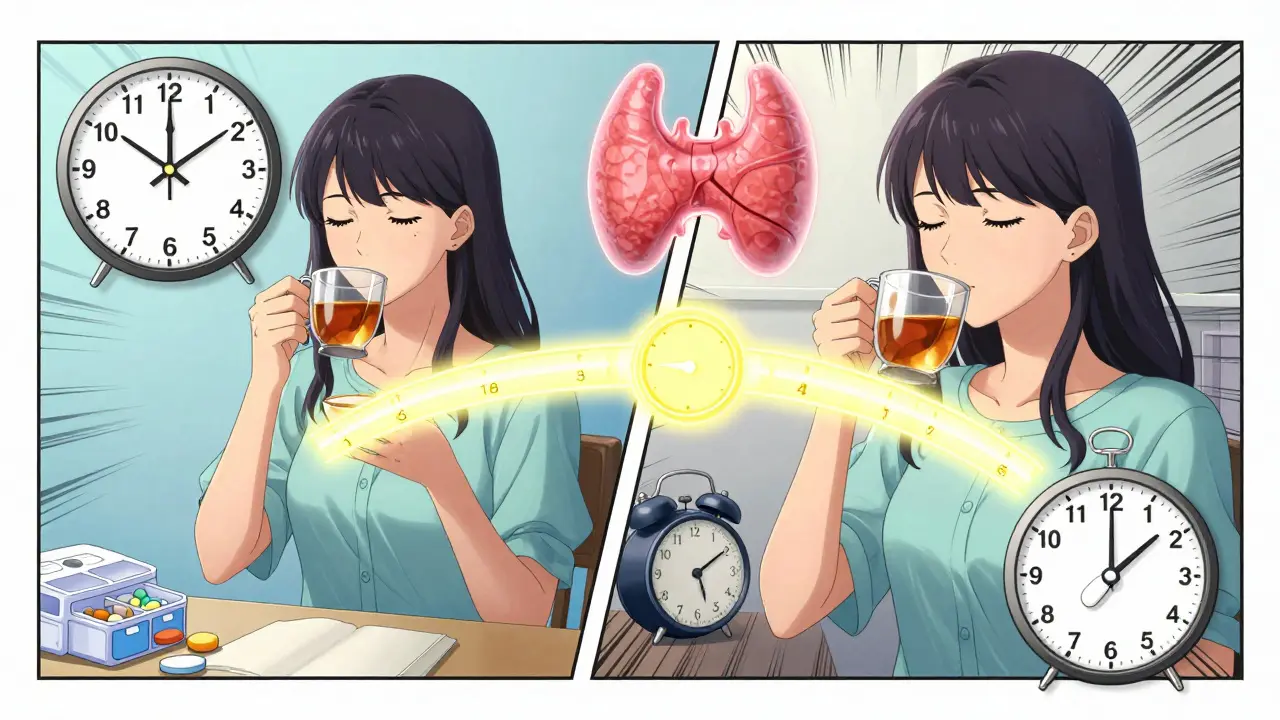
The best time to take levothyroxine is on an empty stomach, 30 to 60 minutes before breakfast, with a full glass of water. This gives it the cleanest path to absorption.Here’s how to structure your day:
- 6:00 AM: Take levothyroxine with water. Wait 30-60 minutes before eating.
- 10:00 AM: Take your iron supplement (if prescribed in the morning).
- 2:00 PM: Take calcium supplement with lunch or a snack.
- 8:00 PM: Take evening calcium or iron if needed-just make sure it’s at least 4 hours after your morning dose.
Many people take calcium at night because it’s easier to remember. That’s fine-as long as you wait until 10 PM or later to take it. The key is consistency. If you switch from morning calcium to nighttime, your body might react with fluctuating TSH levels.
What If You Can’t Stick to the Schedule?
Life gets busy. Work, kids, travel-all of it makes timing hard. A 2022 study found that 41% of patients didn’t follow separation guidelines. That’s why endocrinologists now recommend practical tools:- Smartphone alarms: Set two: one for levothyroxine, one for supplements. 78% of endocrinologists surveyed in 2023 recommend this.
- Pill organizers: Use one with labeled compartments for morning, afternoon, and night. Don’t mix levothyroxine with other pills in the same slot.
- Write it down: Tape a note to your bathroom mirror: “Thyroid med first. Wait 4 hours. Then calcium. Wait 2-4 hours. Then iron.”
Some patients report better results with liquid levothyroxine. A 2008 study showed that when iron was taken with liquid levothyroxine, TSH levels stayed much lower than with tablets. The liquid form may be less prone to binding. But it costs about 35% more than standard tablets. If your insurance covers it and you’ve struggled with absorption, it’s worth asking your doctor.
What About Food and Other Supplements?
Calcium and iron aren’t the only offenders. Soy products, fiber supplements, antacids, and even coffee can interfere. Here’s what to avoid within an hour of your dose:- Soy milk or tofu
- High-fiber cereals or bran
- Antacids containing aluminum or magnesium
- Coffee (even one cup)
- Calcium-fortified orange juice
Water is your best friend. It helps flush the pill down and keeps your stomach empty for absorption.
What Happens If You Don’t Separate Them?
You might not notice right away. But over time, your thyroid hormone levels drop. Your TSH rises. Your doctor might think you’re not taking your medication-when in reality, you are. But it’s not getting absorbed.A 2020 study of 605 patients found that 16% needed a dose increase simply because they were taking calcium or iron too close together. One patient on Reddit shared: “I took Synthroid at 6 AM and calcium with dinner. My TSH went from 2.1 to 7.4 in three months. My doctor thought I was non-compliant. I was just ignorant.”
When separation is followed, results improve dramatically. A case study from ThyroidUK showed a patient’s TSH dropped from 7.4 to 1.8 after switching to a 4-hour gap. That’s the difference between feeling sluggish and feeling normal.
What’s New in 2026?
The FDA approved a new extended-release levothyroxine formulation called Thyropatch ER in late 2023. Early data suggests it reduces calcium interactions by 28%. It’s not a magic fix, but it’s a step forward. Phase II trials for nanoparticle delivery systems are also showing promise-92% absorption even with calcium present.But for now, the best solution is still simple: time and distance. Don’t wait for new drugs. Use what works today.
Can I take levothyroxine and calcium at the same time if I skip a meal?
No. Even if you haven’t eaten, calcium still binds to levothyroxine in the gut. The interaction happens regardless of food. The 4-hour separation is required whether you’re fasting or not.
What if I forget and take them together? Should I take another dose?
Don’t double up. Taking an extra dose can cause side effects like rapid heartbeat or anxiety. Just wait until tomorrow and stick to the correct schedule. If this happens often, talk to your doctor about adjusting your timing or switching to liquid levothyroxine.
Is there a difference between over-the-counter and prescription calcium/iron?
No. The interaction depends on the elemental calcium or iron content, not whether it’s prescription or OTC. A 500 mg OTC calcium tablet has the same effect as a prescription one. Always check the label for elemental content.
Can I take multivitamins with levothyroxine?
Only if they don’t contain calcium or iron. Many multivitamins include both. Check the ingredient list. If they do, take them at least 4 hours after your thyroid medication. Otherwise, take a separate multivitamin without these minerals.
How long does it take for TSH to stabilize after I start separating my doses?
It usually takes 4-6 weeks. Thyroid hormone levels change slowly. Your doctor will likely check your TSH again after 6 weeks to see if your dose needs adjustment. Don’t rush it-consistency matters more than speed.
If you’re taking levothyroxine and supplements, you’re not alone. Millions of people manage this every day. The key isn’t perfection-it’s awareness. A few minutes of planning each morning can save you months of fatigue, confusion, and unnecessary doctor visits. Stick to the schedule. Use alarms. Know your numbers. And don’t let a simple interaction steal your energy.
Jessica Chaloux
March 3, 2026 AT 14:34Mariah Carle
March 5, 2026 AT 10:11Donna Zurick
March 6, 2026 AT 05:14Stephen Vassilev
March 6, 2026 AT 09:30John Cyrus
March 6, 2026 AT 19:12tatiana verdesoto
March 7, 2026 AT 00:25Tobias Mösl
March 8, 2026 AT 12:02Ethan Zeeb
March 8, 2026 AT 18:48Darren Torpey
March 9, 2026 AT 17:04Lebogang kekana
March 10, 2026 AT 01:23Raman Kapri
March 10, 2026 AT 23:14Renee Jackson
March 11, 2026 AT 20:35