
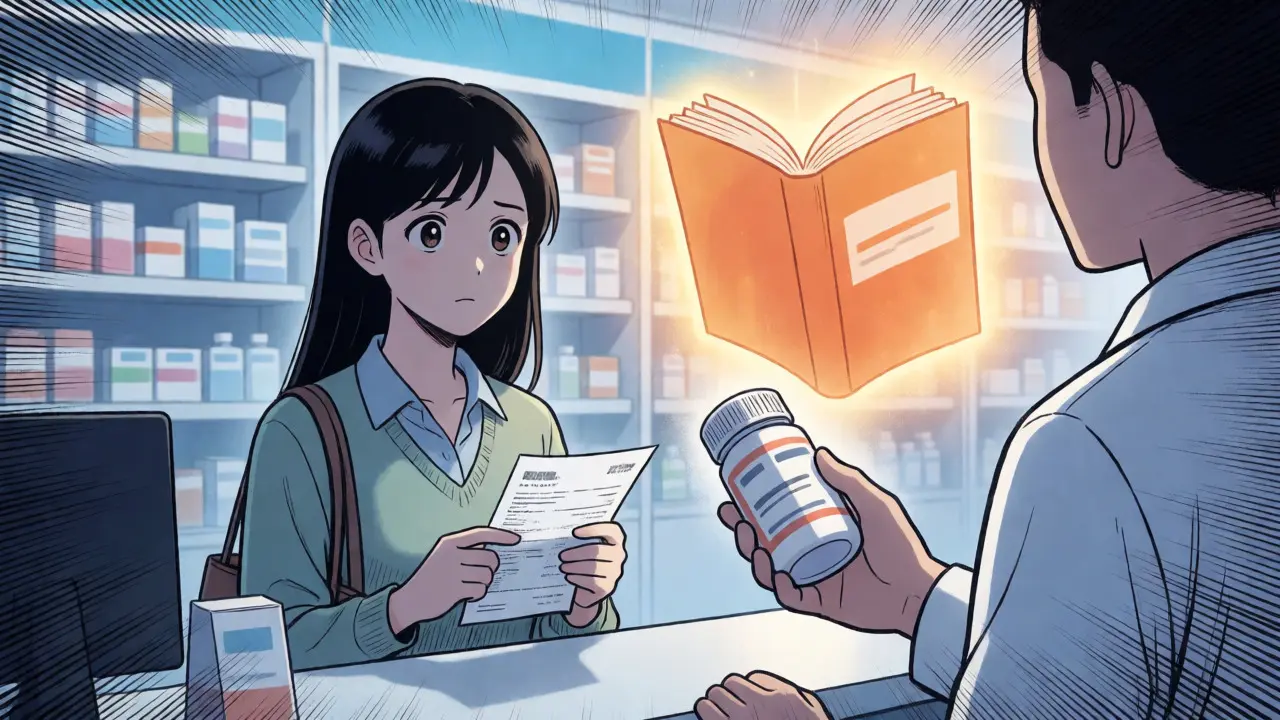
You’re standing at the pharmacy counter, holding a prescription for a brand-name drug. The pharmacist offers you a generic version that costs 80% less. You hesitate. Is this cheaper pill actually the same as the expensive one? Or is it just a look-alike with different fillers? This isn’t paranoia; it’s a valid question about generic equivalence. The answer lies in a digital database most people never touch: the FDA Orange Book.
The FDA Orange Book is the official publication of the U.S. Food and Drug Administration that lists approved drug products and their therapeutic equivalence evaluations. It’s not just a list; it’s the legal backbone of how generics enter the market. Established under the Hatch-Waxman Act, this resource tells pharmacists exactly which generics can be swapped for brand names without asking your doctor first. But reading it requires knowing what to look for. Here is how you can verify if a generic is truly equivalent, step by step.
Understanding the Therapeutic Equivalence Code
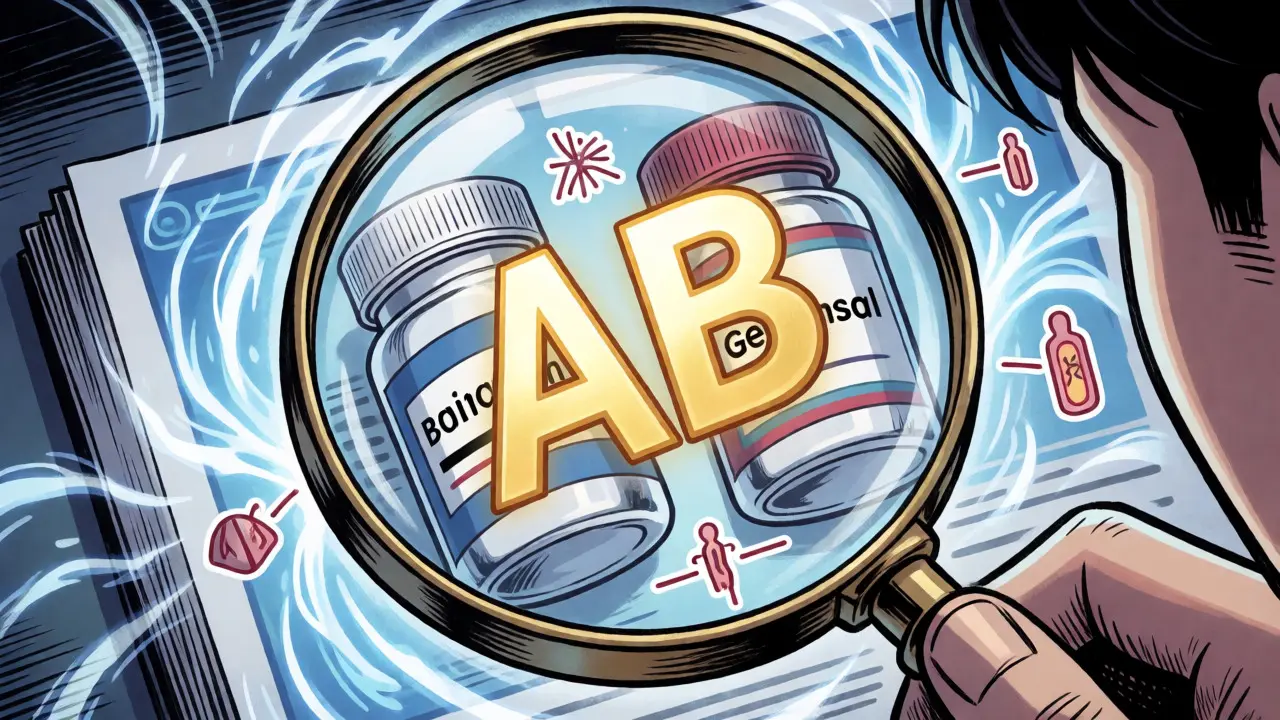
When you search the Orange Book, the most critical piece of data you’ll see is a two-letter code called the Therapeutic Equivalence (TE) Code. This code is the FDA’s scientific stamp of approval on substitution. It’s not random. The first letter indicates whether the product meets pharmaceutical standards, while the second letter confirms bioequivalence.
Most generics you encounter will have an "AB" rating. What does that mean? "A" means the product is considered therapeutically equivalent to other pharmaceutically equivalent products. "B" means it is not considered therapeutically equivalent due to known or potential issues. So, an "AB" rating is the gold standard. It tells you the generic has been proven to deliver the same amount of active ingredient into your bloodstream as the brand name, under the same conditions.
However, don’t assume every generic gets an AB code automatically. Some products are rated "BX." This is a red flag. A BX rating means the FDA hasn’t determined therapeutic equivalence yet, often because the drug is new or complex, like certain inhalers or topical creams. If you see BX, do not assume it’s interchangeable without consulting your pharmacist.
| Code | Meaning | Substitution Status |
|---|---|---|
| AB | Therapeutically equivalent to the Reference Listed Drug (RLD). | Safe for automatic substitution in most states. |
| AA | Pharmaceutical equivalents but not necessarily bioequivalent (rare for generics). | Check specific state laws. |
| BX | Equivalence not established; often used for complex dosage forms. | Do not substitute without professional advice. |
| AN | Not considered therapeutically equivalent due to labeling differences. | Generally not substitutable. |
Identifying the Reference Listed Drug (RLD)
To understand if a generic matches the brand, you need to know what the brand is compared against. In the Orange Book, this is called the Reference Listed Drug (RLD). Think of the RLD as the benchmark. Every generic must prove it works just as well as its specific RLD.
Here’s where it gets tricky. Sometimes, multiple drugs exist for the same active ingredient. For example, there might be two different brand-name versions of Levothyroxine, each with its own unique formulation. Both could be RLDs. When this happens, the Orange Book uses numerical suffixes. You might see codes like AB1, AB2, or AB3. These numbers indicate which specific RLD the generic was tested against.
If you are switching from Brand X to Generic Y, you must ensure Generic Y has an AB rating linked to the same RLD as Brand X. If Brand X is RLD #1, and Generic Y is rated AB2, it means Generic Y was tested against RLD #2. While they contain the same active ingredient, the inactive ingredients (fillers, binders) might differ enough to affect absorption in sensitive patients. This is crucial for narrow therapeutic index drugs, where small changes in blood levels matter.
Navigating the Electronic Orange Book Search
Gone are the days of flipping through a heavy printed book. The Electronic Orange Book is updated daily and is free to use online. But searching it efficiently takes a bit of strategy. Don’t just type in the generic name. Start with the brand.
- Search by Proprietary Name: Enter the brand name (e.g., Lipitor) in the search bar. This identifies the active ingredient (Atorvastatin).
- Switch to Ingredient Search: Now, search by the active ingredient name. This pulls up all approved products containing Atorvastatin.
- Filter by Dosage Form: Results will show tablets, capsules, etc. Stick to the form prescribed to you.
- Locate the RLD Column: Look for the column labeled "RLD." The brand name you started with should say "Yes." Generics will say "No."
- Check the TE Code: Scan the last column for the TE code. Confirm it says "AB" and matches the correct RLD number if applicable.
A common mistake users make is ignoring the "Discontinued" section. If a drug is discontinued, it loses its RLD status and TE ratings. Always check the current date stamp on the page to ensure you’re looking at live data. The FDA updates this database daily, so yesterday’s listing might be outdated today.
Patents vs. Exclusivity: Why Availability Matters
Just because a generic is rated AB doesn’t mean it’s available on the shelf. The Orange Book also lists patent information and exclusivity periods. This is vital context for why some generics take years to appear.
Under the Hatch-Waxman Act, brand manufacturers list patents protecting their drug. Generic manufacturers must certify against these patents. Often, the first company to challenge a patent gets 180 days of exclusive marketing rights. During this time, only one generic exists. Once that period ends, more competitors enter, driving prices down further.
When verifying equivalence, remember that patent expiration dates are estimates. Legal challenges can extend them. If you’re wondering why a cheap generic isn’t available yet, check the "Patent Expiration" column. If the date is in the future, the brand still holds monopoly power, regardless of how many AB-rated generics are technically approved.

Real-World Limitations and State Laws
The Orange Book provides federal guidelines, but healthcare is delivered locally. This creates a gap between federal equivalence and local practice. A major limitation is that the Orange Book does not account for state-specific substitution laws.
In some states, pharmacists cannot automatically substitute certain drugs, even if they are AB-rated. This is especially true for narrow therapeutic index (NTI) drugs like warfarin or levothyroxine. Doctors may prefer you stay on the exact same manufacturer’s product to avoid minor variations in absorption. The Orange Book says "equivalent," but your doctor might say "stick with what works."
Another nuance involves over-the-counter (OTC) drugs. The Orange Book focuses on prescription medications. OTC products generally do not receive TE codes. Just because a store-brand ibuprofen looks like Advil doesn’t mean it’s verified by the Orange Book system in the same rigorous way. For prescriptions, though, the AB rating is your best evidence of safety and efficacy.
Troubleshooting Common Verification Errors
Even experienced professionals get tripped up. Here are three pitfalls to avoid when checking generic equivalence:
- Confusing Bioequivalence with Identical Composition: AB-rated generics don’t always have identical inactive ingredients. They must have the same active ingredient, strength, dosage form, and route of administration. Fillers can vary. If you have allergies to dyes or gluten, check the label, not just the TE code.
- Ignoring Multiple RLDs: As mentioned, if a drug has AB1 and AB2 ratings, ensure you match the right one. Switching between products tied to different RLDs can cause unexpected side effects in sensitive individuals.
- Relying on Third-Party Apps: Apps like Drugs.com or Micromedex pull data from the Orange Book, but they can lag by 24-72 hours. For critical decisions, always cross-check with the official FDA site.
Verifying generic equivalence isn’t about doubting your pharmacist. It’s about understanding the science behind the swap. The Orange Book gives you the tools to ask better questions. Next time you pick up a prescription, glance at the TE code. If it’s AB, you’re getting a medication that the FDA has scientifically validated as equal to the brand. That knowledge is worth more than the price difference.
What does an 'AB' rating mean in the FDA Orange Book?
An 'AB' rating indicates that the FDA considers the generic drug therapeutically equivalent to the Reference Listed Drug (RLD). This means it contains the same active ingredient, strength, and dosage form, and has demonstrated bioequivalence, allowing for automatic substitution in most cases.
Are all generic drugs safe to substitute for brand names?
Most are, provided they have an 'AB' rating. However, some drugs, particularly those with a narrow therapeutic index, may require physician approval for substitution depending on state laws and individual patient sensitivity. Always consult your pharmacist if unsure.
Why do some generics have numbers after their code, like AB1 or AB2?
Numerical suffixes indicate which specific Reference Listed Drug (RLD) the generic was tested against. This occurs when multiple brand-name drugs exist for the same active ingredient. Matching the number ensures you are comparing against the correct benchmark.
Does the Orange Book cover over-the-counter (OTC) drugs?
No, the Orange Book primarily evaluates prescription drugs for therapeutic equivalence. OTC products are generally excluded from these specific TE coding evaluations, although they must still meet FDA safety and labeling standards.
How often is the FDA Orange Book updated?
The electronic version of the Orange Book is updated daily. Major comprehensive updates occur monthly. Always check the current date on the website to ensure you are viewing the most recent data regarding approvals and patent expirations.