
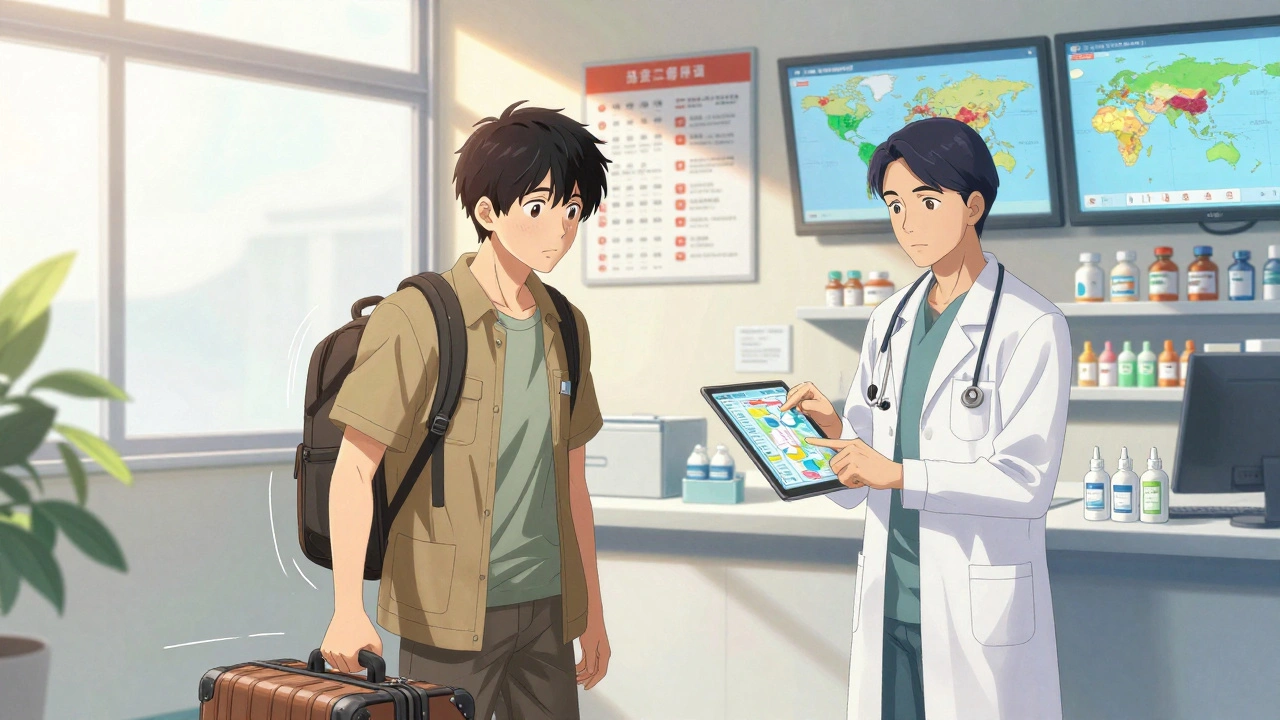
Planning a trip abroad? Don’t just pack your suitcase-pack your health too. Many travelers think a quick visit to their regular doctor or a pharmacy is enough before heading overseas. But if you’re going to a country with different disease risks, that’s not enough. Travel health clinics are designed for exactly this: making sure you don’t get sick because you didn’t plan ahead.
Why a Travel Health Clinic Is Different From Your Regular Doctor
Your family doctor knows your medical history. But they don’t know that malaria is resistant to chloroquine in Ghana, or that yellow fever vaccination must be given at a certified clinic to be valid. Travel health clinics specialize in this. They track outbreaks, update their protocols every quarter, and know exactly which medications work where-and when to start them. According to the CDC, travelers who see a travel clinic are 63% less likely to get sick on the road than those who don’t. Why? Because these clinics don’t just hand out prescriptions. They build a full prevention plan: vaccines, pills, advice on water safety, and even what to do if you get diarrhea 3,000 miles from home.What Happens During a Travel Health Consultation
A typical appointment lasts 30 to 45 minutes. You won’t be rushed. The provider will ask for details like:- Where exactly you’re going (not just ‘Thailand’-but Bangkok, Chiang Mai, and jungle treks)
- How long you’ll stay
- What you’ll be doing (hiking, street food, volunteering, luxury resorts)
- Your medical history (especially if you have diabetes, asthma, or take immunosuppressants)
- Vaccines (like typhoid, hepatitis A, or yellow fever)
- Prophylactic medications (like malaria pills)
- Emergency meds (like azithromycin for traveler’s diarrhea)
- Supplies (oral rehydration salts, insect repellent with DEET, water filters)
Medications You Might Get (And When to Start)
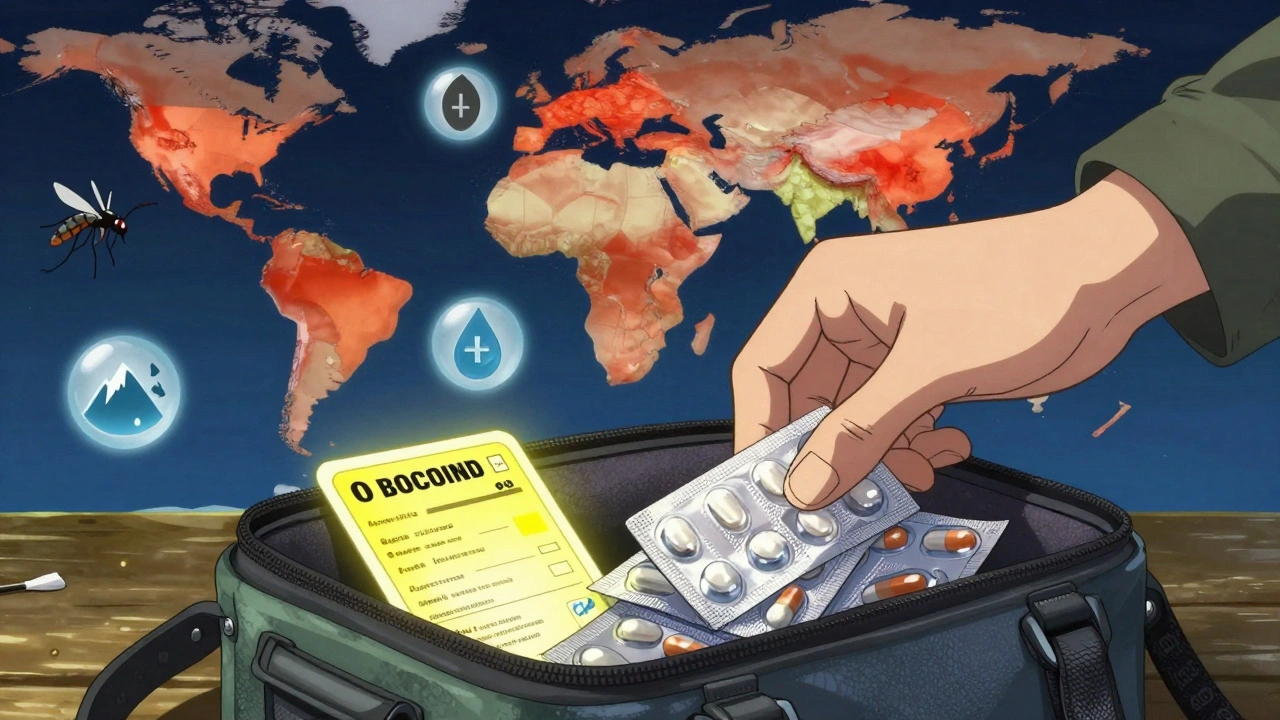
Here’s what you might walk out with, and why timing matters:- Malaria pills: Malarone starts 1-2 days before travel; doxycycline starts 1-2 days before; mefloquine starts 2-3 weeks before. Missing the start window means you’re unprotected.
- Yellow fever vaccine: Must be given at least 10 days before travel. Only certified clinics can give it-and they’ll give you the official International Certificate, which some countries check at entry.
- Traveler’s diarrhea treatment: Azithromycin (500 mg daily for 3 days) is now preferred over older antibiotics like ciprofloxacin. The clinic will tell you to carry it and only take it if you have watery diarrhea with fever or blood.
- Altitude sickness: If you’re trekking in the Andes or Himalayas, acetazolamide (Diamox) at 125 mg twice daily, starting 24-48 hours before ascent, can prevent headaches, nausea, and worse.
Where to Find a Travel Health Clinic
There are over 1,200 travel health clinics in the U.S. as of 2025. They fall into four main types:- University hospitals (like UCLA, Stanford, UC Davis): Often the most thorough. Consultations cost $150-$250. Insurance rarely covers them, but they handle complex cases best.
- Retail clinics (CVS MinuteClinic, Walgreens): Cheaper ($129), sometimes covered by insurance. Good for routine trips, but they won’t handle chronic conditions or complex itineraries.
- Private travel clinics: Often run by infectious disease specialists. Best for long-term travelers or those with complicated health needs.
- Hospital-based programs (Mayo Clinic, Kaiser Permanente): Mayo offers virtual visits now-great if you’re busy. Kaiser only serves members and requires 6-8 weeks’ notice.
Timing Is Everything
The biggest mistake travelers make? Waiting too long. The CDC says: ‘Ideally, schedule your appointment 4 to 8 weeks before departure.’ Why? Some vaccines need multiple doses over weeks. Malaria pills need to be started before you’re exposed. The yellow fever vaccine takes 10 days to become effective. But what if you’re leaving in two weeks? Don’t panic. Even last-minute visits help. UC Davis says a consultation a week out can still get you critical meds like azithromycin, insect repellent, and advice on avoiding contaminated water. You won’t get full vaccine protection-but you’ll reduce your risk.Special Cases: Chronic Conditions and Kids
If you have diabetes, heart disease, or take blood thinners, your travel plan needs extra care. A 2023 study found that 42% of complex cases at Stanford’s clinic required coordination between the travel doctor and the patient’s primary physician. Don’t assume your travel clinic will know your full history-bring your medication list and recent lab results. Kids need special attention too. Some vaccines have age restrictions. Malaria pills aren’t approved for infants under 5 months. Diarrhea treatment dosing changes by weight. A good travel clinic will tailor everything to age, weight, and developmental stage.What to Bring to Your Appointment
Be prepared. The more info you give, the better your plan will be:- Travel itinerary (dates, cities, activities)
- List of current medications (including supplements)
- Immunization records (even old ones)
- Insurance card (some clinics bill insurance for vaccines)
- Questions written down (don’t rely on memory)
What Not to Do
Avoid these common traps:- Don’t assume ‘everywhere in Southeast Asia’ is the same. Bali’s risks are different from Laos.
- Don’t skip malaria pills because you ‘don’t feel like taking them every day.’ Incomplete use is the #1 reason travelers get malaria.
- Don’t buy meds online without a prescription. Counterfeit antimalarials are common in some countries.
- Don’t rely on ‘natural remedies’ like garlic or vitamin B12 for malaria prevention. They don’t work.
What Comes After the Appointment
After your visit, you’ll get:- A printed or digital list of vaccines and meds
- Instructions on when and how to take each one
- Emergency contact info for medical help abroad
- Your yellow fever certificate (if applicable)
Future of Travel Health
The field is evolving fast. By 2026, 80% of clinics will use AI tools that cross-reference your health profile with real-time outbreak data. Stanford is even testing genetic tests to see which antimalarial drug your body handles best. But for now, the best tool is still a good consultation-done early, done right.Frequently Asked Questions
Do I need a travel health clinic if I’m only going to Europe?
For most Western European countries, you likely only need routine vaccines like MMR and tetanus. But if you’re camping in rural Romania, hiking in the Carpathians, or visiting in spring, tick-borne encephalitis may be a risk. Travel clinics know these hidden dangers. If you’re unsure, it’s worth a 30-minute check-up.
Can I get travel vaccines at my local pharmacy?
Some pharmacies offer common vaccines like hepatitis A or typhoid. But only certified clinics can give yellow fever vaccine. Also, pharmacists may not know which malaria pills are best for your destination or how to adjust doses for kids or chronic conditions. A travel clinic gives you a full plan-not just a shot.
How much does a travel health clinic visit cost?
Consultations range from $129 at retail clinics like CVS to $250 at university hospitals. Vaccines cost extra-yellow fever is around $150, typhoid about $100. Insurance rarely covers the consultation, but sometimes covers vaccines. Always ask for a breakdown before you go.
What if I forget to take my malaria pills?
Missing one dose isn’t a disaster-but don’t skip two in a row. If you miss a dose, take it as soon as you remember. If it’s been more than 48 hours, skip the missed dose and resume your schedule. Never double up. Talk to your travel clinic about backup plans-some offer emergency treatment meds you can carry just in case.
Are travel health clinics worth it if I’m healthy?
Yes. Even healthy people get sick from food, water, or bugs. A 2022 study found that travelers who used a clinic had 72% fewer illnesses overall. It’s not about being sick before-you’re preventing something you didn’t even know was a risk. One person’s ‘minor stomach bug’ can turn into a 10-day hospital stay overseas.
brenda olvera
December 7, 2025 AT 12:13Just got back from Bali and I wish I’d known about this sooner. I got sick from street food and thought it was just bad luck. Turns out I didn’t pack the right meds and skipped the clinic because I thought ‘it’s just Thailand’ lol. Don’t be me. Go to a travel clinic even if you think you’re fine.
Chris Park
December 9, 2025 AT 00:18Travel clinics are just another way for the medical-industrial complex to profit off fear. Malaria pills? Yellow fever certs? They’re selling you paranoia. I’ve been to 17 countries without a single shot and never got sick. The real danger is corporate healthcare pushing unnecessary treatments. Wake up.
Myles White
December 9, 2025 AT 23:07I used to think the same as the guy above-until I spent three days in a hospital in Nairobi with bacterial dysentery because I trusted a pharmacy’s advice. Travel clinics don’t just hand out pills-they give you context. Like knowing that in rural Uganda, even bottled water can be refilled from contaminated sources. They tell you how to test it with a strip, what to do if you start vomiting, and how to find a clinic that speaks English. That’s not fearmongering-that’s survival training. And if you think you’re invincible, you’re just one contaminated mango away from a six-week recovery.
Inna Borovik
December 10, 2025 AT 08:02Let’s be real-most ‘travel clinics’ are just overpriced pharmacies with a fancy sign. I went to one in Austin and they pushed me to get three vaccines I didn’t need, charged me $220, and then gave me a PDF that had typos in the dosage instructions. The CDC’s own site says most travelers don’t need half the stuff they sell. Save your money. Just bring Imodium, hand sanitizer, and common sense.
Brooke Evers
December 11, 2025 AT 21:32I’m a nurse and I’ve worked in three countries. I used to skip travel clinics too-until I saw a 22-year-old student from Ohio end up in ICU because he thought ‘it’s just diarrhea.’ He didn’t know azithromycin was the only thing that worked in that region. His parents had to fly out. I’m not saying you need to go nuts-but if you’re going somewhere with poor sanitation or endemic diseases, a 45-minute chat could save your life. It’s not about being scared. It’s about being smart. And honestly? It’s cheaper than an emergency medevac.
Nigel ntini
December 12, 2025 AT 06:47As someone who’s lived in 12 countries over 15 years, I can say this: the real game-changer isn’t the clinic-it’s the follow-up. Most people get their meds, then forget to take them. Set phone alarms. Pack extras. Tell someone your itinerary. I’ve seen people get sick because they ‘forgot’ their malaria pills for three days and then panicked. The clinic gives you the tools. You’ve got to use them.
Dan Cole
December 13, 2025 AT 20:19Let’s cut through the noise. Travel clinics are the new religion of modern capitalism. They’ve turned prevention into a cult. You don’t need a $250 consultation to know not to drink tap water in India. You don’t need a certified yellow fever clinic to know that mosquitoes are dangerous. The real issue? We’ve been conditioned to outsource our common sense to institutions that profit from our anxiety. The truth? Most diseases are preventable with basic hygiene, mosquito nets, and a little research. The clinic? Just a tax on curiosity.
Billy Schimmel
December 15, 2025 AT 07:50So I went to CVS. Paid $130. Got two shots and a pamphlet. Two weeks later, I was in Thailand eating street food and laughing. Didn’t get sick. Didn’t need Malarone. Didn’t even carry azithromycin. So yeah… maybe I’m just lucky. Or maybe you’re all overthinking this.
Jackie Petersen
December 16, 2025 AT 06:43Why do they even have these clinics? Who’s funding them? I bet it’s Big Pharma. They make billions off vaccines and pills. And now they’ve got the CDC pushing fear so people keep coming back. I’m not saying don’t be careful-but don’t let them scare you into spending $500 on shots you’ll never need. I’ve been to Africa, Asia, and South America. I brought a water filter, ibuprofen, and a sense of humor. That’s all you need.
Saketh Sai Rachapudi
December 16, 2025 AT 12:38you guys are so dumb. in india we dont need all this fancy clinic stuff. we eat street food since we are born. my grandma never took a vaccine and she lived to 98. you americans think every bug is gonna kill you. i went to usa last year and got sick from your frozen pizza. so stop pretending your clinics are magic. just eat clean and drink bottled water. its not that hard.
joanne humphreys
December 17, 2025 AT 18:16I went to a travel clinic last year for a trip to Peru. I had asthma and was worried about altitude. The provider spent 40 minutes asking about my inhaler use, my last ER visit, and even my sleep patterns. She gave me a personalized plan, a backup prescription for Diamox, and a printed list with emergency contacts in Cusco. I didn’t need to use any of it-but I felt so much calmer. That peace of mind? Priceless.
Clare Fox
December 19, 2025 AT 02:48the thing no one talks about is what happens after you get back. i went to a clinic, got all my shots, took my meds, came home. then i had a weird rash and fever and panicked for a week thinking i brought back something deadly. turns out it was just a reaction to the yellow fever vaccine. no one told me that side effects can last weeks. maybe the clinic should talk about the after too, not just the before.