
Restarting a medication after stopping it-even for just a few days-can be deadly if you go back to your old dose. It’s not about being careless. It’s about biology. Your body forgets how to handle the drug. That’s why people who’ve been clean for weeks, months, or even years can die from a dose they used to take without a second thought. This isn’t rare. It’s one of the most common causes of overdose after treatment, jail, or hospital discharge.
Why Your Body Can’t Handle Your Old Dose
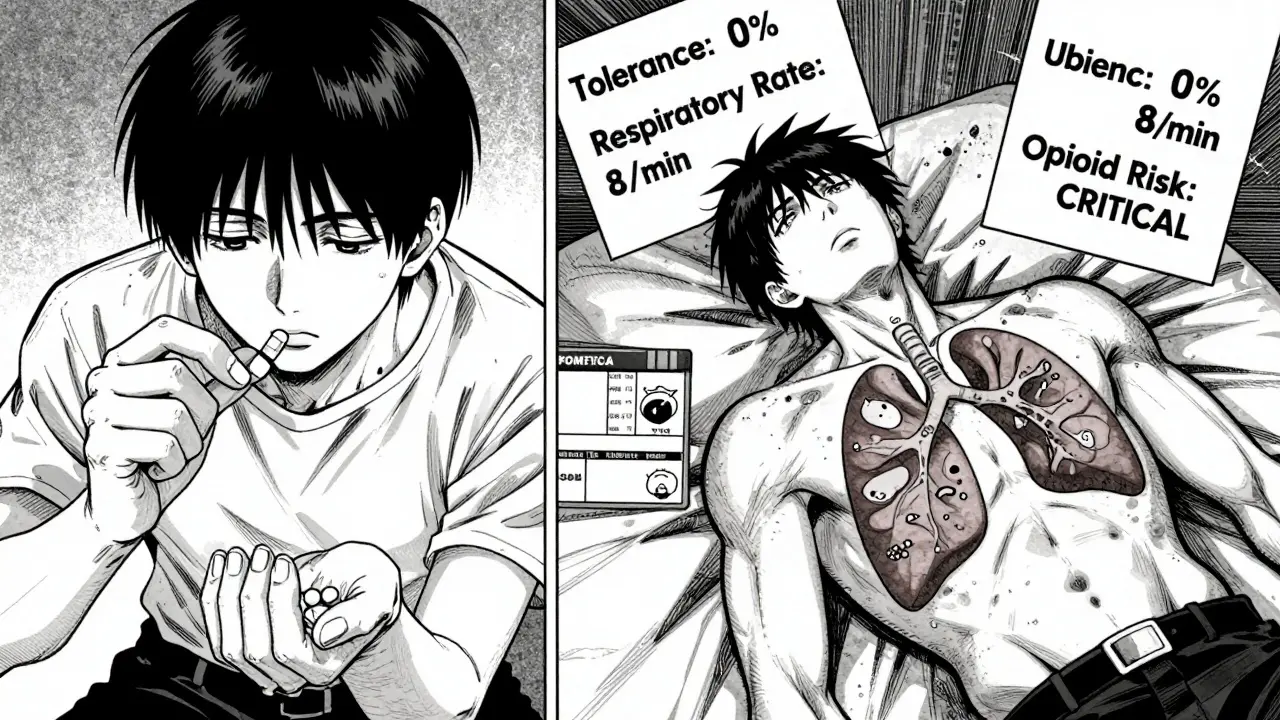
When you stop taking a medication like an opioid, benzodiazepine, or even some antidepressants, your body starts to lose its tolerance. That means the system that once processed the drug safely no longer does. For opioids, tolerance can drop in as little as 3 to 5 days. For methadone, it’s around a week. Even if you only took a break for a weekend, your body might be back to near-zero tolerance.This is dangerous because your brain and lungs don’t remember how to cope. Opioids slow your breathing. When you take the same dose you used to, your body can’t respond. Your breathing slows too much-or stops. That’s how overdoses happen. You’re not taking more than before. You’re taking the same amount, but your body is no longer prepared.
High-profile cases like actor Philip Seymour Hoffman’s death in 2014 highlight this. He had been abstinent for years. When he used again, he took the same dose he used to. His body couldn’t handle it. He died. This isn’t an exception. It’s a pattern.
Which Medications Carry the Highest Risk?
Not all medications are equally risky when restarted. But some are especially dangerous:- Opioids (oxycodone, hydrocodone, fentanyl, methadone): These are the biggest concern. Even small doses after a break can stop breathing.
- Benzodiazepines (alprazolam, diazepam, clonazepam): Used for anxiety or sleep. Stopping and restarting can cause seizures or respiratory depression.
- Antidepressants (venlafaxine, fluoxetine): Restarting too soon after stopping another drug like an MAOI can trigger serotonin syndrome-a life-threatening surge in brain chemicals.
- Antipsychotics (quetiapine, olanzapine): Restarting at old doses can cause sudden drops in blood pressure, fainting, or heart rhythm problems.
The risk isn’t just from the drug itself-it’s from mixing them. Taking an opioid with alcohol, sleeping pills, or even some cold medicines can double or triple the chance of overdose. Many people don’t realize their other meds are still in their system.
How to Restart Safely: The Start Low, Go Slow Rule
Medical experts agree: never restart at your old dose. The only safe way is to begin at a fraction of what you used to take and build up slowly.Here’s what works based on real clinical guidelines:
- Start at 25%-50% of your previous dose. If you were taking 10 mg of oxycodone twice a day, start with 2.5 mg once a day. For methadone, start at 20% of your old dose-sometimes as low as 5 mg.
- Wait at least 24-48 hours between dose increases. Don’t rush. Your body needs time to adjust. For some drugs like quetiapine, doctors recommend increasing by 25 mg every 3-5 days.
- Use a pill splitter or low-dose formulation. Many pharmacies offer lower-strength versions. Ask for them. You don’t need to guess.
- Monitor yourself closely. Watch for signs of trouble: slow breathing (fewer than 12 breaths per minute), extreme drowsiness, pinpoint pupils, or confusion. If you feel like you can’t stay awake, call for help.
For opioids, the Washington State Department of Health recommends that anyone restarting after a break should be observed for at least 24 hours. That’s why many treatment centers keep patients overnight after restarting.
Why Medical Supervision Isn’t Optional
Trying to restart on your own is like driving blindfolded. You don’t know how your body will react. That’s why doctors and addiction specialists say: never restart without supervision.Studies show that patients who restart under medical care have an 87% success rate. Those who do it alone? Only 42% make it through without a serious problem. That’s not luck. It’s science.
Hospitals and clinics now have formal protocols:
- They check your last dose, how long you stopped, and what other drugs you’re taking.
- They test for liver enzymes to see how fast your body breaks down the medication.
- They give you naloxone (Narcan) and teach your family how to use it.
Even if you’re restarting a medication you’ve taken for years-like a blood pressure pill or an antidepressant-you still need to talk to your doctor. What worked before might not be safe now.
What to Do Before Restarting
Before you even think about taking the pill again, do these five things:- Call your prescriber. Don’t assume they remember your old dose. Tell them exactly how long you stopped and why.
- Get naloxone. If you’re restarting an opioid, you need naloxone. Keep it in your wallet, your car, your kitchen. Teach someone you trust how to use it. It saves lives.
- Avoid alcohol and other sedatives. No sleeping pills. No wine. No Xanax. Even one drink can push you over the edge.
- Don’t restart alone. Have someone with you for the first 24-48 hours. Someone who can call 911 if you pass out.
- Check for interactions. Did you take another medication while you were off? Did you start a new one? Some drugs block or speed up how your body processes the one you’re restarting. Your pharmacist can help.
What Happens If You Skip These Steps?
The numbers don’t lie:- 62% of fatal opioid overdoses happen within 72 hours after leaving jail, rehab, or the hospital.
- Overdose deaths from medication restart have risen 45% since 2019.
- Reddit threads like r/opiates are full of stories like: “Took my usual 80mg methadone after 10 days off. Woke up in the ER. Didn’t know I was dead.”
These aren’t just stories. They’re preventable tragedies. Every single one of them could have been avoided with a simple phone call to a doctor and a dose that was 75% lower.
What’s Changing in 2026?
The medical world is catching on. In 2024, the American Society of Addiction Medicine rolled out a 10-point scoring system to help doctors calculate safe restart doses based on how long someone was off the drug, their old dose, and their health history. The FDA issued draft guidelines in 2023 standardizing this across clinics.New tools are coming too:
- Wearable monitors that detect slow breathing and auto-administer naloxone (in clinical trials).
- Genetic tests that show if your body metabolizes opioids fast or slow-so dosing can be personalized.
- Extended-release naltrexone, given before restarting, cuts overdose risk by 73% in the first 30 days.
But none of this matters if you don’t act now. You don’t need to wait for new tech. The safest method is already here: start low, go slow, get help.
Final Warning: This Isn’t About Willpower
It’s easy to think: “I’ve done this before. I know my body.” But your body doesn’t remember. Your brain might. Your lungs don’t. Your heart doesn’t. Your tolerance isn’t stored in your memory-it’s built into your cells. And when you stop taking the drug, those cells reset.Restarting medication after a break isn’t a minor step. It’s a medical event. Treat it like one. Don’t risk your life because you think you’re fine. You’re not. Not anymore.
How long does it take to lose tolerance to opioids after stopping?
Tolerance to opioids can drop significantly in as little as 3 to 5 days. For short-acting opioids like heroin or oxycodone, tolerance begins to fade within 24 hours. For longer-acting ones like methadone, it takes about 7 to 10 days. But even after just one day off, your body’s ability to handle the drug is reduced. Never assume your old dose is safe.
Can I restart my medication on my own if I feel fine?
No. Feeling fine doesn’t mean your body is ready. Overdose risk comes from a mismatch between your old dose and your current tolerance. You may feel alert, but your breathing could slow dangerously without warning. Medical supervision is critical-even if you think you’re fine.
Is naloxone really necessary if I’m restarting a non-opioid?
If you’re restarting a non-opioid like an antidepressant or antipsychotic, naloxone won’t help. But if there’s any chance you’ve used opioids in the past-even once-naloxone is still recommended. Many people mix medications unknowingly. Having naloxone on hand is a simple safety net.
What if I accidentally take my old dose?
Call 911 immediately. Don’t wait to see if you feel okay. Opioid overdose can happen silently-no vomiting, no screaming. Just slow, shallow breathing. If you have naloxone, use it right away. Then call for help. Even if you feel better after naloxone, you still need medical care. The drug can come back into your system after the naloxone wears off.
Are there any medications that are safe to restart without a doctor?
No medication should be restarted without consulting a healthcare provider after a break. Even common drugs like blood pressure pills or thyroid medication can cause dangerous changes in your body after you’ve stopped them. Your metabolism, liver function, and other health factors may have changed. Always check with your doctor or pharmacist first.
lawanna major
March 18, 2026 AT 07:22It’s wild how biology doesn’t care about your confidence. You think you remember how to handle it, but your cells? They’ve forgotten everything. That’s not weakness-it’s science. And if you’re restarting after even a weekend break, you’re playing Russian roulette with your lungs.
I’ve seen friends lose weight, get sober, rebuild their lives-only to die because they thought, ‘I got this.’ No, you don’t. Your body doesn’t. That’s why I always tell people: start at 25%. Not 50%. Not ‘a little less.’ 25%. It’s not about being cautious-it’s about respecting the fact that your body isn’t the same person it was two years ago.
And yeah, naloxone isn’t just for ‘addicts.’ It’s for anyone who’s ever taken opioids, even once. You don’t need to be a user to need it. You just need to be alive.
Stop glorifying willpower. Tolerance isn’t a muscle. It’s a ghost. And ghosts don’t come back just because you call their name.
Ryan Voeltner
March 19, 2026 AT 23:08Linda Olsson
March 21, 2026 AT 02:36Melissa Starks
March 21, 2026 AT 23:41Don’t wait to be a statistic. Be the person who says ‘I got you.’ You don’t need a degree. You just need to care. And if you’re reading this? You already do. So do something.
Lauren Volpi
March 22, 2026 AT 07:11Suchi G.
March 22, 2026 AT 16:12I’ve been through this. Twice. First time, I thought I was strong. Second time, I was in a hospital bed with my mom crying and a nurse holding my hand and saying, ‘You’re lucky you’re alive.’
It’s not just the drugs. It’s the loneliness. The shame. The silence. People don’t restart because they want to. They restart because they’re broken. Because they lost their job. Because their partner left. Because the pain came back and no one was there to hold them.
So yes, start low. Yes, get naloxone. But also-call someone. Text a friend. Say ‘I’m scared.’ Say ‘I need help.’ You don’t have to be perfect. You just have to be honest.
I’m still here. Not because I was smart. But because someone didn’t look away.
Don’t let anyone else feel alone like I did.
becca roberts
March 23, 2026 AT 15:42Andrew Muchmore
March 23, 2026 AT 19:20MALYN RICABLANCA
March 24, 2026 AT 02:32Oh honey. You think this is about biology? No. It’s about capitalism. The opioid crisis? It was engineered. The pharmaceutical industry didn’t just sell pills-they sold hope. Then they sold rehab. Then they sold detox. Then they sold ‘safe restart protocols.’ And now? Now they’re selling naloxone like it’s a subscription box. Every time someone overdoses? It’s a revenue stream. Every time someone says ‘I need help’? They get billed. Every time a family member learns to use Narcan? There’s a training fee. The system doesn’t want you alive. It wants you *managed.*
They call it ‘harm reduction.’ I call it ‘profit-driven survival theater.’
So yeah. Start low. Go slow. But also? Question everything. Who benefits? Who profits? Who wrote this guideline? And why does it sound so… clean?
Don’t just follow the rules. Burn the rulebook. And then ask yourself-what are they afraid you’ll find?
gemeika hernandez
March 25, 2026 AT 08:20