
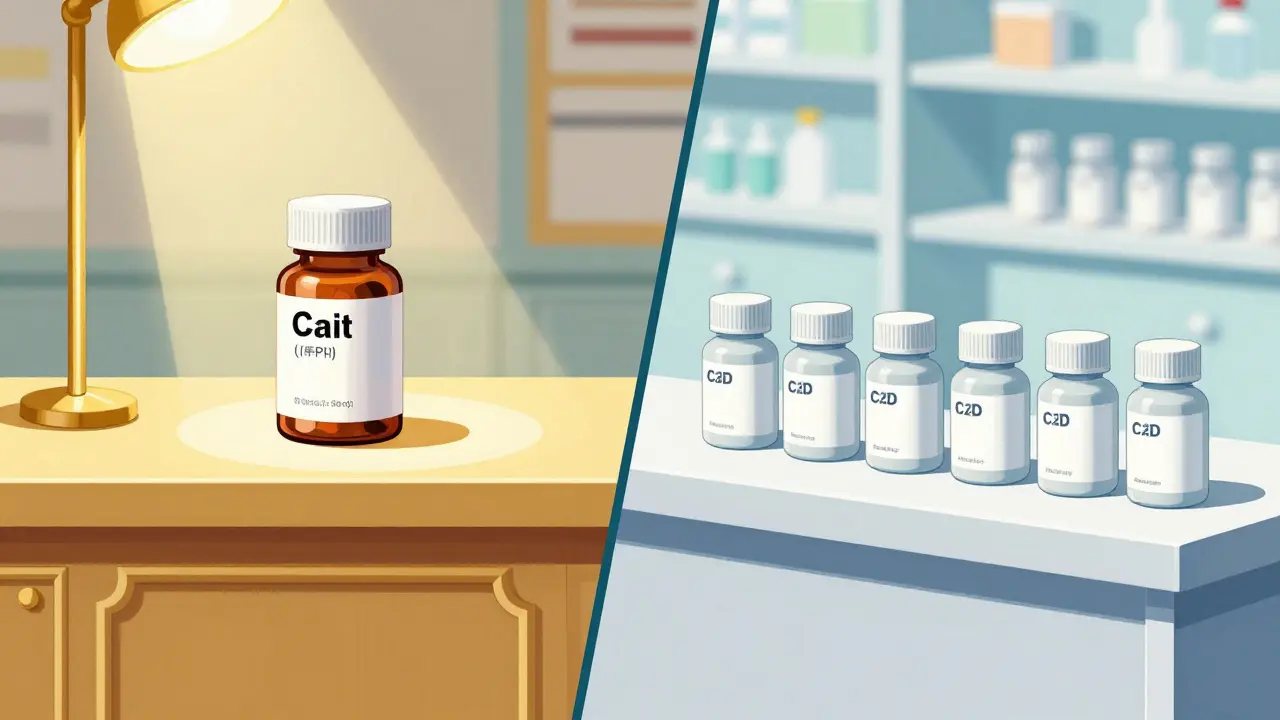
The Foundation of Generic Approvals
The whole system rests on the Hatch-Waxman Act a 1984 law that balanced patent protections for innovators with a streamlined path for generic competitors. Before this law, generic companies had to perform their own massive clinical trials to prove a drug worked, which was so expensive that few companies bothered. The Act created the Abbreviated New Drug Application commonly known as the ANDA, a streamlined application for generic drugs (ANDA) pathway. This is why it is called "abbreviated"-the manufacturer doesn't have to provide preclinical or clinical data on safety and efficacy because the FDA already has that data from the original brand-name drug, known as the Reference Listed Drug (RLD).
This process is managed by the Office of Generic Drugs the FDA division responsible for reviewing and approving generic drug applications (OGD) within the Center for Drug Evaluation and Research (CDER). To get a drug approved via an ANDA, a company doesn't need to prove the drug is "good" in a general sense; they just need to prove it is "the same" as the brand-name version. This includes having the same active ingredients, strength, dosage form, and route of administration.
Proving the Generic Works: Bioequivalence
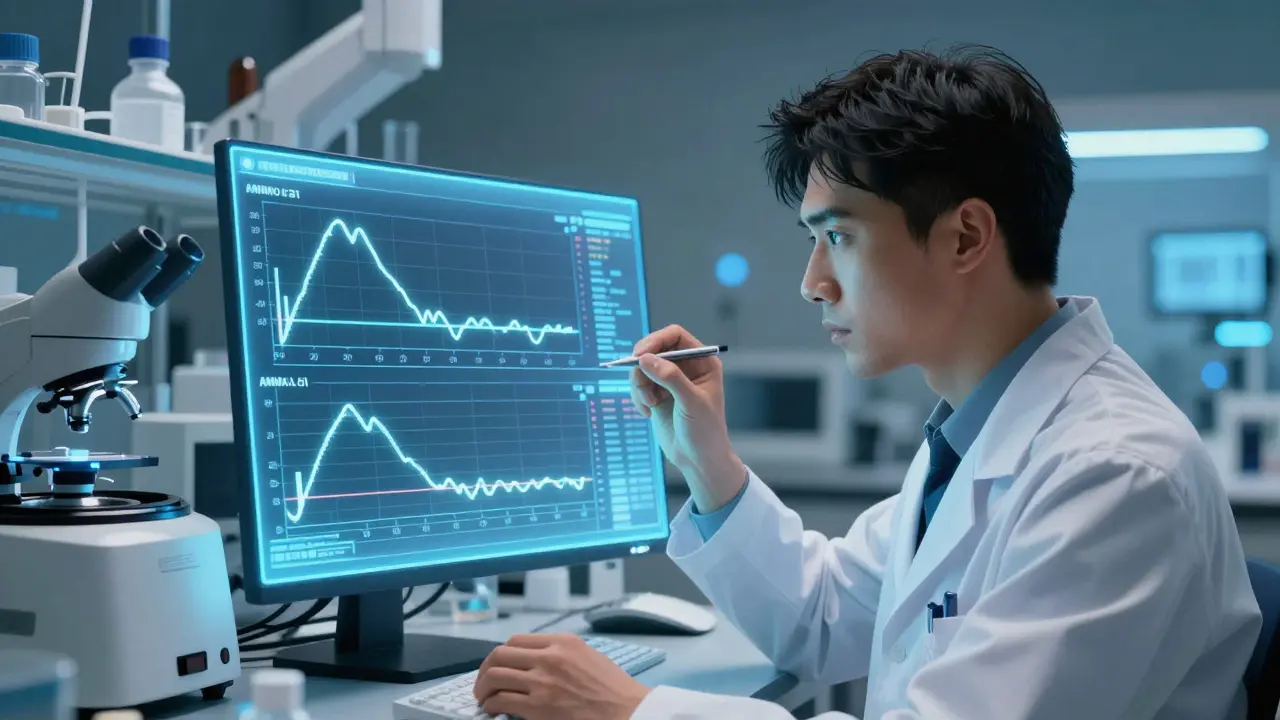
The most critical part of the ANDA process is proving bioequivalence the scientific demonstration that a generic drug delivers the same amount of active ingredient into the bloodstream at the same rate as the brand-name drug. The FDA doesn't just take a company's word for it. Manufacturers typically conduct pharmacokinetic studies with 24 to 36 healthy volunteers. They measure how quickly the drug is absorbed and how much reaches the bloodstream.
The FDA uses a strict mathematical window for this. Specifically, the 90% confidence interval for the ratio of geometric means must fall between 80.00% and 125.00% for both the area under the curve (AUC) and the peak concentration (Cmax). If a drug falls outside this window, it isn't considered bioequivalent, and the application is rejected. This ensures that whether you take the brand or the generic, your body reacts to the medicine in exactly the same way.
| Feature | New Drug Application (NDA) | Abbreviated New Drug Application (ANDA) |
|---|---|---|
| Clinical Trials | Required (Safety & Efficacy) | Not Required (Bioequivalence only) |
| Typical Cost | Approx. $2.6 Billion | $2.4 - $6.3 Million |
| Time to Market | 10 - 15 Years | 3 - 4 Years |
| Primary Goal | Prove the drug is safe and works | Prove it is equivalent to an RLD |
The Step-by-Step Approval Timeline
Getting an ANDA approved isn't a quick process. It starts with a Filing Review. The FDA checks if the application is complete. If it's missing key data, the agency issues a "Refuse-to-Receive" (RTR) letter. In 2022, about 15.3% of submissions were hit with an RTR, often because the chemistry, manufacturing, and controls (CMC) sections were incomplete.
Once the application passes the filing stage, it moves to Substantive Review. The FDA sets a Target Action Date (TAD). For standard applications, this is usually 10 months, but for priority reviews-like drugs currently in shortage-it can be as short as 8 months. During this phase, the FDA looks at everything from the stability of the chemical compound to the quality of the factory where it is made.
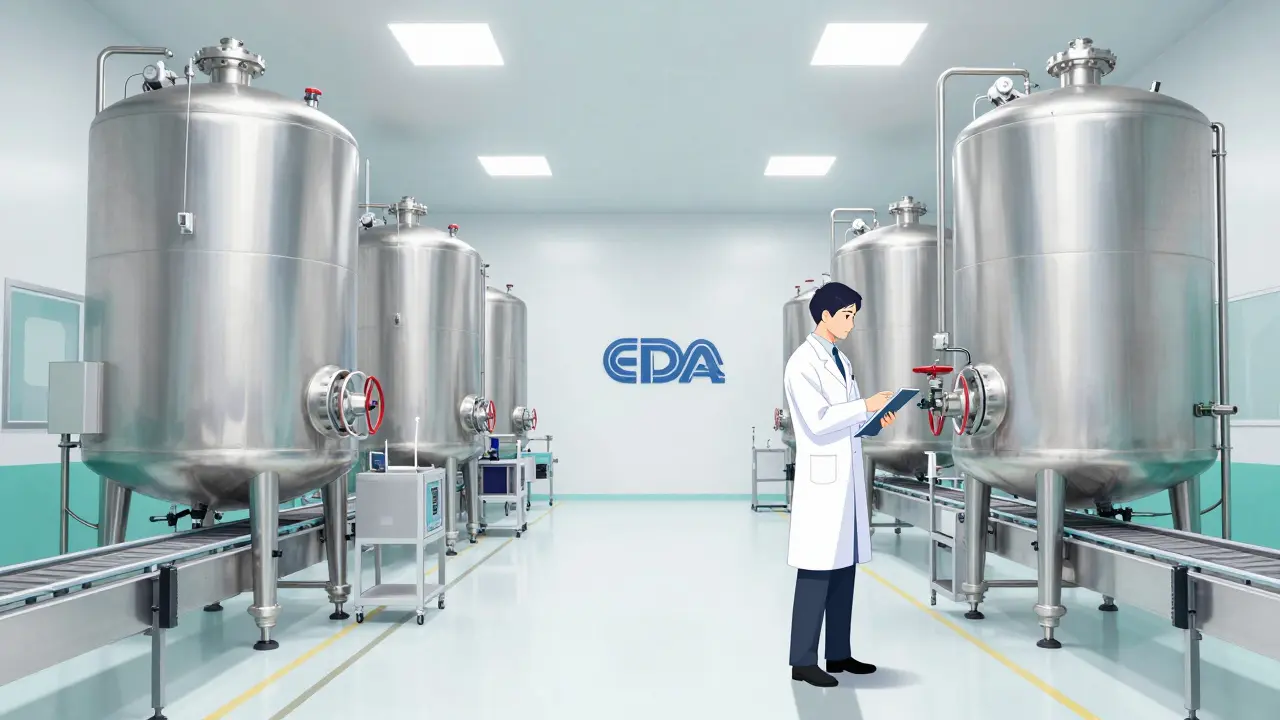
Speaking of factories, the Current Good Manufacturing Practice CGMP regulations that ensure drug products are produced in a quality-controlled environment (CGMP) regulations are non-negotiable. The FDA inspects generic drug facilities frequently, with an average inspection rate of 82.7% annually. If a plant is dirty or the records are sloppy, the drug won't be approved, no matter how good the bioequivalence data is.
The Challenge of Complex Generics
Not all generics are created equal. It is relatively easy to make a generic version of a simple tablet (like aspirin), but it is incredibly hard to copy an inhaler or a topical cream. These are called "complex generics." Because these drugs don't always enter the bloodstream in a way that can be easily measured by a blood test, the FDA has had to develop new ways to prove they work.
The agency has launched the Complex Generic Drugs Initiative to help companies navigate these hurdles. It is working; complex products made up 37.5% of approvals in 2023, compared to only 22.1% back in 2018. The FDA is even experimenting with AI-assisted reviews and real-world evidence to speed up these approvals, targeting 25% of complex generic approvals to use real-world evidence by 2026.
Financials and Market Impact
The cost of entry is high. Under the Generic Drug User Fee Amendments GDUFA, a program where industry pays fees to fund the FDA's review process (GDUFA III), a company must pay $389,490 just to submit a single ANDA. Facility fees can add another $200,000 to $400,000 per year.
Despite these costs, the payoff is massive for the public. Generics now make up 9 out of 10 prescriptions filled in the U.S. They account for 90% of the volume but only about 23% of the total spending. This creates an annual savings of roughly $132.6 billion. For a patient, this is the difference between paying $390 a month for a brand-name insulin and paying $98 for a biosimilar equivalent.
Common Pitfalls for Manufacturers
Many companies fail on their first try. The most common reasons for rejection (RTR letters) include:
- CGMP Non-compliance: Cited in over 41% of RTR letters. This means the manufacturing facility didn't meet quality standards.
- Bioequivalence Failures: About 28.3% of issues stem from poor study design or the drug failing to hit that 80%-125% window.
- CMC Deficiencies: Poorly documented chemistry or stability data.
To avoid these, most successful companies use pre-ANDA meetings. In 2022, about 78.4% of approved applications had these early check-ins with the FDA to ensure they were on the right track before spending millions on the final submission.
Are generic drugs actually as effective as brand-name drugs?
Yes. The FDA requires generic drugs to be bioequivalent, meaning they deliver the same amount of active ingredient to the bloodstream at the same rate. While inactive ingredients (like fillers or dyes) can differ, the active part that treats the condition must be identical. FDA data shows that the vast majority of perceived differences in efficacy are actually due to the progression of the patient's disease, not the drug itself.
Why do some generics take so long to reach the market?
There are two main reasons: regulatory backlogs and patent litigation. Even after the FDA reviews a drug, the original manufacturer often challenges the generic in court to protect their patent. Additionally, the OGD sometimes faces resource constraints, leading to some applications waiting over 36 months for review.
What is the Orange Book?
The Orange Book is the official FDA publication that lists all approved drug products. It provides a "therapeutic equivalence" rating for generics, telling pharmacists and doctors whether a generic is considered a substitute for the brand-name drug.
Can the FDA approve a generic if the original drug is in shortage?
Yes, and they often prioritize these. The FDA provides "priority reviews" for drugs in shortage, reducing the Target Action Date from 10 months to 8 months to get the medicine to patients faster.
Does the FDA inspect every factory that makes generics?
While not every single facility is inspected every year, the FDA maintains a high inspection rate, averaging about 82.7% for generic drug facilities. This is to ensure that Current Good Manufacturing Practice (CGMP) standards are being met globally.
Next Steps for Pharmacy Professionals and Patients
If you are a patient, the best way to save money is to ask your pharmacist if a "therapeutic equivalent" listed in the Orange Book is available for your prescription. Most generics are interchangeable with the brand, but some (like certain narrow therapeutic index drugs) may require a specific doctor's approval.
For those entering the industry, the learning curve for an ANDA submission is roughly 18 to 24 months. Focusing on the 287 specific FDA guidance documents and utilizing the Electronic Submission Template and Resource Center (eSTaR) can reduce formatting errors by over 60%, significantly increasing the chance of passing the initial filing review.
Caroline Duvoe
April 22, 2026 AT 10:51basically just a fancy way of saying the govt lets companies copy homework 🙄
Ajinkya Joshi
April 22, 2026 AT 20:09Oh sure, let's just trust the "mathematical window" of 80-125%. Because that 25% gap is totally negligible when you're dealing with potent chemicals. Absolute genius logic right there.
Dave Edwards
April 24, 2026 AT 17:11It is absolutely immoral to allow these generic companies to just swoop in and profit off the blood, sweat, and tears of the original researchers! Who cares if it's cheaper? We are destroying the very incentive for innovation! 😱😡
Sue Stoller
April 25, 2026 AT 23:16This is such a great breakdown! It's so wonderful that we have these systems to make life-saving meds affordable for everyone ✨💖 Keep sharing this kind of helpful info!
Sarah Watters
April 26, 2026 AT 20:25Funny how they mention "real-world evidence" and AI. That's just code for skipping the actual safety checks. They're probably just outsourcing the testing to places where they can hide the side effects. It's all a giant shell game to keep us medicated and compliant.
Mayur Pankhi Saikia
April 26, 2026 AT 21:12Imagine... thinking... that a simple tablet is "easy" to copy... the sheer ignorance is staggering!!! The molecular stability alone requires a level of expertise most of these generic firms lack... clearly... 🙄
Emma Cozad
April 28, 2026 AT 19:31Amercian drug companys are the only ones doing real science anyway. These generics are probably just cheap copies from overseas that the FDA lets slide because they are desperate.
Mel Glick
April 29, 2026 AT 20:23Cut the nonsense. If the FDA doesn't tighten the CGMP inspections, we're basically gambling with our health every time we take a generic. The 82% inspection rate is a joke when you consider how many facilities are operating globally. Get it together!
RAJESH MARAVI
April 30, 2026 AT 03:15lol 2.6 billion for nda?? why so much $$$? probably just payin for fancy offises and yachts... the system is riggd
Mike Arrant
May 1, 2026 AT 08:24You're all missing the point. The real issue isn't the process, it's the people blindly trusting the Orange Book without checking the fillers. Some of you are just lazy and don't care what goes into your body as long as it's cheap.
Amy Fredericks
May 1, 2026 AT 12:12I think it's a fair balance. We need the innovators to be rewarded, but we can't ignore the people who literally can't afford their meds. There's a middle ground here for everyone to win.
Nicole Antunes
May 2, 2026 AT 06:15It is heartening to see the Complex Generic Drugs Initiative making progress. Expanding access to inhalers and creams will truly change lives for many patients. :)
vimal purwal
May 4, 2026 AT 02:10While I certainly appreciate the detailed breakdown of the ANDA process, it is imperative that we acknowledge the immense logistical challenges faced by manufacturers in India who strive to meet these rigorous US standards despite the disparity in local infrastructure, and therefore, a more supportive coaching mechanism from the FDA would be beneficial for global health equity.
Anastasios Kyriacou
May 4, 2026 AT 05:55who cares about the cost... just gimme the cheap pills
Saptatshi Biswas
May 5, 2026 AT 10:56The audacity of this post to focus on US standards as if they are the gold standard of the world! India is the pharmacy of the world and our manufacturing capabilities far exceed these bureaucratic hurdles you describe so precisely. It is frankly insulting to suggest that Indian firms need "guidance" from a failing US system when we provide the majority of the world's generic supply with far more efficiency than any American firm ever could. We are the ones sustaining global health while you obsess over an Orange Book that is essentially a relic of a dying empire. The sheer arrogance of the FDA's regulatory capture is evident in every line of this text, and it is high time the world recognized that the real innovation is happening in the East. I find it absolutely abhorrent that the narrative always centers on the FDA's "approval" rather than the actual scientific prowess of the producers in the global south. You can keep your 80-125% window; we have precision that puts your outdated benchmarks to shame! Truly a pathetic excuse for an analysis of the pharmaceutical landscape!