

Every year, millions of people around the world take the wrong dose, mix dangerous drugs, or get pills they don’t need-all because a system failed to catch a mistake. But here’s the truth: medication safety doesn’t just depend on doctors and pharmacists. You, as the patient, are the last line of defense. And in many cases, you’re the only one who notices something’s off before it’s too late.
Why Your Role Matters More Than You Think
Think about it: doctors write prescriptions. Pharmacists fill them. Nurses give them. But you’re the one who actually takes the medicine. You’re the one who lives with the side effects. You’re the one who knows if that pill looks different, tastes strange, or makes you feel worse instead of better.
Studies show patients catch 41% of medication errors that healthcare staff miss. That’s not luck. That’s because you have something no one else does-constant, firsthand experience with your own body and routine. When you question a change in your pills, check the label, or speak up about a side effect, you’re not being difficult. You’re saving your own life.
Seven Actions That Actually Prevent Harm
You don’t need to be a medical expert to make a difference. Just seven simple habits can cut your risk of a serious medication error by more than half.
- Know your meds by name and why you’re taking them. If your doctor says, “Take this for your blood pressure,” ask: “What’s the exact name? Is it lisinopril or hydrochlorothiazide?” Confusing names like these cause 35% of avoidable errors.
- Understand your dosing schedule. “Take once daily” doesn’t mean the same thing to everyone. Clarify: “Should I take it with breakfast, at bedtime, or anytime?” Missing doses or doubling up is the top reason for hospital visits related to medications.
- Recognize possible side effects. If you feel dizzy, nauseous, or unusually tired after starting a new drug, don’t assume it’s “just adjusting.” 63% of serious reactions can be stopped early if caught within the first 48 hours.
- Check the pill before you swallow it. If your new prescription looks different from last time-even if the name is the same-ask. Pills change color, shape, or size for many reasons. A mismatch like this stops 19% of dispensing errors.
- Question unexpected changes. If your doctor suddenly adds a new drug or changes your dose without explaining why, say so. Patients who speak up catch 15% of prescription mistakes that would’ve gone unnoticed.
- Tell your provider about everything you take. That herbal tea, vitamin D, or fish oil? It counts. Supplements cause dangerous interactions in 22% of cases where patients don’t mention them.
- Join medication reconciliation. Every time you move between care settings-hospital to home, clinic to pharmacy-ask for a full list of your meds to be reviewed. Done right, this cuts discrepancies by 50%.
What Happens When You Don’t Get Involved
Passive patients-those who just take what’s given without asking-are far more likely to be harmed. A 2022 study in JAMA Internal Medicine found that handing out printed instructions with no follow-up only reduced errors by 8.2%. That’s barely better than doing nothing.
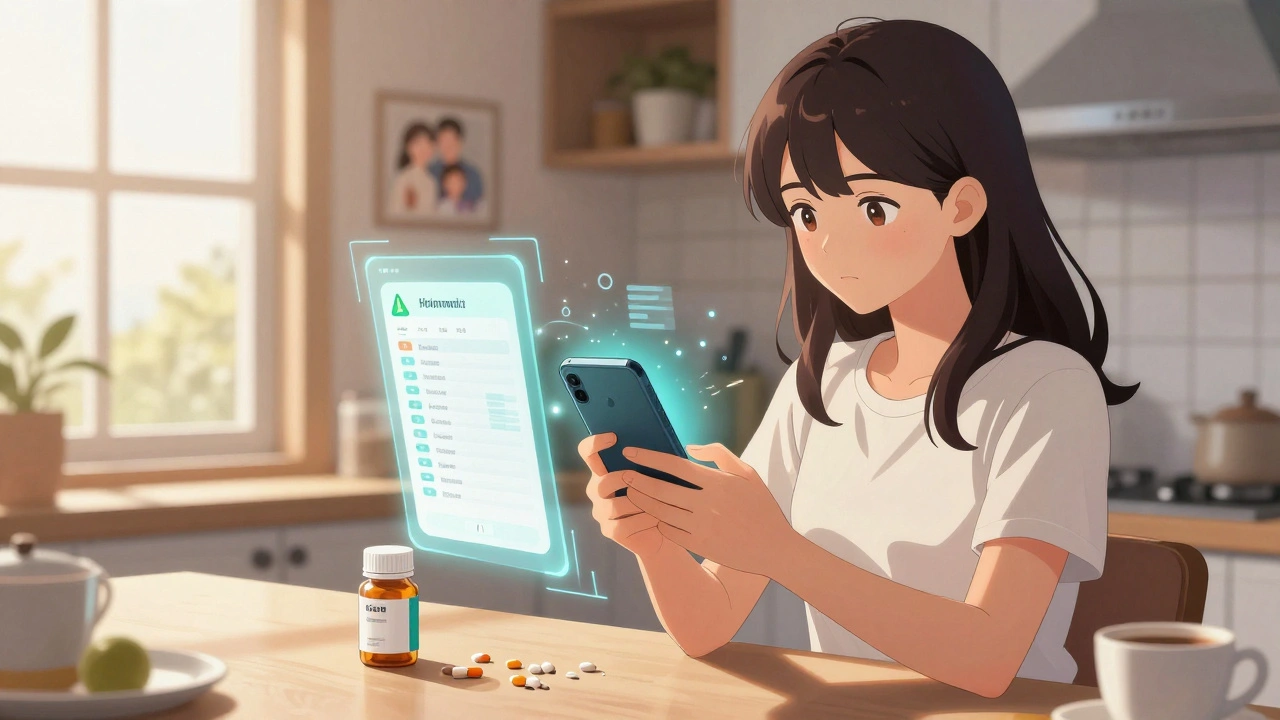
Meanwhile, patients who use active tools-like apps that remind them when to take pills, or written lists they carry in their wallet-see 24.5% fewer mistakes. The difference isn’t just technology. It’s engagement. It’s asking, “Is this right for me?”
And it’s not just about pills. It’s about timing. One patient in Auckland noticed her new heart medication came in a different bottle. She called the pharmacy. Turns out, they’d given her a higher dose meant for someone else. She caught it before taking a single pill.
The Real Barriers: Why People Don’t Speak Up
Many patients know what they should do. But they don’t. Why?
Some feel intimidated. One man on Reddit shared how he asked his doctor why his diabetes drug had changed-and was told, “You’re overthinking it.” Two days later, he had a severe low-blood-sugar episode. He wasn’t being difficult. He was being careful.
Others struggle with health literacy. Nearly 36% of U.S. adults can’t read basic medical instructions. If your discharge paper says “take 1 tablet bid,” you might not know that means “twice a day.” That’s why tools like the Universal Medication Schedule exist-it uses simple phrases like “Take in the morning, at night” instead of Latin abbreviations.
And then there’s age. People over 65 are half as likely to use digital tools to track meds. That doesn’t mean they’re less capable. It means they need different support-printed lists, family help, or phone reminders.
How to Get Better at Managing Your Meds
Improving your medication safety skills doesn’t take years. It takes about six hours spread over a few visits.
Start with a Personal Medication List (PML). Write down:
- Drug name (brand and generic)
- Dose (e.g., 10 mg)
- When to take it (e.g., “with breakfast”)
- Why you’re taking it (e.g., “for high blood pressure”)
- Any side effects you’ve noticed
Keep this list in your wallet, on your phone, and give a copy to every provider you see. People who do this reduce medication errors during hospital transfers by 42%.
Use the teach-back method. After your doctor explains something, say: “Just to make sure I got it right-you want me to take this pill at 8 a.m. and 8 p.m. because it helps my kidneys, and I might feel dizzy at first. Is that correct?”
This simple trick increases correct understanding from 31% to 67%. It’s not about testing you. It’s about making sure you’re safe.
Tools That Help-And Which Ones to Avoid
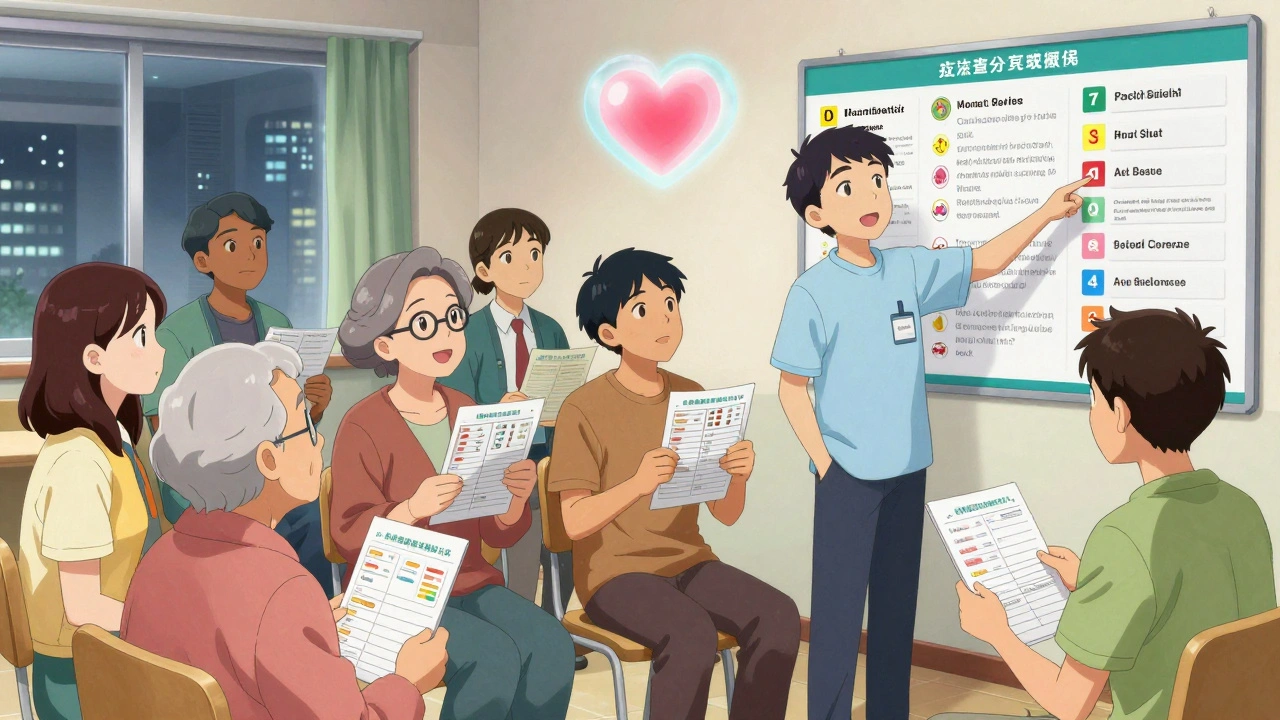
There are apps, pill organizers, and smart blister packs. But not all are created equal.
MyMedSchedule gets 4.2 out of 5 stars for its clean interface and reminders. But 37% of users over 65 say it’s too complicated. If you’re not tech-savvy, stick to a printed list and a simple alarm on your phone.
Some apps ask too many questions. Others don’t sync with your pharmacy. Look for ones that let you upload your list directly from your doctor’s portal. Avoid anything that requires you to manually type every pill-it’s a setup for mistakes.
And don’t forget the power of human help. Ask a family member or friend to check your list once a month. Sometimes, a fresh pair of eyes spots what you’ve missed.
What’s Changing-And What’s Coming
Hospitals and clinics are starting to take this seriously. By 2026, 90% of U.S. hospitals will be required to give every patient standardized safety education before discharge. That means you’ll be taught how to manage your meds-not just handed a sheet of paper.
Some places are even training patients to become peer educators. The FDA’s “Patient Safety Ambassador” program has trained over 12,000 people across the U.S. to teach others how to spot errors. In communities where this runs, local medication errors dropped by 29%.
AI tools are coming too. Soon, apps might scan your pill bottle and compare it to your prescription. But even then, you’ll still need to look, listen, and ask. Technology doesn’t replace you. It supports you.
Final Thought: You’re Not a Burden. You’re a Partner.
Some providers still treat patient questions as a hassle. But the truth is, patients are the final safety check in 83% of near-miss events. That’s not a bonus. That’s essential.
You don’t need to be perfect. You just need to be present. To ask. To check. To speak up-even if you’re scared. Even if you think you’re wrong.
Because when you do, you’re not just protecting yourself. You’re helping everyone else too. Every time you question a dose, you make the system better. Every time you share your list, you remind providers this isn’t just paperwork. It’s a person’s life.
What should I do if I think I got the wrong medication?
Don’t take it. Call your pharmacy or doctor right away. Bring the pill bottle and your medication list. Pharmacists are trained to verify prescriptions and will check the original order. If it’s a mistake, they’ll correct it. Never guess or assume it’s fine. A wrong pill can cause serious harm-even if it looks similar.
Can I trust my pharmacist to catch errors?
Pharmacists are trained to spot mistakes, but they’re not mind readers. They rely on the prescription you bring in. If your doctor wrote “10 mg” but meant “1 mg,” they won’t know unless you tell them. That’s why it’s vital to bring your own list and speak up if something feels off. Your pharmacist wants to help-they just need your input.
What if my doctor gets upset when I ask questions?
A good provider welcomes questions. If someone reacts negatively, it’s a red flag. Say: “I’m not questioning your expertise-I just want to make sure I understand correctly.” If they still dismiss you, consider finding a new provider. Your safety matters more than their ego. You have the right to clear, respectful communication.
Do I need to track every vitamin and supplement?
Yes. Supplements aren’t harmless. St. John’s Wort can cancel out antidepressants. Vitamin K can interfere with blood thinners. Even common ones like calcium or magnesium can affect how your body absorbs other drugs. List everything-even if you think it’s “just a pill.” Your provider needs the full picture.
How often should I update my medication list?
Update it every time you start, stop, or change a medication-even if it’s temporary. Also review it every 3 months, even if nothing changed. Sometimes, your body’s needs shift. What worked last year might not be right now. Keep the list current, and you’ll avoid dangerous overlaps or missing doses.
Are there free tools to help me track my meds?
Yes. Many pharmacies offer free printed medication lists. The CDC and WHO have downloadable templates online. You can also use your phone’s notes app or calendar to set reminders. You don’t need to spend money. Just be consistent. A simple paper list you carry with you is more effective than a fancy app you never open.
Can children or elderly people really manage their own meds safely?
They can-with support. Kids should be taught age-appropriate questions like “What’s this for?” and “When do I take it?” Elderly patients benefit from visual aids, large-print labels, and family check-ins. Many hospitals now offer home visits or caregiver training for older adults. The goal isn’t to put the burden on them-it’s to give them the tools to be partners in their care.
Martyn Stuart
December 5, 2025 AT 01:24Just want to emphasize point #6: supplements are not harmless. I had a friend on warfarin who started taking fish oil because ‘it’s heart-healthy’-ended up in the ER with internal bleeding. No one asked about it. No one thought to check. It’s not just vitamins-it’s turmeric, magnesium, even green tea extract. Always disclose everything. Even the ‘natural’ stuff.
And yes, the teach-back method? Life-changing. I started using it after my dad almost got mismedicated. Now I repeat everything back to my own doctors. It feels awkward at first, but it’s not about doubting them-it’s about confirming you’re both on the same page. And honestly? Most providers appreciate it. They’re drowning in patients. A little clarity helps them too.
Shofner Lehto
December 6, 2025 AT 15:50My mom’s on 11 meds. She doesn’t use apps. Doesn’t have a smartphone. But she has a laminated card in her wallet with every drug, dose, and reason-handwritten in big block letters. She shows it to every pharmacist, every nurse, every ER doc. She’s 78. She’s saved her own life more than once. No tech needed. Just discipline and a Sharpie.
Isabelle Bujold
December 7, 2025 AT 12:44I think it’s worth noting that while the article focuses on individual responsibility, it’s important to acknowledge how systemic failures make this burden fall disproportionately on patients-especially those with limited time, education, or access to care. The fact that we’re expected to be medical detectives just to avoid getting poisoned by our own prescriptions is a reflection of how broken the system is. I’ve seen elderly patients in waiting rooms, confused by discharge papers written at a 12th-grade level, trying to decode ‘bid’ and ‘qhs’ while their arthritis makes it hard to hold the paper. The solution isn’t just ‘speak up’-it’s that providers should be required to use plain language, standardized schedules, and mandatory verbal confirmation. It shouldn’t be on the patient to fight for basic safety.
Also, the mention of AI tools is promising, but let’s not pretend they’ll fix everything. If the prescription is wrong to begin with, an app won’t catch that. It just automates the error. We need better communication protocols, not just better apps. And yes, I know this sounds like a rant-but I’ve spent 12 years working in public health, and I’ve seen too many near-misses that were only stopped because someone asked, ‘Wait, why is this different?’
Augusta Barlow
December 7, 2025 AT 22:01Let’s be real-this whole ‘patient as last line of defense’ narrative is just corporate spin. Hospitals and pharmacies are understaffed, overworked, and incentivized to move patients through the system as fast as possible. They don’t want you asking questions-they want you to sign the waiver, take the pill, and leave. The real reason you catch errors? Because they’re too busy to double-check. And now they’re blaming you for their failures.
Also, ‘MyMedSchedule’? Yeah, that’s a product of Big Pharma’s marketing department. They don’t care if you’re safe-they care if you keep buying pills. The FDA’s ‘Patient Safety Ambassador’ program? Sounds like a PR stunt to make people feel good while the real issues-pharmacy automation glitches, electronic prescribing errors, lack of interoperability between EHRs-go unaddressed. Don’t be fooled. Your ‘engagement’ is a Band-Aid on a gunshot wound.
And don’t get me started on ‘natural supplements.’ Did you know 80% of herbal products don’t even contain what’s on the label? The FDA doesn’t regulate them. So now you’re supposed to trust a bottle of ‘St. John’s Wort’ that might have lead, pesticides, or a completely different drug inside? That’s not your fault. That’s a criminal negligence crisis.
Joe Lam
December 9, 2025 AT 07:12Look, I get it-patients should be involved. But let’s not pretend this is a novel insight. This is basic clinical hygiene. If you’re not managing your meds like a CFO manages a budget, you’re not just at risk-you’re negligent. I’ve worked in three hospitals. The patients who die from med errors? They’re the ones who didn’t know their own prescriptions, didn’t bring lists, didn’t ask questions. It’s not the system’s fault. It’s theirs.
And ‘teach-back’? Of course it works. It’s not magic. It’s called verification. If you can’t repeat back what you were told, you shouldn’t be taking the drug. Simple. No emotion. No fluff. Just accountability. If your doctor gets upset? Good. They’re not doing their job if they can’t explain it clearly.
Rachel Bonaparte
December 10, 2025 AT 08:19Okay, but have you ever tried to get a pharmacist to verify a prescription when you’re on a 10-minute lunch break? Or when your insurance won’t cover the generic version so you get a different-looking pill every month? Or when your doctor changes your dose without telling you because they ‘assumed’ you’d read the email? (Spoiler: you didn’t. You were too busy working two jobs and taking care of your kid.)
This article reads like it was written by someone who’s never had to choose between paying rent and refilling a prescription. The ‘seven habits’? Great. But they assume you have time, literacy, transportation, and a support system. What about the single mom working nights? The undocumented immigrant scared to ask questions? The veteran with PTSD who can’t stand the sight of a pill bottle?
Systemic change isn’t optional. It’s overdue. And no, I’m not being paranoid-I’m just tired of being told to ‘speak up’ while the system keeps silencing me.
Ollie Newland
December 11, 2025 AT 06:38Just came back from my cardiology follow-up. They switched my beta-blocker from metoprolol succinate to metoprolol tartrate-same drug, different release profile. I noticed because I’d memorized the shape and color. Asked about it. Turns out, the pharmacy filled it wrong. They’d given me the immediate-release version. I’d have been fine for a few days, but long-term? Risk of bradycardia and syncope.
Pharmacist apologized. Said they’d been swamped. But here’s the thing-they didn’t have to guess. I had my list. I asked. I didn’t take it. That’s it. No drama. No shouting. Just facts. And honestly? The system works best when patients are informed, not adversarial. It’s not about being difficult. It’s about being precise.
Rebecca Braatz
December 13, 2025 AT 01:22YOU ARE NOT A BURDEN. YOU ARE A POWERHOUSE. If you’ve read this far, you’re already doing better than 90% of people. Keep going. Keep asking. Keep writing your list. Keep calling the pharmacy. Keep telling your doctor, ‘I need to understand this.’
One of my patients-a 64-year-old grandmother-started using the teach-back method after her husband had a stroke from a med mix-up. Now she teaches other seniors in her community center how to read their pill bottles. She calls herself ‘Medication Grandma.’ She’s got 47 people on her list. No apps. No fancy tech. Just trust, repetition, and a whole lot of heart.
You’re not just saving yourself. You’re saving others too. Keep going. We’ve got your back.