
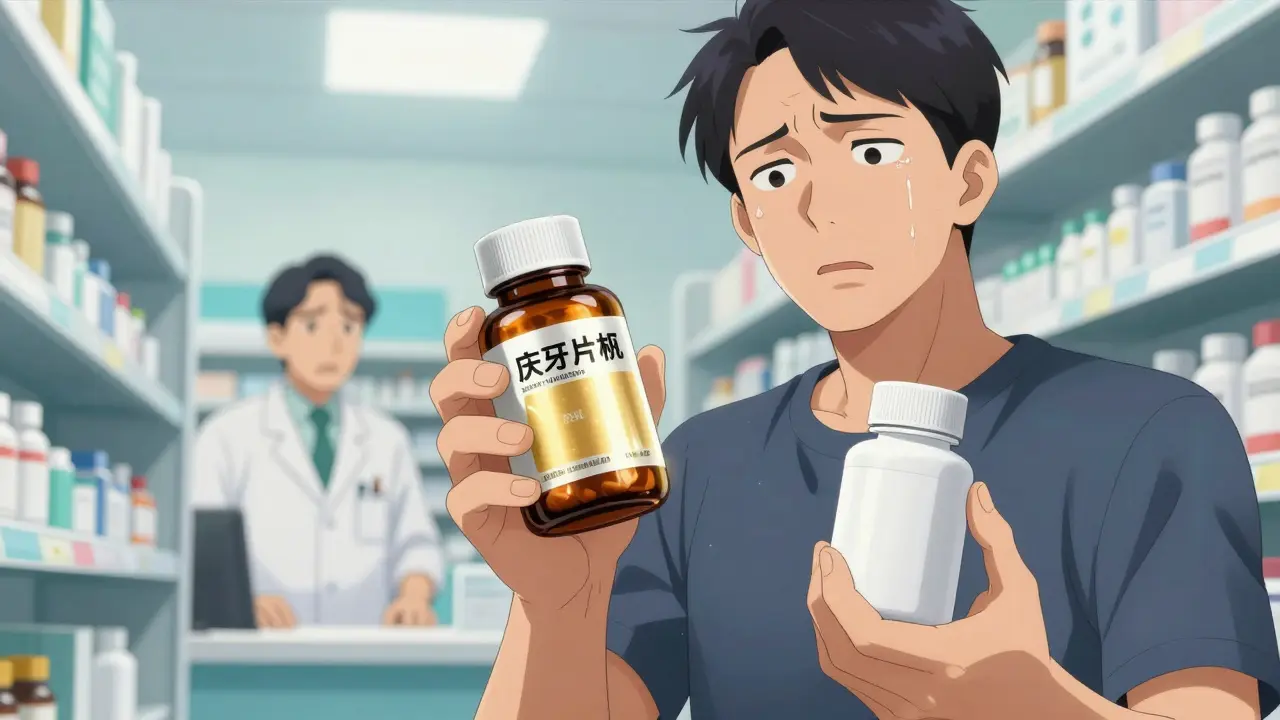
Imagine walking out of a pharmacy with a pill that looks different from the one you took last month. It’s cheaper, sure. But does it work? That split-second doubt is not just in your head-it’s a well-documented psychological phenomenon known as brand psychology, which refers to the influence of brand identity on consumer perception and behavior. For many patients, switching from a brand-name drug to a generic version triggers anxiety, skepticism, or even physical symptoms, despite decades of scientific evidence proving their equivalence.
The bridge between clinical reality and patient belief isn’t built by chemistry alone; it’s built by conversation. Research consistently shows that how a clinician talks about generic drugs is the single most powerful factor in whether a patient accepts them. When doctors and pharmacists communicate effectively, they don’t just dispense information-they actively shape the patient’s expectation of healing, neutralizing fear before it takes root.
The Power of Provider Voice Over Price
We often assume patients choose brand-name drugs because they can afford them or because they believe the higher price tag equals higher quality. While cost matters, data tells a more nuanced story. A landmark study published in the Journal of General Internal Medicine by Shrank and colleagues in 2011 analyzed nearly 2,000 patients across diverse demographics. They found that generic medication use was most significantly associated with patient communication by healthcare providers (p<0.001). Interestingly, general preferences for generics, perceived efficacy, safety concerns, or even direct cost considerations were not primary drivers compared to what the doctor actually said.
Patients who received clear communication about generics from their providers were 37% more likely to accept and adhere to the treatment than those who got no explanation at all. This suggests that the barrier isn’t usually financial-it’s informational and emotional. If a physician presents a generic option confidently, the patient follows suit. If the physician hesitates, the patient doubts.
Understanding the Nocebo Effect in Drug Substitution
To understand why communication matters so much, we have to look at the nocebo effect, defined as a phenomenon where negative expectations lead to negative outcomes, such as increased side effects or reduced efficacy. Unlike the placebo effect, where positive belief improves health, the nocebo effect proves that belief can also harm health. In the context of generic drugs, if a patient believes a generic is "inferior" or "less safe," they are statistically more likely to report adverse events-even when the active ingredient is identical.
A pivotal 2019 study in the Journal of the American Medical Association (JAMA) demonstrated this clearly. Researchers followed 412 patients with chronic conditions after they switched to generic versions of their medications. Those who received communication emphasizing the rigorous FDA approval process reported 28% fewer adverse events than those who only received standard substitution info. The researchers concluded that "expectation of harm leads to the experience of real, perceived negative symptoms." Dr. Aaron Kesselheim, a Professor of Medicine at Harvard Medical School and lead author of the study, noted that communication strategy is not merely educational; it is a crucial clinical intervention designed to prevent the nocebo effect from compromising therapeutic outcomes.

What Effective Communication Actually Looks Like
Not all conversations are created equal. Saying "this is the generic version" is rarely enough. Research published in U.S. Pharmacist in 2022 identified three critical components of effective generic medication communication:
- Authoritative understanding of regulatory standards: Clinicians must explain the FDA’s bioequivalence requirements, specifically the 80-125% range allowed for absorption rates, ensuring patients understand this is a strict legal standard, not a loose guideline.
- Confident endorsement language: Avoid tentative phrases like "let's try this generic and see how it goes." Instead, use definitive statements such as "This medication contains the exact same active ingredient and works the same way in your body."
- Proactive addressing of nocebo effects: Acknowledge that while inactive ingredients differ, these do not affect the drug's core function, and reassure patients that any minor differences in appearance or taste are normal and harmless.
The American Pharmacists Association’s 2020 survey of 2,500 patients highlighted the impact of these techniques. Ninety-two percent of patients who received thorough explanations from their pharmacists accepted the substitution. In contrast, only 68% accepted it when no explanation was provided-a 24 percentage point difference driven entirely by the quality of the interaction.
Tailoring Messages to Diverse Patient Populations
Communication is not one-size-fits-all. Demographic variations play a significant role in how patients perceive generic drugs. According to the NIH’s 2016 national survey of 3,500 patients, non-Caucasian patients were 1.7 times more likely to express skepticism about generics than Caucasian patients (34% vs. 20%). Similarly, patients with lower socioeconomic status (annual income under $30,000) were 2.3 times more likely to prefer brand-name medications, often associating brand names with status or reliability.
This doesn’t mean these groups are irrational; it means their trust in the system may be fractured differently. A 2021 study in Health Affairs found that culturally competent communication-where providers acknowledge historical disparities and build personal trust-reduced skepticism by 41% among non-Caucasian patients. For clinicians, this means taking an extra minute to listen to specific concerns rather than reciting a script. It involves validating the patient’s feelings while gently correcting misconceptions with empathy.
| Communication Approach | Patient Acceptance Rate | Key Outcome |
|---|---|---|
| No Explanation | 61% | High risk of non-adherence and nocebo effects |
| Single Provider (Doctor OR Pharmacist) | 76% | Moderate improvement in trust |
| Dual Provider (Doctor AND Pharmacist) | 92% | Significant reduction in skepticism and side-effect reporting |
| Culturally Competent + Detailed Bioequivalence Data | 94%+ | Highest adherence, especially in skeptical demographics |

Barriers to Better Conversations in Clinical Settings
If communication is so vital, why is it still lacking? The answer lies in systemic barriers. Time is the biggest enemy. A 2020 AMA time-motion study revealed that physicians spend an average of just 1.2 minutes per patient encounter. In that window, covering diagnosis, treatment, insurance, and now detailed pharmaceutical education feels impossible.
Knowledge gaps also exist. Only 54% of physicians correctly answered questions about FDA bioequivalence standards in a 2019 survey. If a doctor isn’t confident in the science, they won’t be confident in the sales pitch. Furthermore, 39% of clinicians expressed uncertainty about generic efficacy for specific complex conditions like epilepsy, leading them to default to brand names to avoid difficult conversations.
However, solutions are emerging. Kaiser Permanente’s "Generic First" initiative achieved 94% generic utilization through mandatory provider training and standardized communication scripts. This program resulted in $1.2 billion in annual savings, proving that investing in communication pays off financially as well as clinically. The American Pharmacists Association’s 2022 "Generic Medication Communication Toolkit" includes 15-minute training modules that reduced pharmacist communication time by 38% while increasing patient understanding scores from 42% to 87%.
The Future of Generic Confidence
The landscape is shifting. As complex generic products like inhalers and injectables enter the market, the stakes for clear communication rise. The FDA’s 2023 Generic Drug Communication Initiative provides standardized patient education materials in 12 languages, aiming to level the playing field. Meanwhile, Epic Systems launched the "Generic Confidence Score" in April 2024, prompting clinicians within electronic health records to address specific communication elements during interactions.
Looking ahead, the CDC plans to incorporate generic medication communication into national health literacy standards by 2025. Medicare Part D redesigns are expected to tie reimbursement to demonstrated communication effectiveness. These changes signal a new era where talking about generics is not optional-it’s a measurable part of quality care. With 90% of prescriptions in the U.S. already being generic, closing the remaining gap in patient acceptance could generate an additional $180 billion in savings over the next decade, according to IQVIA Institute projections.
For patients, the message is simple: ask questions. For clinicians, the mandate is clear: speak up. The pill might be generic, but the care should never feel second-rate.
Why do some patients feel generic drugs don't work as well?
This feeling is often due to the nocebo effect, where negative expectations cause real physical symptoms. Patients may associate brand names with higher quality due to marketing or past experiences. Without clear reassurance from a clinician about the strict FDA bioequivalence standards (80-125% absorption range), this skepticism can manifest as perceived inefficacy or side effects, even though the active ingredient is identical.
How much more likely are patients to accept generics if their doctor explains them?
According to a 2011 study in the Journal of General Internal Medicine, patients who receive communication about generics from their healthcare providers are 37% more likely to accept and adhere to generic medications compared to those who receive no communication. Another study showed that thorough explanations from pharmacists increased acceptance rates from 68% to 92%.
Are generic drugs truly as safe as brand-name drugs?
Yes. The FDA requires generic drugs to meet strict bioequivalence standards, meaning they must contain the same active ingredients and deliver similar amounts of the drug into the bloodstream within a specific timeframe (80-125% range). While inactive ingredients like dyes or fillers may differ, they do not affect the drug's therapeutic action. The JAMA 2019 study confirmed that proper communication about these standards reduces reported adverse events by 28%.
Why is there a difference in generic acceptance among different demographic groups?
NIH data shows non-Caucasian patients are 1.7 times more likely to express skepticism, and lower-income patients are 2.3 times more likely to prefer brands. This is often linked to broader trust issues in healthcare systems or associations of brand names with status/reliability. Culturally competent communication that addresses these specific concerns has been shown to reduce skepticism by 41%.
What should I ask my pharmacist if I'm worried about switching to a generic?
Ask about the FDA bioequivalence testing for that specific drug. Request confirmation that the active ingredient is identical. Ask if the inactive ingredients (like gluten or dyes) could affect you if you have allergies. Finally, ask your provider to explicitly state their confidence in the generic's effectiveness, as their tone heavily influences your own expectation of success.