
Birth Control Supplement Checker
Check Your Supplements
This tool identifies potential interactions between herbal supplements and hormonal birth control. Always consult your healthcare provider before making changes to your regimen.
HIGH RISK
May reduce hormone levels by up to 50%. Requires backup contraception for 1 month after stopping.
MEDIUM RISK
Unpredictable effects on hormone absorption. Effects vary by person.
MEDIUM RISK
May bind to hormones if taken within 4 hours of birth control.
MEDIUM RISK
High doses (600mg+) may reduce effectiveness.
LOW RISK
No strong evidence of interaction, but consult your provider.
LIKELY SAFE
No significant interaction with birth control hormones.
LIKELY SAFE
No evidence of interaction with hormonal birth control.
LIKELY SAFE
No known interaction with birth control.
Many women take herbal supplements to feel better, manage stress, or support their hormones-without realizing they might be making their birth control less effective. It’s not a myth. It’s not rare. And it’s not always obvious. If you’re on the pill, patch, or ring, and you’re also popping something labeled “natural,” you could be at risk for unintended pregnancy-even if you’ve never missed a dose.
St. John’s Wort Is the Big One
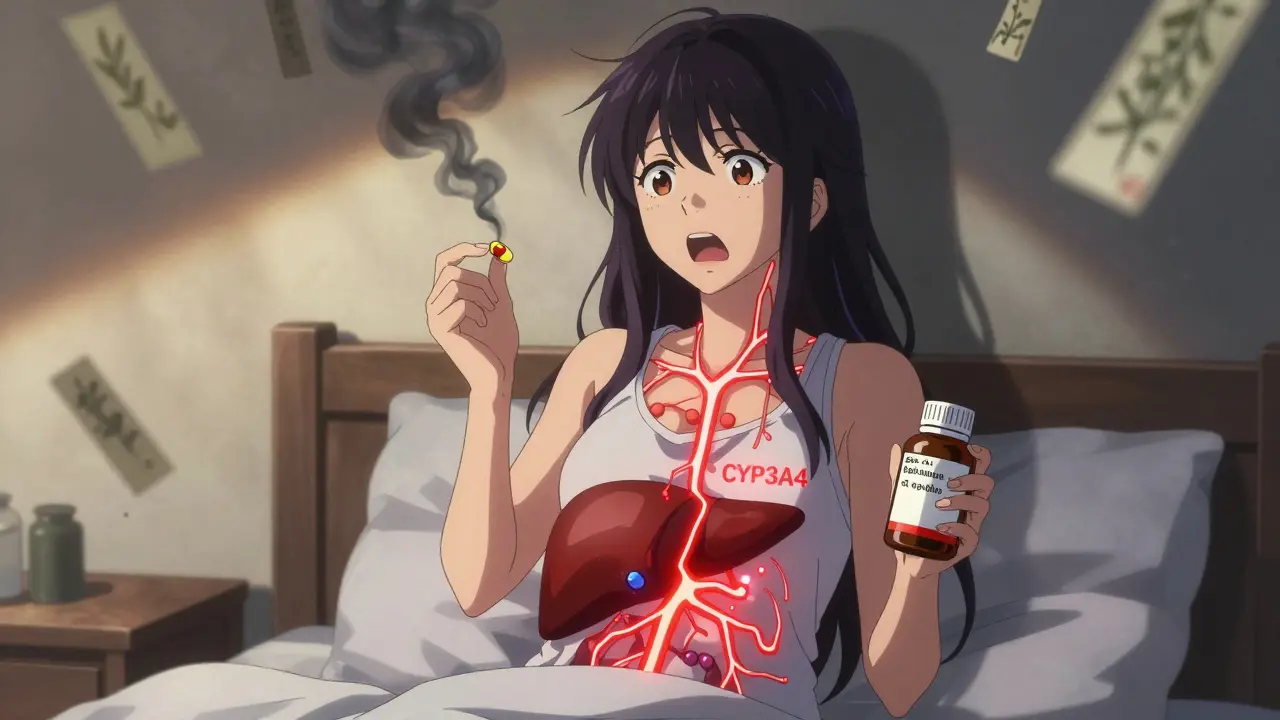
The most dangerous herbal supplement when taken with birth control is St. John’s wort. This herb, often used for mild depression or anxiety, doesn’t just sit there quietly. It actively triggers your liver to break down hormones faster. Specifically, it turns on the CYP3A4 enzyme and P-glycoprotein, two systems that flush out ethinyl estradiol and progestin-the key ingredients in most birth control pills.
A 2001 study showed that women taking 900 mg of St. John’s wort daily along with a standard birth control pill saw their hormone levels drop by up to 50%. That’s not a small change. That’s enough to stop ovulation from being fully suppressed. The result? 23% of women on this combo experienced breakthrough bleeding-compared to just 5% of women taking birth control alone. Breakthrough bleeding isn’t just annoying. It’s a red flag that your contraception isn’t working like it should.
And it doesn’t stop when you quit the herb. The enzymes stay turned on for weeks. Medical guidelines say you need to use a backup method-like condoms-for at least a month after stopping St. John’s wort. No exceptions. No “I’ll just be careful.” This isn’t theoretical. There are documented cases of pregnancy directly linked to this interaction.
Other Supplements That Might Interfere
St. John’s wort isn’t the only one. Some other supplements carry risk, even if the evidence isn’t as strong.
- Grapefruit juice can interfere with how your body absorbs birth control hormones. It blocks enzymes that normally break down the pill, but in some cases, it can also slow absorption. The effect is unpredictable and varies from person to person. If you drink grapefruit juice regularly, talk to your doctor.
- Activated charcoal is marketed as a detox or digestive aid. But if you take it within four hours of your birth control pill, it can bind to the hormones and pull them out of your system before they’re absorbed. One dose might not cause failure-but repeated use? That’s a real problem.
- Saw palmetto, garlic pills, flaxseed, and alfalfa have been flagged in case reports and small studies. The mechanism isn’t clear, but they may affect hormone metabolism or liver enzymes. If you’re using these long-term, don’t assume they’re harmless.
- Soy isoflavones work differently. Instead of changing how your body processes hormones, they compete with estrogen for receptor sites. Think of it like trying to fit two keys into the same lock. If soy isoflavones are blocking the lock, your birth control’s hormones can’t do their job properly.
What’s Probably Safe (But Still Check)
Not all supplements are risky. Many have no known interaction with hormonal birth control.
- Ashwagandha: A 2015 study found no effect on the enzymes that break down birth control hormones. Short-term use (up to 3 months) appears safe. But long-term safety data is limited, and some people experience stomach upset or liver stress-side effects that could indirectly affect absorption.
- Probiotics: No evidence they interfere with birth control. They work in the gut, not the liver. If you’re taking them for digestion or vaginal health, you’re likely fine.
- Melatonin: Doesn’t reduce contraceptive effectiveness. But birth control can raise melatonin levels in your body, which might make you feel sleepier than usual. That’s not dangerous, but it’s worth noting.
- Most vitamins and minerals: Vitamin C, D, B-complex, iron, magnesium-they don’t touch your birth control. Unless they’re packed with herbs, they’re generally safe.
DIM and Vitex: The Gray Areas
Some supplements sit in a tricky middle ground.
Diindolylmethane (DIM), often taken for estrogen balance, is one. At normal doses (50-100 mg), there’s no proof it interferes with birth control. But at high doses (600 mg+), it may increase estrogen breakdown. That’s a problem if your birth control relies on steady estrogen levels. If you’re taking DIM, stick to the lower end-and tell your doctor.
Vitex (chasteberry) is another. Some sources say it’s safe. Others say it might affect prolactin and progesterone. The truth? There’s no solid evidence it reduces birth control effectiveness. In fact, some practitioners say it may help regulate cycles in women on the pill. But because it influences hormones, it’s not something to start without talking to your provider.
Why This Isn’t Common Knowledge
Here’s the frustrating part: herbal supplements aren’t regulated like drugs. The FDA doesn’t test them for safety or interactions before they hit shelves. A bottle labeled “St. John’s wort” might contain anything from 0.3% to 1.5% hyperforin-the active ingredient. One batch could be harmless. Another could be dangerous.
Companies don’t have to prove their claims. They don’t have to list side effects. And most people assume “natural” means “safe.” But natural doesn’t mean harmless. St. John’s wort is a plant. So is poison ivy.
Even doctors don’t always ask. A 2012 survey found that 23.2% of U.S. adults used herbal supplements. Yet, fewer than half told their healthcare provider. That’s a huge gap. If you’re on birth control and taking anything beyond a multivitamin, your provider needs to know.
What You Should Do Right Now
Here’s what works:
- Make a list of every supplement, herb, or tea you take daily-even “just for sleep” or “occasional stress relief.”
- Check the label. Look for St. John’s wort, grapefruit extract, activated charcoal, or any unfamiliar botanical names.
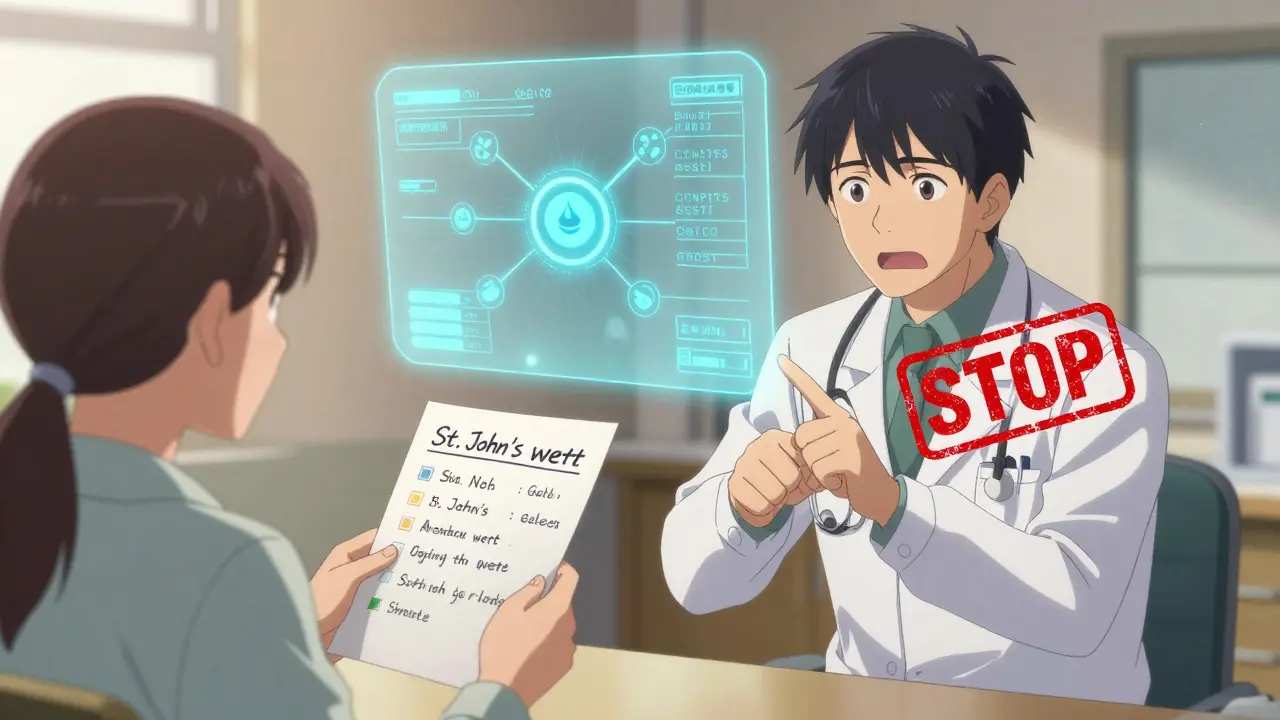
- Call your doctor or pharmacist. Don’t Google it. Don’t rely on a blog. Ask a professional to review your list. They can cross-reference it with your birth control type.
- If you’re taking St. John’s wort, stop it. Use condoms or another form of birth control for at least a month after quitting.
- Don’t assume safety. Even if something is “safe for most people,” you’re not most people. Your body, your hormones, your meds-they’re unique.
There’s no shame in asking. No embarrassment in saying, “I’m on birth control-does this interact?” Your provider has seen this before. They’ve helped women avoid unplanned pregnancies because they asked the right question.
Bottom Line
Herbal supplements aren’t the enemy. But they’re not harmless either. When mixed with birth control, a few can seriously reduce effectiveness. St. John’s wort is the biggest threat. Others like grapefruit juice and activated charcoal carry real risks. Many others are fine-but you won’t know unless you check.
Don’t let a well-meaning supplement cost you your peace of mind-or your future. Talk to your provider. Know what you’re taking. And never assume “natural” means “safe.” Your birth control deserves that much respect.
Can I take ashwagandha with birth control?
Yes, ashwagandha doesn’t appear to interfere with the enzymes that break down birth control hormones. A 2015 study found no significant interaction. Short-term use (up to 3 months) is generally considered safe. But long-term safety data is limited, and it can cause stomach upset or liver stress in some people-which might indirectly affect how your body absorbs your pill. If you’re taking it regularly, mention it to your doctor.
Does St. John’s wort really make birth control fail?
Yes. Multiple studies confirm that St. John’s wort significantly lowers hormone levels from birth control pills by speeding up their metabolism. One study showed hormone levels dropped by up to 50%. This leads to breakthrough bleeding and increases the risk of pregnancy. It’s one of the few herbal supplements with proven, clinically significant interaction. If you’re taking it, stop immediately and use backup contraception for at least a month after quitting.
Is grapefruit juice dangerous with birth control?
It can be. Grapefruit juice blocks enzymes in your liver and gut that help process birth control hormones. This can either increase hormone levels (raising side effect risk) or, in some cases, reduce absorption. The effect is unpredictable and varies by person. If you drink grapefruit juice regularly, talk to your doctor about switching to a different birth control method or avoiding it altogether.
What about DIM or Vitex? Are they safe?
At low doses (50-100 mg), DIM doesn’t appear to interfere with birth control, but high doses (600 mg+) may lower estrogen levels, which could reduce effectiveness. Vitex has no strong evidence of interaction, and some providers say it may even help balance hormones while on the pill. But because both affect hormone pathways, it’s best to consult your doctor before using them long-term. Don’t self-prescribe.
Do probiotics or vitamins affect birth control?
No. Probiotics, vitamin C, D, B-complex, iron, and most standard multivitamins have no known interaction with hormonal birth control. They work in different parts of the body and don’t affect liver enzymes or hormone metabolism. You can take them safely. But always check the label-some “vitamins” contain added herbs like St. John’s wort or saw palmetto.
Why don’t supplement labels warn about birth control interactions?
Because they’re not required to. In the U.S., herbal supplements are classified as dietary supplements, not drugs. That means they don’t need FDA approval before sale, and manufacturers aren’t required to test for drug interactions or list side effects. The FDA only steps in after problems arise. That’s why you can’t rely on labels-you have to ask your doctor.
What should I do if I think my birth control failed because of a supplement?
Stop taking the supplement immediately. Use emergency contraception (like Plan B) if you had unprotected sex in the last 5 days. Then schedule an appointment with your doctor. They can help you switch to a more reliable method, check for interactions, and advise on future supplement use. Don’t wait-timing matters for emergency contraception.
Joie Cregin
January 15, 2026 AT 21:51Okay but can we talk about how wild it is that we’re expected to be detectives just to not get pregnant? I took ashwagandha for months thinking it was ‘just chill herbs’ and had no idea I was basically playing Russian roulette with my birth control. So glad I read this-now I’m going through my supplement cabinet like it’s a crime scene. 🙃
Melodie Lesesne
January 16, 2026 AT 18:38I used to drink grapefruit juice every morning like it was a health ritual. Now I just stick to orange juice and feel way less anxious about my pill. Honestly, this post saved me from a nightmare. Thanks for laying it all out so clearly-no jargon, no fearmongering, just facts. 🙌
Corey Sawchuk
January 17, 2026 AT 09:52St John's wort is a known drug interaction and it's been documented for decades. If you're on birth control and taking it you're not being natural you're being careless. The liver enzymes don't care if it's plant based or synthetic. Same mechanism same risk. Just stop.
Stephen Tulloch
January 19, 2026 AT 07:29LMAO so the FDA doesn’t regulate herbs but you’re supposed to trust some dude on Amazon selling ‘detox charcoal’ for $29.99? 🤡 Natural doesn’t mean safe. Poison ivy is natural too. Next you’ll tell me I should drink kava for anxiety and not worry about liver failure. Wake up people. If it’s not FDA approved it’s a gamble. And if you’re taking it with birth control? You’re not a wellness influencer-you’re a liability.
Isabella Reid
January 21, 2026 AT 02:02As someone who grew up in a culture where herbal teas are medicine, I get why people assume these are harmless. My grandma swore by chamomile for everything. But the truth? Just because it’s been around for centuries doesn’t mean it won’t mess with your hormones. I told my doctor I was drinking vitex tea for ‘cycle balance’-she nearly had a heart attack. Now I only take what’s on her approved list. Don’t be like me.
Jody Fahrenkrug
January 22, 2026 AT 04:53Probiotics are safe. Vitamins are safe. But if it’s got ‘extract’ or ‘proprietary blend’ on the label? That’s the red flag. I once bought a ‘stress relief’ capsule that had St. John’s wort in the fine print. No warning. Just a tiny font. I almost got pregnant. Don’t trust labels. Trust your pharmacist.
kanchan tiwari
January 23, 2026 AT 13:20THEY KNOW. THEY ALL KNOW. Big Pharma doesn’t want you to know this because if you stop buying their pills and start using ‘natural’ herbs, they lose billions. But the truth? The FDA is in bed with supplement companies. That’s why nothing is labeled. That’s why your doctor doesn’t ask. They’re paid off. You think this is an accident? It’s a system. They want you confused. They want you scared. They want you dependent. Wake up. 🕵️♀️
Bobbi-Marie Nova
January 24, 2026 AT 01:31So let me get this straight-taking a ‘natural’ supplement is basically cheating on your birth control? 😂 I thought I was being healthy. Turns out I was just being a walking FDA violation. Thanks for the reality check. Now I’m throwing out my ‘hormone harmony’ tea and going back to my boring old pill. No more ‘wellness’ drama for me.
Ryan Hutchison
January 24, 2026 AT 06:44Just take the pill. Stop with the herbal nonsense. America’s problem isn’t birth control-it’s people thinking they know more than science because they watched a YouTube video. You want to be healthy? Eat real food. Exercise. Sleep. Don’t turn your medicine cabinet into a hippie bazaar. This isn’t Canada. We don’t need this crap.