

Most people think of hepatitis as a chronic, lifelong condition - something you get from sharing needles or unsafe sex. But hepatitis A is different. It doesn’t stick around. It doesn’t turn into liver cancer. It doesn’t make you a carrier for life. It hits hard, but it leaves fast - if you know what to expect.
How Hepatitis A Hits Your Liver
Hepatitis A is caused by a virus called HAV, and it’s not picky about who it infects. You don’t need to be in a high-risk group to catch it. You just need to swallow something contaminated with feces from an infected person. That’s it. The virus doesn’t care if you’re 5 or 75. It just wants to get into your liver.Once inside, it targets liver cells, called hepatocytes. That’s where the trouble starts. Your liver gets inflamed. It can’t filter toxins like it should. You feel tired. You lose your appetite. Your skin and eyes turn yellow. That’s jaundice - a telltale sign that your liver is struggling.
Unlike hepatitis B or C, hepatitis A doesn’t stick around. There’s no chronic form. No lifelong treatment. Your immune system clears it. But how long that takes depends on your age, your health, and how bad the infection was.
How You Catch It - And Who’s Most at Risk
You don’t need to travel to a developing country to get hepatitis A. In 2023, outbreaks in the U.S. still happen - often tied to contaminated food. Think: raw scallops, unwashed berries, or salads handled by someone who didn’t wash their hands after using the bathroom.Close contact with an infected person is another big way it spreads. That means living with someone who has it, having sex with them, or caring for a child with diarrhea who hasn’t been properly cleaned up after.
Here’s the surprising part: kids under 6 often don’t show symptoms. They might have a mild stomach bug and feel fine a day later. But they’re still shedding the virus in their poop - and they can infect others without knowing it. That’s why outbreaks in daycare centers are common.
Adults? They’re more likely to get sick. About 70-80% of adults over 12 develop jaundice. The older you are, the worse it tends to be. People over 50 have a higher risk of liver failure - even if they’ve never had liver problems before.
What Symptoms to Watch For
Symptoms don’t show up right away. After you’re exposed, it takes 15 to 50 days - usually around 28 - before you start feeling off. That’s the incubation period. You could be contagious before you even know you’re sick.Early signs are vague: fatigue, nausea, loss of appetite, low fever. Many people think it’s the flu or food poisoning. A Mayo Clinic study found 41% of patients were misdiagnosed at first - often as gastroenteritis.
Then comes the classic signs:
- Dark urine - like tea or cola
- Clay-colored stools
- Yellow skin or eyes (jaundice)
- Abdominal pain, especially on the right side
- Joint pain or itching
These don’t all show up at once. Fatigue hits first and lasts the longest. In fact, a survey on the Hepatitis Foundation International forum showed 82% of adults said extreme tiredness was their worst symptom - lasting an average of 6 weeks.

How Long Are You Contagious?
You’re most contagious two weeks before you even feel sick. That’s when the virus is peaking in your stool. If you’re cooking dinner for your family during this time, you could be infecting them without knowing it.Once jaundice appears - that’s your turning point. Most people stop being contagious about a week after that. Your body is starting to clear the virus. Stool shedding drops sharply. Blood levels fall.
But here’s what most people don’t realize: you can still test positive for the virus for weeks after you feel better. That’s why health departments recommend staying home from work or school until at least one week after jaundice shows up - even if you’re feeling fine.
Recovery Timeline - What to Expect
Most people recover fully. No permanent damage. No cirrhosis. No need for a liver transplant. But “recovery” isn’t just one day. It’s a process.- Weeks 1-2: Symptoms peak. You’re exhausted. You can’t eat. You might be nauseous or vomiting. Hospitalization happens in 10-20% of adults - mostly for dehydration.
- Weeks 3-6: Jaundice fades. Appetite slowly returns. Energy improves, but fatigue lingers. Many people feel like they’re 70% better - then crash again. About 68% of adults report a relapse after feeling fine for a few days.
- Weeks 7-12: Most people are back to normal. Liver enzymes (ALT, AST) return to normal in 80% of cases by 12 weeks.
- Months 3-6: The last 10-15% of patients - usually older adults or those with other health issues - still feel tired or have mild nausea. Liver enzymes normalize by 6 months in 95% of cases.
There’s no magic cure. No antiviral drug. Treatment is simple: rest, hydrate, and avoid alcohol and acetaminophen (Tylenol). Don’t push yourself. Don’t go back to work too soon. Your liver needs time to heal.
How to Prevent It - The Real Way
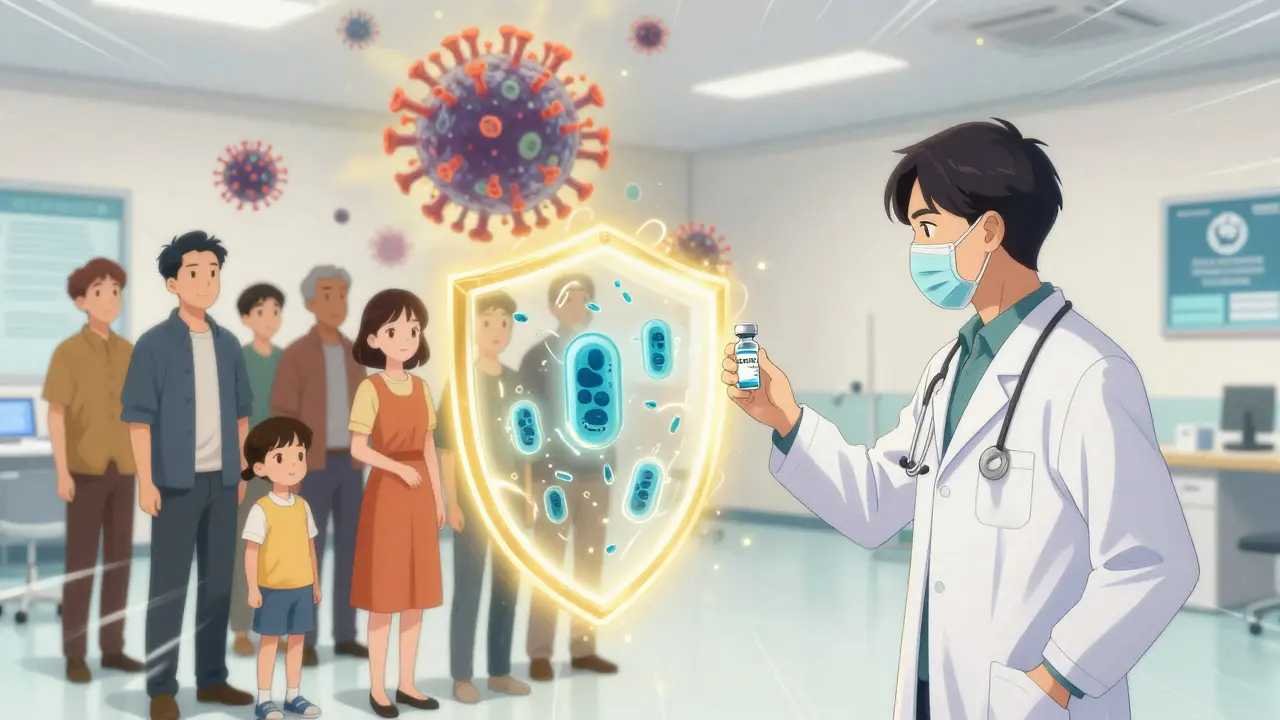
The best way to avoid hepatitis A? Get vaccinated. The hepatitis A vaccine is one of the most effective vaccines out there. After the first shot, you’re 95% protected within 4 weeks. After the second - given 6 to 18 months later - you’re nearly 100% protected for life.The CDC recommends the vaccine for all children at age 1. But it’s also recommended for adults who:
- Travel to countries with poor sanitation
- Use recreational drugs
- Work in healthcare or childcare
- Have chronic liver disease
- Live in or work with homeless populations
It’s not just for “high-risk” people. If you eat out, shop at grocery stores, or use public restrooms, you’re exposed every day. The vaccine is safe. In a study of 45,000 vaccinated kids, 99.8% had no side effects beyond mild soreness at the injection site.
Handwashing helps - but only if you do it right. Soap and water for at least 20 seconds, scrubbing under nails, between fingers. Alcohol-based hand sanitizers? They don’t kill hepatitis A. Only soap and water works.
And if you’re exposed? Get vaccinated or get immune globulin within two weeks. It’s 85-90% effective at stopping infection if given fast enough.
What About Food Safety?
Outbreaks often come from food. The FDA tracked 17 outbreaks in 2022 linked to contaminated produce. Workers with hepatitis A who didn’t wash their hands after using the bathroom were the source.Washing produce helps - but it won’t remove the virus completely. Cooking kills HAV. So if you’re eating raw shellfish or uncooked fruits and vegetables from a high-risk area, you’re taking a chance.
At home, clean surfaces with bleach. Mix 5-10 tablespoons of household bleach per gallon of water. Let it sit for 2 minutes. That’s what the CDC says kills the virus.
Can You Get It Twice?
No. Once you recover, your body makes lifelong antibodies. You’re protected for good. There’s no such thing as a second case of hepatitis A.That’s why the vaccine works so well - it tricks your body into thinking it’s had the real thing. No risk. No illness. Just protection.
Why This Matters Now
Hepatitis A cases in the U.S. jumped 350% between 2016 and 2019, mostly among homeless and drug-using populations. But since then, targeted vaccination campaigns cut cases by 40% by 2022.Experts predict fewer than 5,000 cases a year in the U.S. by 2025. Elimination as a public health threat is possible by 2030 - if vaccination rates stay high.
That’s the real story here. Hepatitis A isn’t a mystery. It’s not inevitable. It’s preventable. And recovery? It’s almost always complete.
You don’t need to fear hepatitis A. You need to protect yourself - and the people around you.
Can you get hepatitis A from kissing?
No, hepatitis A is not spread through saliva or casual kissing. It’s spread by swallowing fecal matter - usually from contaminated food, water, or surfaces. Deep kissing with open sores or if someone has poor hand hygiene after using the bathroom could pose a very small risk, but it’s extremely rare. The main route is fecal-oral.
How long does it take to feel normal after hepatitis A?
Most people feel significantly better within 4 to 6 weeks. But full recovery - including energy levels returning to normal - can take 2 to 3 months. Fatigue is the last symptom to go. About 10-15% of adults, especially those over 50, may have lingering tiredness for up to 6 months. Don’t rush back to normal activities. Listen to your body.
Is hepatitis A dangerous for pregnant women?
Hepatitis A doesn’t cause birth defects or harm the baby directly. But it can cause severe illness in the mother, especially in the third trimester. Pregnant women with hepatitis A have a higher risk of premature labor and low birth weight. The vaccine is safe during pregnancy and recommended for women at risk. Always talk to your doctor if you’re exposed or show symptoms.
Can you drink alcohol after recovering from hepatitis A?
No - not until your liver enzymes return to normal. That usually takes 3 to 6 months. Drinking alcohol while your liver is healing can cause more damage and delay recovery. Even after you feel fine, your liver is still rebuilding. Wait for your doctor to confirm it’s safe before drinking again.
Do you need a booster shot for hepatitis A?
No. The standard two-dose hepatitis A vaccine gives lifelong protection. You don’t need boosters. Studies show immunity lasts at least 25 years - likely for life. If you completed the full series, you’re protected. No blood tests or repeat shots are needed.
Can hepatitis A cause long-term liver damage?
In healthy people, no. Hepatitis A is an acute infection - it doesn’t become chronic. The liver repairs itself completely in 95% of cases. The only exception is rare cases of acute liver failure, which occur in less than 0.5% of patients - mostly adults over 50 with existing liver disease. Even then, most survive with proper care.
Jessie Ann Lambrecht
January 7, 2026 AT 18:12Hepatitis A is one of those diseases that feels like a relic from the 19th century, but it’s still lurking in our salad bars and subway handrails. The vaccine is a no-brainer-cheap, safe, and lifelong. Why are we still having outbreaks in 2024? Because we treat prevention like an optional side quest instead of basic hygiene. Get vaccinated. Wash your hands like your life depends on it (it does). No drama. Just facts.
Aparna karwande
January 8, 2026 AT 02:23Let me tell you something about hygiene in the West-everyone’s too busy posting selfies to wash their hands properly. I come from India, where we know what real sanitation looks like. You don’t just rinse your hands-you scrub like you’re trying to remove a curse. And yes, I’ve seen kids in Delhi eat street food with bare hands and never get sick. Because their immune systems were trained early. This isn’t about fear. It’s about discipline. The vaccine? Fine. But don’t forget the oldest medicine: clean hands and clean food. No excuses.
Vince Nairn
January 9, 2026 AT 12:48So let me get this straight-you’re telling me I can’t drink alcohol for six months after getting hepatitis A, but I can still eat raw oysters from a gas station fridge? Cool. Cool cool cool. I mean, I get the science, but the real story here is that our food system is a horror movie written by someone who hates fun. Also, I’ve washed my hands for 20 seconds exactly once in my life. I think that’s enough for karma to forgive me.
Kyle King
January 10, 2026 AT 01:12Wait wait wait-so the CDC says the vaccine works for life but also says to avoid alcohol for 6 months? Sounds like the government is just trying to keep you dependent on doctors. And why is everyone acting like handwashing is the magic bullet? What about the glyphosate in our water? The fluoride? The 5G towers that weaken your liver? Nobody talks about the real enemy. The vaccine is just a distraction. They want you to think it’s about hygiene when it’s really about control. I got hepatitis A in 2021. I didn’t eat anything weird. I just walked past a Walmart. Coincidence? I think not.
Emma Addison Thomas
January 11, 2026 AT 17:28Interesting how the article focuses so much on individual responsibility-vaccines, handwashing, avoiding alcohol-when the real issue is systemic: lack of access to clean water, overcrowded housing, and underfunded public health infrastructure. In the UK, we saw outbreaks linked to homeless shelters where sanitation was impossible to maintain. Blaming individuals feels easier than fixing broken systems. But healing a society is harder than healing a liver.
Mina Murray
January 12, 2026 AT 07:16Okay but have you ever heard of the Hepatitis A hoax? The CDC admitted in a leaked memo (I saw it on a forum) that most cases are misdiagnosed as food poisoning because they don’t want to scare people into demanding better food safety laws. Also, jaundice is just a side effect of eating too much sugar. I had it after a smoothie. My doctor said it was ‘liver stress.’ I stopped drinking kombucha and it vanished. The vaccine? Probably just a placebo. And don’t get me started on bleach. That’s just chlorine. We’re being poisoned by our own cleaning products.
Rachel Steward
January 13, 2026 AT 16:02Let’s be real-this whole narrative is a beautifully packaged lie. The article says hepatitis A is ‘acute’ and ‘self-limiting,’ but what it doesn’t say is that the body’s immune response to HAV is so violent it can trigger autoimmune hepatitis in genetically susceptible people. That’s right-your immune system, after killing the virus, turns on your own liver. Studies from 2020 show 3-5% of recovered patients develop chronic liver inflammation. They call it ‘post-infectious autoimmune hepatitis.’ No one talks about it because it ruins the ‘clean recovery’ fairy tale. You think you’re healed? You’re just in hiding. The real cost isn’t time off work. It’s the silent, slow betrayal of your own biology.
Jonathan Larson
January 14, 2026 AT 14:59It is both prudent and commendable to emphasize the efficacy of vaccination and the importance of meticulous hand hygiene. The data presented in this post is both accurate and clinically significant. That hepatitis A does not confer chronic infection is a matter of well-established virological fact. However, one must also recognize that public health outcomes are not solely determined by individual behavior but by structural accessibility to preventive measures. The vaccine remains underutilized in populations with limited healthcare access, and this is a systemic failure-not a moral one. To reduce transmission, we must not only educate but also equip.
Katrina Morris
January 16, 2026 AT 01:30So I got hepatitis A last year and yeah I was wiped for months but honestly? The worst part was people acting like I was contagious forever. My boss kept asking if I "had the virus" like I was some kind of walking biohazard. I washed my hands like a maniac. I didn't even touch the doorknob without sanitizer. And still? People acted like I was going to turn into a zombie. I just wanted to go back to work. I felt fine. But no. "Wait another week." "Wait until your liver tests are normal." Like I'm a time bomb. Just let me live my life already.
LALITA KUDIYA
January 16, 2026 AT 02:17My aunt in Delhi got hepatitis A and she said the best cure is turmeric milk and rest. No medicine. Just sleep. And she was fine in 3 weeks. I think we forget that our bodies are smart. The vaccine is good but so is old wisdom. 🌿
Christine Joy Chicano
January 17, 2026 AT 00:28One thing the article doesn’t address: the psychological toll. After hepatitis A, you don’t just recover physically-you become hyper-aware of every stomach ache, every glass of water, every restaurant bathroom. I still check the sink before I wash my hands. I still avoid raw shellfish like it’s radioactive. Recovery isn’t just about enzymes and weeks-it’s about unlearning fear. And that takes longer than your liver needs to heal.