
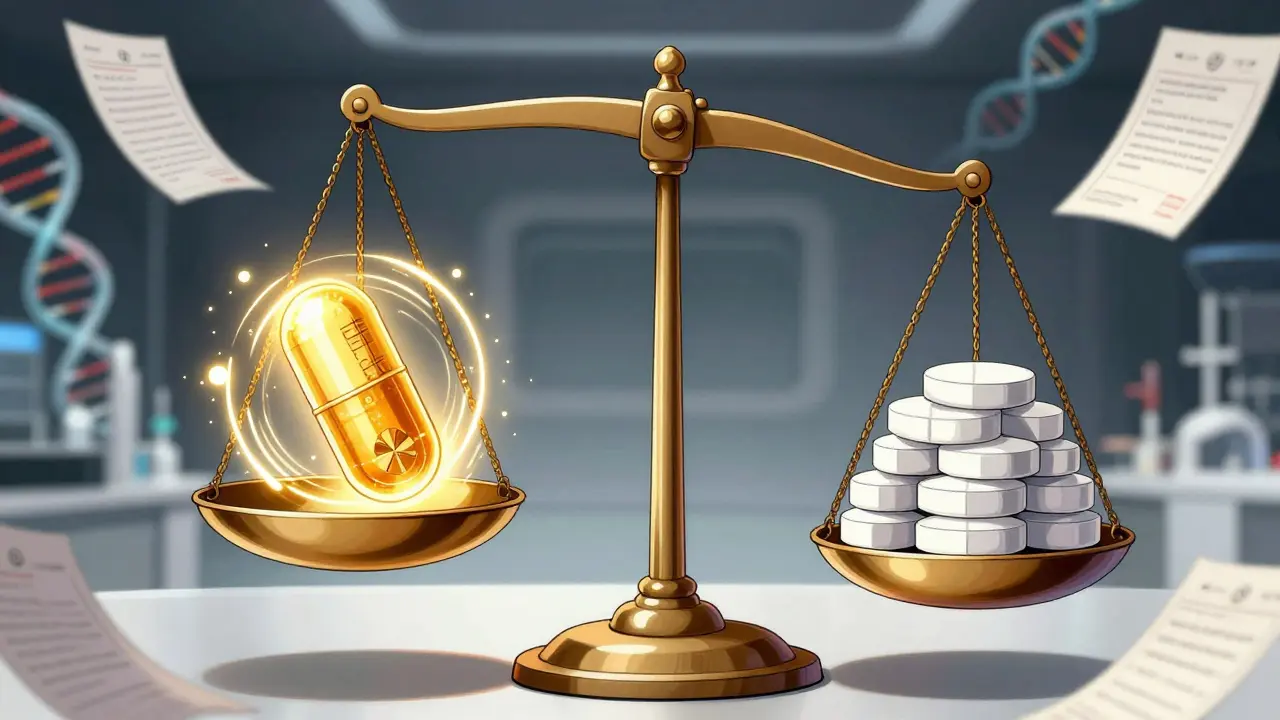
Imagine needing a life-saving medication that costs $500 a month. Now imagine that same medication available for $10 because a competitor made an identical version. This isn’t magic; it’s the result of one of the most impactful pieces of legislation in modern history. The Hatch-Waxman Act is a federal law governing generic approval and patent protections for pharmaceuticals. Officially known as the Drug Price Competition and Patent Term Restoration Act of 1984, this law created the bridge between expensive brand-name innovation and affordable generic competition.
Before 1984, the system was broken. Brand-name companies had no incentive to innovate quickly because they feared immediate copying, while generic manufacturers couldn’t enter the market because they were forced to repeat costly clinical trials for drugs already proven safe. The Hatch-Waxman Act fixed this by striking a delicate balance. It gave brand-name manufacturers extra time on their patents to recoup research costs. In exchange, it created a streamlined path for generic drugs to enter the market once those patents expired or were challenged. Today, this framework dictates how almost every pill you buy gets approved, priced, and sold.
The Core Mechanism: Abbreviated New Drug Applications (ANDA)
The heart of the Hatch-Waxman Act is the creation of the Abbreviated New Drug Application (ANDA) pathway. Before this act, if you wanted to sell a generic version of a drug, you had to submit a full New Drug Application (NDA). This meant running your own human clinical trials to prove safety and efficacy. It was redundant, expensive, and dangerous to patients who became test subjects for unnecessary studies.
The ANDA process changes everything. Under Section 505(j) of the Federal Food, Drug, and Cosmetic Act, generic manufacturers can rely on the FDA’s previous determination that the brand-name drug is safe and effective. You don’t need to prove the drug works; you just need to prove your version is identical to the original. This is called therapeutic equivalence.
To get approval via an ANDA, a generic manufacturer must demonstrate two things:
- Pharmaceutical Equivalence: Your product must have the same active ingredient, strength, dosage form (like a tablet or capsule), and route of administration (oral, topical, etc.) as the Reference Listed Drug (RLD).
- Bioequivalence: Your product must perform the same way in the body. This is measured through pharmacokinetic studies showing that the rate and extent of absorption (Cmax and AUC) fall within a strict 80-125% confidence interval compared to the brand-name drug.
This shift cut development costs for generics from roughly $2.6 million per product in 1984 dollars to significantly less today. It removed the biggest barrier to entry, allowing dozens of competitors to flood the market after patents expire, driving prices down dramatically.
The Orange Book and Patent Certifications
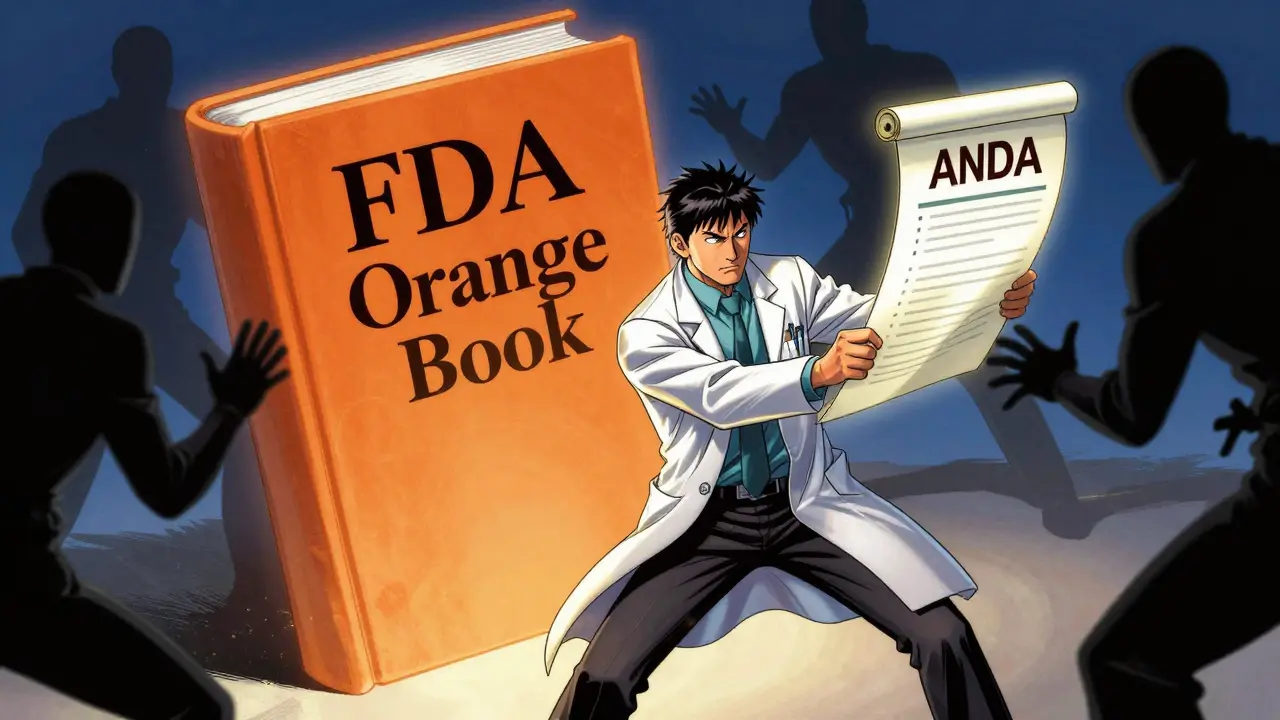
If the ANDA is the engine, the Orange Book is the official list of approved drug products with therapeutic equivalence evaluations published by the FDA is the map. The Hatch-Waxman Act requires brand-name manufacturers to list all patents covering their drug in this book. For generic manufacturers, checking the Orange Book is the first step in deciding whether to file an ANDA.
When filing an ANDA, the applicant must certify the status of the patents listed in the Orange Book. There are four types of certifications, often referred to by their paragraph numbers:
- Paragraph I: No patent information is listed for the drug.
- Paragraph II: All patents listed have already expired.
- Paragraph III: Patents are still valid, but the generic will not be marketed until they expire.
- Paragraph IV: The patents are invalid or will not be infringed by the generic product.
Paragraph IV is where the drama happens. By filing a Paragraph IV certification, a generic company is essentially saying, “We think your patent is bogus, and we’re going to challenge it.” This triggers a legal battle known as the “patent dance.” The generic filer must notify the brand owner within 20 days. If the brand owner sues for infringement within 45 days, the FDA automatically stays its approval for 30 months. This period allows courts to decide who wins without halting the regulatory review entirely.
The 180-Day Exclusivity Reward
Why would a small generic company risk millions of dollars in legal fees to challenge a giant pharmaceutical corporation? The Hatch-Waxman Act offers a massive carrot: 180-day market exclusivity.
The first generic applicant to file a substantially complete ANDA with a Paragraph IV certification-and successfully challenge the patent-gets 180 days of sole access to the generic market. During this window, the FDA cannot approve any other competing generic versions of that drug. This exclusivity period is incredibly valuable. It allows the first mover to capture up to 80% of the market share before other generics enter, helping them recoup their litigation costs and make a profit.
This incentive structure has been highly effective. According to industry data, 90% of brand-name drugs face generic competition within one year of losing patent protection. Without this reward, many smaller generic firms might not have the resources to take on big pharma in court.
Patent Term Restoration for Innovators
The “Waxman” part of the act addresses the needs of brand-name manufacturers. Developing a new drug takes years of R&D, followed by years of clinical trials and FDA review. During this entire period, the clock is ticking on the patent, which typically lasts 20 years from the filing date. By the time a drug hits the market, it might only have 7 or 8 years of patent protection left.
The Hatch-Waxman Act provides patent term restoration, adding up to 5 years to the patent life to compensate for the time lost during regulatory review. However, there is a cap: the total patent life from the date of FDA approval cannot exceed 14 years. This ensures that innovators have enough time to generate revenue to fund future discoveries, preventing a race-to-the-bottom where companies stop investing in high-risk R&D.
Impact on Healthcare Costs and Access
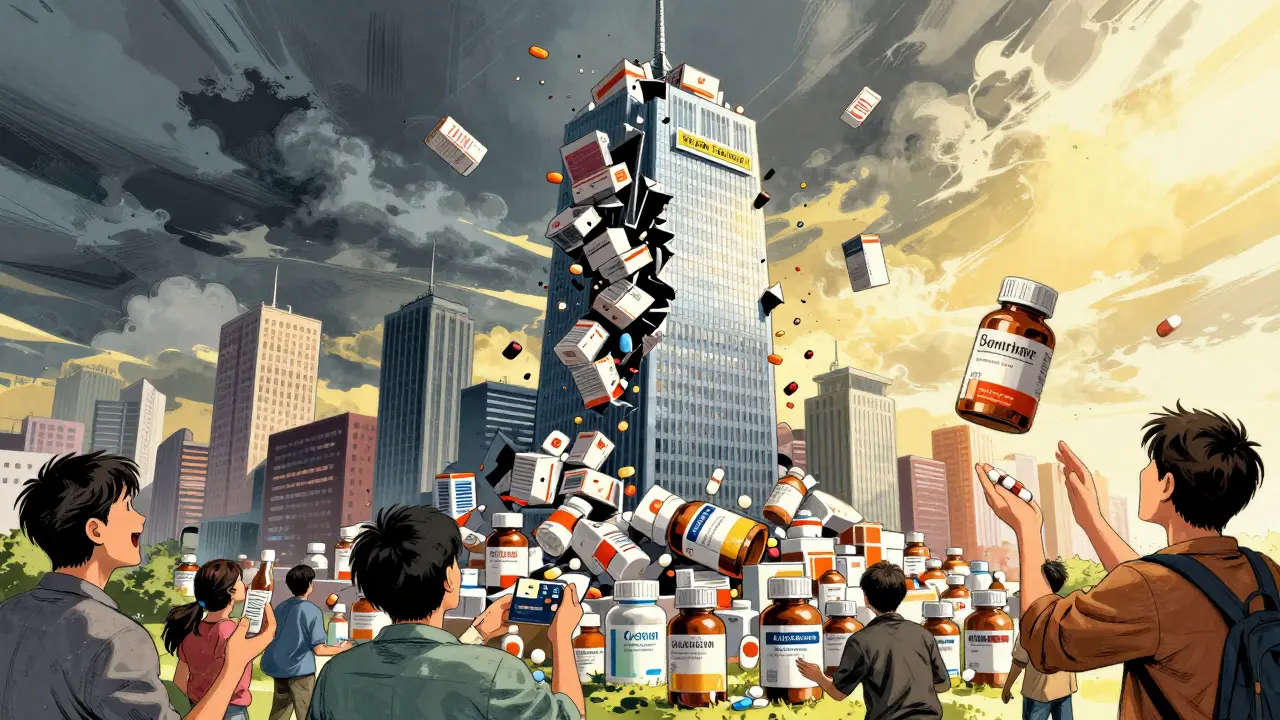
The results of this legislative balancing act are staggering. When the Hatch-Waxman Act passed in 1984, generic drugs accounted for only 19% of prescriptions. Today, they represent over 90% of prescriptions by volume. Despite this dominance, generics account for only about 23% of total drug spending.
The Congressional Budget Office estimated that generic competition generated approximately $1.7 trillion in healthcare savings over a single decade prior to 2020. For individual patients, the difference is stark. Medicare beneficiaries save an average of $3,200 annually per person by using generics instead of brand-name equivalents. Prices for generic drugs typically drop 80-90% compared to the brand-name price once competition enters the market.
| Metric | Brand-Name Drugs | Generic Drugs |
|---|---|---|
| Market Share (Prescriptions) | < 10% | > 90% |
| Share of Total Spending | ~77% | ~23% |
| Avg. Development Cost | $1-2 Billion+ | $1-2 Million (ANDA) |
| Price Reduction upon Entry | N/A | 80-90% |
Challenges and Modern Controversies
While the Hatch-Waxman Act is widely considered a success, it is not perfect. Over the decades, loopholes have emerged that some argue undermine the spirit of the law.
Evergreening: Brand manufacturers sometimes file multiple secondary patents for different aspects of a drug-such as a new formulation, a new dosage schedule, or a new manufacturing method. These “patent thickets” can extend market exclusivity far beyond the original compound patent, delaying generic entry even when the core molecule is off-patent.
Pay-for-Delay Settlements: In some cases, brand companies pay generic challengers to delay entering the market. While settlements are common in litigation, these reverse payments can keep prices high for consumers. Courts and regulators have increasingly scrutinized these practices as anti-competitive.
Sample Access: To prove bioequivalence, generic manufacturers need samples of the brand-name drug. Sometimes, brands refuse to provide these samples, forcing generics into lengthy legal battles under the CREATES Act of 2019, which mandates that brands must provide samples unless they have a legitimate reason not to.
Additionally, the Hatch-Waxman framework was designed for small-molecule drugs (chemical compounds). It does not work well for biologics, which are complex proteins produced in living cells. This gap led to the Biologics Price Competition and Innovation Act (BPCIA) in 2010, creating a separate pathway for biosimilars.
What is the main purpose of the Hatch-Waxman Act?
The main purpose is to balance two competing interests: encouraging pharmaceutical innovation by protecting brand-name patents, and fostering competition by creating a streamlined approval process for generic drugs. It aims to ensure patients have access to both new innovative therapies and affordable generic alternatives.
How does the ANDA process differ from a standard NDA?
An NDA (New Drug Application) requires the manufacturer to conduct full clinical trials to prove safety and efficacy. An ANDA (Abbreviated New Drug Application) allows generic manufacturers to rely on the FDA's previous finding of safety and efficacy for the brand-name drug. They only need to prove their product is bioequivalent and pharmaceutically equivalent to the reference drug.
What is Paragraph IV certification?
Paragraph IV certification is a statement filed by a generic manufacturer asserting that a patent listed in the FDA's Orange Book is invalid or will not be infringed by their generic product. Filing this certification triggers a legal challenge against the brand-name holder and makes the generic eligible for 180 days of market exclusivity if successful.
Why do generic drugs cost so much less than brand names?
Generic drugs cost less because manufacturers do not incur the billions of dollars spent on initial research, discovery, and large-scale clinical trials required for brand-name drugs. They also benefit from intense market competition once patents expire, which drives prices down by 80-90%.
Does the Hatch-Waxman Act apply to biologics?
No, the Hatch-Waxman Act primarily governs small-molecule chemical drugs. Biologics, which are complex proteins, are regulated under a different framework established by the Biologics Price Competition and Innovation Act (BPCIA) of 2010, which creates a pathway for biosimilar approvals.
Anthony Red
May 16, 2026 AT 12:38man this is actually a pretty solid breakdown of how the whole generic drug game works. i always thought it was just companies being cheap but seeing the actual legal framework makes way more sense now. the part about the andas saving millions in trial costs is wild.
Tanya KLIMCHUK Klimchuk
May 17, 2026 AT 21:18Let's be real here, the system is broken if you think about who really benefits from those patent extensions. Big pharma lobbies hard to keep those prices high while regular people struggle to afford insulin or basic meds. The Hatch-Waxman act sounds nice on paper but in practice it's been gamed by every major corporation out there to squeeze every last dollar out of patients before competition even gets a chance to breathe. We need stricter regulations on these so-called 'evergreening' tactics because they are literally killing people who can't pay the inflated prices.
Kris Wong
May 18, 2026 AT 03:54you guys are sleeping on the obvious truth here 😴💊 the fda is basically a puppet show for big pharma. they claim it's about safety but it's all about protecting corporate profits. look at the biologics gap, that wasn't an accident, it was designed to keep us dependent on expensive treatments while they stockpile cash. wake up sheeple 🐑📉
Jeremiah Cassandra
May 19, 2026 AT 16:38Oh, look at Kris trying to sound like a revolutionary with his emoji-laden conspiracy theories. 🙄 The reality is that without some form of patent protection, we'd have zero new drugs developed because no one wants to spend billions on R&D with no guarantee of return. The Hatch-Waxman act is flawed, sure, but it's the best compromise we've got to balance innovation with access. Maybe try reading a textbook instead of watching infomercials?
Kris Wong
May 20, 2026 AT 21:52@Jeremiah Cassandra typical corporate shill response 🤡 you clearly don't understand how the deep state operates. they want us sick so they can sell us cures. it's that simple. stop defending the devil 👿
Danny S
May 21, 2026 AT 18:16The underlying issue here is not just about patents, but about the fundamental corruption of our regulatory bodies. The FDA has long been compromised by revolving door appointments where regulators go straight to work for the companies they were supposed to oversee. This creates a conflict of interest that undermines the entire purpose of the Hatch-Waxman Act. We must demand transparency and accountability from these institutions before we can trust any claims about patient safety or fair pricing. :)
Desirea Gaona
May 23, 2026 AT 17:06I find it quite fascinating how the legislation attempts to strike a balance between two very different economic models. It is important to recognize that the incentives provided to brand-name manufacturers are necessary to encourage the high-risk investment required for pharmaceutical discovery. However, I also believe that we must remain vigilant regarding the potential for abuse within the current framework. The concept of therapeutic equivalence is crucial for ensuring that patients receive safe and effective alternatives when patents expire. It would be beneficial if future discussions could focus on how to further streamline the ANDA process while maintaining rigorous standards for bioequivalence.
Kathryn Byrd
May 25, 2026 AT 08:55I noticed the article mentions the Orange Book but doesn't elaborate much on how difficult it can be for smaller generic firms to navigate the patent landscape. It seems like a lot of red tape exists even after the initial approval. I wonder if there are resources available for independent pharmacists to better understand these certifications.
Warren Brewer
May 25, 2026 AT 20:54it's good to know generics are cheaper but i still worry about quality sometimes. glad the law helps keep prices down though.