
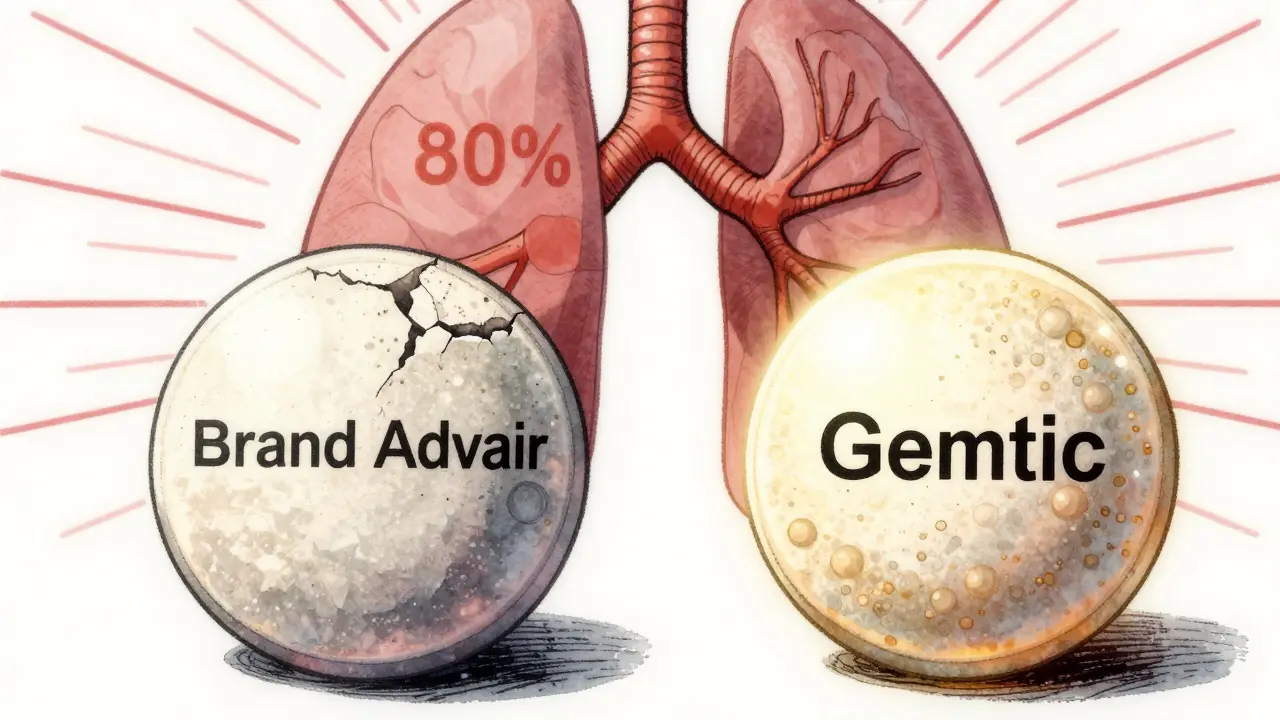
Most people assume that if a generic drug has the same active ingredients as the brand name, it will work the same way. But that’s not always true-especially with combination medications. When two or more drugs are packed into one pill or inhaler, even small changes in the non-active ingredients can throw off how the medicine behaves in your body. This isn’t theory. It’s happening right now, and it’s affecting real people.
What Makes Generic Combinations Different?
Generic drugs are legally required to have the same active ingredients in the same strength as the brand name. That part is straightforward. But the rest? The fillers, binders, coatings, and preservatives? Those can be completely different. And in combination products, where multiple drugs are delivered together, those differences matter more than you might think.Take Advair Diskus, for example. The brand version contains fluticasone and salmeterol in a specific inhaler device designed to deliver both drugs evenly to the lungs. When generics hit the market, some versions used different propellants, powder formulations, or even slightly altered inhaler mechanisms. Independent tests showed certain generics delivered up to 20% less drug to the lungs. Patients didn’t notice until they started using their rescue inhalers more often. That’s not a coincidence-it’s a formulation mismatch.
The FDA requires generics to prove they’re “bioequivalent”-meaning the body absorbs the active ingredient at a rate within 80-125% of the brand. But that standard doesn’t check how fast the drug dissolves, how evenly it mixes with other ingredients, or whether the inactive components irritate the stomach lining or interfere with absorption. For most people, it’s fine. For others, it’s enough to cause problems.
Who’s Most at Risk?
Not everyone reacts the same way. The real danger lies in drugs with a narrow therapeutic index (NTI). These are medications where even a tiny change in blood levels can mean the difference between working and causing harm. Examples include:- Levothyroxine (for thyroid conditions)
- Warfarin (a blood thinner)
- Phenytoin and other anti-seizure drugs
- Some asthma and COPD combination inhalers
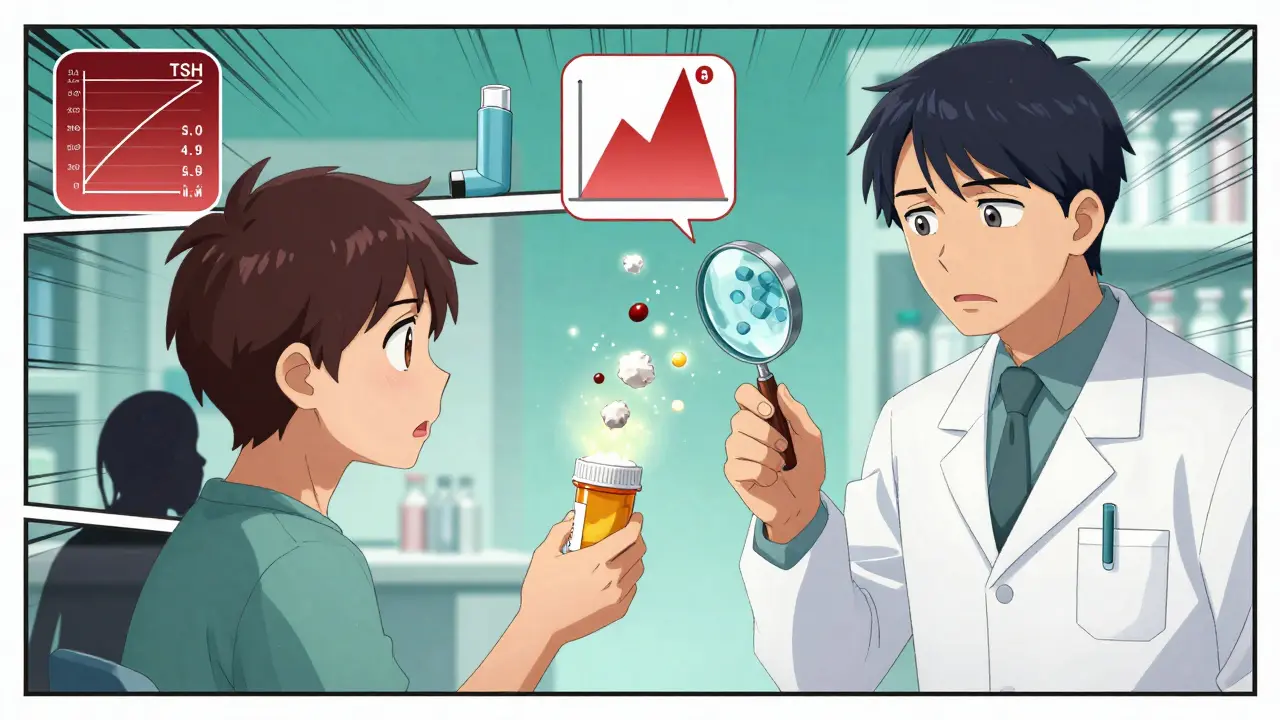
A 2020 study of nearly 90,000 Medicare patients switching from brand to generic levothyroxine found that 12.3% needed a dosage adjustment within months. That’s more than 1 in 8 people. Their TSH levels shifted-enough to cause fatigue, weight gain, or even heart rhythm problems. The brand version had worked perfectly. The generic? It didn’t.
Another study on generic versions of Advair showed 23% of patients reported increased rescue inhaler use after switching. That’s not just inconvenience-it’s a sign the medication isn’t controlling their condition like it should. In psychiatric combinations like fluoxetine/olanzapine, patients on Reddit and PatientsLikeMe reported sudden anxiety, insomnia, or nausea after switching to generics-even though the active ingredients were identical.
Why Do These Differences Even Exist?
It comes down to cost and regulation. Brand manufacturers spend billions developing a drug, including testing how every ingredient interacts. Generic makers don’t have to repeat those trials. They just need to prove the active ingredient gets absorbed similarly. That saves them millions-but leaves room for variation in the rest.Common inactive ingredients that differ between brands and generics include:
- Magnesium stearate (a lubricant-used in 38% of cases)
- Lactose (a filler-changed in 29%)
- Microcrystalline cellulose (a binder-changed in 22%)
- Dyes and coatings (can trigger allergies)
For someone allergic to lactose, a generic version with lactose instead of a sugar substitute could cause bloating or diarrhea. For someone with sensitive digestion, a different coating might make the pill dissolve too fast in the stomach instead of the intestine, causing nausea. These aren’t rare edge cases. They’re common enough that pharmacists are now trained to ask about them.
What Are Pharmacists Doing About It?
Many pharmacists don’t automatically substitute generics anymore-especially for combination drugs. They follow a five-point checklist:- Is this a narrow therapeutic index drug?
- Has the patient ever had issues with a previous generic?
- Do we have bioequivalence data for this specific generic?
- Does the patient have allergies to any inactive ingredients?
- Is their condition stable right now?
A 2023 study across 300 pharmacies showed that using this checklist cut adverse events by 62%. That’s huge. And it’s why more states are requiring pharmacists to document every substitution, especially for NTI drugs. California now mandates logs for all epilepsy medications. New York and Florida have similar rules.
There’s also something called an “authorized generic”-the exact same pill as the brand, just sold under a generic label. Pfizer’s version of Lyrica is one. It costs more than a regular generic (15-20% higher), but it’s still 60-70% cheaper than the brand. And because it’s identical, there’s zero risk of formulation mismatch.

What Should You Do If You’re Switching?
If you’re on a combination medication and your pharmacy switches you to a generic:- Don’t assume it’s the same.
- Check the pill’s appearance. Is it a different color or shape?
- Ask your pharmacist for the manufacturer name and inactive ingredients list.
- Monitor for changes: new side effects, reduced effectiveness, or unusual symptoms.
- Get a blood test if you’re on warfarin, levothyroxine, or anti-seizure meds.
- Call your doctor if anything feels off-even if it seems minor.
Don’t wait for a crisis. A small change in how you feel could mean your medication isn’t working the way it should. And if you’ve had a bad reaction before, tell your doctor and pharmacist upfront. You’re not being difficult-you’re being smart.
The Bigger Picture
The generic drug market saved the U.S. healthcare system over $1.6 trillion between 2006 and 2019. That’s life-changing savings. But it’s not a perfect system. As combination drugs become more common-especially for diabetes, heart disease, and mental health-the risk of formulation mismatches grows.The FDA is starting to catch up. Their 2023 approval of Teva’s generic Advair required the same inhaler performance as the brand. That’s new. And the 2022 Consolidated Appropriations Act is forcing the FDA to create a formal system to track adverse events linked to generic formulations. By 2024, we’ll have better data.
Meanwhile, the industry is moving toward clearer labeling. By 2025, most generic manufacturers plan to list all inactive ingredients on the packaging-something they’ve avoided for years. That’s progress.
But until then, the responsibility falls on you. You’re not just a patient. You’re the one who knows your body best. If something feels wrong after a switch, speak up. Your health isn’t a cost-saving metric. It’s personal.
Can generic combination drugs really be less effective than brand names?
Yes, for some people. While most generics work just as well, differences in inactive ingredients can affect how the drug dissolves, absorbs, or is tolerated-especially in combination products. This is most common with narrow therapeutic index drugs like levothyroxine, warfarin, and certain asthma inhalers. Studies show a measurable percentage of patients experience changes in effectiveness or side effects after switching.
How do I know if my generic medication has different ingredients?
Ask your pharmacist for the manufacturer name and request the list of inactive ingredients. You can also check the drug’s packaging-the FDA now requires this information on labels for most generics. Online databases like the FDA’s Orange Book or Drugs.com also list inactive ingredients for approved products. If the pill looks different or you’ve had a reaction before, don’t assume it’s the same.
Are authorized generics better than regular generics?
Yes, if you’ve had issues with generics before. Authorized generics are made by the original brand manufacturer and contain identical active and inactive ingredients. They’re sold under a generic label, so they cost less than the brand-but more than a standard generic. For people sensitive to formulation changes, they’re the safest option without paying full brand price.
What should I do if I think my generic medication isn’t working?
Don’t stop taking it. Contact your doctor right away. Keep track of any new symptoms, changes in effectiveness, or side effects. If you’re on a narrow therapeutic index drug, your doctor may order a blood test to check levels. Ask if switching back to the brand or an authorized generic is an option. Many insurance plans will approve it if there’s documented clinical need.
Why don’t pharmacists always warn me about these differences?
Many pharmacists do, but not all. In high-volume settings, substitution happens quickly. However, since 2020, more states have required pharmacists to screen for risk factors before substituting combination generics-especially for NTI drugs. If you’re unsure, ask: “Is this the same as my old pill?” or “Could the inactive ingredients affect me?” Pharmacists are trained to answer these questions. You have the right to know.
Matt Davies
December 18, 2025 AT 10:48Man, I never thought about how the filler stuff in pills could mess with my asthma inhaler. I switched generics last year and started needing my rescue inhaler way more often - thought I was just getting worse. Turns out, my body hates the new coating. Now I ask for the authorized generic every time. Worth the extra $5. My lungs thank me. 🙌
Dev Sawner
December 19, 2025 AT 20:42It is a well-documented phenomenon in pharmaceutical bioequivalence literature that the excipient variance in generic combination products can lead to clinically significant pharmacokinetic deviations, particularly in drugs with a narrow therapeutic index. The FDA’s 80–125% AUC and Cmax acceptance range is statistically inadequate for precision medicine applications. Regulatory frameworks require recalibration.
Moses Odumbe
December 21, 2025 AT 14:20Bro. I switched to a generic levothyroxine and felt like a zombie for 3 weeks. My TSH went from 2.1 to 8.9. Doctor said ‘it’s fine’ - nope. Went back to brand. Now I only take the authorized generic. It’s not ‘expensive’ - it’s insurance. 💯
mark shortus
December 23, 2025 AT 03:36WHY IS NO ONE TALKING ABOUT THIS?!?!? I had a seizure because my pharmacist switched me to a generic phenytoin without telling me. I was fine on the brand. The generic had a different binder - it dissolved TOO FAST. I woke up in the ER. My mom cried. My dog cried. The FDA is asleep at the wheel. 😭
Elaine Douglass
December 23, 2025 AT 19:09I just wanted to say thank you for writing this. My mom’s on warfarin and we’ve had to fight the pharmacy every time they try to switch her. She’s 78 and has no idea what’s going on. I printed this out and gave it to her pharmacist. She actually listened this time. ❤️
Emily P
December 24, 2025 AT 05:30So… if the inactive ingredients are different, does that mean the generic could have a different absorption rate even if the active ingredient is bioequivalent? Like, maybe it absorbs slower in the gut but still hits the 80–125% window over 24 hours? That seems like it could cause issues for timed-release combos.
Vicki Belcher
December 24, 2025 AT 15:00Yessss this is so important!! I switched to a generic Advair and started coughing nonstop. Thought I had a cold. Turns out the lactose in the generic made me wheeze. I’m lactose intolerant. No one asked. Now I always check the label. Also - authorized generics are a GAME CHANGER. 💖
Aboobakar Muhammedali
December 24, 2025 AT 18:31My cousin had a bad reaction to a generic antidepressant combo. She got panic attacks outta nowhere. She thought she was losing her mind. Turned out the new version had a dye she was sensitive to. She cried for days. People think meds are just chemicals. But your body remembers. You gotta be careful.
Laura Hamill
December 24, 2025 AT 20:00THIS IS A BIG PHARMA COVER-UP. They don’t want you to know generics are just cheap knockoffs. The FDA is bought off. They let these companies use talc and cornstarch instead of real stuff. And now your kids are getting autism from the dyes. I know people who got cancer from generics. They’re hiding it. I’m not paranoid - I’m informed. 🚨
Alana Koerts
December 25, 2025 AT 02:33So what? People survive. It’s not a crisis. You’re just being dramatic. If you can’t handle a generic, maybe you shouldn’t be on meds at all. The system works. Stop whining.
William Liu
December 26, 2025 AT 23:48I’ve been on a generic combo for COPD for 2 years. No issues. But I always check the pill color and call my pharmacist if it looks different. It’s not hard. Just pay attention. Knowledge is power.
Kinnaird Lynsey
December 28, 2025 AT 15:48It’s funny how people get so upset about pills changing color. I get it - it’s unsettling. But if you’re not having symptoms, maybe the change is fine? I don’t trust the panic. But I also don’t trust the ‘it’s fine’ dismissal. There’s a middle ground. Ask questions. Don’t assume.
Anna Sedervay
December 29, 2025 AT 20:16As a former FDA compliance officer, I can confirm that the current bioequivalence paradigm is fundamentally flawed. The regulatory framework was designed for single-agent, non-combination drugs. The rise of fixed-dose combinations - particularly in cardiovascular and psychiatric therapeutics - has exposed a critical regulatory blind spot. The industry is exploiting loopholes under the guise of cost-efficiency. This is not merely a pharmacological issue - it is a systemic failure of oversight.
Mike Rengifo
December 31, 2025 AT 20:04My doc told me to switch to generic for my combo pill. I said no. He didn’t argue. Just shrugged and wrote ‘authorized generic’ on the script. Saved me $80/month. No side effects. No drama. Just… worked. Sometimes the middle path is the smartest one.
Mark Able
January 1, 2026 AT 11:24Okay but why are we even talking about this? Just take the brand name. If you can’t afford it, go on assistance. Stop blaming the generics. The problem is insurance companies forcing switches. Fix that. Not the pills.