
Overdose Urgency & Symptom Checker
If the person has stopped breathing, is seizing, or is unresponsive, Call 911 Immediately. Do not wait for results below.
Step 1: Check Physical Symptoms
Check off any symptoms observed. Select all that apply.
Step 2: Dosage Risk (Children)
Use this only for children under 6. Assumes standard 25mg tablets or standard concentration liquid.
Select symptoms or enter child's details above to see urgency assessment.
If you suspect someone has taken too much allergy medicine, every minute counts. While Antihistamine Overdoseoccurs when more than the recommended dose of allergy medication is ingested, many people treat it like a minor mistake until it becomes critical. It can quickly lead to heart rhythm problems, seizures, or dangerous coma-like states. Understanding the difference between a mild drowsy feeling and a life-threatening emergency is your first line of defense.
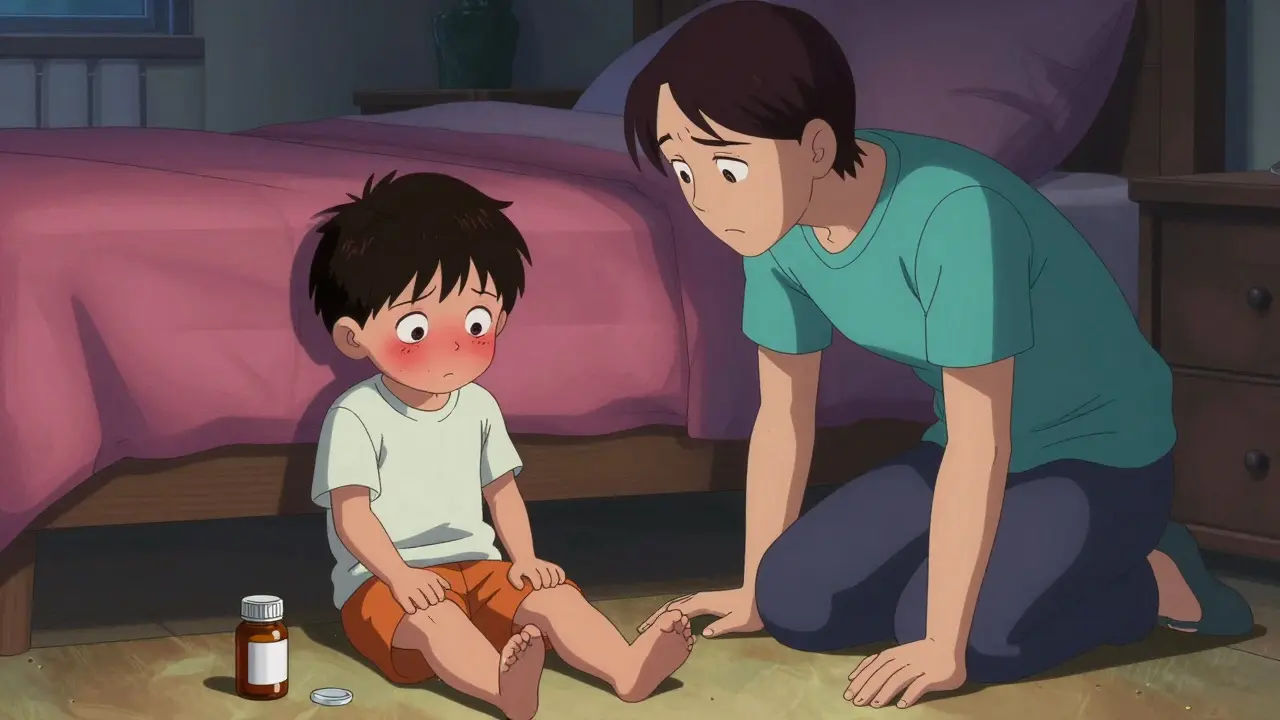
You might be dealing with a child who found a bottle of DiphenhydramineBenadryl left within reach, or perhaps an adult struggling with anxiety who doubled up their dose. Regardless of the scenario, the protocol remains focused on stabilization and preventing absorption. Data shows that over 5% of pediatric poisonings involve these drugs, and most serious outcomes happen because help was delayed.
Identifying the Danger Signs Early
Before you rush to the hospital, you need to know what you are looking for. Not every extra pill causes a crisis, but specific warning signs demand immediate attention. If the person is awake and talking, ask them how they feel, but watch their behavior closely. Drowsiness is common, but deep unresponsiveness is not normal after just a few pills.
The symptoms vary depending on whether the person took a First-Generation Antihistamine like chlorpheniramine or promethazine versus a modern non-sedating option. Older medications block acetylcholine receptors, leading to what doctors call the anticholinergic syndrome. Think "mad as a hatter" - confused, flushed skin, dry mouth, dilated pupils, and rapid heartbeat. In severe cases, hallucinations and delirium set in quickly.
- Extreme Drowsiness: Harder to wake than expected.
- Rapid Heart Rate: Tachycardia above 100 or 120 beats per minute.
- Dilated Pupils: Eyes appear unusually large and unreactive to light.
- Dry Skin: Flushed face, lack of sweating, warm temperature.
- Seizures: Convulsions occurring suddenly during agitation.
- Difficulty Urinating: Urinary retention is a classic sign of anticholinergic toxicity.
Second-generation options like cetirizine or loratadine generally cause milder symptoms even in overdose. However, massive amounts can still lead to heart issues. You cannot rely on brand names alone; checking the label for "diphenhydramine" or similar active ingredients is crucial for determining risk.
Immediate First Aid Actions
When time matters, do not try to play doctor at home beyond basic first aid. Your goal is to keep the airway open and get professional guidance immediately. Do not assume the person will sleep it off; cardiac toxicity can peak within hours.
The very first step involves contacting a Poison Control CenterSpecialized hotline providing expert toxicology advice. In the United States, this is 1-800-222-1222. These experts guide you based on weight, the specific chemical, and the time of ingestion. They tell you if you need the emergency room right now or if home observation is safe. For adults, ingestions under 300mg of diphenhydramine might be okay to monitor at home, whereas children have a much lower threshold for toxicity.
Avoid inducing vomiting. This is a common misconception. If the person is already drowsy, making them vomit increases the risk of aspiration pneumonia. If there is any liquid in their mouth, simply wipe it away or help them spit it out. If it gets into the eyes, flush with cool water for at least 20 minutes. For skin contact, shower with soap and water to remove residue. Keep the patient calm and comfortable, but never leave them alone.
| Action | Do | Do Not |
|---|---|---|
| Assessment | Check breathing and pulse | Wait for symptoms to worsen |
| Contaminants | Remove pills/bottle from scene | Gave more food or water unless instructed |
| Vomiting | Follow medical professional orders | Induce vomiting voluntarily |
| Contact | Call Poison Control or Emergency Services | Rely solely on internet search results |

Medical Interventions in the Hospital
Once you reach the hospital, the focus shifts to stopping the drug from absorbing further and managing the heart's electrical system. If the patient arrives within two hours of swallowing the pills, doctors often administer Activated CharcoalPorous substance used to adsorb toxins in the stomach. It works by binding the medication inside the gut so it doesn't enter the bloodstream. Standard doses range from 1 gram per kilogram of body weight for children to roughly 25-100 grams for adults.
Monitoring the heart is non-negotiable for significant overdoses. The medical team places the patient on a continuous EKG monitor. The specific thing they look for is QRS widening on the heart rhythm strip. A normal QRS interval is less than 100 milliseconds. When antihistamines block sodium channels in the heart, this interval stretches. If it exceeds 120 milliseconds, the heart rhythm becomes unstable and prone to arrhythmias.
To counteract this, doctors may use Sodium BicarbonateIntravenous solution used to alkalize blood. It sounds simple-baking soda-but in an IV drip, it changes the pH of the blood slightly to make it harder for the toxin to bind to the heart cells. Guidelines suggest starting this infusion if the heart rate goes above 120 bpm or if the QRS width crosses that critical threshold. The goal serum pH is typically maintained around 7.45 to 7.55.
For agitated patients or those having seizures, benzodiazepines like midazolam or lorazepam are the gold standard. They calm the brain activity without suppressing the heart further. Historically, doctors used physostigmine, but modern protocols advise against it due to the risk of causing sudden heart failure. Supportive care, meaning keeping the airway clear and fluids running, remains the backbone of treatment. Most patients recover fully within 24 hours once the medication leaves their system.
Understanding Generation Differences
Why does some Benadryl cause such a fuss compared to Zyrtec? It comes down to chemistry and receptor affinity. First-Generation AntihistaminesOlder sedating allergy medicines like Diphenhydramine cross the blood-brain barrier easily. This means they don't just stop allergies; they shut down parts of your brain, affecting alertness and causing those nasty anticholinergic effects mentioned earlier. Studies show these older drugs account for the vast majority of serious toxicity reports.
In contrast, Second-Generation AntihistaminesNewer non-sedating allergy medicines like Loratadine were designed to stay out of the brain. They target the histamine receptors in the tissues without causing widespread sedation. While safer, a 2020 pediatric study noted that if you take ten times the therapeutic dose, you can still see dizziness or tachycardia, but the risk of fatal arrhythmia is significantly lower than with the older generation.
This distinction changes the triage decision. If a child swallows one tablet of diphenhydramine, that might warrant an ER visit depending on their weight. Swallowing one tablet of loratadine usually requires a quick call to poison control but often resolves at home. Always check the back label to confirm the "generation" of the drug before deciding your next move.

Children and Accidental Ingestion
Parents, pay close attention here. Most antihistamine exposures happen in kids under six years old. Why? Because they think the colorful bottles are candy. The Victoria Poisons Information Centre notes that for children under 6, ingesting less than 7.5 mg per kg of body weight usually allows for safe home monitoring. Anything above that limit generally means the emergency department is the destination.
Consider this real-world example: A parent reported their 2-year-old consuming roughly 25 mg of liquid diphenhydramine. That might sound small to an adult, but for a toddler weighing 12 kilograms, that's nearly double the safety threshold. The parents called poison control, who guided them to bring the child in for an EKG check just to be sure. Turns out, the heart rhythm was normal, and the child slept off the drowsiness safely in the ER waiting room. Without that call, they would have been guessing.
Storage matters immensely. Keep all medications in child-resistant containers, but never forget that toddlers figure these caps out faster than we expect. Store medicines up high, locked if possible. Even better, check expiration dates regularly and dispose of expired drugs properly so they aren't tempting "snacks." Remember, nearly 67% of cases involve children this young accessing meds within arm's reach.

Long-Term Outlook and Recovery
The prognosis for antihistamine overdose is generally excellent when treated promptly. A 2023 NCBI StatPearls review cites a survival rate near 99.9% for patients receiving appropriate care. There are no long-term brain effects typically associated with a single episode of toxicity, assuming the patient is stabilized before permanent hypoxia occurs.
However, the recovery period varies. Some adults experience lingering fatigue or mental fogginess for a day or two after discharge. This is part of the drug's half-life clearing out of the body. For those admitted to the hospital, expect a stay of about 24 to 48 hours if EKG monitoring is needed. Doctors won't let you leave until the QRS interval returns to normal width and heart rate stabilizes without medication support.
Prevention is always easier than cure. Educate your household on the risks of combining medications. Many cold and flu remedies contain hidden antihistamines on top of pain relievers. Taking a nighttime cold pill plus a separate allergy tablet creates a stack effect that pushes you into overdose territory instantly. Read every label, count your doses, and respect the limits printed on the package insert.
Frequently Asked Questions
How much Benadryl is considered an overdose for a child?
For children under 6 years old, ingesting more than 7.5 mg per kilogram of body weight is concerning and requires medical evaluation. Even smaller doses can cause drowsiness, but higher amounts increase the risk of heart rhythm issues.
Can I make my child throw up if they took too much?
No, do not induce vomiting. Drowsy patients are at high risk of aspirating vomit into their lungs, which can cause pneumonia. Only follow instructions from Poison Control or a medical professional.
What heart rhythm changes indicate toxicity?
Doctors look for QRS widening on an ECG. An interval greater than 100 milliseconds suggests sodium channel blockade, and over 120 milliseconds indicates severe toxicity requiring aggressive treatment.
Is activated charcoal safe for everyone?
It is generally safe if given within 1-2 hours of ingestion. However, it must not be used if the patient cannot protect their own airway, as there is a risk of choking or aspiration.
Do newer allergy pills cause less harm?
Yes, second-generation antihistamines like cetirizine are less toxic than older ones. However, taking massive amounts (over 10x the dose) can still cause heart issues and agitation.
Tony Yorke
March 28, 2026 AT 05:51Store everything high up and locked tight.
Sabrina Herciu
March 28, 2026 AT 16:05The data regarding pediatric poisoning incidents is absolutely staggering!!! It is crucial that parents understand the gravity of anticholinergic toxicity!!! You simply cannot ignore the signs of tachycardia!!! Call the hotline immediately!!! Every minute counts!!! Do not wait for symptoms to worsen!!! Professional guidance is essential!!!
Rohan Kumar
March 29, 2026 AT 05:17Oh sure, trust the bottle labels completely 🙄 because obviously they aren't hiding anything shady inside 🤨 big pharma loves when we stay asleep so we don't question the dosage limits 📉 honestly this fear-mongering is typical corporate strategy 💊😤
Devon Riley
March 30, 2026 AT 15:27That's a pretty harsh take on the situation honestly 😕 sometimes these warnings are meant to save lives 🧡 we all want our kids safe and sound ❤️ please just consider the medical advice calmly 🥺 it's not about control it's about care 💕 take a breath and look at the facts 🧐 staying informed helps everyone 🌟
Monique Ball
March 31, 2026 AT 18:04I really think we need to talk about how easy it is to misinterpret these symptoms when you are stressed out in the moment.
It is scary because the line between sleeping it off and needing the ER is really thin with certain medications.
My cousin had a scare last year when she thought she just needed a nap after taking extra allergy medicine.
She ended up in the hospital because her heart rate spiked way above normal levels during sleep.
We always keep the poison control number saved right on our phone contacts now for emergencies.
The fact that kids see colorful bottles as candy is something every parent needs to re-evaluate daily.
Older drugs like Benadryl act differently than the newer stuff people buy at the pharmacy aisle today.
Sodium channel blockade sounds technical but basically means your heart rhythm gets messed up internally.
You cannot guess the dose safely unless you know the weight of the child precisely before acting.
Activated charcoal helps bind toxins but you need a doctor to decide if they give it to you.
Do not make yourself throw up if you feel drowsy because aspiration risks are real dangers.
I know calling poison control feels like a burden but the staff are trained to guide you step by step.
It is much safer to get monitored on an EKG machine for twenty four hours than risk sudden arrhythmias at home.
Prevention is honestly the best tool we have for keeping our households safe from accidental overdoses.
Please read every label carefully even if you think you know exactly what ingredients are inside the bottle. 🛡️🏥💊
Jordan Marx
April 2, 2026 AT 05:29This clinical overview highlights significant pharmacokinetic variables regarding QRS interval widening specifically.
The utilization of sodium bicarbonate therapy effectively manages the intracellular alkalization needed for cardiac stabilization.
Understanding the half-life clearance rates is paramount for discharge planning protocols.
Benzodiazepines remain the first-line agents for seizure management in toxicological profiles.
We must emphasize airway patency maintenance alongside continuous telemetry monitoring parameters.
Educational outreach reduces the incidence of iatrogenic complications significantly.
Always verify the active ingredient nomenclature on packaging containers.
Risk stratification models support early intervention strategies for pediatric populations.
Toxicology experts recommend strict adherence to guideline-based toxicant removal procedures.
Thank you for sharing this vital safety resource for community health awareness initiatives.
Aaron Olney
April 3, 2026 AT 09:26i saw my friend get super scared bcs he took 2 pills instead of 1 and his heart went crazy
the doctors said he was lucky to come back around in time
please dont play hero at home
just call the pros and let them handle the toxicity issues
gina macabuhay
April 3, 2026 AT 18:21Your grammar is atrocious and your anecdotal evidence is statistically irrelevant.
People like you trivialize serious medical emergencies with such sloppy commentary.
Stop spreading misinformation disguised as casual experience.
We need precision not lazy typos when discussing life-threatening conditions.
Shameless behavior like this endangers others looking for factual answers here.
Grow up and learn how to type before posting public health advice.
Pathetic display of ignorance.
Get educated first.
tyler lamarre
April 3, 2026 AT 21:31Typical crowd seeking validation from basic internet articles.
Newsflash: real doctors already knew this stuff decades ago.
Why bother reading blog posts when you have access to PubMed.
Spend less time scrolling and more time studying anatomy if you care about this niche topic.
Amateur hour at best.
Seriously stop the armchair diagnosis nonsense.
Sophie Hallam
April 5, 2026 AT 15:00Everyone here seems pretty stressed out about the different opinions being shared on this topic.
It is important to remember that we are all trying to stay safe and healthy for our families.
Different people express their concerns in unique ways that might feel aggressive.
We should focus on the core message of contacting emergency services when needed.
Maintaining a calm environment helps us process critical safety information better.
Let's support each other rather than attacking styles of communication.
Safety is the common ground we can all agree upon together.
Austin Oguche
April 6, 2026 AT 11:02I appreciate the comprehensive breakdown of first aid protocols provided here.
Cultural differences in medication storage practices often influence household safety outcomes globally.
Many regions lack access to specialized poison control hotlines mentioned in the US context.
Nevertheless the principle of immediate professional contact remains universal and vital.
Sharing these resources helps bridge knowledge gaps between communities internationally.
Respectful dialogue ensures we protect vulnerable members of society everywhere.
Debra Brigman
April 7, 2026 AT 22:50The philosophical implication of chemical dependency reveals a deeper fracture in our modern existence.
We treat our bodies as vessels for foreign substances until they rebel against our negligence.
Perhaps true freedom lies in understanding the boundaries of biological autonomy.
The pill becomes a talisman against suffering yet transforms into an agent of harm.
Existence is a delicate balance between chemical equilibrium and chaotic entropy.
We must find harmony within the molecular dance of life itself.
Philip Wynkoop
April 9, 2026 AT 12:30Just keep the meds locked up and call if you doubt anything :)
Jeannette Kwiatkowski Kwiatkowski
April 11, 2026 AT 10:11Most of this forum content lacks academic rigor and intellectual depth.
True understanding requires peer-reviewed literature not anecdotal horror stories.
Vulgar discourse dominates this platform unfortunately.
Real expertise involves nuanced analysis of electrophysiological mechanisms.
These simplistic summaries cater to the lowest common denominator.
Ignore the noise if you wish to maintain cognitive clarity.
Poppy Jackson
April 12, 2026 AT 01:29The drama surrounding this issue truly touches the soul of every caregiver.
Imagine the terror of realizing you made a mistake with something so innocent looking.
Fear paralyzes the mind until action becomes impossible without guidance.
Hope remains the only anchor in that storm of medical uncertainty.
We must stand strong against the panic that threatens rational thought.
Courage is knowing when to call for help when the stakes are highest.