

When your body is the battlefield, you should get to choose your weapons
You’re sitting in the doctor’s office. The prescription pad is out. They say, "This will help. Take it once a day." You nod. But inside, you’re wondering: Is this really right for me? What if it makes me nauseous? What if I can’t afford it? What if I don’t want to take pills at all?
That’s not just hesitation. That’s autonomy. And it’s not optional-it’s a right.
Medication autonomy means you have the power to say yes, no, or "tell me more" when it comes to drugs. It’s not about being difficult. It’s about being human. Your body, your life, your values. No one else gets to decide what goes into you-not even your doctor.
Back in the 1970s, courts started forcing doctors to stop talking at patients and start talking with them. The landmark Canterbury v. Spence case made it clear: if a doctor doesn’t explain the risks, they’re not just being careless-they’re violating your legal right to decide. That’s not ancient history. It’s the foundation of every medication choice you make today.
It’s not just about saying yes or no
Autonomy isn’t a checkbox. It’s a conversation. And it’s messy.
Let’s say you’re prescribed an SSRI for depression. Your doctor says it has a 50-60% success rate. Great. But they don’t mention that one in four people on it lose their sex drive. Or that it costs $5,000 a month if it’s brand-name, but $3,000 if you switch to a biosimilar. Or that therapy, exercise, or light treatment might work just as well-with fewer side effects.
That’s not informed consent. That’s incomplete information.
True autonomy means knowing all your options-not just the one the doctor thinks is best. It means understanding trade-offs: Do I want to feel calmer, even if I’m always tired? Do I want to avoid hospital visits, even if I have to take five pills a day?
A tool called the Shared Decision Making (SDM) Index-9 measures how well these conversations happen. It’s not about how much the doctor talks. It’s about whether you leave feeling like you understood your choices-and that your values mattered.
Why pills feel different than surgery
Most people don’t mind choosing whether to have a knee replacement. But when it comes to pills? It’s personal.
A 2022 JAMA survey found that 73% of patients worry more about medication side effects than about the risks of diagnostic tests. Why? Because drugs go inside you. They change how you feel, think, sleep, even how you look. And once you start, it’s hard to stop.
That’s why 50% of people with chronic conditions quit their meds within a year-even if they agreed to take them at first. It’s not noncompliance. It’s a quiet rebellion. They didn’t feel heard. They picked the pill because they felt pressured, not because it fit their life.
Compare that to surgery. You say yes, they cut, you heal. But with medication? You’re signing up for a daily negotiation. Will I take it today? Will I skip it because I’m traveling? Will I switch because I hate the way it makes my hands shake?
Autonomy isn’t just about the first decision. It’s about the hundred decisions that come after.

Cost isn’t a footnote-it’s the main character
Here’s the hard truth: you can’t choose what you can’t afford.
In 2023, 32% of Medicare Part D users changed or skipped their meds because of cost. That’s not laziness. That’s survival.
Doctors aren’t always aware of what things cost. A patient might be offered a biologic for rheumatoid arthritis that costs $6,000 a month. But they don’t know there’s a biosimilar at $4,000 that works just as well. Or that a generic alternative exists at $200. Or that a pharmacy discount card could cut it in half.
Autonomy means transparency-not just about side effects, but about price. If your doctor doesn’t ask about your budget, they’re not helping you choose. They’re just handing you a prescription.
And then there’s advertising. Direct-to-consumer drug ads influence 28% of medication requests. You see a commercial for a new antidepressant. You walk in and ask for it. Your doctor says no-it’s not right for you. Now you feel dismissed. Or worse, you feel like your choice doesn’t matter.
True autonomy means you can ask for what you saw on TV… and your doctor still listens.
When autonomy fails
Not everyone gets to exercise this right equally.
In the U.S., 74% of white patients say they felt involved in their medication decisions. But only 49% of Black patients and 53% of Hispanic patients say the same. Why? Bias. Assumptions. Time.
Doctors assume a low-income patient won’t stick with a costly drug. So they don’t even offer it. They assume an older patient won’t understand complex options. So they pick for them. They assume a non-English speaker won’t ask questions. So they don’t explain.
That’s not care. That’s control dressed up as convenience.
One Reddit user, a palliative care nurse, shared how a cancer patient refused opioids because of her religious beliefs. Instead of pushing, they worked together to build a pain plan without them. It took more effort. More time. But it honored her.
Another patient on PatientsLikeMe said their doctor prescribed Ozempic for diabetes but refused to discuss alternatives when they mentioned nausea. So they switched doctors. That’s autonomy in action-finding someone who respects your voice.
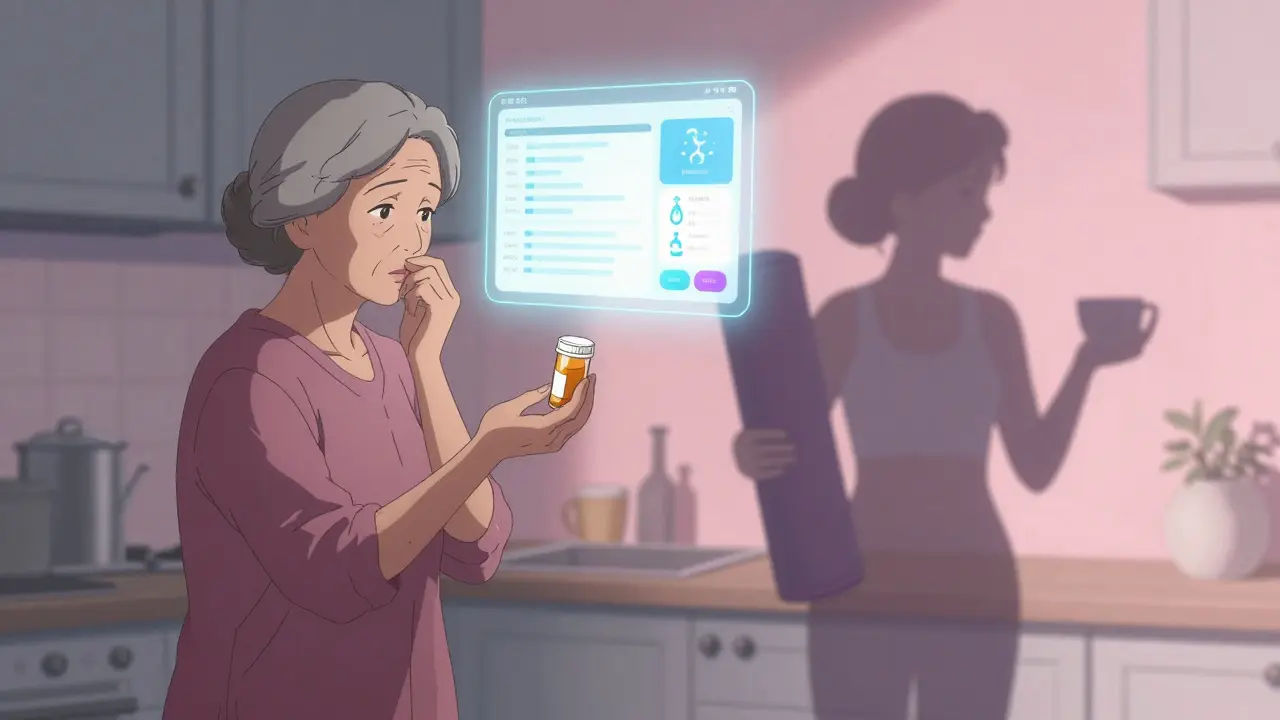
What actually works
Autonomy doesn’t mean chaos. It means structure.
Hospitals that use decision aids-like those from the Mayo Clinic-see better outcomes. These tools show side effects, costs, and effectiveness side by side. No jargon. Just facts. Patients walk out knowing their options.
Pharmacies are stepping in too. Medication Therapy Management (MTM) programs, led by pharmacists, help patients sort through their pills. One study showed these programs increased patient autonomy by 31%. Why? Because pharmacists have time. They don’t rush. They ask: What matters to you?
And pre-visit tools? Simple apps or paper forms that ask you: What are your goals? What side effects scare you? What’s your budget? These cut decision stress by 42%.
Doctors who train for 12-18 months in shared decision-making become better at listening. They learn to ask open questions: What do you think would work best for your life? Not: Do you want this?
What’s next
The future of medication autonomy is personal.
Genetic testing now costs under $250. That means your body’s unique reaction to drugs can be predicted. Maybe you metabolize antidepressants too fast. Or you’re at risk for a dangerous reaction to a common painkiller. That’s not science fiction-it’s here.
And digital alternatives? Apps that help manage anxiety without pills? 41% of patients say they’d try them. That’s a new kind of autonomy: choosing a non-drug path and having it taken seriously.
But here’s the catch: 37% of adults over 65 can’t use these apps. If we don’t fix that, autonomy becomes a privilege for the tech-savvy.
Regulators are catching up. The FDA now requires drug makers to collect patient preference data. Medicare will soon require clinics to document your medication choices. That’s a big deal. It means your voice will be part of your medical record-not just your doctor’s opinion.
You’re not asking for too much
You’re not being difficult if you want to know why you’re taking a pill. You’re not being stubborn if you ask about cheaper options. You’re not being ungrateful if you say no.
Medication autonomy isn’t about rejecting medicine. It’s about reclaiming your role in your own healing.
Next time you’re handed a prescription, ask: What are my other options? What do you think I’d handle best? What does this cost? What happens if I don’t take it?
If your doctor gets frustrated? That’s a red flag.
Good doctors don’t mind questions. They welcome them. Because they know: the best treatment isn’t the one that works in a trial. It’s the one you’ll actually take.
Can I refuse a medication even if my doctor recommends it?
Yes. As long as you have decision-making capacity-meaning you understand the risks, benefits, and alternatives-you have the legal and ethical right to refuse any medication, even if it’s considered standard care. This is protected under informed consent laws dating back to the 1972 Canterbury v. Spence case. Your doctor must respect your choice, though they may explain why they disagree and suggest alternatives.
What if I can’t afford my prescribed medication?
Cost is a legitimate factor in medication autonomy. You have the right to ask about generics, biosimilars, patient assistance programs, or alternative treatments. In 2023, 32% of Medicare beneficiaries changed or skipped doses due to cost-this is common and valid. Pharmacies and some clinics offer discount cards or sliding-scale fees. If your doctor doesn’t help you explore options, seek a second opinion or talk to a pharmacist.
Do I need to understand all the science to make a good choice?
No. You don’t need to be a doctor. You just need to understand what matters to you. Tools like decision aids from the Mayo Clinic or the Agency for Healthcare Research and Quality break down complex info into simple comparisons: success rates, side effects, cost, and daily impact. Ask for them. Your doctor should provide them. Your goal isn’t to memorize data-it’s to decide what fits your life.
Why do some doctors resist shared decision-making?
Many doctors are trained to make decisions quickly and assume they know what’s best. Time pressure is a big factor-in a 15-minute visit, it’s easier to prescribe than to discuss options. Some also hold unconscious biases, like assuming patients won’t adhere to expensive or complex regimens. But research shows that when patients are involved, adherence improves by up to 17%, and outcomes get better. Training and support help doctors shift from authority to partner.
How can I prepare for a medication decision talk?
Before your appointment, write down: your top concerns (e.g., weight gain, drowsiness), your goals (e.g., "I want to sleep better," "I need to work full-time"), and your limits (e.g., "I can’t afford more than $50/month," "I hate swallowing pills"). Bring a list of all meds you’re taking. Ask: "What are my alternatives? What happens if I wait? What’s the cost?" Use free decision aids from reputable sources like AHRQ or Mayo Clinic to guide your questions.
Carolyn Whitehead
February 1, 2026 AT 08:54Just took my blood pressure med today and realized I haven’t thought about why I’m taking it in months. Guess I need to ask my doc about alternatives.
calanha nevin
February 1, 2026 AT 09:14You’re not being difficult if you ask about cost. You’re being responsible. I work in primary care and see patients skip meds every day because they’re priced like luxury goods. Pharmacists can help-ask for MTM. No shame in it.
owori patrick
February 3, 2026 AT 01:47In Nigeria, we don’t always have choices. But when we do, the real fight isn’t with doctors-it’s with the system that makes pills unaffordable. Autonomy means nothing if your wallet decides for you.
Rob Webber
February 3, 2026 AT 04:08Doctors don’t give a damn about your feelings. They’re paid to push pills, not have conversations. I had a cardiologist prescribe me a $7000 drug then act like I was crazy for asking about generics. Screw that. I switched doctors and my BP dropped. Coincidence? I think not.
Jodi Olson
February 5, 2026 AT 00:01Autonomy isn’t rebellion-it’s epistemic sovereignty. The body is not a passive vessel to be engineered by institutional authority. When the physician assumes epistemic privilege over lived experience, they violate the phenomenological contract of care. This is not medical advice-it’s a moral imperative.
April Allen
February 6, 2026 AT 01:28The data is clear: shared decision-making improves adherence by 17% and reduces unnecessary prescriptions. But the infrastructure doesn’t exist in most clinics. Decision aids, trained facilitators, time buffers-these aren’t luxuries, they’re clinical necessities. Until we fund them, autonomy remains a slogan, not a standard.
Lisa McCluskey
February 6, 2026 AT 03:58I used to feel guilty for refusing meds. Then I learned that my anxiety improved more with walking and sunlight than with SSRIs. My doctor didn’t push. She said, ‘Let’s track it.’ That’s the difference between compliance and care.
Claire Wiltshire
February 6, 2026 AT 08:19Patients need structured support-not just permission to ask questions. Pre-visit tools that capture goals, fears, and budget constraints reduce decision fatigue by 42%. Why aren’t these standard? Because healthcare systems optimize for speed, not dignity.
Natasha Plebani
February 7, 2026 AT 08:42The ontological dissonance between biomedical hegemony and patient phenomenology is the central tension in contemporary pharmacotherapy. The reductionist model of medication adherence as behavioral noncompliance obscures the epistemic injustice inflicted upon marginalized populations whose lived realities are systematically excluded from clinical deliberation. We must reconceptualize autonomy not as a procedural checkbox but as a hermeneutic space wherein patient narrative is co-constitutive of therapeutic efficacy.
Yanaton Whittaker
February 8, 2026 AT 12:11America’s healthcare system is broken. But you want autonomy? Stop whining. Get a second opinion. Pay cash. Switch pharmacies. Use GoodRx. If you can’t afford meds, get a job. This isn’t Europe. We don’t hand out free pills. Take responsibility or shut up.