

When your prescription runs out and the pharmacy says it’s backordered-again-you’re not alone. In 2025, the U.S. saw over 350 drug shortages, from common antibiotics to life-saving heart medications. For many, the answer isn’t waiting or switching brands. It’s compounding pharmacies.
What Exactly Is a Compounding Pharmacy?
A compounding pharmacy doesn’t just fill prescriptions. It builds them. These specialized labs take raw ingredients and mix them into custom medications tailored to your exact needs. If you can’t swallow a pill, they make it a liquid. If you’re allergic to the dye in your tablet, they remove it. If the only available dose is too strong or too weak, they adjust it to the milligram. Unlike regular pharmacies that stock mass-produced drugs, compounding pharmacies work like medical chefs. They follow strict guidelines-USP <795> for non-sterile mixes and USP <797> for sterile ones-to ensure safety. Many are accredited by the Pharmacy Compounding Accreditation Board (PCAB), which means they’ve passed rigorous inspections for cleanliness, accuracy, and quality control.Why Do People Turn to Compounding Pharmacies?
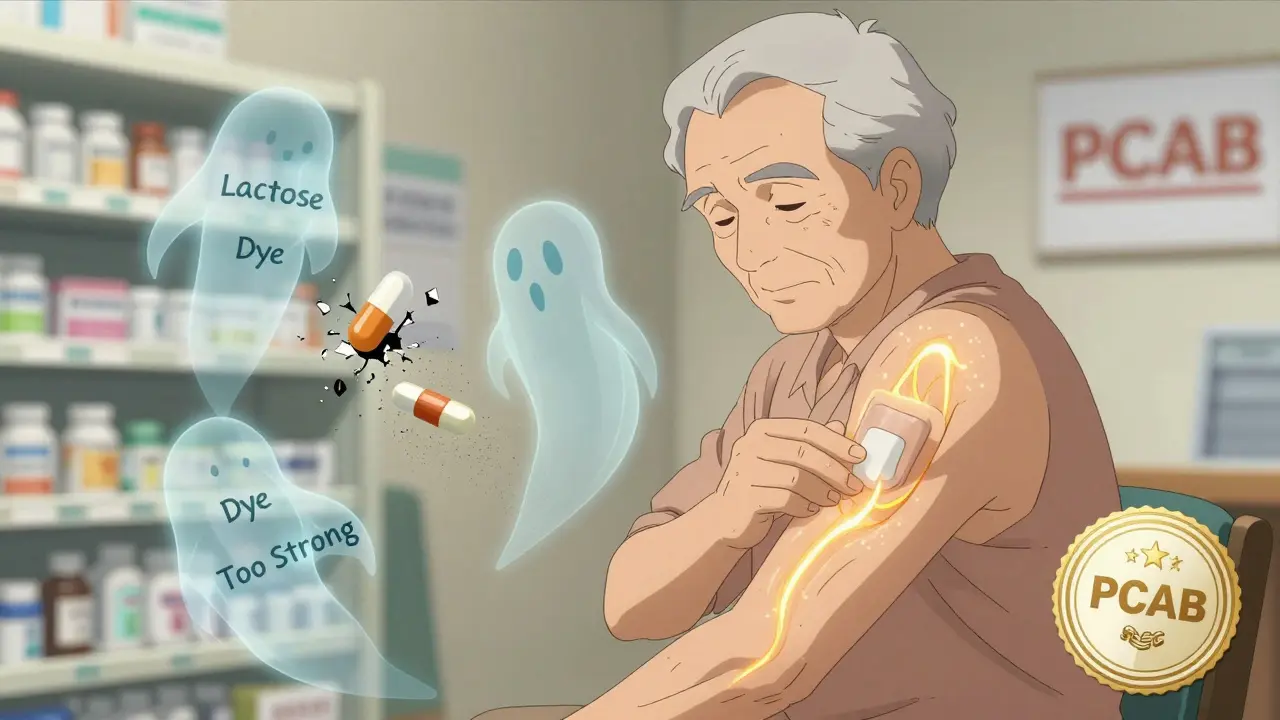
It’s not about convenience. It’s about necessity. Take pediatric patients. About 40% of kids can’t swallow pills. A standard liquid antibiotic might taste like chemicals, making kids spit it out. A compounding pharmacist can turn it into a strawberry-flavored syrup that’s easy to dose and palatable. Parents report a 73% increase in adherence when medications are customized this way. For older adults, swallowing problems affect nearly 30%. Compounding pharmacies offer creams, gels, or troches (lozenges) that absorb through the skin or mouth-no swallowing required. Then there are allergies. Around 15-20% of people react to fillers like lactose, gluten, or dyes in commercial drugs. A compounded version removes those triggers. One study showed 85% better adherence when patients switched to allergen-free compounded versions. And when a drug disappears from shelves? Compounding fills the gap. In 2023, over 300 drugs were in short supply. For some, like thyroid hormone or certain antibiotics, there’s no generic alternative. Compounding pharmacies can replicate the exact formula using approved raw materials-keeping treatment alive.What Can They Make?
Compounding pharmacies aren’t magic. But they’re versatile.- Liquids: For kids, elderly, or those with swallowing issues.
- Creams and gels: Topical pain relief, hormone therapy, or antifungal treatments without systemic side effects.
- Troches and lozenges: Slow-release medications absorbed under the tongue.
- Transdermal patches: For steady, long-term delivery of hormones or pain meds.
- Flavor-enhanced versions: Bubblegum, cherry, or mint to make bitter drugs tolerable.
- Exact dosages: 2.5 mg, 7.8 mg, 12.3 mg-anything your doctor prescribes, not just what’s packaged.
What Can’t They Do?
Compounding isn’t a replacement for FDA-approved drugs when they’re available. It’s a backup. They can’t make:- Biologics (like insulin or monoclonal antibodies)
- Complex intravenous chemotherapy drugs (unless in a certified sterile lab)
- Drugs that require patented manufacturing processes

How Do You Get a Compounded Prescription?
It’s not a walk-in deal. You need a doctor’s order. 1. Your doctor identifies that a commercial drug isn’t working-due to shortage, allergy, or dosage issue. 2. They write a prescription with the exact formula needed. 3. You take it to a compounding pharmacy (many will ship nationwide). 4. The pharmacist reviews the formula, sources ingredients, and prepares the medication. Preparation time? Usually 24 to 72 hours. Sterile preparations take longer. That’s why you can’t get it on the spot like a regular fill.Cost and Insurance: The Big Hurdle
This is where things get messy. About 45% of patients pay out-of-pocket for compounded meds. Insurance often won’t cover them unless the drug is on a shortage list and the pharmacy submits documentation proving no alternative exists. Some insurers require prior authorization. Others only cover certain types-like hormone creams or pediatric liquids. Always call your insurer before filling. Ask: “Do you cover compounded medications under my plan, and what’s the process?” Costs vary. A compounded cream might run $50-$120. A custom liquid could be $30-$80. Compare that to a $10 generic pill-but remember, that generic might not be safe or usable for you.Who Uses Compounding Pharmacies the Most?
The data shows clear patterns:- Geriatric patients: 28% of compounded prescriptions-because of swallowing issues, multiple meds, and sensitivity to fillers.
- Pediatric patients: 12%-flavored liquids, tiny doses, and non-pill forms.
- Allergy-sensitive patients: 22%-no dyes, gluten, or lactose.
- Chronic pain and hormone therapy patients: Together, these make up nearly 50% of all compounded prescriptions.
How to Find a Reliable Compounding Pharmacy
Not all are created equal.- Look for PCAB accreditation. It’s the gold standard.
- Check if they use USP-compliant ingredients.
- Ask if they do stability testing-this ensures the medication doesn’t break down too fast.
- Read reviews from real patients, not just ads.
- Call and ask: “Do you compound for [your condition]? Can I see your accreditation?”
What’s Changing in 2025?
The FDA updated its guidance in late 2024, making it clearer when compounding is acceptable during shortages. More insurers are starting to cover it-but slowly. New tech is helping too. Digital formulation tools cut compounding errors by 37%. Better stability testing extends shelf life by up to 40%. And more pharmacists are working directly with genetic test results to create truly personalized meds. The market is growing fast-projected to hit $15.8 billion by 2027. Why? Because drug shortages aren’t going away. And patients are demanding better options.Final Thought: It’s Not a Shortcut. It’s a Solution.
Compounding pharmacies aren’t the first choice. They’re the last resort that works. When the system fails-when your child can’t swallow, your body reacts to the pill, or the drug vanishes-these labs step in. They don’t replace FDA-approved drugs. They rescue patients when those drugs can’t. If you’re stuck because of a shortage or an allergy, ask your doctor: “Is a compounded version possible?” Don’t give up. There’s often a way.Are compounded medications safe?
Yes, if they’re made by an accredited pharmacy following USP standards. PCAB-accredited compounding pharmacies are held to strict quality and cleanliness rules. But unlike FDA-approved drugs, compounded meds aren’t tested for safety and effectiveness before being sold. That’s why accreditation and your pharmacist’s expertise matter more than ever.
Can any pharmacy compound medications?
Technically, yes-about 32,000 U.S. pharmacies offer some level of compounding. But not all are equipped for complex or sterile preparations. Only about 7,500 specialize in it. For anything beyond basic flavoring or dose adjustments, go to a pharmacy with PCAB accreditation. That’s the only way to ensure proper training, equipment, and testing.
Why won’t my insurance cover my compounded prescription?
Most insurers only cover compounded medications when there’s no FDA-approved alternative and your doctor proves it’s medically necessary. If the drug is on a shortage list, that helps. But if it’s just a preference-like wanting a different flavor-coverage is unlikely. Always get a letter of medical necessity from your doctor and check with your insurer before filling.
How long does it take to get a compounded medication?
Most take 24 to 72 hours. Simple non-sterile formulas (like flavored liquids or topical creams) can be ready in a day. Sterile compounds-like injections or IV bags-require extra testing and can take 3-5 days. Plan ahead. You can’t walk in and get it the same day like a regular prescription.
Can compounding pharmacies make drugs that are banned or illegal?
No. Compounding pharmacies must follow federal and state laws. They cannot make drugs that are unsafe, unapproved, or banned by the FDA-even if requested. They also can’t compound drugs that are essentially copies of commercially available products unless there’s a real medical need. The goal is to fill gaps-not bypass regulation.
Winni Victor
December 24, 2025 AT 12:47Okay but let’s be real-compounding pharmacies are the wild west of medicine. One guy in Ohio is mixing hormones in his garage with a coffee stirrer and calling it ‘bio-identical magic.’ I’ve seen the reviews. People are taking ‘custom’ thyroid pills that taste like burnt plastic and wondering why they’re hallucinating. Accreditation? Most of these places don’t even have running water in the back.
And don’t get me started on insurance. You think they’re gonna pay $90 for a strawberry-flavored pill when Walmart sells the same thing for $4? No. They’ll make you jump through hoops while your kid’s fever spikes. This isn’t healthcare innovation. It’s desperation with a lab coat.
Bailey Adkison
December 25, 2025 AT 07:22Compounding pharmacies are not a solution. They are a symptom of systemic failure. The FDA approves drugs after years of testing. Compounded meds bypass that. You're trading safety for convenience. There's no oversight. No batch testing. No post-market surveillance. This isn't personalized medicine. It's medical roulette. And anyone who praises it without acknowledging the risk is either naive or complicit.
Gary Hartung
December 25, 2025 AT 14:15Ohhhhh, so now we’re romanticizing the underground pharmacy scene like it’s some kind of artisanal coffee shop for pills? ‘Oh, they made my estrogen cream with lavender and unicorn dust!’
Let me guess-next we’ll be getting ‘bespoke’ antibiotics hand-mixed by a guy who ‘listens to his gut’ and uses ‘quantum-frequency ingredients’? I swear, if I see one more TikTok influencer promoting ‘compounded miracle cures’ for Lyme disease, I’m gonna scream into a void.
Ben Harris
December 27, 2025 AT 06:25I used a compounding pharmacy for my chronic pain cream after my insurance denied the branded version. I got it in three days. No side effects. No stomach issues. No nonsense. My doctor said it was perfect for my nerve sensitivity. I don’t care if it’s not FDA approved. What’s FDA approved got me? A $120 pill that made me feel like I was being eaten from the inside.
So yeah I’m gonna keep using it. And if you think you know better than my pharmacist and my neurologist then you’re not my doctor and you don’t get to judge my pain.
Justin James
December 27, 2025 AT 11:45Have you ever wondered why drug shortages keep happening? It’s not coincidence. It’s not bad luck. It’s a deliberate strategy by Big Pharma to keep prices high. They intentionally limit production of generics so you’re forced to pay $500 for the brand name. When that runs out? They want you to panic and turn to compounding pharmacies-where they secretly own half the labs anyway. The FDA doesn’t regulate them because they’re in bed with the same lobbyists who control the big drug companies. They want you dependent on expensive, unregulated meds so you keep paying. Look up the 2022 Senate hearings on compounding pharmacy ownership ties. They buried it. And now you’re praising it like it’s a miracle. Wake up.
Terry Free
December 29, 2025 AT 06:52Wow. A whole article about how compounding pharmacies are the answer to everything. Meanwhile, the guy who actually makes your medicine probably didn’t go to med school and is using a $200 mixer from Amazon. You think you’re getting precision? Nah. You’re getting a guy who googled ‘how to dissolve pills’ last Tuesday.
And don’t even get me started on ‘custom doses.’ If your doctor prescribes 7.8 mg, they’re either a wizard or they’re just trying to make you feel special. Real medicine comes in 5mg, 10mg, 20mg. Not ‘personalized math.’
Sophie Stallkind
December 29, 2025 AT 22:16While I appreciate the nuanced exploration of compounding pharmacies as a necessary alternative, I must emphasize the profound responsibility borne by both prescribers and pharmacists in this context. The absence of FDA pre-market review necessitates an elevated standard of professional accountability, rigorous documentation, and transparent communication with patients regarding potential risks. To treat this as a casual workaround is to undermine the ethical foundations of pharmaceutical care. I urge all stakeholders to prioritize accreditation, stability validation, and patient education above convenience.
Katherine Blumhardt
December 31, 2025 AT 07:24i used a compouding pharmacy for my kid’s amoxicillin and it was a game changer. he used to spit out every drop like it was poison now he asks for it like it’s candy. the pharmacist made it with strawberry and no sugar. also no dyes. he’s 4. he’s happy. i’m happy. i don’t care if it’s not ‘approved’ by some big lab in dc. it works. and my kid isn’t sick anymore. 🙏
Rick Kimberly
January 1, 2026 AT 17:41This is a thoughtful and comprehensive overview. I’m curious, though-how do compounding pharmacies source their raw ingredients? Are they regulated at the supplier level? And is there any data on the consistency of potency between batches across accredited facilities? I’d love to see more transparency around the supply chain, especially as demand grows. The potential here is enormous, but without standardized quality benchmarks, we risk creating a new kind of health disparity.
Lindsay Hensel
January 1, 2026 AT 18:39My mother’s thyroid medication vanished from shelves for 11 months. She was terrified. We found a PCAB-accredited pharmacy 300 miles away. They made her exact dose. She cried when she took it. Not because it was fancy. Because it worked. And someone listened. That’s not magic. That’s humanity.
Let’s not turn this into a debate about regulation. Let’s turn it into a movement for access.
Michael Dillon
January 3, 2026 AT 04:07Look, I get it. Compounding saves lives. But let’s not pretend it’s some noble underground movement. Most of these places are just trying to make a buck off people who are desperate. I’ve seen the ads: ‘Get your magic hormone blend today!’ Like it’s a Spotify playlist. If your pharmacy’s website has a ‘custom formula wizard’ with a cartoon beaker, run. Fast.
And yes, I know someone who got sick from a compounded pill. It wasn’t their fault. It was the pharmacy’s. No one’s talking about that.
Oluwatosin Ayodele
January 4, 2026 AT 20:20In Nigeria we don’t have this problem because we just use what works. If the drug is not available, we use herbal mixtures or traditional remedies. Your system is broken if you need a lab to make a pill you can’t swallow. You have too many regulations and too little common sense. Why not just make the original drug cheaper instead of inventing new ways to pay more?
Jason Jasper
January 5, 2026 AT 20:29I’ve worked in a compounding pharmacy for seven years. We do sterile IVs for cancer patients. We make pediatric doses no one else will touch. We test every batch. We keep logs. We’re not a loophole. We’re a lifeline.
Most people don’t know this, but the pharmacists here work 12-hour days, often for less pay than retail. We don’t do this for the glory. We do it because someone’s child is choking on a pill. Or someone’s mother can’t swallow. Or someone’s body won’t tolerate the dye.
Don’t call us a last resort. Call us the quiet ones who show up.
Mussin Machhour
January 7, 2026 AT 10:35Bro this is actually dope. My dog’s vet uses compounding for his seizure meds-tiny gummy treats with the exact dose. I didn’t even know this was a thing for humans. I’m gonna ask my doc about my weird allergy to the filler in my blood pressure pill. If they can make it taste like grape and not give me a rash? Sign me up. Thanks for the info, this changed my whole perspective.