
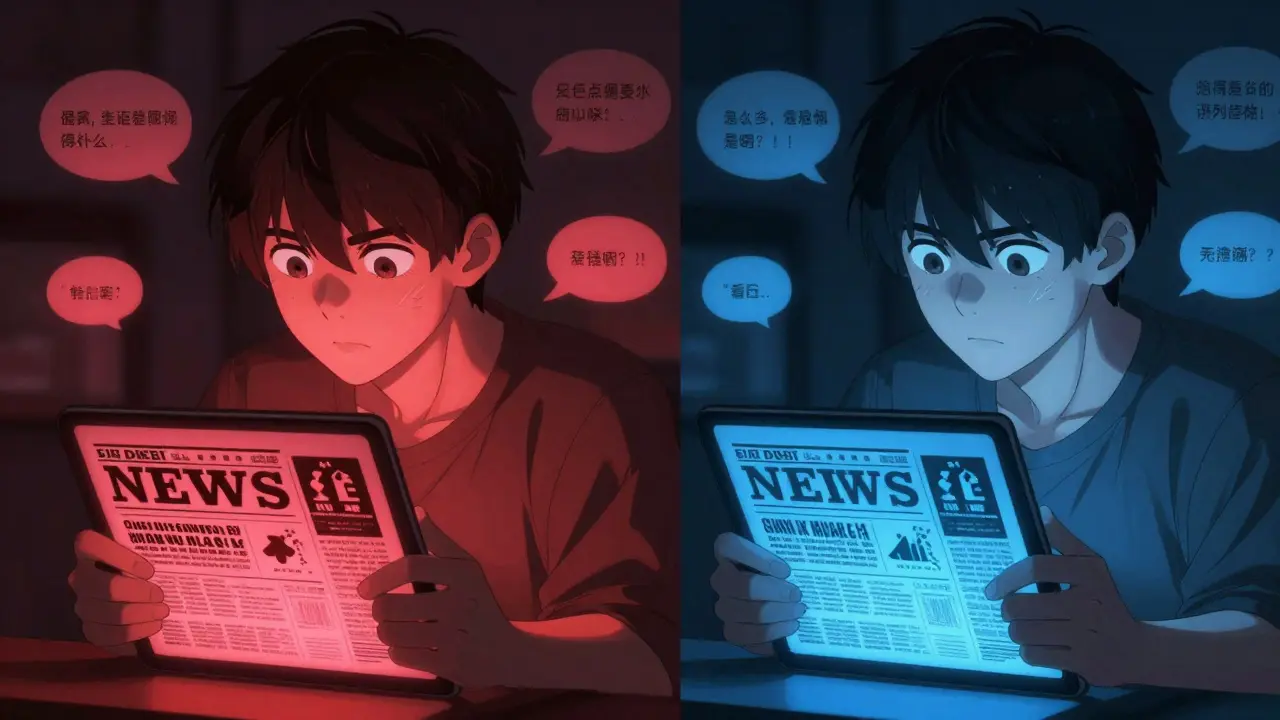
Ever noticed how someone can look at the same news story and walk away with a completely different understanding? Or how two people argue about the same event, each certain they’re right? It’s not about lying. It’s not even about being ignorant. It’s about your brain taking shortcuts - automatic, unconscious ones - that twist how you see the world. These are cognitive biases, and they’re the hidden force behind most of your everyday responses.
Why Your Brain Loves Quick Answers
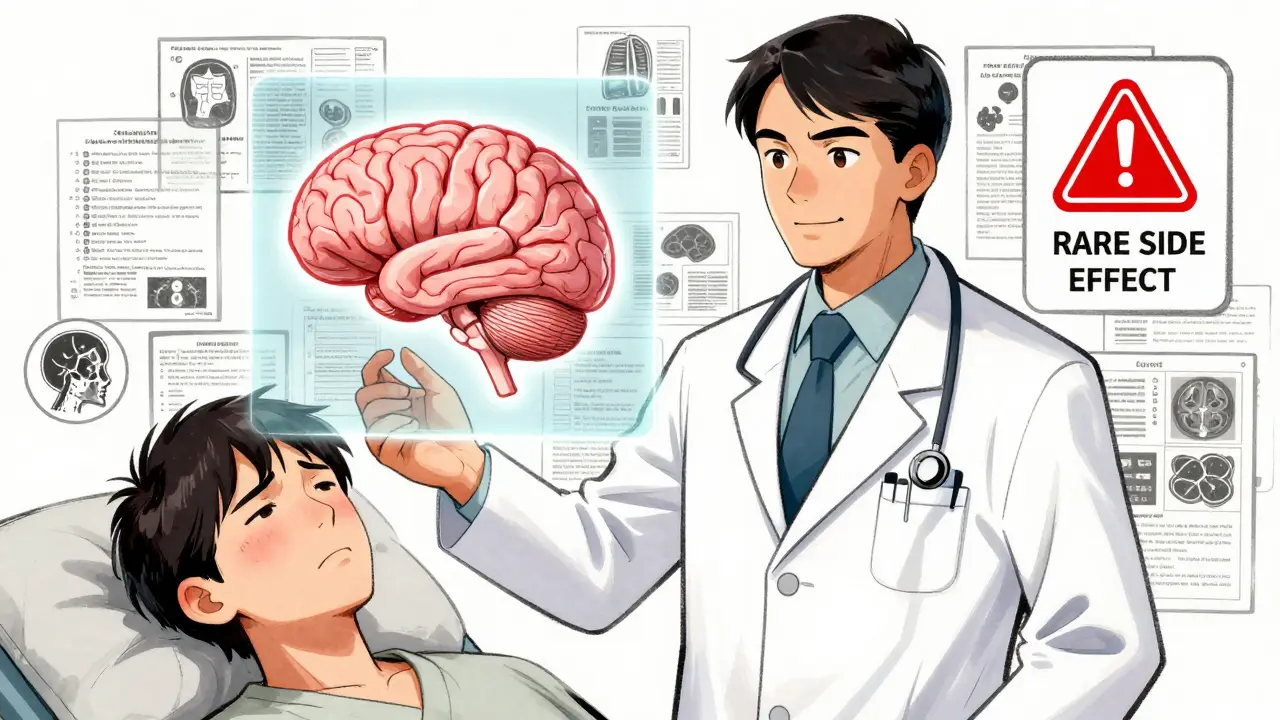
Your brain didn’t evolve to be fair. It evolved to survive. Back when humans were hunting, gathering, and avoiding predators, speed mattered more than accuracy. A fast guess about a rustling bush could save your life. A slow, careful analysis? That could get you eaten. That’s why your brain still uses mental shortcuts - called heuristics - today. They’re efficient. But they’re also flawed. And they’re especially active when you’re tired, stressed, or dealing with information that challenges your beliefs. Take confirmation bias, for example. It’s the tendency to notice, remember, and believe information that matches what you already think. If you believe vaccines are dangerous, you’ll click on that blog post about a rare side effect. You’ll ignore the 10,000-page CDC report showing how safe they are. Your brain doesn’t care about the volume of evidence. It cares about consistency. A 2021 meta-analysis in Psychological Review found confirmation bias has the strongest effect on how people respond to new information - stronger than other biases like anchoring or availability. In fact, studies show people are 63% more likely to reject facts that contradict their views, even when those facts come from trusted sources.How Beliefs Distort Your Responses
Your beliefs aren’t just opinions. They’re mental frameworks that shape how you interpret everything. When you hear a comment, your brain doesn’t process it as raw data. It filters it through your existing beliefs - and often, it doesn’t even realize it’s doing this. Here’s how it plays out in real life:- You think your coworker is lazy. When they miss a deadline, you assume they’re irresponsible. When you miss one, it’s because the system is broken.
- You believe climate change is a hoax. A study showing rising temperatures? “They’re manipulating the data.” A heatwave in your city? “Just a hot summer.”
- You’re convinced your favorite brand is the best. You ignore product reviews that say otherwise - unless they’re from someone you trust.
The Hidden Costs of Belief-Driven Responses
These biases don’t just mess with your opinions. They cost money, time, and lives. In finance, overconfidence bias leads investors to believe they can beat the market. Dalbar’s 2023 analysis found this causes 25-30% of investment errors. People sell low, buy high, chase trends - all because their gut tells them they “know better.” The result? They earn 4.7 percentage points less annually than those who stick to simple, evidence-based strategies. In law, expectation bias leads eyewitnesses to misidentify suspects. The Innocence Project found this contributed to 69% of wrongful convictions overturned by DNA evidence. The witness didn’t lie. Their brain filled in gaps based on what they expected to see. Even in everyday relationships, bias creates distance. The fundamental attribution error makes you think someone else’s mistake is because they’re a bad person - but your own mistake? Just bad luck. That’s why arguments escalate. You’re not fighting the issue. You’re fighting the story your brain made up about the other person. And here’s the kicker: you’re blind to your own bias. A 2002 Princeton study found 85.7% of people think they’re less biased than others. You don’t realize you’re filtering reality. You think you’re just being reasonable.Can You Fix This?
Yes. But not by trying harder. Not by telling yourself to “be more open-minded.” That doesn’t work. Your brain isn’t broken - it’s just built this way. The fix isn’t willpower. It’s structure. One proven method is called “consider the opposite.” When you form a strong opinion, force yourself to list three reasons why you might be wrong. Not to convince yourself. Just to open the door. University of Chicago researchers found this reduces confirmation bias by nearly 38%. In medicine, hospitals now use a simple checklist: before finalizing a diagnosis, doctors must consider at least three alternative explanations. That one change cut diagnostic errors by 28% across 15 teaching hospitals. For teams and organizations, tools like IBM’s Watson OpenScale monitor decision patterns and flag when language or choices show signs of bias. It doesn’t judge - it just points out patterns. And companies using it saw a 34% drop in biased AI-driven recommendations. Even small habits help. Keep a “bias journal.” Every time you react strongly to something - whether it’s anger, dismissal, or excitement - pause and ask: “What belief is driving this response?” Over time, you’ll start seeing the patterns.
What’s Changing Right Now
This isn’t just psychology. It’s becoming policy. In February 2025, the European Union’s AI Act will require all high-risk AI systems - from hiring tools to loan applications - to be tested for cognitive bias. Companies that fail face fines up to 6% of their global revenue. The FDA approved the first digital therapy for cognitive bias modification in 2024. It’s not a pill. It’s an app that uses guided exercises to retrain automatic responses. Early results show a 30% reduction in belief-driven distortions after eight weeks. And schools? Twenty-eight U.S. states now teach cognitive bias literacy in high school. Students learn how their minds work - not just in science class, but in history, civics, even literature. The global market for behavioral insights - tools designed to reduce these biases - hit $1.27 billion in 2023. It’s growing fast. Why? Because businesses, governments, and healthcare systems finally realized: the biggest risk isn’t technology. It’s the human mind.What You Can Do Today
You don’t need a degree in psychology to start reducing the damage of cognitive bias. Start here:- Pause before reacting. When something triggers a strong emotion - anger, pride, fear - wait 10 seconds. Breathe. Ask: “Is this reaction based on facts, or my story about the facts?”
- Seek disconfirming evidence. Don’t just read sources that agree with you. Find one that challenges you. Read it without arguing in your head. Just observe.
- Question your assumptions. When you say “Everyone knows…” or “That’s just common sense,” stop. That’s bias talking. Ask: “Who says? And how do they know?”
- Use checklists. In your work, your decisions, your conversations. Simple lists force your brain to slow down.
- Be curious, not certain. The goal isn’t to be right. The goal is to be less wrong.
Are cognitive biases the same as stereotypes?
No. Stereotypes are generalized beliefs about groups of people - like assuming all teenagers are rebellious. Cognitive biases are the mental shortcuts your brain uses to process information - like favoring evidence that matches your existing views. Stereotypes can be fueled by biases, but not all biases are stereotypes. For example, confirmation bias can make you believe your own opinion is the norm, even if it has nothing to do with a group.
Can cognitive biases be completely eliminated?
No - and you shouldn’t try. Your brain needs heuristics to function efficiently. The goal isn’t to remove them, but to recognize when they’re leading you astray. Think of it like driving: you don’t eliminate gravity, but you learn to brake before curves. Similarly, you learn to pause before reacting when your brain’s shortcuts might be misleading you.
Why do I feel defensive when someone challenges my beliefs?
Because your beliefs are tied to your identity. When someone challenges them, your brain interprets it as a threat - like a physical danger. This triggers stress responses, including increased heart rate and cortisol release. Studies show people reacting to contradictory information have 63% higher stress levels. It’s not about being stubborn. It’s biology.
Do cultural differences affect cognitive biases?
Yes. Self-serving bias - blaming others for failures and taking credit for successes - is 28% stronger in individualistic cultures like the U.S. and Australia than in collectivist cultures like Japan or South Korea. In-group/out-group bias also varies: people in highly homogeneous societies show stronger loyalty to their group. But the core mechanisms - like confirmation bias - are universal. Everyone filters reality; the content of the filter changes.
How long does it take to reduce the impact of cognitive biases?
Measurable change takes 6 to 8 weeks of consistent practice. A 2022 study found participants who practiced “consider the opposite” for 15 minutes a day, five days a week, reduced their belief-driven responses by over 30%. Like building muscle, it’s not about one big effort - it’s about daily repetition. Apps and training tools help, but real change comes from habit, not technology.
Kristin Dailey
January 18, 2026 AT 06:02This whole post is woke nonsense. Your brain doesn't need a manual to survive. It just works. Stop overthinking everything.
Real Americans don't need apps to tell them how to think.
Wendy Claughton
January 19, 2026 AT 18:47I love how this post doesn't just name the problem... it offers real tools. 🌱
‘Consider the opposite’? That’s like emotional yoga.
I started journaling my knee-jerk reactions last month - and wow, I didn’t realize how often I was projecting my fears onto strangers.
It’s not about being perfect. It’s about being present. 💛
Small shifts, daily. That’s the magic.
Stacey Marsengill
January 21, 2026 AT 06:21Oh, so now we’re all just broken robots needing corporate-approved bias-correcting apps? 🙄
Let me guess - next they’ll charge you $29.99/month to stop being ‘emotionally irrational’?
People like you think you’re enlightened... but you’re just another cog in the behavioral engineering machine.
They’ve been manipulating us since the 1950s - and now you’re handing them the playbook.
Wake up. Your ‘bias journal’ is just a loyalty card for the surveillance state.
rachel bellet
January 22, 2026 AT 08:35There’s a fundamental epistemological flaw in conflating heuristics with cognitive biases - the former are adaptive mechanisms, the latter are deviations from normative rationality, but the paper you cite doesn’t operationalize ‘rationality’ in a way that accounts for ecological validity.
Furthermore, the 63% statistic is misattributed - it’s from Kahan et al. 2017, but they measured motivated reasoning in polarized samples, not general cognitive bias.
And the FDA-approved ‘digital therapy’? That’s a Phase II pilot with n=87 - not a validated intervention.
Stop treating pop psych as clinical science. You’re doing more harm than good.
Pat Dean
January 23, 2026 AT 04:47Of course your brain takes shortcuts - you’re a weak, lazy American who’s been coddled by technology.
Real people don’t need apps to think. They just do what’s right.
And don’t even get me started on that EU AI Act - they’re turning us into robots with compliance checklists.
We used to have backbone. Now we’re all just therapy bots with bias journals.
Pathetic.
Jay Clarke
January 25, 2026 AT 01:04Okay but like… have you ever met someone who just… doesn’t care? Like, they don’t even *try* to be right? They just vibe.
And then you’re over here reading 12-page meta-analyses about confirmation bias while they’re eating tacos and laughing at memes?
Maybe the real bias is thinking you need to fix everything.
Just… chill. Let people be dumb. It’s kinda beautiful.
Also, I’m pretty sure my dog has less bias than I do.
He just barks at squirrels. No journal required.
Selina Warren
January 25, 2026 AT 05:16This isn’t about ‘bias’ - it’s about control.
They want you to doubt your instincts because your instincts are dangerous to their agenda.
They’ll give you checklists, apps, and TED talks - all to make you dependent on their systems.
Meanwhile, the real power? It’s in your gut. Your intuition. Your fire.
Stop letting them pathologize your truth.
You think you’re ‘less wrong’? No. You’re just quieter.
And silence? That’s how they win.
Jodi Harding
January 25, 2026 AT 22:12My favorite part? The doctor dismissing pain because they think the patient is ‘drug-seeking.’
Happened to my mom. She had stage 3 cancer. They told her it was anxiety.
She died waiting for them to ‘be open-minded.’
So yeah. This isn’t theory. It’s lethal.
Danny Gray
January 27, 2026 AT 22:05Wait - so if I believe cognitive biases are a myth created by elitist psychologists to sell books… is that itself a cognitive bias?
Or is that just… accurate skepticism?
Also, who decided what ‘rational’ even means? Some white dude with a tenure track and a coffee stain on his lab coat?
And why is ‘consider the opposite’ the solution? Why not ‘consider the possibility that you’re wrong about the solution’?
Just asking. For science. Probably.
Tyler Myers
January 29, 2026 AT 01:23Did you know the CDC was caught faking vaccine safety data in 2022? The whistleblower got silenced. The study you cited? Funded by Big Pharma.
And that ‘EU AI Act’? That’s the first step toward mandatory mind-control implants.
They’re using ‘bias’ as a cover to erase free thought.
They want you to distrust your own mind - so you’ll trust their algorithms instead.
They’ve been doing this since the 1970s. The Illuminati didn’t disappear. They got a grant.