
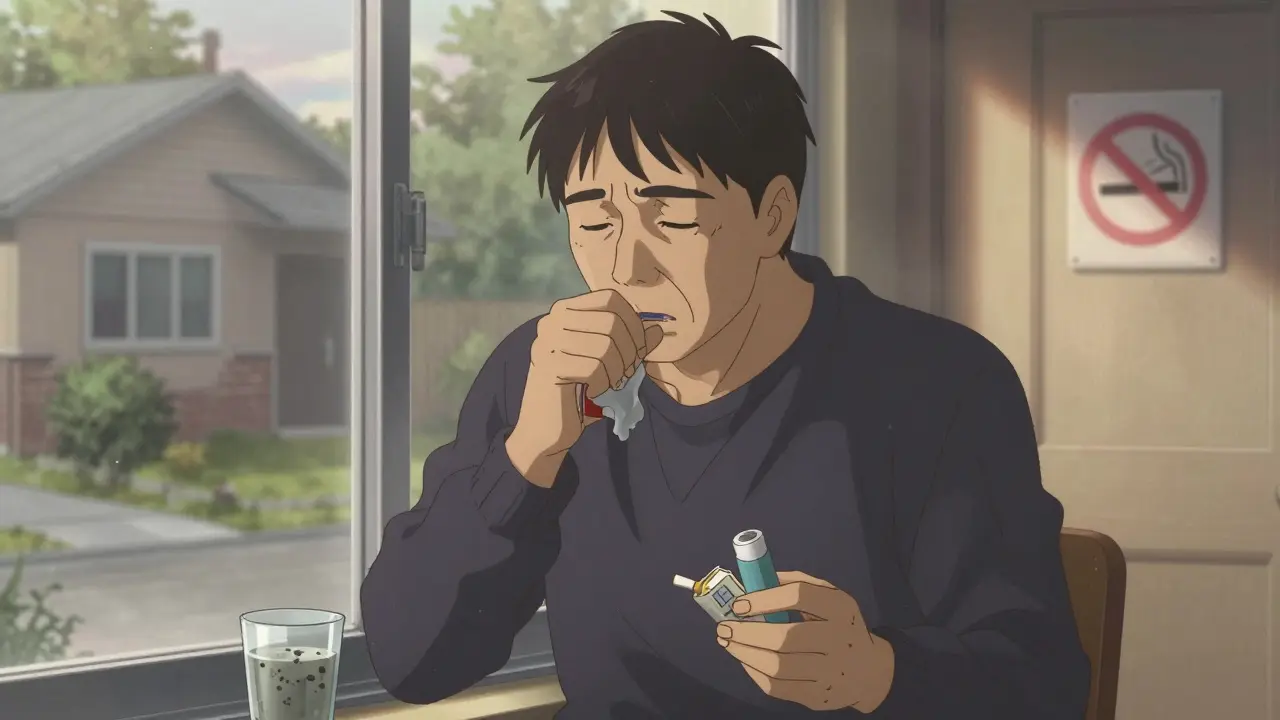
For many people, a persistent cough that won’t go away isn’t just annoying-it’s a sign something deeper is wrong. If you’ve been coughing up mucus most days for two years or more, especially if you’ve smoked or been around smoke for a long time, you might be dealing with chronic bronchitis. It’s not just a bad cold that lingers. It’s a real, long-term lung condition that changes how you breathe, moves, and even lives.
What Chronic Bronchitis Actually Feels Like
You don’t wake up one day with chronic bronchitis. It creeps in. At first, it’s just a morning cough-what people call a "smoker’s cough." You clear your throat, spit out some phlegm, and think it’s normal. But over time, the cough gets worse. You’re coughing more often, not just in the morning. The mucus becomes thicker, harder to clear. You start noticing you’re out of breath walking up stairs or carrying groceries. Your chest feels tight. Sometimes you wheeze. Fatigue sets in. You skip social events because you’re too tired or afraid of having a coughing fit. This isn’t just "being out of shape." Chronic bronchitis is defined by doctors as a cough with mucus that lasts at least three months a year, for two years in a row. It’s one of the two main forms of COPD-the other is emphysema. Together, they affect about 10 million Americans and are the fourth leading cause of death in the U.S. The damage to your airways is permanent, but the good news? You can still take control.Why Smoking Is the Main Culprit-And Why Quitting Is Your Best Shot
Over 90% of people with chronic bronchitis have smoked or used to smoke. That’s not a coincidence. Cigarette smoke doesn’t just irritate your lungs-it rewires them. The tiny hair-like structures (cilia) that normally sweep mucus out of your airways get paralyzed and die. Your body responds by making more mucus, trying to flush out the toxins. But with the cilia gone, that mucus just sits there, blocking your airways and inviting infections. Here’s the hard truth: if you keep smoking, your lungs will keep getting worse. Studies show that people who continue smoking after diagnosis have a 60% faster decline in lung function than those who quit. That means more hospital visits, less mobility, and a higher chance of dying from respiratory failure. But quitting? That’s where hope begins. People who stop smoking see their cough and mucus production drop within weeks. Their lungs start healing. Even if you’ve smoked for 40 years, quitting now can slow the disease’s progress by more than half. One study found that quitting led to a 21% increase in five-year survival rates for people with severe COPD. It’s not a cure, but it’s the single most powerful thing you can do.How to Quit-And Actually Stay Quit
Most people try to quit on their own. And most fail. The spontaneous quit rate? Just 7%. But when you get help, your chances jump dramatically. The most effective approach combines three things: medication, counseling, and support.- Varenicline (Chantix) reduces cravings and blocks nicotine’s effects in the brain. Studies show it doubles your chance of quitting compared to placebo.
- Nicotine replacement (patches, gum, lozenges) helps manage withdrawal symptoms. Using more than one form-like a patch plus gum-works better than just one.
- Behavioral counseling helps you understand your triggers. Is it after meals? When you’re stressed? Around friends who smoke? A counselor helps you build new habits.
What Else Helps-Beyond Quitting
Quitting smoking is the foundation, but you need more to feel better.- Bronchodilators (inhalers like albuterol or tiotropium) open your airways. They don’t fix the damage, but they make breathing easier-often within 15 minutes. Most people need them daily.
- Mucolytics like N-acetylcysteine help thin the mucus so it’s easier to cough up. The Global Initiative for Chronic Obstructive Lung Disease (GOLD) recommends them for regular use because they reduce flare-ups by about one episode every three years.
- Vaccines are non-negotiable. Get the flu shot every year-it cuts your risk of a serious lung infection by 42%. Get the pneumococcal vaccine every five to seven years. Pneumonia can be deadly with chronic bronchitis.
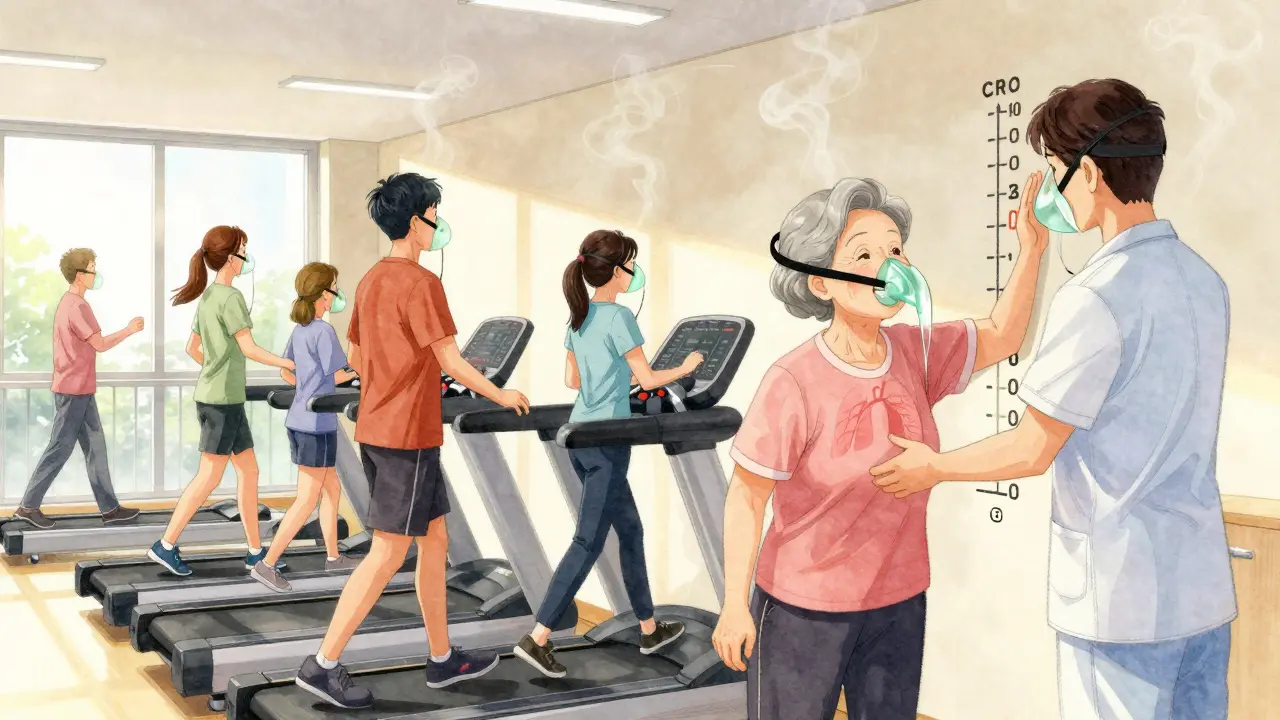
- Pulmonary rehabilitation is the most underused tool. It’s not just exercise. It’s a 6- to 12-week program with breathing training, nutrition advice, and supervised physical activity. People who complete it walk 78 meters farther in six minutes and cut hospital visits by 37%. It’s like physical therapy for your lungs.
The Dark Side of Treatment: Side Effects and Mistakes
Not all treatments are created equal. Some come with serious risks. Inhaled steroids, while helpful for reducing inflammation, can cause osteoporosis, high blood pressure, and even diabetes if used long-term. One patient on a patient forum shared that after 18 months on a steroid inhaler, she broke two vertebrae-even with calcium supplements. Antibiotics are often overused. They only help if you have a bacterial infection. Taking them when you don’t need them doesn’t help-and it can make future infections harder to treat. And then there’s the inhaler problem. Most people use them wrong. A study found it takes an average of 4.7 sessions with a respiratory therapist to get it right. If you’re not getting the medicine into your lungs, you’re wasting your money and your time.What’s New in 2026
Treatment is evolving. In 2023, the FDA approved a new drug called ensifentrine, which improves breathing and reduces flare-ups. Researchers are also exploring gene-based therapies that could one day target mucus production directly. Digital tools are getting smarter too-smart inhalers that track when you use them and send reminders to your phone. Tele-rehabilitation programs let you do breathing exercises at home with virtual coaching. But none of these replace the basics: stop smoking, get vaccinated, do rehab, take your meds right. Technology helps. It doesn’t replace the hard work.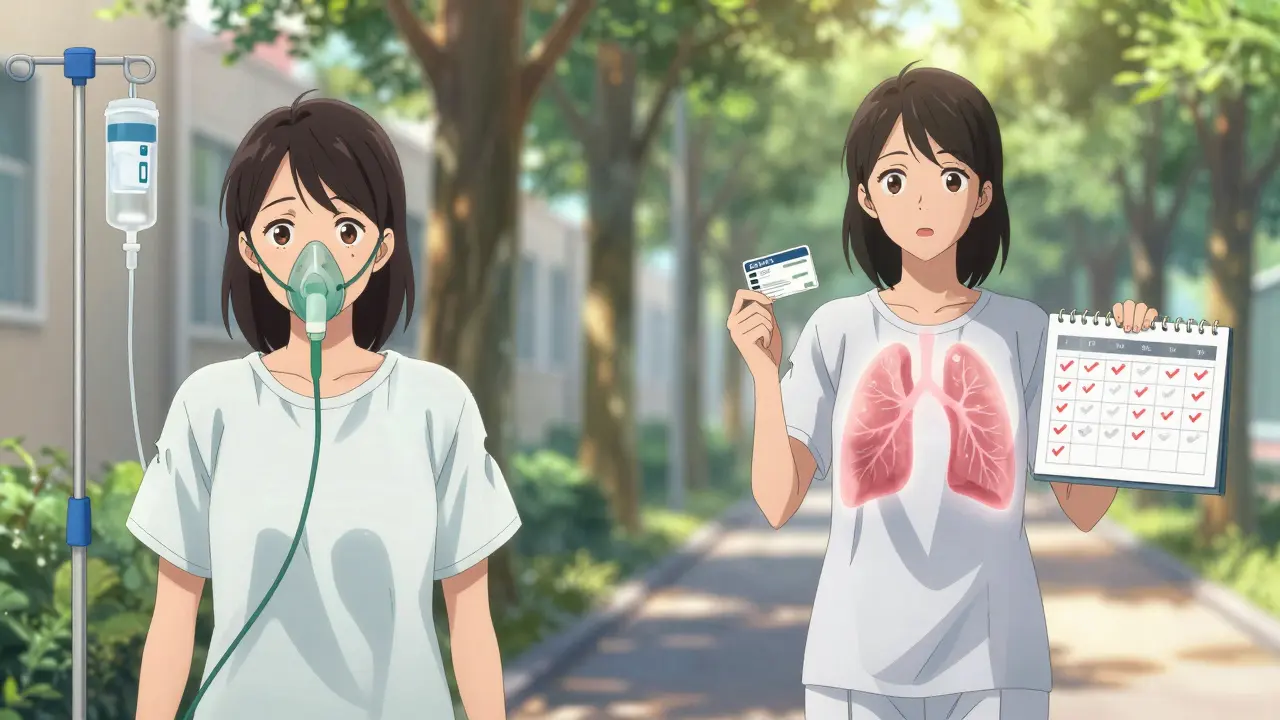
Real Talk: What Works in Real Life
The people who do best with chronic bronchitis aren’t the ones with the fanciest inhalers. They’re the ones who show up. They go to rehab. They quit smoking. They call their doctor when they feel off-not when they’re gasping for air. One man in his 60s told his support group: "I thought I was too old to change. Turns out, I was too old to keep doing nothing." Another woman said: "I used to think my cough was just part of getting older. Now I know it was my body screaming for help. I listened. And I’m still here."You’re Not Alone
Chronic bronchitis doesn’t have to be a death sentence. It’s a chronic condition, yes-but it’s not a life sentence of decline. Every day you don’t smoke, your lungs get a little better. Every rehab session, every vaccine, every correct inhaler use adds up. The goal isn’t perfection. It’s progress. One day at a time.Is chronic bronchitis the same as COPD?
Chronic bronchitis is one of the two main types of COPD-the other is emphysema. Both involve airflow obstruction, but chronic bronchitis is defined by a long-term cough with mucus. Many people have both conditions at the same time. Doctors now use the term COPD to cover both, but the symptoms and treatments overlap significantly.
Can you live a normal life with chronic bronchitis?
Yes, but it takes effort. People who quit smoking, do pulmonary rehab, take their medications correctly, and stay up to date on vaccines often live full, active lives. They may need to adjust their pace-walking slower, taking breaks, avoiding pollution-but they can still travel, spend time with family, and enjoy hobbies. The key is managing the disease, not letting it manage you.
How do I know if my cough is chronic bronchitis and not just a cold?
A cold cough lasts a few weeks. Chronic bronchitis means you’ve had a productive cough (with mucus) for at least three months a year, for two years in a row. If you’re over 40, have a history of smoking, and your cough won’t go away, it’s time to see a doctor. A simple breathing test called spirometry can confirm if you have airflow obstruction.
Are there any natural remedies that help with chronic bronchitis?
Hydration helps thin mucus. Steam or humidifiers can ease coughing. Avoiding air pollution and cold, dry air reduces irritation. But there’s no proven herbal remedy or supplement that reverses lung damage. Don’t replace medical treatment with unproven remedies. Some herbs can interact with your medications. Always talk to your doctor before trying anything new.
What if I’ve tried to quit smoking before and failed?
Most people need multiple tries to quit successfully. Each attempt teaches you something. Maybe you didn’t have the right support. Maybe you didn’t use medication. Maybe you didn’t plan for triggers. Talk to your doctor about varenicline, nicotine patches, or counseling. You’re not weak-you’re human. And help is more effective than ever.
Can secondhand smoke cause chronic bronchitis?
Yes. About 9% of chronic bronchitis cases in people who never smoked are linked to long-term exposure to secondhand smoke. If you live with a smoker, ask them to smoke outside. Use air filters. Your lungs are still vulnerable-even if you’ve never lit a cigarette.
When should I go to the ER?
Go to the ER if you have sudden worsening of symptoms: extreme shortness of breath, high fever, confusion, blue lips or fingernails, or if your inhaler isn’t helping. These could signal a serious lung infection or respiratory failure. Don’t wait. Early treatment saves lives.
Next Steps: What to Do Today
If you have chronic bronchitis:- Call your doctor. Ask for a spirometry test if you haven’t had one.
- Ask about pulmonary rehab. It’s covered by Medicare and most insurance.
- Start a smoking cessation plan. Don’t wait. Use varenicline, nicotine replacement, or counseling.
- Get your flu shot and pneumococcal vaccine now.
- Learn how to use your inhaler. Ask for a demo from your pharmacist or respiratory therapist.
- Don’t nag. Support. Ask how you can help.
- Help them avoid smoke, dust, and pollution.
- Go with them to appointments. Take notes.
- Celebrate small wins. A smoke-free day. A walk without stopping.
Joseph Snow
January 5, 2026 AT 15:24Let me guess - the pharmaceutical industry paid you to write this. Quitting smoking? Please. The real cure is being suppressed by Big Pharma because inhalers and Chantix are way more profitable. You think they want you healthy? They want you dependent. I’ve seen the data - the ‘quit rates’ are faked. They just reclassify people who relapse as ‘non-compliant.’
And pulmonary rehab? That’s just a fancy way to make you pay for treadmill time. My uncle smoked for 50 years, never quit, and lived to 89. He didn’t need your ‘science.’ He had grit.
melissa cucic
January 7, 2026 AT 00:16Thank you for writing this with such clarity and care. It’s rare to see medical information presented without condescension or overwhelming jargon. I especially appreciated the distinction between chronic bronchitis and emphysema - many people conflate them, and that confusion delays care.
And the point about inhaler technique? So vital. I’ve watched patients use their devices for years, only to realize they’ve been inhaling into their cheeks, not their lungs. A simple demo can transform outcomes.
It’s not about perfection. It’s about persistence. One day, one breath, one step. That’s how healing happens.
Akshaya Gandra _ Student - EastCaryMS
January 8, 2026 AT 15:24Jacob Milano
January 10, 2026 AT 09:22Man, this hit different. I used to think my morning cough was just ‘morning wood’ for my lungs - you know, clearing out the night’s debris. Turns out, it was my lungs screaming for mercy.
Quit cold turkey at 48. Six months in, I walked my daughter down the aisle without stopping. Didn’t cry - but my wife did. She said, ‘I didn’t think I’d ever hear you laugh without wheezing.’
You don’t need a miracle. You just need to show up. One day. One breath. One less cigarette. That’s the whole damn playbook.
saurabh singh
January 11, 2026 AT 09:01Bhai, I'm from India too - and trust me, we’ve all seen this. My uncle smoked 30 cigarettes a day for 40 years, still danced at weddings, drank chai like it was oxygen. Then one day, he couldn’t climb the stairs to his own flat.
But when he started using the NAC tablets and got his flu shot? Holy moly - he started walking to the temple again. No magic. Just basics. And now he tells everyone: ‘Don’t wait till you’re gasping. Start when you’re just tired.’
You don’t need a PhD. You need a plan. And a friend who says, ‘Let’s go get that inhaler demo together.’
Dee Humprey
January 11, 2026 AT 19:15Shanna Sung
January 11, 2026 AT 21:27Mandy Kowitz
January 12, 2026 AT 09:44Justin Lowans
January 13, 2026 AT 00:36This is one of the most thoughtful, clinically grounded, and human pieces I’ve read on COPD in years. The emphasis on pulmonary rehab as a cornerstone - not an afterthought - is profoundly correct.
I’ve seen patients who’ve spent decades in the hospital cycle, only to transform after a single rehab program. The improvement isn’t just physical - it’s existential. They stop seeing themselves as patients. They become people again.
Thank you for writing this. It’s not just information. It’s an invitation to reclaim dignity.
Oluwapelumi Yakubu
January 14, 2026 AT 19:50Let me tell you something - in Lagos, we don’t have inhalers. We have ginger tea, bitter leaf, and ancestral prayers. And guess what? Many live longer than your ‘FDA-approved’ patients.
Western medicine is brilliant, yes - but it’s not the only truth. The body remembers. The spirit heals. You can’t quantify that with spirometry.
Still - if you have access to Chantix? Use it. But don’t forget: your ancestors survived famine, war, and plague. You’re not helpless. You’re resilient.
Terri Gladden
January 15, 2026 AT 06:58Jennifer Glass
January 16, 2026 AT 22:23I appreciate the nuance here. It’s easy to fall into ‘just quit smoking’ as the only answer - but the real work is in the daily choices: the inhaler technique, the vaccine, the walk around the block.
I have COPD. I’m 63. I still garden. I still laugh. I still cry when I hear my grandkids sing.
It’s not about being cured. It’s about being present. And that’s worth fighting for.
Enrique González
January 18, 2026 AT 04:05I was diagnosed two years ago. Didn’t believe it. Thought I was just getting old. Then I went to rehab. Didn’t want to go. Thought it was dumb.
Turns out, breathing exercises? Life-changing. Walking 10 minutes a day? Changed everything.
I don’t smoke anymore. I don’t need to prove anything to anyone.
I just breathe.