
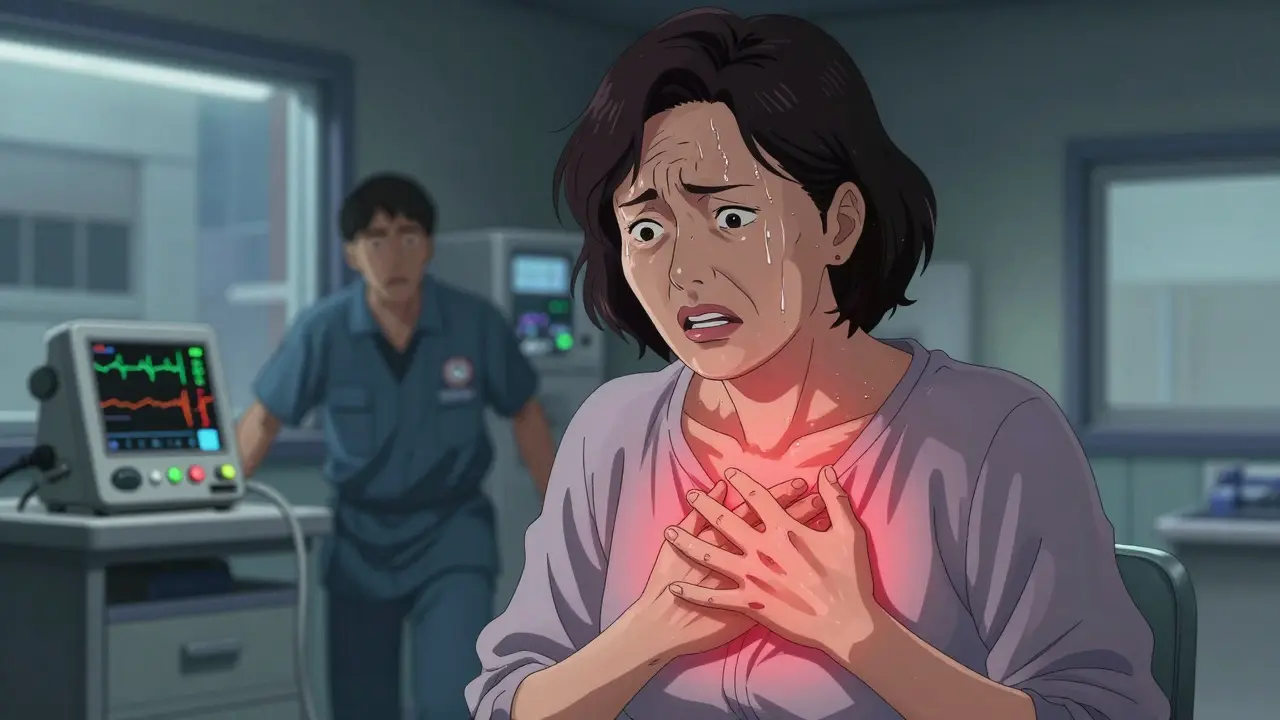
When your chest hurts, it’s easy to panic. Is it heartburn? A pulled muscle? Or something serious like a heart attack? The truth is, chest pain isn’t always what it seems - and knowing when to act can save your life.
Every year in the U.S., millions of people show up at emergency departments with chest discomfort. But here’s the surprising part: only about 1 in 10 of them actually have a heart attack. That means most people are either fine… or they’re missing the warning signs. The key isn’t just the pain itself - it’s what comes with it.
What Chest Pain Really Means
The 2021 American Heart Association and American College of Cardiology guidelines redefine chest pain beyond just a sharp or squeezing feeling in the chest. It includes pressure, tightness, or aching that can spread to your shoulders, arms, neck, jaw, or even your upper belly. It’s not always pain - sometimes it’s just unusual fatigue, nausea, or shortness of breath. These are called anginal equivalents, and they’re just as dangerous as classic chest pain.
Think of it this way: if you’re a 55-year-old woman and you feel like you’ve been hit by a truck - no chest pain, just crushing fatigue and sweating - that could be your heart. Men are more likely to feel the classic squeezing sensation. Women, older adults, and people with diabetes often have subtler symptoms. Ignoring them because it doesn’t "feel like a heart attack" is how people delay care… and lose time.
When to Call 9-1-1 - Not Drive Yourself
If you’re wondering whether to drive to the hospital or call an ambulance, here’s the rule: if you’re unsure, call 9-1-1. Emergency medical services (EMS) aren’t just faster - they’re safer. Studies show that people who drive themselves to the ER have a 25-30% higher risk of complications during transport. Why? Because if your heart stops on the way, no one’s there to help. EMS crews can start treatment before you even arrive.
Here are the red flags that mean you need an ambulance right now:
- Chest pain or pressure that lasts more than 5 minutes - or comes and goes
- Pain that spreads to your arm, jaw, neck, or back
- Breaking out in cold sweat for no reason
- Feeling dizzy, lightheaded, or passing out
- Shortness of breath that doesn’t go away
- Nausea or vomiting with chest discomfort
- Heart rate over 100 beats per minute or breathing faster than 20 times a minute
Don’t wait to see if it gets better. Don’t try to tough it out. Don’t text a friend first. Every minute counts. The sooner treatment starts, the less damage your heart takes.
The ECG: Your Fastest Clue
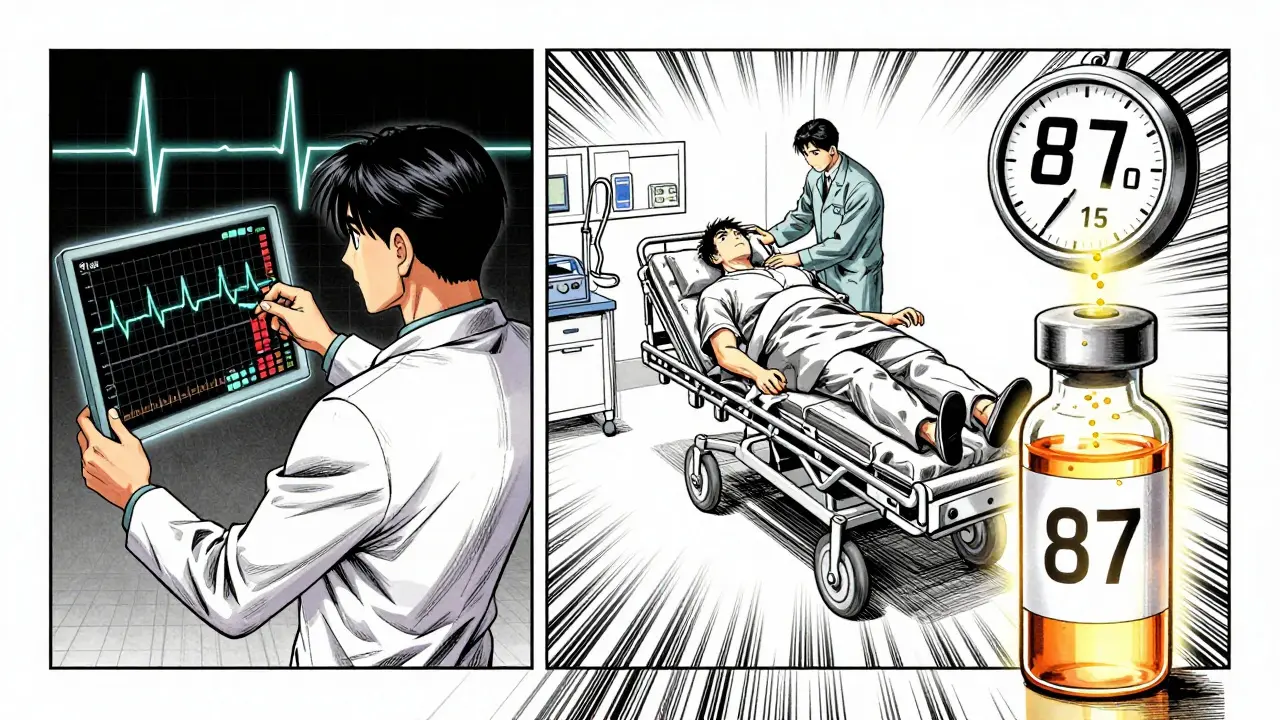
When you arrive at the emergency department, the very first thing they’ll do is hook you up to an ECG machine. This test, which measures your heart’s electrical activity, must be done within 10 minutes of arrival - no exceptions. Why? Because if you’re having a heart attack called STEMI (a type of heart attack with a clear spike on the ECG), doctors need to open your blocked artery within 90 minutes. That’s the gold standard. Miss that window, and your chances of recovery drop fast.
The ECG isn’t just a formality. It’s your best first clue. A normal ECG doesn’t rule out a heart attack - but an abnormal one tells doctors to act immediately. That’s why experts say the ECG is the single most important test in chest pain evaluation. It’s cheap, fast, and tells you more than you think.
Troponin Tests: The Blood Clue
After the ECG, they’ll draw blood for a troponin test. Troponin is a protein released when heart muscle is damaged. Modern labs use high-sensitivity troponin assays - these can detect tiny amounts of damage. In fact, with these tests, doctors can rule out a heart attack in 70-80% of patients within just 1-2 hours.
Here’s how it works: they take your first blood sample when you arrive, then another one 1-2 hours later. If the levels stay flat or rise only slightly, it’s very unlikely you had a heart attack. If they spike, you’re in danger zone. This method is so accurate that many hospitals now send low-risk patients home the same day - no hospital stay needed.
But here’s the catch: this only works with high-sensitivity tests. If your hospital still uses older troponin assays, the rules change. Make sure you’re getting the right test. Most U.S. hospitals switched to these by 2022 - but not all.
Who Gets the Full Workup?
Not everyone needs a CT scan or stress test. The 2021 guidelines divide patients into three risk groups:
- High-risk: You have ongoing chest pain, unstable blood pressure, abnormal ECG, or signs of heart failure. You go straight to the cath lab. No waiting.
- Intermediate-risk: You have some symptoms but are stable. You might get a CT scan of your heart (CCTA) or a stress test. CCTA is more accurate - it shows blockages in your arteries with 95-99% accuracy.
- Low-risk: Your pain is mild, your ECG is normal, and your troponin levels are fine. You can go home with a follow-up appointment. No need to stress.
The HEART score is a simple tool doctors use to help decide. It looks at five things: your History (what you describe), ECG findings, Age, Risk factors (like smoking or diabetes), and Troponin level. A score of 0-3? Very low risk. 7-10? High risk. It’s not perfect, but it’s better than guessing.
What’s Not a Heart Attack?
Many chest pains have nothing to do with your heart. Muscle strain, acid reflux, anxiety, lung infections, even a pinched nerve can mimic heart pain. That’s why doctors don’t just treat the symptom - they rule out the worst possibilities first.
For example, if your pain is sharp and gets worse when you breathe in, it might be your lungs. If it burns after eating, it’s likely acid reflux. If you’re young, healthy, and the pain comes with panic attacks, it could be anxiety. But here’s the problem: you can’t tell the difference on your own. That’s why professional evaluation matters.
There’s also a group called INOCA - ischemia with no obstructive coronary artery disease. About 5-10% of people who have heart-like symptoms don’t have blocked arteries, but their heart still isn’t getting enough blood. These cases are tricky. They need special testing, like stress tests with imaging, to find the cause.
What You Can Do Before You Go
If you’re worried about chest pain, here’s what to do right now:
- Stop what you’re doing. Sit down. Don’t exert yourself.
- Call 9-1-1. Don’t call a friend. Don’t text. Dial emergency services.
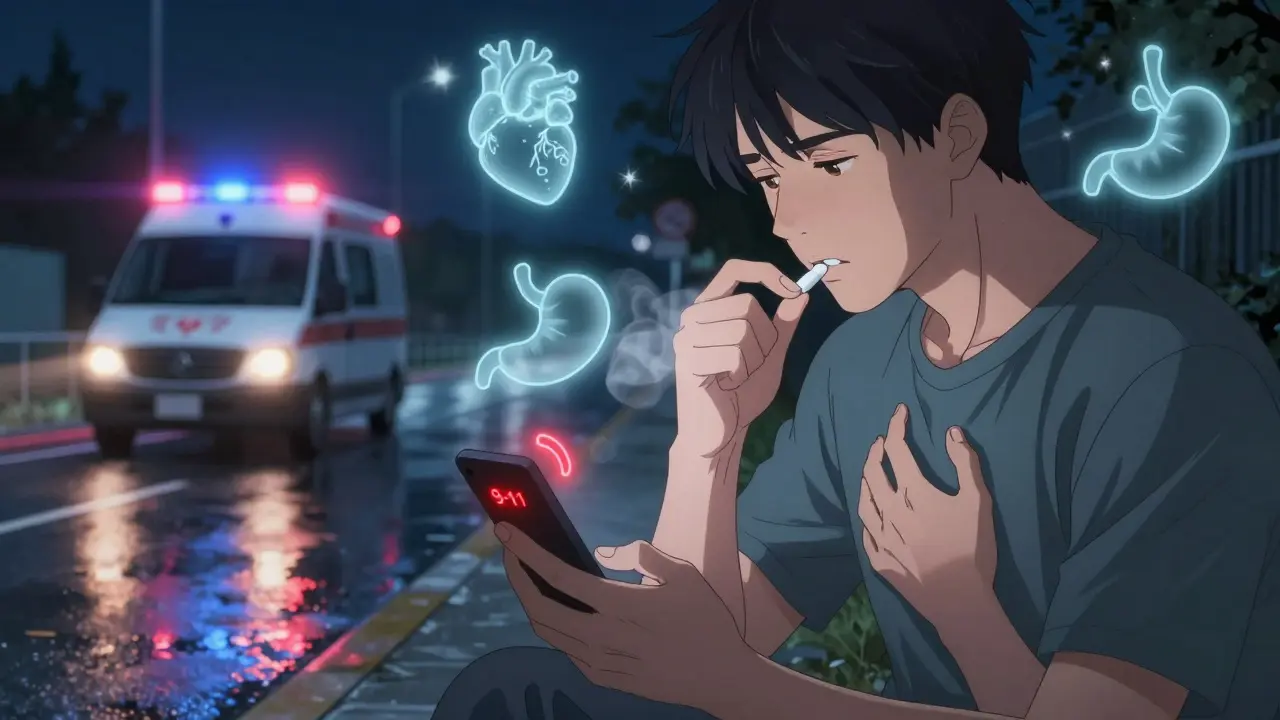
- If you’re not allergic to aspirin and have some on hand, chew one 325 mg tablet. It helps slow blood clots.
- Don’t drive yourself. Wait for EMS.
- Have your medications, insurance card, and list of allergies ready.
Don’t wait for someone else to decide. If you feel something’s wrong - trust it. The system is built to catch heart attacks early. But it only works if you act.
What Happens After the ER?
If you’re cleared and sent home, don’t ignore follow-up. Even if your ECG and troponin were normal, you might still need a stress test or specialist visit. Some heart conditions show up days later. And if you were diagnosed with angina or INOCA, lifestyle changes matter - quitting smoking, eating better, moving more, managing stress.
If you had a heart attack, rehab starts immediately. Cardiac rehab isn’t optional - it cuts your risk of another event by 25%. It’s not just exercise. It’s education, counseling, and support.
And if you’re at risk - say, you have high blood pressure, diabetes, or a family history - talk to your doctor about prevention. Aspirin? Statins? Blood pressure meds? These aren’t just pills. They’re tools to keep you alive.
Looking Ahead
The future of chest pain evaluation is getting smarter. By 2025, most U.S. hospitals will use artificial intelligence to analyze ECGs. AI can spot tiny changes in heart rhythm that humans miss - changes that signal trouble hours before symptoms appear. This could cut diagnosis time by 15-20 minutes. That’s life-saving.
The guidelines are stable for now. The 2021 AHA/ACC rules are still the gold standard. No major overhaul is expected until 2026. But the tools around them - like high-sensitivity troponin and AI - are changing how fast we can act. And that’s what matters most: time.
Is chest pain always a sign of a heart attack?
No. Chest pain can be caused by many things - acid reflux, muscle strain, anxiety, lung issues, or even a pinched nerve. But because heart attacks can mimic these conditions, any new or unexplained chest discomfort should be checked by a medical professional. It’s better to be safe than sorry.
Can I wait to see my doctor instead of going to the ER?
Only if your symptoms are mild, stable, and clearly linked to something non-cardiac - like recent physical exertion or known reflux. If you have any doubt - especially if pain lasts more than 5 minutes, spreads, or comes with sweating, nausea, or shortness of breath - go to the ER. Delaying care increases your risk of permanent heart damage or death.
Why is an ECG done within 10 minutes?
The first 10 minutes after arriving at the ER are critical for detecting STEMI, the most dangerous type of heart attack. If doctors see the telltale ECG pattern, they can activate the cath lab team before you even reach the exam room. Every minute counts - delays of even 20-30 minutes can mean more heart muscle dies.
Are all troponin tests the same?
No. Older troponin tests take longer to detect damage and aren’t sensitive enough for rapid rule-out protocols. High-sensitivity troponin assays, introduced in most hospitals by 2022, can detect tiny amounts of heart injury and allow doctors to rule out a heart attack in 1-2 hours. Always ask if your hospital uses high-sensitivity testing.
What if I have chest pain but my tests come back normal?
Normal tests don’t always mean you’re out of the woods. Conditions like INOCA - ischemia with no blocked arteries - can still cause chest pain and require follow-up. You may need stress testing, heart imaging, or lifestyle changes. Always follow up with your doctor, even if you’re sent home.
Pat Mun
February 12, 2026 AT 20:47So many people panic about chest pain and end up in the ER for nothing - but honestly? I’d rather be the guy who cried wolf than the one who didn’t and lost a heart. I had a friend who brushed off her symptoms for three days because she thought it was ‘just stress.’ Turned out it was a silent heart attack. She’s fine now, but she’s on meds and can’t climb stairs without getting winded. Don’t be that person. If it feels off, call 9-1-1. Seriously. No shame in being overcautious.
Also, the part about high-sensitivity troponin? Lifesaver. My local hospital didn’t switch until 2023. Took them forever. If you’re getting tested and they’re using the old assay, ask for an upgrade. It’s not a luxury - it’s standard now.
And yes, women’s symptoms are different. I’m 52, and my ‘heart attack’ felt like someone sat on my ribcage while I was running on a treadmill. No chest pain. Just exhaustion. I thought I had the flu. Turns out, I had a 90% blockage. Don’t wait for the textbook version. Your body knows.
Sophia Nelson
February 13, 2026 AT 14:09Ugh. Another medical article that makes me feel guilty for not being a walking ECG machine. I get it, call 911. But what if you’re in a rural area with a 45-minute ambulance ride? Or you’re homeless and don’t have insurance? Or you’re just scared of the bill? This reads like it was written by someone who’s never had to choose between food and a copay.
Also, ‘don’t drive yourself’? Yeah, right. I’ve seen people drive 30 miles to the ER because they don’t have a phone or can’t afford to wait. The system is broken. Stop pretending everyone has access to ‘gold standard’ care. It’s not a checklist - it’s a privilege.
Stacie Willhite
February 14, 2026 AT 06:56I just want to say thank you for writing this. As someone who’s had anxiety attacks that mimic heart pain, I’ve been to the ER twice thinking I was dying. Both times, they were clean - but I left feeling seen, not dismissed. That matters.
The part about INOCA? I’ve been living with that for years. No blockages. No stents. Just… pain. And doctors kept telling me it was ‘all in my head.’ I finally found a cardiologist who knew about microvascular disease. It’s real. It’s underdiagnosed. And yes, it’s treatable.
If you’re reading this and you’ve been told your pain isn’t ‘real’ - keep pushing. You’re not crazy. You’re just not in the textbook. And that’s okay.
Jason Pascoe
February 15, 2026 AT 13:29As an Aussie who’s had a few cardiac scares, I can confirm: the US system’s got some solid protocols, but we do things a bit differently here. We don’t wait for troponin levels to spike - we do rapid rule-out pathways with ECG + troponin at 0 and 1 hour. It’s faster, cheaper, and just as accurate. Also, we don’t hand out aspirin like candy - only if it’s confirmed cardiac. Overuse = bleeding risk.
And yeah, AI on ECGs? We’re already using it. One algorithm flagged a subtle ST depression I missed. Saved a guy who thought he had indigestion. Tech’s not magic, but it’s helping. Gotta love it.
Sonja Stoces
February 17, 2026 AT 03:27OMG I can’t believe people still believe this BS. 😭
Heart attacks? More like corporate healthcare propaganda. Did you know the AHA gets funded by pharmaceutical companies? 🤫
Most chest pain is just anxiety or magnesium deficiency. I took 400mg of Mg and my ‘heart pain’ vanished. Also, aspirin is poison. It thins your blood and causes ulcers. Why do you think so many people have GI issues? 💀
And EMS? They’re just part of the ambulance-industrial complex. I called 911 once and got charged $2,000. My cousin had a heart attack and they gave him a $10,000 bill. 💸
Stop trusting the system. Trust your body. Eat more kale. Drink lemon water. 🌿
Also, AI? It’s watching you. 🤖👁️
Annie Joyce
February 17, 2026 AT 10:33Y’all are overcomplicating this. If your chest feels like someone’s crushing it with a vise, and you’re sweating buckets while your arm goes numb? Yeah. That’s not heartburn. That’s your heart screaming for help.
But here’s the real tea: the reason people delay is because they don’t wanna be a ‘nuisance.’ I get it. I’ve been there. Thought I was being dramatic. Turns out, I was just… alive.
And yeah, troponin tests? High-sensitivity ones are game-changers. My doc showed me the numbers - it’s like seeing a ghost in your blood. Tiny little fingerprints of damage. Scary. But knowing? That’s power.
Also - chew aspirin. Not swallow. Chew. It gets in your system faster. And if you’re allergic? Skip it. Don’t be a hero. Just call 911. You’re not a burden. You’re a human. And your heart? It’s worth it.
Rob Turner
February 18, 2026 AT 01:17Been to the ER twice for chest pain - both times, it was anxiety. But I’m glad I went. Not because I was ‘right,’ but because I learned how fragile this body is.
One thing I’ll say - the ECG thing? Brilliant. It’s like a heartbeat fingerprint. You don’t need to be a doctor to get that. And honestly? I think we need more public education on this. Not just ‘call 911,’ but ‘here’s what happens next.’
Also, I’ve noticed a weird trend - men are way more likely to dismiss symptoms. Women? They’re more likely to say ‘something’s off.’ Maybe we should stop gendering health. Maybe we should just listen.
And yeah, AI’s coming. I’m excited. But let’s not forget: the best diagnostic tool is still a person who cares enough to ask, ‘Are you okay?’
Luke Trouten
February 19, 2026 AT 00:21There’s a deeper philosophical point here: we live in a culture that rewards stoicism, especially around physical suffering. We’re taught to endure, to ‘tough it out,’ to ‘not be a drama queen.’ But the human body doesn’t negotiate. It doesn’t care about your pride, your job, your insurance deductible.
The medical guidelines in this article aren’t just clinical - they’re ethical. They say: when in doubt, choose life. Not convenience. Not cost. Not fear.
And that’s a radical stance in a world that commodifies health. The fact that we’ve institutionalized rapid ECGs and high-sensitivity troponin? That’s not luck. That’s moral progress.
We don’t need more awareness. We need more courage. And sometimes, courage looks like calling 911 when you’re scared, alone, and unsure.
Gabriella Adams
February 20, 2026 AT 05:17As a registered nurse with 18 years in the ER, I can tell you this: the most dangerous patients are the ones who say, ‘I’m fine.’
Every single day, someone walks in saying, ‘It’s just heartburn.’ Then 20 minutes later, their ECG spikes. They’re coding before we get them to the cath lab.
And yes - high-sensitivity troponin? It’s changed everything. We used to wait 6 hours. Now? We rule out 80% in 90 minutes. That’s not science fiction. That’s Tuesday.
Also - if you’re reading this and you’re a caregiver? Please, don’t let your loved one ‘wait and see.’ Don’t be the person who says, ‘Maybe it’ll pass.’ It might. But if it doesn’t? You’ll live with it forever.
Call 911. Chew aspirin. Don’t drive. And for the love of God - don’t text your friend first.
Jonathan Noe
February 20, 2026 AT 16:29Let’s cut through the noise. The 2021 AHA/ACC guidelines? Solid. But here’s what nobody talks about - the real bottleneck isn’t the ECG or the troponin. It’s the fact that 60% of patients don’t know their own risk factors.
How many people know their LDL? Their blood pressure? Their family history? Most don’t. And that’s why they panic when they feel something - because they’ve never been taught to *monitor*.
Also - ‘chest pain’ isn’t a diagnosis. It’s a symptom. And the real problem? We treat symptoms, not causes. You can have a perfect ECG and still have microvascular disease. Or inflammation. Or endothelial dysfunction.
Stop waiting for the crisis. Start tracking your numbers. Get a home BP monitor. Check your pulse. Know your baseline. Prevention > ER visits.
And if you’re on statins? Don’t stop them because of a YouTube video. Talk to your doctor. Not a TikTok influencer.
Autumn Frankart
February 20, 2026 AT 18:04THEY’RE LYING TO YOU. 🚨
Did you know the FDA approved high-sensitivity troponin tests because Big Pharma wanted to sell MORE tests? 🤫
And EMS? They’re paid per call. That’s why they rush you in - so they get paid more. You’re a revenue stream. 💰
Also - AI on ECGs? That’s how they track your heart data for insurance companies. They’ll raise your rates if they see ‘abnormal patterns’ - even if you’re fine. 😈
And aspirin? It’s a blood thinner. If you’re bleeding internally, it’ll kill you. They don’t tell you that. They just say ‘chew one.’
My cousin died after they gave him aspirin. He had a stomach ulcer. No one asked. No one cared.
Don’t trust the system. Trust yourself. Drink apple cider vinegar. Eat garlic. And if your chest hurts? Lie down. Breathe. Wait. Don’t call 911. You’ll be fine. 🌿