
CNS Depressant & Cannabis Interaction Checker
Disclaimer: This tool is for educational purposes only. Always consult a licensed healthcare provider before mixing any medications or substances.
Interaction Result
Mixing a joint or an edible with a prescription sedative might seem like a way to double down on relaxation, but the physiological reality is far more volatile. When you combine Cannabis is a psychoactive substance containing cannabinoids like THC that can act as a central nervous system depressant with other drugs that slow down your brain, you aren't just adding their effects together-you're often multiplying them. This creates a dangerous state of additive sedation that can lead to memory blackouts, severe respiratory distress, or even a fatal overdose.
How CNS Depressants Actually Work
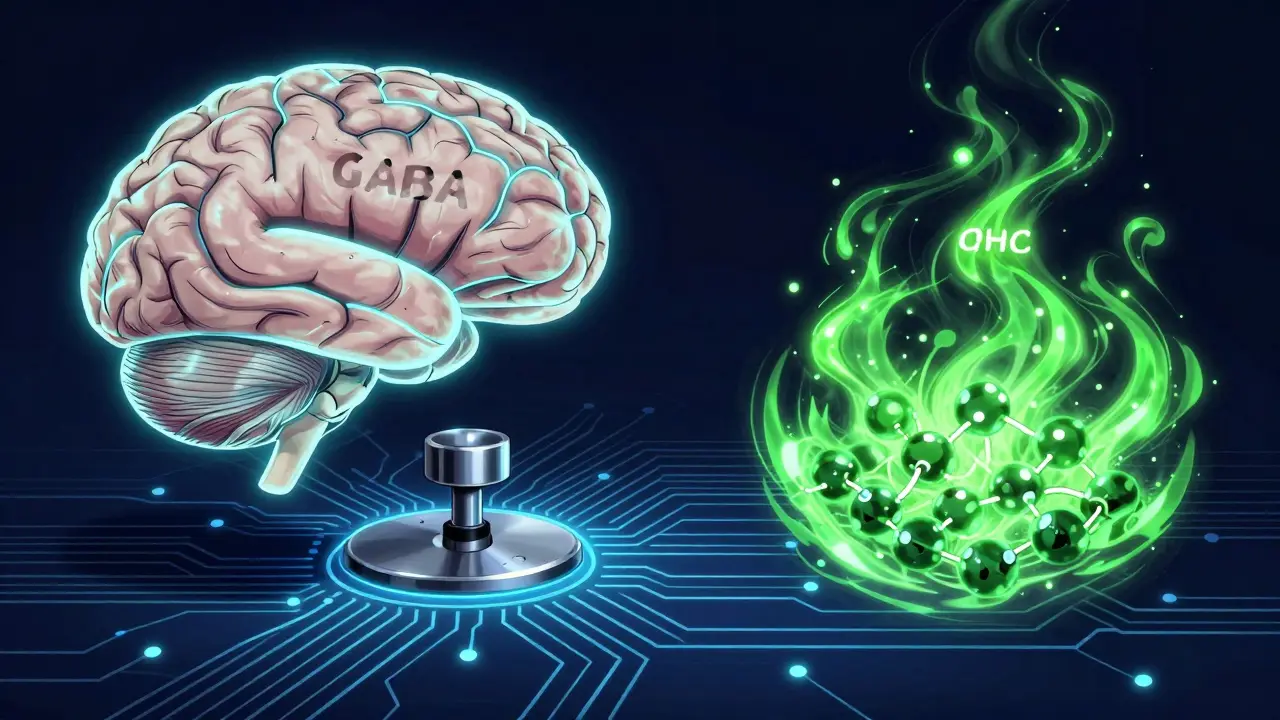
To understand the risk, we first need to look at how the brain handles "slowing down." Most CNS Depressants (Central Nervous System depressants) work by boosting a neurotransmitter called GABA (gamma-aminobutyric acid). Think of GABA as the brain's primary brake pedal; when it's activated, brain activity decreases, leading to feelings of calm and drowsiness. Drugs like Benzodiazepines (such as Xanax or Valium) and Barbiturates are classic examples of GABA-enhancing substances.
Cannabis takes a different route but reaches a similar destination. Its primary psychoactive component, THC (delta-9-tetrahydrocannabinol), binds to CB1 receptors in the brain. While the mechanism is distinct from GABA, the end result-reduced psychomotor performance, slowed reaction time, and impaired concentration-mimics the effects of alcohol or sedatives. When these two different systems (the endocannabinoid system and the GABAergic system) are activated simultaneously, the "braking" effect on the brain becomes profound.
The Danger of Additive Sedation
In pharmacology, an "additive effect" means that the combined impact of two drugs is greater than if you took either one alone. When you mix cannabis with other depressants, the sedation doesn't just double; it can snowball. This is particularly critical when dealing with Opioids. Both cannabis and opioids can suppress the drive to breathe, but they do so through different pathways. This creates a multiplicative risk where the body may "forget" to breathe during deep sleep.
Real-world data paints a stark picture. A 2020 study in the Journal of Clinical Medicine revealed that patients using both cannabis and benzodiazepines were 3.2 times more likely to end up in the emergency room than those using benzodiazepines alone. Alarmingly, 67% of those ER visits were due to respiratory complications. It's not just a theoretical risk; it's a documented pattern of medical emergencies.
| Substance Type | Primary Mechanism | Interaction Risk Level | Key Danger |
|---|---|---|---|
| Benzodiazepines | GABA Enhancement | High | Profound sedation & cognitive impairment |
| Opioids | Mu-Opioid Receptors | Critical | Severe respiratory depression/death |
| Barbiturates | GABA Modulation | High | Deep coma & cardiovascular collapse |
| Alcohol | GABA/Glutamate | High | Aspiration and loss of consciousness |

Spotting the Red Flags
How do you know if the interaction is becoming dangerous? It often starts with a feeling of "extreme heaviness." While a normal cannabis high might make you feel relaxed, the combined effect with a depressant often manifests as difficulty waking up or an inability to stay conscious. Users have reported memory blackouts-where they wake up hours later with no recollection of the intervening time-and a significant drop in oxygen saturation.
Specific warning signs include:
- Slurred speech that sounds like heavy intoxication.
- Extreme dizziness or a feeling of "spinning" even while lying down.
- Slowed or shallow breathing (hypoventilation).
- Confusion and an inability to perform simple tasks, like standing up.
- Severe drowsiness that persists for 12 or more hours.

Surgical and Medical Risks
The risks don't stop at home use. If you're heading into surgery, your cannabis use matters. Anesthetists use powerful CNS depressants like Propofol to keep you under. Research from Washington University School of Medicine shows that regular cannabis users may require 20-25% higher doses of propofol to achieve the same level of sedation as non-users. However, the danger increases during recovery; these same patients experienced 37% more respiratory complications as the anesthesia wore off.
This is why the American Society of Anesthesiologists recommends monitoring cannabis use within 72 hours of surgery. The interaction can make it unpredictable how your body will respond to sedative agents, potentially leading to prolonged unconsciousness or breathing failure post-op.
Harm Reduction and Safety Strategies
While the safest choice is to avoid combining these substances, some people do so under medical supervision to manage chronic pain. In some cases, low-dose THC has actually helped patients reduce their opioid intake. However, this cannabis and CNS depressants interaction must be managed with extreme caution. If you are using both, consider these safety guidelines:
- Stagger your dosing: Try to keep at least 4 hours between taking a CNS depressant and using cannabis to avoid a peak-on-peak sedative effect.
- Start low: Use the smallest possible dose of both substances. If you're trying a new strain or a new medication, do it when someone else is present to monitor you.
- Avoid high-potency THC: Products with THC concentrations above 15% significantly increase the risk of unpredictable reactions and anxiety-driven panic that can mask early signs of sedation.
- Prioritize CBD: Emerging evidence suggests that CBD-dominant products (with a CBD to THC ratio higher than 20:1) may have much lower interaction risks. Some trials have shown no significant pharmacokinetic interactions between high-CBD oils and alprazolam.
Healthcare providers now use risk assessment tools to determine if a patient is at high risk. These tools look at the THC concentration, the specific type of depressant (with barbiturates being the highest risk), and patient age. Those over 65 are particularly vulnerable because their metabolism slows down, meaning these drugs stay in the system longer, increasing the window for a dangerous interaction.
Does CBD cause the same sedation risks as THC?
Generally, no. High-CBD products with very low THC (less than 0.3%) do not typically produce the same profound CNS depressant effects as THC. Some studies suggest high-CBD oils do not significantly interfere with the metabolism of benzodiazepines like alprazolam, making them a safer alternative for those seeking therapeutic benefits without the heavy sedation.
Why is the combination with opioids more dangerous than with benzodiazepines?
While both are risky, opioids and cannabis both directly suppress the respiratory drive through different biological mechanisms. This creates a synergistic effect where the combined impact on breathing is far more severe than simply adding the two effects together, significantly increasing the risk of fatal respiratory failure.
How long does it take for cannabis to leave the system before it's safe to use a sedative?
The timing varies by consumption method. Inhaled cannabis peaks quickly (30 minutes) and lasts 2-4 hours. Edibles take longer to peak (2-3 hours) and can last 6-8 hours. For surgery, specialists recommend a window of at least 72 hours for stable monitoring, but for daily use, a 4-hour gap between doses is a common baseline for harm reduction.
Can cannabis actually help reduce the need for CNS depressants?
Yes, but only under strict medical supervision. Some clinical case series have shown that chronic pain patients using low-dose THC (2.5-5mg) were able to reduce their opioid doses by nearly 50%. This is called "opioid-sparing," and it should only be attempted with a doctor to avoid withdrawal and dangerous interaction spikes.
Is it safe to mix cannabis with over-the-counter allergy meds?
Many over-the-counter allergy medications (like diphenhydramine) are also CNS depressants. Mixing these with cannabis can cause excessive drowsiness, impaired coordination, and slowed reaction times. You should always check if an OTC medication causes sedation before combining it with THC.
Mayur Pankhi Saikia
April 23, 2026 AT 10:11Actuallly... the pharmacolgy here is oversimpli-fied!!! One must consider the blood-brain barrier permeability variations across different demographics... it's quite basic stuff if you actually read the peer-revwed literture!!!!
Anantha Lakshmi
April 25, 2026 AT 05:24Staying safe is the most important thing! Always be mindful of your body's signals ✨🌈
Dan Wizard
April 25, 2026 AT 08:25It is quite fascinating how the interaction between the endocannabinoid system and the GABAergic system can create such a profound effect on the human respiratory drive, and I believe that understanding these biological pathways is essential for anyone who wishes to navigate the complexities of modern medicine while maintaining their own wellbeing and safety.
RAJESH MARAVI
April 26, 2026 AT 17:50lol a 4 hour gap? typical corporate science bs... i mixed them last week and i'm stil alive lmao. this whole post is just fear mongering to stop ppl from vibing. absolute joke!!!
Divyanshu Giri
April 28, 2026 AT 06:59Keep your heads up and stay smart guys! Just play it safe and you'll be golden 🚀🔥
Sarah Watters
April 28, 2026 AT 17:16Funny how they mention 'medical supervision' right at the end. The pharmaceutical companies probably funded these studies to keep us dependent on their pills while demonizing natural plants. It's all a game to control the population's consciousness and make us easier to manage through systemic sedation.
Rick Brewster
April 29, 2026 AT 22:26one must contemplate the duality of the sedative state as a reflection of the existential void where the chemical bridge between the self and the other dissolves into a mere byproduct of synaptic firing patterns lacking any real metaphysical weight in the grander scheme of cosmic entropy though the typos in my consciousness persist
Ally Warren
April 30, 2026 AT 07:07The intersection of chemistry and consciousness is always a delicate balance. We seek peace, but sometimes the cost of that peace is a loss of presence.
Olayinka Ibukunoluwa Mercy
May 2, 2026 AT 00:01This is such an important reminder for everyone... Please, please be careful with your health!!! Your safety should always come first... 🌸🙏✨
Odicha ude Somtochukwu
May 3, 2026 AT 22:33It is imperative that we approach these health guidelines with the utmost seriousness, for the preservation of life is a collective responsibility... Let us all strive for a balanced and informed approach to wellness!!!