

When you're breastfeeding and need to take medication, you're not choosing between your health and your baby's. You're looking for a smarter way to do both. Many mothers worry that any medicine they take will pass into their milk and harm their baby. But the truth is, timing your doses can cut infant drug exposure by more than half for many common medications. This isn't guesswork. It's science - and it's now standard advice from the American Academy of Pediatrics, the CDC, and the Academy of Breastfeeding Medicine.
How Drugs Move Into Breast Milk
Medications don't flood into breast milk like a faucet. They move slowly, following your bloodstream. When you take a pill, the drug enters your blood, then crosses into your milk. The highest concentration in your milk usually happens 1 to 3 hours after you take the dose - right around when the drug peaks in your body. That's why timing matters so much. If you feed your baby right after taking your medicine, they get the highest dose possible. But if you wait, you let your body clear much of it before the next feeding.Not all drugs behave the same. Some leave your system fast. Others stick around for days. For example, ibuprofen and acetaminophen have very low transfer rates into milk, and their half-lives are short (2-4 hours). That means even if you take them right before feeding, your baby gets only a tiny amount. But opioids? That's where timing becomes critical.
Timing Tips for Common Medications
For pain relief after birth, doctors often recommend ibuprofen or acetaminophen first. Both are safe, and you don't need to time them carefully. But if you need something stronger - like after a C-section or major surgery - opioids might be necessary. Here's how to minimize exposure:
- Morphine: Peaks in 30 minutes to 1 hour. Take it right after feeding. Wait 2-3 hours before the next feed.
- Oxycodone: Peaks in 1-2 hours. Same rule: feed first, then take the dose. Avoid extended-release forms.
- Codeine: Avoid entirely. The FDA warns it can cause life-threatening breathing problems in breastfed babies, even with perfect timing. Some people metabolize it too quickly, flooding the milk with morphine.
- Tramadol: Also risky. The FDA advises against it. Even with timing, unpredictable metabolism can lead to dangerous levels in your baby.
- Diazepam (Valium): This one lingers. Half-life is 44-48 hours. Timing won't help much. If you must use it, keep the dose low and monitor your baby closely.
- Alprazolam (Xanax): Shorter half-life (11 hours). Take it right after a feed. Wait at least 3 hours before the next one.
For antidepressants or anti-anxiety meds, immediate-release versions are best. They let you control the timing. Extended-release pills? They release drug slowly over hours - meaning your baby gets a steady trickle of medication all day. That's harder to manage.
When Timing Doesn't Help
Some drugs are just too long-lasting to make timing useful. If a medication stays in your system for more than 12 hours - like some seizure meds, certain antipsychotics, or long-acting beta-blockers - the amount in your milk stays fairly steady. In those cases, you can't avoid exposure by shifting feeding times. But that doesn't mean you can't breastfeed. It just means you need to weigh risks differently. The LactMed database (from the U.S. National Library of Medicine) lists over 1,000 drugs with specific safety ratings. Check it. Talk to your pharmacist. Most medications are still safe, even if timing doesn't reduce exposure.
Also, timing isn't as important in the first few days after birth. Your milk supply is small - just colostrum. The amount your baby takes in is tiny. So if you need a painkiller right after delivery, don't panic. The exposure is minimal anyway.
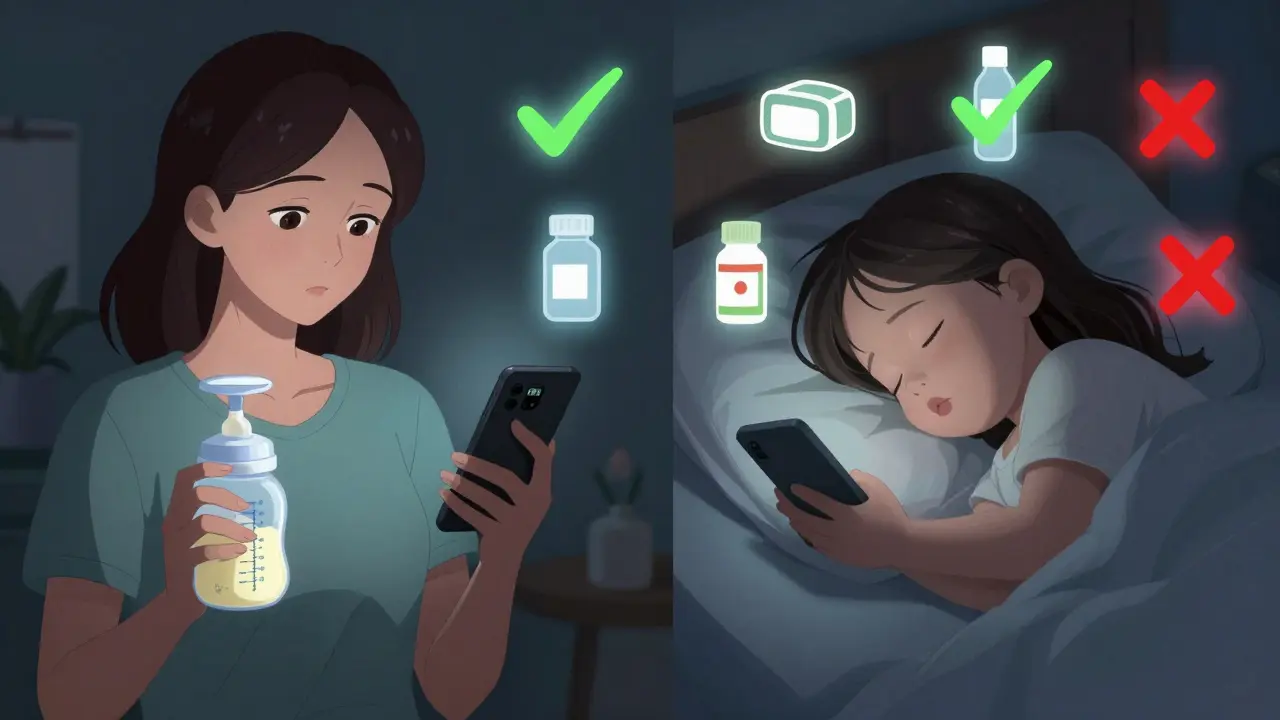
Practical Strategies That Work
Here’s what actually works in real life:
- Feed before you take the pill. This is the single most effective trick. Do it every time.
- Use immediate-release tablets. They work fast and clear fast. Avoid slow-release capsules or patches unless your doctor says it's safe.
- Keep a 2- to 3-hour gap. After you take your dose, wait before the next feed. Use this time to rest, pump, or bond with your baby.
- Pump and dump if needed. If you're on a short-term med you can't avoid - say, after surgery - pump before your dose and store milk to feed later. This gives you peace of mind without stopping breastfeeding.
- Track your baby. Watch for unusual sleepiness, poor feeding, or breathing changes. If you notice anything off, call your pediatrician.
Many moms find it helps to set phone alarms: one for the next feed, one for the next dose. It turns a complex schedule into a simple routine. And yes - it takes a few days to get used to. But most mothers say it feels manageable after a week.
What Experts Say
Dr. Thomas Hale, author of the go-to reference Hale's Medications and Mothers' Milk, says timing can reduce infant exposure by 50-75% for short-acting drugs. The Academy of Breastfeeding Medicine says the same thing - and they've written formal guidelines for it. The CDC says healthcare providers should always discuss timing with breastfeeding mothers on meds.
But here’s the catch: not every doctor does. A 2021 CDC survey found only 35% of general practitioners routinely talk about timing. That’s why you need to bring it up. Say: "I want to keep breastfeeding while taking this. What’s the best time to take it?" Your pharmacist can help too. They see hundreds of these questions every week.
What to Avoid
Some medications should never be used while breastfeeding - timing won't fix it.
- Codeine: FDA black box warning. Risk of infant death.
- Tramadol: Also has an FDA warning. Unpredictable metabolism.
- Chemo drugs: Too toxic. Breastfeeding must stop.
- Lithium: Can build up in babies. Requires close monitoring.
- Radioactive substances: Used in scans. Must pause breastfeeding.
If your doctor prescribes one of these, ask: "Is there a safer alternative?" Often, there is. For example, buprenorphine is now preferred over morphine for mothers with opioid use disorder - and it has better timing options.

Real-Life Scenarios
Case 1: A new mom has a C-section. She's in pain. Her doctor prescribes oxycodone. She feeds her baby at 8 p.m., takes her pill at 10 p.m., and waits until 1 a.m. to feed again. She avoids the peak. Her baby sleeps well. No issues.
Case 2: A mom with anxiety is on alprazolam. She used to take it at bedtime. Her baby was extra sleepy. She switched to taking it right after the 7 p.m. feed. Now she waits until 10 p.m. for the next feed. Her baby is alert and feeding better.
Case 3: A mom needs a dental procedure. She takes ibuprofen before the appointment. She feeds her baby 30 minutes before. No waiting needed. No stress.
These aren't rare stories. They're everyday wins - made possible by simple timing.
What About Pumping?
Pumping before a dose is a great backup. If you're worried, or if your baby is newborn and feeds every 2 hours, you can pump and store milk right before you take your medicine. Then use that stored milk for the next feed. It's not perfect - you have to plan ahead - but it gives you control. Many lactation consultants recommend this for short-term meds.
Just remember: you don’t need to pump every time. Only if you're anxious, or if the drug has a high risk. For most meds, timing alone is enough.
Final Thoughts
You don’t have to choose between being healthy and feeding your baby. Medication timing isn’t about fear. It’s about control. It’s about knowing when to take your pill so your baby gets the least possible amount - while you still get the relief you need. The science is clear. The guidelines are solid. And the results? Real. Mothers are doing this every day - successfully.
If you're on medication and breastfeeding, ask your provider: "What’s the best time to take this?" And if they don't know - ask your pharmacist. They’ve seen it all. You’re not alone. And you don’t have to stop breastfeeding to stay well.
Can I breastfeed if I'm taking painkillers after surgery?
Yes, most painkillers are safe. Ibuprofen and acetaminophen are first-choice options. If you need opioids like oxycodone or morphine, take them right after breastfeeding and wait 2-3 hours before the next feed. Avoid codeine and tramadol entirely - they carry serious risks for infants.
How long should I wait after taking medicine before I breastfeed?
Wait 2 to 3 hours after taking a short-acting medication. That’s usually when the drug level in your blood drops significantly. For example, if you take oxycodone at 9 p.m., wait until midnight to nurse. Always feed your baby first, then take the pill - it’s the easiest way to reduce exposure.
Is it safe to take antidepressants while breastfeeding?
Many antidepressants are safe. SSRIs like sertraline and paroxetine have low transfer into milk. Use immediate-release versions so you can time your dose after feeding. Avoid extended-release forms if possible. Always monitor your baby for unusual sleepiness or fussiness. Talk to your psychiatrist - they can help pick the safest option.
Do I need to pump and dump after taking medication?
Usually not. Pumping and dumping is only necessary if you're taking a medication with high risk and no safe alternative - or if you're anxious about exposure. For most drugs, timing your dose after feeding is enough. Pumping ahead of time is a good backup, especially for newborns who feed often.
What if my baby seems sleepy after I take medicine?
If your baby is unusually sleepy, hard to wake for feeds, or has shallow breathing, contact your pediatrician right away. These could be signs of drug exposure. Keep a log: when you took the medicine, when your baby fed, and any symptoms. This helps your doctor decide if the medication needs to change.
Can I use over-the-counter cold medicine while breastfeeding?
Most single-ingredient OTC meds are fine. Choose plain acetaminophen or ibuprofen for pain. Avoid combination products with decongestants like pseudoephedrine - they can reduce milk supply. If you need antihistamines, try loratadine or cetirizine. They’re less likely to cause drowsiness in your baby than older ones like diphenhydramine.
Arjun Paul
February 5, 2026 AT 10:12one hamzah
February 7, 2026 AT 00:47Tehya Wilson
February 8, 2026 AT 01:58Brendan Ferguson
February 8, 2026 AT 10:01jan civil
February 10, 2026 AT 02:57Brendan Ferguson
February 10, 2026 AT 22:30Gregory Rodriguez
February 11, 2026 AT 14:01lance black
February 13, 2026 AT 08:11Pamela Power
February 13, 2026 AT 23:07Bella Cullen
February 14, 2026 AT 08:55