

Autoimmune Medication Risk & Safety Tool
Select the class of medication you are taking (or interested in) to view specific risk profiles, monitoring requirements, and safety tips.
Corticosteroids
e.g., Prednisone (>20mg/day)
- ⚠️ Broad immune suppression
- ⏱️ Risk lingers 4 weeks after stopping
JAK Inhibitors
e.g., Tofacitinib, Baricitinib
- ⚠️ High Shingles risk
- ⏱️ Blood clot concerns
Biologics (B-Cell)
e.g., Rituximab
- ⚠️ Antibody depletion
- ⏱️ Immune recovery up to 6 months
TNF Inhibitors
e.g., Adalimumab
- ⚠️ Bacterial infections
- ✓ Lower shingles risk than JAKs
Methotrexate
Traditional DMARD
- ✓ Mild infection increase (1.2x)
- ⏱️ Liver/Lung toxicity possible
Hydroxychloroquine
e.g., Plaquenil
- ✓ Minimal immunosuppression
- ✓ Safest option profile
Safety Profile: Corticosteroids
Primary Risks
- Opportunistic Infections: Higher risk than biologics (10-15% higher).
- Bone Density Loss: Long-term use impacts skeletal health.
- Lingering Effect: Immunocompromise lasts up to 4 weeks after discontinuation.
Monitoring Protocol
- Tuberculosis Screening: Twice-yearly PPD test.
- Blood Work: Monthly complete blood counts.
- Dose Threshold: Significant risk begins at >20mg daily for >2 weeks.
Safety Profile: JAK Inhibitors
Primary Risks
- Herpes Zoster (Shingles): 3-5 cases per 100 patient-years (Higher than TNF inhibitors).
- Blood Clots: 1.5-2.0 additional events per 1,000 patient-years.
- Malignancy: Increased lymphoma/lung cancer risk in smokers over 65.
Actionable Advice
- Vaccination: Get Shingrix before starting therapy if possible.
- Testing: Annual VZV antibody testing is crucial.
- Lifestyle: Quit smoking to reduce malignancy risk significantly.
Safety Profile: Biologics (B-Cell Depleters)
Primary Risks
- Hepatitis B Reactivation: High risk due to antibody loss.
- PML: Rare brain infections.
- Duration: Severe immunocompromised state can last up to 6 months post-infusion.
Critical Timing
- Vaccines: Must be completed 4 weeks prior to initiation.
- Monitoring: Check quantitative immunoglobulin levels every 3 months.
- Titers: Check antibody titers 4-8 weeks post-vaccine to confirm protection.
Safety Profile: TNF Inhibitors
Primary Risks
- Bacterial Infections: Higher rate of serious bacterial events compared to JAKs.
- Infection Rate: ~15.2 total infections per 100 pt-yrs.
Comparison Note
While they carry a risk for bacterial infections, TNF inhibitors generally have a lower risk profile for shingles and blood clots compared to JAK inhibitors.
Safety Profile: Methotrexate
Primary Risks
- Infection: Only a mild increase (1.2x general population).
- Organ Toxicity: Liver enzyme elevation and potential lung toxicity.
Management
- Supplements: Folic acid is essential to reduce side effects.
- Long-term: Considered a cornerstone therapy with favorable safety when monitored.
Safety Profile: Hydroxychloroquine
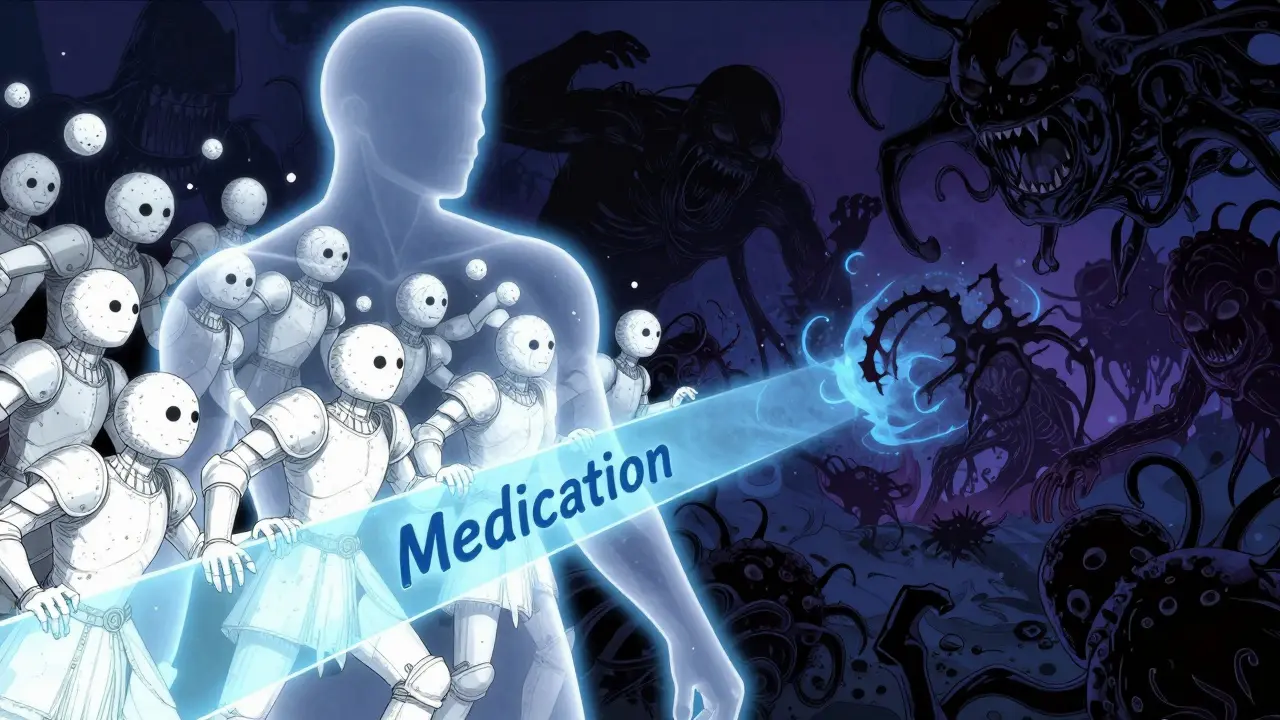
Living with an autoimmune disorder often means trading one set of problems for another. You take medication to stop your immune system from attacking your body, but that same drug weakens your defense against infections and other health threats. This trade-off is the core reality of immunosuppression, which refers to the deliberate reduction of the immune system's ability to mount a response. While these drugs save organs and reduce pain, they come with a specific list of complications that you need to manage actively.
If you are on drugs like prednisone, methotrexate, or biologics, understanding exactly what your body is vulnerable to can prevent hospital visits. The goal isn't to scare you away from treatment-it’s to help you navigate it safely. Let’s look at how different classes of drugs affect your risk profile and what concrete steps you can take to stay healthy.
Understanding the Classes of Immunosuppressants
Not all immunosuppressive medications work the same way, and they don’t carry the same risks. Grouping them by their mechanism helps you understand why your doctor might worry about certain infections while ignoring others. Generally, we categorize these into traditional small molecules, targeted synthetic drugs, and biologic agents.
Corticosteroids like prednisone are the oldest and most broad-acting. They suppress almost every part of the immune response. If you take more than 20 mg of prednisone daily for over two weeks, you enter a zone of significant immunocompromise. The risk doesn't vanish immediately when you stop; it can linger for up to four weeks after discontinuation.
Then there are Janus kinase (JAK) inhibitors such as tofacitinib (Xeljanz) and baricitinib (Olumiant). These are pills that block specific signaling pathways inside immune cells. They offer convenience but have unique risks, particularly regarding herpes zoster (shingles) reactivation. Clinical data shows shingles occurs in 3 to 5 cases per 100 patient-years on JAK inhibitors, compared to just 1 to 2 cases for those on TNF inhibitors.
Biologics represent the third major group. Drugs like rituximab (Rituxan) target B-cells specifically. When you deplete B-cells, you lose your antibody production capability. This creates a severe immunocompromised state that can last up to six months after your last infusion. During this window, your risk of hepatitis B reactivation and rare brain infections like progressive multifocal leukoencephalopathy (PML) rises significantly.
Comparing Infection Risks Across Drug Types
You might wonder if one drug is safer than another. The answer depends on what kind of infection you’re worried about. A comparative analysis reveals distinct patterns in complication rates.
| Drug Class | Primary Infection Risk | Infection Rate (per 100 pt-yrs) | Other Key Complications |
|---|---|---|---|
| TNF Inhibitors (e.g., Adalimumab) | Serious bacterial infections | 15.2 total infections | Higher rate of serious bacterial events (2.1 vs 1.7 for JAKs) |
| JAK Inhibitors (e.g., Tofacitinib) | Herpes Zoster (Shingles) | 18.7 total infections | Increased thromboembolic events (blood clots); lymphoma risk in older smokers |
| B-Cell Depleters (e.g., Rituximab) | Hepatitis B Reactivation; PML | Data varies by baseline immunity | Prolonged vaccine non-response (up to 12 months) |
| Corticosteroids (>20mg/day) | Opportunistic infections | 10-15% higher than biologics | Broad suppression; bone density loss |
| Methotrexate | Mild increase in general infections | 1.2x general population rate | Liver enzyme elevation; lung toxicity |
Note that hydroxychloroquine stands out as the safest option here. It shows minimal immunosuppression and no significant increase in serious infections, making it the preferred first-line therapy for mild conditions like lupus or early rheumatoid arthritis.
The Hidden Threat: Malignancy and Blood Clots
Infections aren’t the only complication. Long-term immunosuppression alters how your body monitors and destroys abnormal cells. This leads to increased cancer risks, though the absolute numbers remain low for most patients.
The European Medicines Agency issued warnings in January 2023 highlighting specific malignancy risks with JAK inhibitors. For patients over 65 with a history of smoking, the risk of lymphoma increases by 1.44 times, and lung cancer risk rises by 1.34 times compared to TNF inhibitors. This isn’t a reason to panic, but it is a reason to quit smoking and discuss age-appropriate screening with your doctor.
Another under-discussed issue is thromboembolism. JAK inhibitors, particularly tofacitinib, show an additional 1.5 to 2.0 blood clot events per 1,000 patient-years compared to TNF inhibitors. If you have a history of deep vein thrombosis or pulmonary embolism, this data point changes the risk-benefit calculation significantly.
Vaccination Timing: Your Best Defense
If there is one thing you can control, it is vaccination timing. Dr. Emily Somers from the University of Michigan found that 68% of serious infections in immunosuppressed patients could be prevented simply by getting vaccines at the right time. The rule is simple: get vaccinated before you start strong immunosuppression.
For patients starting rituximab or other B-cell depleting therapies, the CDC recommends completing all recommended vaccines at least four weeks before initiation. Why four weeks? Because it takes your body that long to build protective antibodies. Once you start the drug, your immune system stops listening to the vaccine instructions. Checking antibody titers 4 to 8 weeks post-vaccination confirms whether you actually built protection.
Live vaccines, like the nasal flu spray or the shingles vaccine Shingrix (which is recombinant, not live, but still requires immune response), must be handled carefully. Live attenuated vaccines are generally contraindicated during active high-dose immunosuppression because the weakened virus can replicate unchecked in your body.
Monitoring Protocols That Actually Work
Many serious complications occur not because the drug failed, but because monitoring was inadequate. The American College of Rheumatology emphasizes stratified monitoring. You shouldn’t treat all immunosuppression as equal.
- For B-cell depleting therapy: Check quantitative immunoglobulin levels every three months. If your levels drop too low, you may need IVIG replacement therapy to prevent recurrent infections.
- For JAK inhibitors: Annual varicella zoster virus (VZV) antibody testing is crucial. If your titer drops, you are at high risk for shingles.
- For corticosteroids (>20mg/day): Twice-yearly tuberculosis screening (PPD test) and monthly complete blood counts are standard recommendations from the Infectious Diseases Society of America.
- For calcineurin inhibitors (cyclosporine/tacrolimus): Monitor kidney function closely. 25-40% of patients develop renal impairment within two years.
Dr. Leonard Calabrese developed a risk stratification tool used in 85% of U.S. rheumatology practices. It categorizes patients into high, moderate, or low risk. High-risk patients-such as those who received rituximab within the last six months-should see an infectious disease specialist monthly if possible. This level of vigilance reduces hospitalizations significantly.

Real-World Patient Experiences
Statistics tell one story, but patient forums tell another. On platforms like MyRheumaticLife.org, patients share stories that highlight gaps in communication between doctors and patients. One user described getting shingles that lasted four months after their second rituximab infusion, noting their rheumatologist hadn’t warned them about the six-month window of highest risk.
Another common theme is the frustration of switching drugs due to side effects. A patient on PatientsLikeMe reported liver enzyme spikes on methotrexate after 18 months, forcing a switch to sulfasalazine. While sulfasalazine is safer for the liver, many find it less effective for joint pain. This trade-off between efficacy and safety is personal and varies by individual.
A survey by the Arthritis Foundation found that 42% of respondents discontinued biologics due to infection concerns. Of those, 28% had experienced at least one serious infection requiring hospitalization. These numbers suggest that fear of complications is a major driver of non-adherence. Education and proactive management can help bridge this gap.
Future Directions: Precision Immunosuppression
The field is moving toward precision medicine. The National Institutes of Health launched a $28 million consortium in 2023 to develop biomarkers that predict individual infection risks. Preliminary data suggests that analyzing CD4+ T-cell subsets could allow doctors to personalize monitoring intensity rather than using a one-size-fits-all approach.
AI algorithms are also being tested. Mayo Clinic’s prototype analyzed electronic health records to predict infection risk, reducing serious infections by 22% in a pilot study. By 2030, experts warn that the aging population will put immense pressure on current strategies. With 1.2 million Americans over 65 expected to be on biologics, the need for safer, more targeted therapies is urgent.
How long does immunosuppression last after stopping medication?
It depends entirely on the drug. Corticosteroids like prednisone typically clear their immunosuppressive effect within 4 weeks of stopping. However, B-cell depleting agents like rituximab can leave you immunocompromised for up to 6 months or longer, as your body needs time to regenerate B-cells and restore antibody production.
Can I get the shingles vaccine if I am on JAK inhibitors?
Yes, and you should. The recombinant zoster vaccine (Shingrix) is recommended for adults on immunosuppressants. However, because JAK inhibitors increase the risk of shingles reactivation, ensure you are up to date before starting therapy. If you are already on the drug, consult your doctor, as your immune response to the vaccine may be blunted.
What are the signs of a serious infection in immunosuppressed patients?
Common signs include persistent fever (over 100.4°F), chills, unexplained fatigue, shortness of breath, or skin redness that spreads quickly. Because immunosuppressants mask inflammation, you might not feel 'sick' in the usual way. If you have a fever while on biologics or high-dose steroids, seek medical attention immediately rather than waiting.
Is methotrexate safe for long-term use?
Methotrexate is considered a cornerstone therapy with a favorable safety profile when monitored correctly. It causes only a mild increase in infection risk (1.2 times higher than the general population). Regular blood tests to monitor liver enzymes and blood counts are essential. Most patients tolerate it well for decades, especially when combined with folic acid supplements to reduce side effects.
Do JAK inhibitors cause cancer?
There is an increased relative risk of certain cancers, particularly lymphoma and lung cancer, in specific populations (those over 65 with a smoking history). For younger, non-smoking patients, the absolute risk remains very low. The benefits of controlling severe autoimmune disease often outweigh these risks, but open discussion with your rheumatologist is key.