
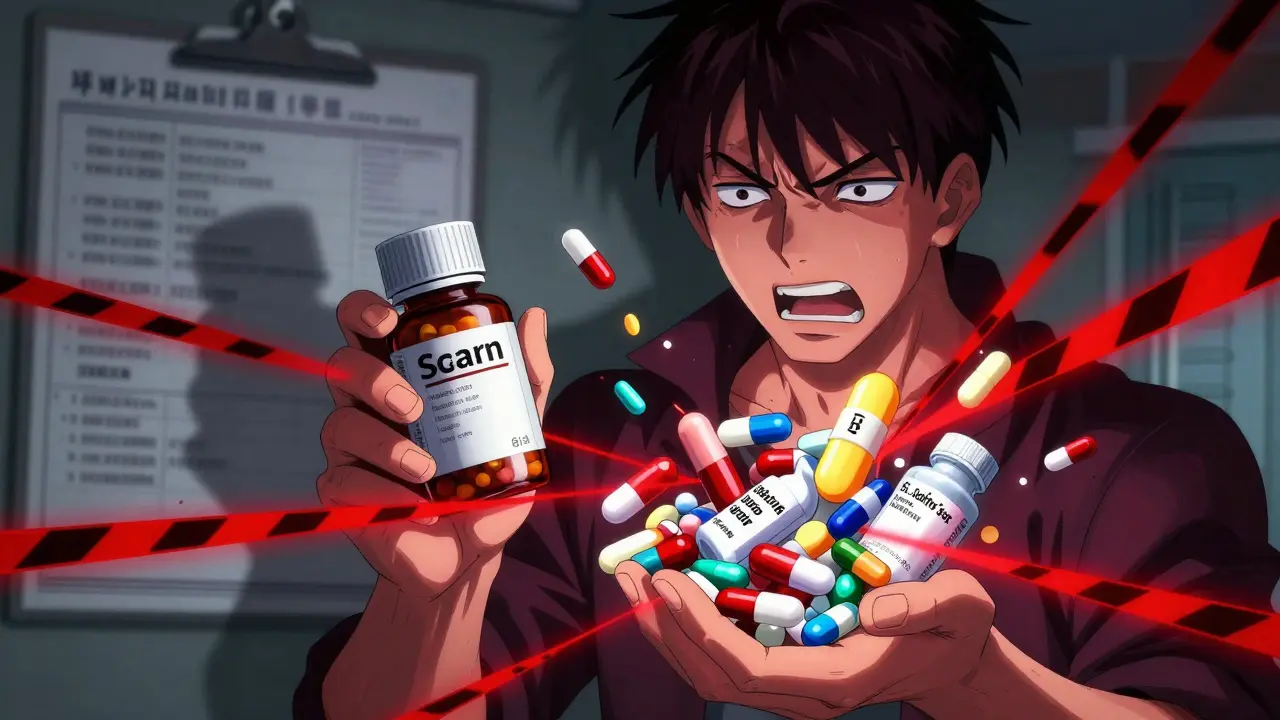
When you’re taking antiretroviral therapy (ART) to manage HIV, the last thing you need is for your blood pressure pill, cholesterol medicine, or even a common painkiller to mess with your treatment. But here’s the hard truth: antiretroviral therapy doesn’t just work on its own. It plays tug-of-war with dozens of other drugs you might be taking-and sometimes, it loses. And when it does, the consequences can be deadly.
Think about it. You’re on ART because it keeps the virus under control. But if you’re also taking simvastatin for high cholesterol, and your ART includes ritonavir or cobicistat, that statin can spike to 30 times its normal level in your blood. That’s not just a side effect-it’s a direct path to rhabdomyolysis, a condition where muscle tissue breaks down and can shut down your kidneys. This isn’t hypothetical. It’s a documented, preventable death risk. And it’s happening right now to people who didn’t know to ask.
Why Some ART Drugs Are More Dangerous Than Others
Not all antiretrovirals are created equal when it comes to interactions. The biggest troublemakers are the older drugs: protease inhibitors (PIs), especially when boosted with ritonavir or cobicistat. These boosters were designed to make ART more effective, but they also slam the brakes on your liver’s ability to break down other drugs. Ritonavir, in particular, interferes with over 200 medications, including common ones like blood thinners, antidepressants, and even erectile dysfunction pills.
Compare that to integrase strand transfer inhibitors (INSTIs) like dolutegravir and bictegravir. These newer drugs barely touch your liver’s enzyme system. They’re the quiet ones on the block-only 7 to 8 major interactions total. That’s why doctors now recommend INSTI-based regimens as first-line treatment for most people. Simpler. Safer. Fewer surprises.
But here’s the catch: even the safest drugs aren’t risk-free. Dolutegravir, for example, can lower metformin levels by a third. That’s a problem if you’re diabetic. And bictegravir? It crashes when you take rifampin, a TB drug. Your HIV viral load can bounce back if you don’t adjust the dose.
The Hidden Danger: Over-the-Counter and Herbal Supplements
Most people don’t think of St. John’s Wort as a drug. But it’s one of the most dangerous herbal supplements you can take with HIV meds. It turns on liver enzymes that clear efavirenz and other NNRTIs out of your system-fast. Studies show it can slash efavirenz levels by half. That’s like skipping doses every day. The virus laughs. Resistance follows.
And it’s not just herbs. Over-the-counter painkillers? Some are fine. Others? Not so much. NSAIDs like ibuprofen can pile up in your blood if you’re on boosted PIs, raising your risk of stomach bleeding or kidney damage. Even something as simple as an antacid can interfere with the absorption of dolutegravir if taken at the same time. The rule? Take it two hours before or after your ART.
Then there’s recreational stuff. Ketamine, MDMA, even marijuana-these can have unpredictable, prolonged effects when mixed with ritonavir. Your body can’t break them down, so they hang around longer. That’s not just a party risk. It’s a medical emergency waiting to happen.
Statins, Blood Pressure Meds, and the Silent Killer
Cardiovascular disease is now the leading cause of death among people with HIV over 50. That means most of you are on statins. But here’s the brutal reality: simvastatin and lovastatin are absolute no-gos with ritonavir or cobicistat. Period. The FDA and HHS both say: don’t even think about it.
What should you take instead? Pitavastatin and fluvastatin. They’re the only statins proven safe with boosted PIs. And even then, you need monitoring. Amlodipine, a common blood pressure pill, can also build up dangerously when paired with ritonavir. Your blood pressure might drop too low. You might faint. You might end up in the ER.
And don’t forget steroids. Inhaled fluticasone for asthma? Budesonide nasal spray for allergies? These can cause Cushing’s syndrome or adrenal failure when combined with boosted PIs. You won’t feel sick right away. But over weeks, your body starts breaking down muscle, your face swells, your bones weaken. It’s slow. It’s silent. And it’s reversible-if caught early.

Erectile Dysfunction Meds: A Dangerous Gamble
If you’re taking ART and using Viagra, Cialis, or Stendra for erectile dysfunction, you’re playing with fire. Avanafil? Completely off-limits with ritonavir or cobicistat. The drug concentration can jump 4 to 5 times. That’s not a stronger effect-it’s a heart attack risk.
Sildenafil (Viagra) isn’t banned, but you can’t take the standard 50 or 100mg dose. You’re limited to 25mg every 48 hours. Tadalafil (Cialis)? Same thing. Dose reduction needed. And if you’re on a newer INSTI like bictegravir? You might be able to use full doses-but only if you’ve been cleared by your pharmacist or HIV specialist. Never guess. Never assume.
What You Need to Do Right Now
Here’s your action plan, straight from the HHS Guidelines and the University of Liverpool’s HIV Drug Interactions Checker:
- Make a full list of everything you take: prescriptions, OTC meds, vitamins, herbs, supplements, even alcohol and marijuana. Write it down. Don’t rely on memory.
- Check every single one against the Liverpool HIV Drug Interactions Checker. It’s free. It’s updated monthly. It’s the gold standard.
- Bring that list to every appointment-with your HIV doctor, your primary care provider, your cardiologist, your pharmacist. Don’t let anyone assume they know what you’re on.
- Ask: Is this safe with my ART? If your doctor doesn’t know, ask them to check. Or ask for a referral to a clinical pharmacist who specializes in HIV.
- Never stop or start a new drug without checking first. Even a new OTC sleep aid or allergy pill can be dangerous.
And if you’re switching ART? That’s when the biggest risks happen. If you go from a ritonavir-boosted regimen to dolutegravir, your other meds might suddenly become too strong. Tacrolimus, used after transplants, needs a 75% dose cut. Blood thinners, antidepressants, anti-seizure drugs-all might need adjustment. Your body is recalibrating. Don’t skip follow-ups.

The Bigger Picture: Why This Matters More Than Ever
Half of all people living with HIV in the U.S. are now over 50. They’re not just taking HIV meds. They’re taking meds for diabetes, high blood pressure, arthritis, depression, heart disease. The average 65-year-old with HIV takes nine different medications. That’s a recipe for disaster if no one’s checking interactions.
Every extra pill you take increases your risk of a dangerous interaction by 18%. Every year since your diagnosis? Another 7% higher risk. And with new long-acting injectables like cabotegravir and rilpivirine, the clock doesn’t reset after your last shot. The drugs stay in your system for months. An interaction that starts today could blow up six months from now.
That’s why the NIH is investing $12.7 million to build next-generation ART with fewer interactions. By 2030, we’ll likely have regimens that are 80% cleaner than today’s boosted PIs. But that’s not today. Today, you need to be your own advocate.
You didn’t get HIV to be killed by a drug interaction. You got it to live. And living means knowing what’s in your body-and what it’s doing to each other.
Can I take ibuprofen with my HIV meds?
It depends. If you’re on a boosted PI like ritonavir or cobicistat, ibuprofen can build up in your blood and increase your risk of stomach bleeding or kidney damage. It’s safer to use acetaminophen (Tylenol) instead. If you must take ibuprofen, use the lowest dose for the shortest time possible-and never take it daily without checking with your doctor or pharmacist.
Is it safe to take St. John’s Wort with ART?
No. St. John’s Wort is one of the most dangerous herbal supplements for people on HIV meds. It can reduce efavirenz, nevirapine, and other NNRTIs by up to 60%, leading to treatment failure and drug resistance. Even if you’ve been on ART for years, adding St. John’s Wort can undo all your progress. Avoid it completely.
What’s the safest statin to take with HIV medication?
Pitavastatin and fluvastatin are the only statins proven safe with boosted protease inhibitors. Simvastatin and lovastatin are absolutely contraindicated-they can cause life-threatening muscle damage. Atorvastatin is an option but requires dose limits and close monitoring. Always confirm with your provider before starting any statin.
Can I use Viagra if I’m on ART?
You can, but only with major restrictions. If you’re on ritonavir or cobicistat, you must limit sildenafil (Viagra) to 25mg every 48 hours-never more. Avanafil (Stendra) is completely unsafe and must be avoided. Tadalafil (Cialis) also needs dose reduction. Always check your specific ART regimen with a pharmacist before using any erectile dysfunction medication.
What should I do if I’m switching from a boosted PI to an INSTI?
Your other medications may suddenly become too strong. For example, tacrolimus (used after transplants) often needs a 75% dose reduction. Blood thinners, antidepressants, and seizure meds may also need adjustments. Never make the switch without a full medication review by your HIV specialist and pharmacist. Schedule a follow-up within one week after the switch.
Are long-acting injectables safer for drug interactions?
They’re simpler in dosing, but not necessarily safer. Cabotegravir and rilpivirine stay in your system for months-so any interaction that starts today could last a year. You still need to avoid CYP3A4 inhibitors or inducers, and you must report all new medications-even a single dose of a new antibiotic. The long half-life means the window for error is much wider.
Where can I check for drug interactions for free?
The University of Liverpool’s HIV Drug Interactions Checker (hiv-druginteractions.org) is the most trusted, free, and up-to-date tool. It includes over 1,200 medications and gives clear recommendations: avoid, adjust dose, monitor, or no interaction. Bookmark it. Use it before you take any new drug.
Next Steps: Don’t Wait for a Crisis
Every person with HIV deserves to live long, healthy, and safe. But safety doesn’t come from luck. It comes from knowing what’s in your body-and who’s watching over it.
Take 10 minutes today. Write down every medication you take. Go to hiv-druginteractions.org. Type in your ART and your other drugs. See what pops up. Then call your pharmacist. Ask them to review your list. If they don’t know HIV interactions well enough, ask for someone who does.
You’re not just managing HIV. You’re managing a complex web of drugs that can save your life-or end it. Be the person who asks the question. Be the person who checks. Be the person who stays alive.
Aaron Mercado
January 3, 2026 AT 12:27Wow. Just... wow. I’ve been on ART for 12 years, and no one ever told me ibuprofen could be a silent killer. I’ve been popping Advil like candy for my back pain. I’m literally sweating right now. I just Googled ‘ritonavir + ibuprofen’ and saw 17 case reports of kidney failure. I’m calling my pharmacist tomorrow. And yes, I’m deleting St. John’s Wort from my Amazon cart-right after I buy a new bottle of Tylenol. This post saved my life. Thank you.
saurabh singh
January 3, 2026 AT 19:33Bro, this is gold. In India, so many people just grab OTC meds from the corner pharmacy without telling their HIV doc. I’ve seen friends take turmeric capsules with their ART-thinking it’s ‘natural’ and safe. Nope. Same enzyme mess. I shared this with my local HIV support group. We’re all printing it out and laminating it. You’re a legend. Keep spreading awareness. 🙌
Dee Humprey
January 4, 2026 AT 20:47Thank you for writing this. I’m a nurse who works with HIV+ patients over 60. I see this every week. Someone comes in with a new script for a statin, and I have to pause and check the interactions. It’s exhausting. But this post? This is what we need more of-clear, urgent, and practical. I’m printing copies for my clinic. No emojis needed. Just facts. And maybe a cup of coffee. 🫖
John Wilmerding
January 6, 2026 AT 18:57It is imperative to underscore the clinical significance of cytochrome P450 3A4 inhibition by ritonavir and cobicistat, as these pharmacokinetic interactions are not merely theoretical but have been documented in peer-reviewed literature with significant morbidity and mortality outcomes. The recommended alternatives, such as pitavastatin and fluvastatin, are supported by pharmacogenomic data and are endorsed by the Department of Health and Human Services. It is also noteworthy that the half-life of long-acting injectables necessitates a prolonged vigilance period, as drug interactions may manifest months after initiation. I strongly encourage all clinicians to utilize the Liverpool HIV Drug Interactions Checker as a first-line resource.
Vikram Sujay
January 7, 2026 AT 06:10It’s interesting how we treat HIV as if it’s the only variable in the body’s chemistry. But we’re not just a virus. We’re a system-liver, kidneys, heart, brain-all talking to each other. And now we’re adding 9 pills to the mix? It’s like trying to conduct an orchestra while someone keeps changing the sheet music. The real solution isn’t just better drugs-it’s better systems. Better communication. Better care coordination. We need more pharmacists in HIV clinics. Not just doctors. Real teams.
Jay Tejada
January 8, 2026 AT 22:53So let me get this straight… I can’t take my morning coffee with my ART because of antacids, can’t use ibuprofen for my headache, can’t have a little Viagra on the weekend, and now I’m supposed to avoid St. John’s Wort like it’s the plague… but I’m supposed to be ‘living’? Bro. I didn’t survive this long to live like a lab rat. 😅
Allen Ye
January 10, 2026 AT 21:54Look, I get it. We’re told to be vigilant. But here’s the uncomfortable truth: most people with HIV aren’t wealthy, educated, or have access to specialists. They’re working two jobs, skipping meals, living in rural areas where the nearest pharmacist doesn’t know what an INSTI is. You can tell them to check the Liverpool database all day-but if they don’t have Wi-Fi, a smartphone, or the time to sit through a 10-minute tutorial, what good is it? The real crisis isn’t the drug interactions-it’s the healthcare system that expects patients to be pharmacologists just to survive. We need policy. We need outreach. We need free, in-person consultations. Not just a website.
Brendan F. Cochran
January 12, 2026 AT 10:50Y’all are overcomplicating this. I’m a veteran. I’ve been on ART since 2008. I take my meds, I take my statin, I take my Tylenol, I take my Adderall for focus, and I’m still alive. I don’t need no fancy checker. I just take what my doc says. If you’re scared of your own meds, maybe you shouldn’t be on them. Stop being so damn paranoid. America’s got too many hypochondriacs. Just trust your doctor.
jigisha Patel
January 12, 2026 AT 20:30Actually, the Liverpool database is not peer-reviewed. It is a curated clinical tool, but its methodology lacks transparency regarding algorithmic weighting of interaction risks. Furthermore, the recommendation to use pitavastatin over atorvastatin is based on limited pharmacokinetic data from small cohort studies. The HHS guidelines themselves classify these interactions as ‘moderate’ or ‘potential’ in 60% of cases-not absolute contraindications. Your alarmist tone may induce unnecessary anxiety and non-adherence. Evidence-based medicine requires nuance, not fearmongering.
Angie Rehe
January 13, 2026 AT 19:15Let’s be real-this entire post is just a marketing ploy for the new INSTI regimens. Big Pharma doesn’t want you on boosted PIs because they’re cheaper and older. They’re pushing dolutegravir and bictegravir because they make more money. And now you’re scaring people into switching. What about the 30% of us who are stable on boosted regimens? What about the ones who can’t afford the new drugs? You’re not helping. You’re creating panic. And now people are dumping their meds because they’re terrified of ibuprofen. That’s not safety. That’s negligence.