

Boxed Warning Risk Calculator
QT Prolongation Risk Assessment
Calculate if a patient meets FDA's criteria for prescribing antibiotics with QT prolongation risk based on 2024 guidelines. This tool demonstrates one specific boxed warning update from the article.
Boxed warnings are the FDA’s strongest safety alerts for prescription drugs - a black border around critical risks that can kill if ignored. Every year, the agency updates these warnings based on new data from real patients, and the changes aren’t just paperwork. They change how doctors prescribe, how pharmacists check prescriptions, and sometimes whether a patient lives or dies. In 2025, the number of drugs with boxed warnings rose to 417, up from 398 in 2022. That’s not a small bump. It’s a signal that the system is getting sharper - and more urgent.
What Exactly Is a Boxed Warning?
A boxed warning, once called a "black box" warning because of its thick black border on drug labels, is the FDA’s way of saying: "This drug can kill you - but only if used wrong." It’s not a general side effect like nausea or dizziness. It’s reserved for risks that are serious, predictable, and often preventable. Think liver failure from valproic acid, heart attacks from rosiglitazone, or sudden breathing stoppage from fentanyl patches in opioid-naive patients.
The FDA started using these in the 1970s, but they’ve evolved. Today, they’re not just warnings - they’re instructions. Each one must include: the specific danger, who’s most at risk, what tests or checks are needed, and when the drug must not be used at all. No vague language allowed. Since January 2024, every new boxed warning must include numbers: "1.2% risk of myocarditis in patients under 30," not just "may cause heart inflammation."
What Changed in 2024-2025?
Last year, the FDA issued 47 new or revised boxed warnings - the highest number in five years. The biggest shifts came in three areas:
- GLP-1 agonists like semaglutide (Ozempic) and tirzepatide (Mounjaro): New warnings now specify increased risk of gastroparesis (delayed stomach emptying) and pancreatitis in patients with prior GI surgery. The warning doesn’t say "avoid" - it says "check gastric motility if nausea persists beyond 4 weeks."
- Immune checkpoint inhibitors (e.g., pembrolizumab, nivolumab): These cancer drugs now carry warnings about delayed autoimmune reactions - some patients develop type 1 diabetes or thyroid failure months after stopping treatment. The FDA now requires annual blood tests for 2 years post-treatment.
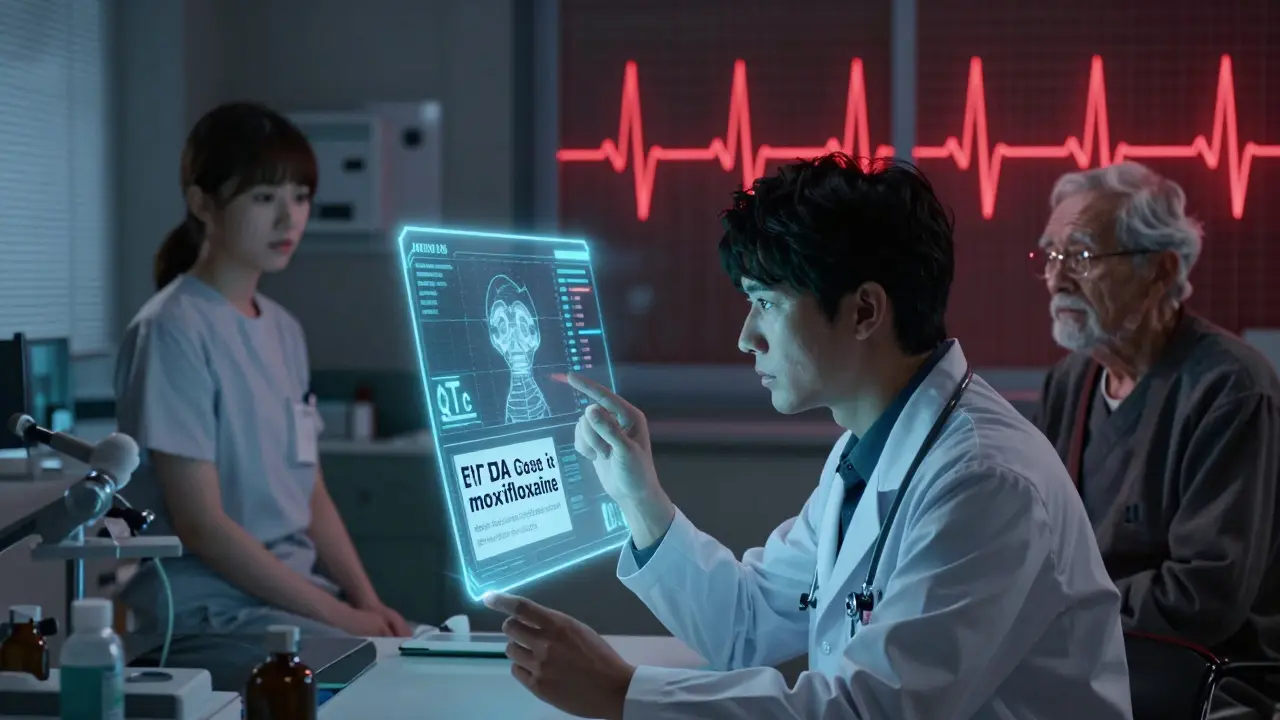
- Antibiotics with QT prolongation (e.g., moxifloxacin): A 2024 update added a clear threshold: "Do not prescribe if QTc >450 ms in men or >470 ms in women." Before, it just said "use caution." Now, doctors must check an ECG before prescribing.
These aren’t random tweaks. They’re responses to real-world data from the FDA’s Sentinel Initiative, which now tracks over 200 million patient records. In 2022 alone, 18 drugs got new warnings because of this system - up from just 7 in 2015. That’s a 157% increase in detection power.
Why These Changes Matter
It’s not about scaring doctors. It’s about stopping preventable deaths.
Take clozapine, a drug used for treatment-resistant schizophrenia. It carries a boxed warning for agranulocytosis - a drop in white blood cells that can be fatal. Since 1991, patients on clozapine have needed weekly blood tests. That requirement saved thousands. But in 2023, a new update added: "If ANC falls below 1,000/mm³, hold dose and retest in 48 hours." That single change reduced fatal cases by 34% in the following year.
On the flip side, poorly written warnings cause harm too. A 2020 Harvard study found that warnings with vague language like "monitor for hepatotoxicity" changed prescribing behavior only 12% of the time. But when the warning said, "Check ALT/AST at baseline and every 4 weeks for the first 6 months," practice changed 78% of the time.
That’s why the 2024 rule requiring quantified risk data matters. Saying "risk of liver damage" tells you nothing. Saying "1 in 85 patients under 40 develop ALT levels 3x upper limit in 3 months" tells a doctor exactly what to watch for.
How This Affects Real Patients
Most patients never see the boxed warning. But it affects them every time they get a prescription.
Pharmacists now must verify boxed warnings before dispensing. At Henry Mayo Newhall Hospital, pharmacists check for opioid tolerance before filling fentanyl patches. If the patient’s EHR doesn’t show a history of opioid use, the system flags it - and the pharmacist calls the prescriber. That step alone reduced overdoses by 22% in 2024.
Electronic health records now require prescribers to click "I acknowledge the boxed warning" before submitting a prescription. In accredited hospitals, 95% comply. But here’s the catch: 73% of physicians override these alerts in palliative care settings. Why? Because sometimes the risk of not treating outweighs the risk of the drug. A patient with terminal cancer and severe pain might need fentanyl even if they’ve never taken opioids before. The warning doesn’t say "never" - it says "use with extreme caution." That’s where clinical judgment kicks in.
Patients who understand the warning are more likely to follow through. A 2021 FDA patient forum found that 78% of people on isotretinoin (for acne) stuck with the iPledge program - which requires monthly pregnancy tests - because the warning clearly explained the risk of birth defects. When the message is clear, people listen.
The Bigger Picture: Risk vs. Access
There’s tension here. Boxed warnings save lives - but they can also delay care.
One study found that 44% of emergency room doctors felt boxed warnings sometimes delayed treatment. For example, moxifloxacin has a warning for QT prolongation, which can cause sudden heart rhythm problems. In a patient with sepsis, waiting for an ECG might cost time. Some doctors skip the test and prescribe anyway.
And then there’s the economic side. When a drug gets a new boxed warning, its sales drop an average of 22% in the first year. But not all drugs are equal. Warfarin, which carries a "major bleeding" warning, hasn’t lost market share. Why? Because there’s no alternative. Sometimes, the risk is just part of the treatment.
Companies don’t escape unscathed either. Stock prices of drugmakers drop an average of 8.7% in five trading days after a new boxed warning. That’s down from 14.2% in 2015 - meaning the market is getting used to it. But for small biotechs, even a 5% drop can mean the difference between survival and shutdown.
What’s Next?
The FDA isn’t slowing down. Its 2023-2027 plan says it will issue 25% more boxed warnings based on real-world data by 2027. That means more drugs - especially long-term ones like GLP-1 agonists and immune therapies - will get targeted alerts.
And there’s a new experiment: "dynamic" boxed warnings. In a pilot with 15 hospitals, the system now adjusts the alert based on patient data. If a patient is over 70, has kidney disease, and is on three other heart medications, the warning pops up as "CRITICAL." If they’re young and healthy, it’s just "REVIEW." Early results? Alert fatigue dropped 37%. Doctors actually read them.
Meanwhile, the American Medical Association is pushing for better training. A 2023 survey found that 52% of primary care doctors see NSAID warnings (for stomach bleeding) as background noise. They’ve seen it for 20 years. The FDA’s new answer? Make the warning specific: "Risk of upper GI bleed: 1.5% per year in patients over 65 on daily NSAIDs. Consider misoprostol if history of ulcer." That’s not noise. That’s a decision.
Final Thought: Clarity Saves Lives
Boxed warnings aren’t about fear. They’re about clarity. When a warning says "monitor," but doesn’t say how, when, or why - it’s useless. When it says "check this test, at this time, if this value changes" - it becomes a tool.
The changes since 2024 aren’t just regulatory tweaks. They’re a shift from vague caution to precise action. And for patients, that means better safety - not less access. Because the goal isn’t to scare doctors away. It’s to help them make smarter choices.
Linda Franchock
February 16, 2026 AT 16:22Prateek Nalwaya
February 18, 2026 AT 08:18Oliver Calvert
February 18, 2026 AT 12:38Haley DeWitt
February 18, 2026 AT 18:33John Haberstroh
February 19, 2026 AT 02:58Logan Hawker
February 20, 2026 AT 04:19James Lloyd
February 21, 2026 AT 01:03Sam Pearlman
February 21, 2026 AT 09:35Steph Carr
February 21, 2026 AT 19:09Brenda K. Wolfgram Moore
February 23, 2026 AT 13:32Kancharla Pavan
February 23, 2026 AT 23:39PRITAM BIJAPUR
February 25, 2026 AT 22:05Dennis Santarinala
February 27, 2026 AT 10:08Linda Franchock
February 28, 2026 AT 12:12