
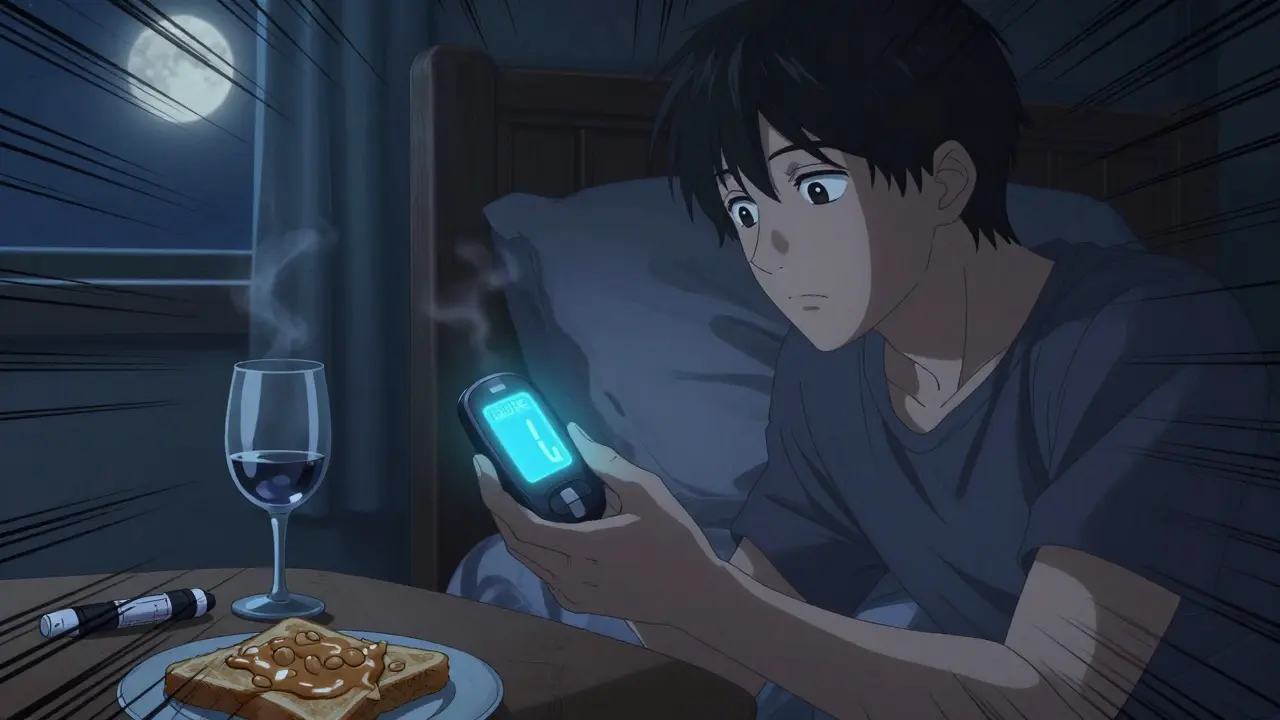
Drinking alcohol while taking diabetes medication isn’t just a bad idea-it can be dangerous. For many people with diabetes, a glass of wine or a beer after dinner feels harmless. But when alcohol meets insulin, sulfonylureas, or even metformin, it can trigger a silent, life-threatening drop in blood sugar that hits hours later-often while you’re asleep. This isn’t a myth. It’s a well-documented, clinically proven risk that affects nearly 4 out of 10 adults with diabetes who drink.
How Alcohol Lowers Blood Sugar
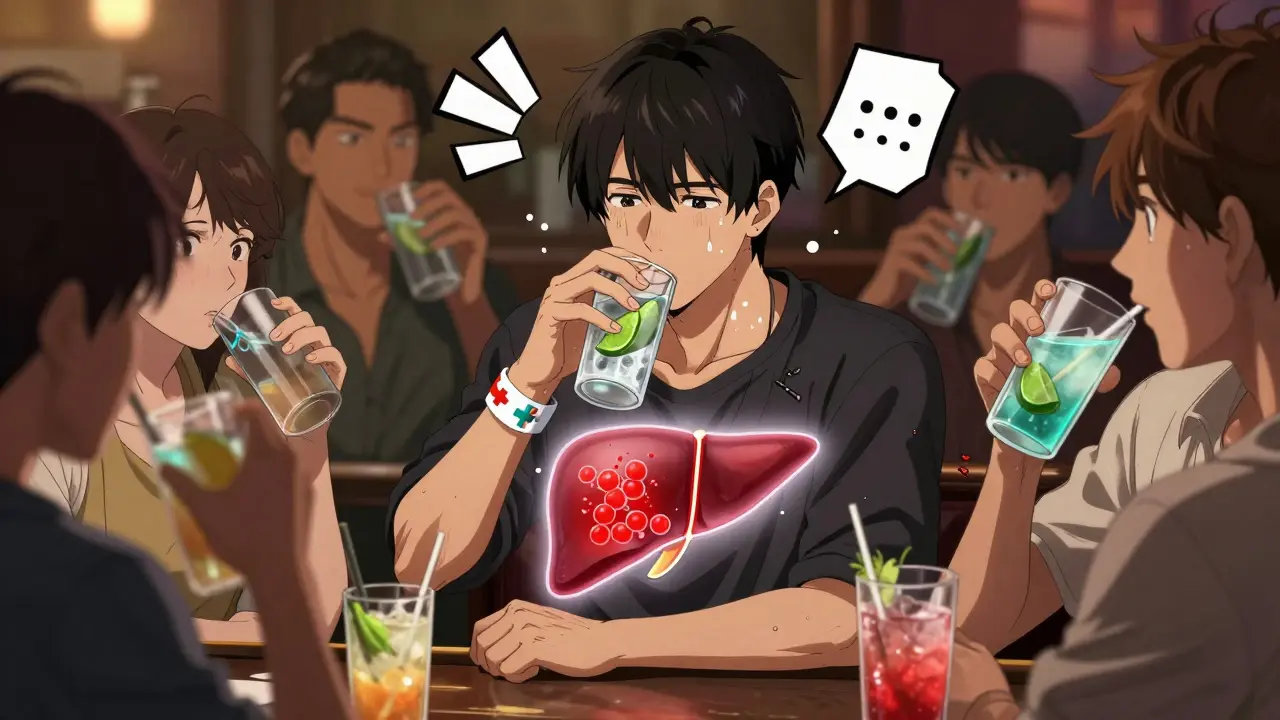
Your liver is your body’s glucose factory. When blood sugar drops, it steps in and releases stored sugar or makes new sugar from fat and protein. Alcohol shuts that down. When you drink, your liver prioritizes breaking down ethanol over making glucose. This can reduce glucose production by up to 37% for up to 8 hours after your last drink.
That’s bad enough on its own. But when you’re also taking medications that lower blood sugar-like insulin or glyburide-the effect multiplies. These drugs are already pushing your blood sugar down. Alcohol removes your liver’s ability to fight back. The result? A dangerous, unpredictable plunge into hypoglycemia (blood sugar below 70 mg/dL).
Worse, alcohol blunts your body’s natural warning signs. Normally, when your blood sugar drops, your body releases adrenaline to make you shaky, sweaty, and anxious. But alcohol suppresses that response. A 2021 study found adrenaline release during low blood sugar drops by 42% after drinking. So you might not feel a thing until you pass out-or wake up in the ER.
Which Diabetes Medications Are Riskiest?
Not all diabetes drugs react the same way with alcohol. Some are far more dangerous than others.
- Insulin and sulfonylureas (like glipizide, glyburide): These are the biggest culprits. They force your pancreas to release more insulin or mimic its effect. Alcohol doesn’t just add to the effect-it can extend the risk for up to 24 hours. A 2020 meta-analysis showed alcohol triples the chance of severe hypoglycemia with these drugs.
- Metformin: While it doesn’t directly cause low blood sugar, alcohol increases the risk of lactic acidosis-a rare but deadly buildup of acid in the blood. The FDA requires a boxed warning on metformin labels for this reason. Acute alcohol use raises this risk by 5.7 times. Symptoms include confusion, rapid heartbeat, muscle pain, and vomiting.
- Chlorpropamide: This older sulfonylurea can cause a disulfiram-like reaction with alcohol-flushing, nausea, fast heartbeat, and low blood pressure. It’s rarely prescribed today, but if you’re still on it, even one drink can trigger this.
Even newer drugs like SGLT2 inhibitors (empagliflozin, dapagliflozin) and GLP-1 agonists (semaglutide, liraglutide) carry less direct hypoglycemia risk-but mixing them with alcohol still affects your liver, hydration, and judgment, making it harder to manage your blood sugar.
Real Stories, Real Consequences
People don’t always realize how sneaky this interaction is.
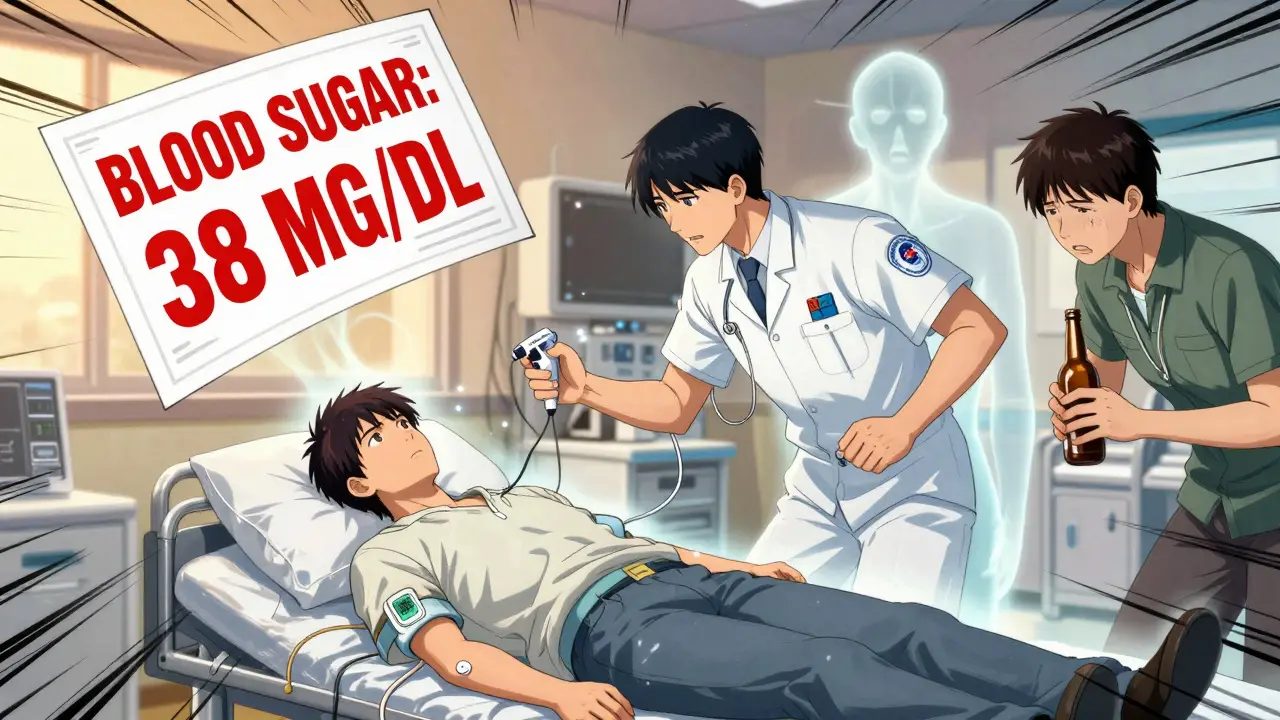
One user on the American Diabetes Association’s forum described three episodes where he needed glucagon after drinking two beers with his insulin pump. He thought he was fine because he checked his blood sugar before bed-it was normal. But six hours later, it crashed to 38 mg/dL. He didn’t wake up until his partner found him unconscious.
On Reddit, someone shared how friends thought he was just drunk after tequila shots-until he collapsed. His blood sugar was 42 mg/dL. He woke up in the ER. No one knew he had diabetes.
A 2023 survey of diabetes support forums found that 73% of respondents had experienced an alcohol-related low in the past year. Nearly 30% needed help from someone else to treat it. And in over a third of cases, people didn’t recognize the symptoms because alcohol made them feel dizzy or sleepy anyway.
What Counts as a "Safe" Drink?
The American Diabetes Association says moderate drinking can be okay-if you’re careful. But "moderate" means strict limits:
- Women: 1 drink per day
- Men: 2 drinks per day
But what’s a drink? Not a pint of beer. Not a large cocktail. One drink is:
- 12 oz of regular beer (about 13 grams of carbs)
- 5 oz of wine (under 1 gram of sugar if it’s dry)
- 1.5 oz of distilled spirits (vodka, gin, whiskey)
Here’s where most people get it wrong: mixers. A mojito? That’s 24 grams of sugar. A margarita? Up to 30 grams. A sweet wine? 8-14 grams per glass. These spike your blood sugar first, then crash it later when alcohol kicks in.
Stick to:
- Hard liquor with soda water and lime
- Light beer (under 5 grams carbs per serving)
- Dry white or red wine (check labels for sugar content)
And never drink on an empty stomach. Always eat food with carbs-like whole grain bread, beans, or fruit-alongside your drink. That gives your liver something to work with besides ethanol.
How to Stay Safe: A Practical Checklist
If you choose to drink, follow these steps every time:
- Check your blood sugar before drinking. If it’s below 100 mg/dL, eat a snack first.
- Never drink on an empty stomach. Always pair alcohol with a meal or snack containing carbs and protein.
- Choose low-sugar drinks. Avoid sweet cocktails, dessert wines, and sugary mixers.
- Check your blood sugar again 2 hours after drinking. Many lows happen here.
- Check before bed. If it’s below 100 mg/dL, eat a small snack with complex carbs and protein-like peanut butter on whole wheat toast.
- Wear your medical ID. If you pass out, paramedics need to know you have diabetes.
- Tell someone you’re with. Make sure at least one person knows you have diabetes and what to do if you act strangely.
- Wait 24 hours before driving. Hypoglycemia can hit late, and alcohol impairs your judgment even after you feel sober.
What About Continuous Glucose Monitors (CGMs)?
CGMs are a game-changer for people who drink. Many newer models, like Dexcom G7 (released late 2023), now let you log alcohol intake directly. The app can then flag patterns-like if your glucose drops 3 hours after a drink-and warn you to eat.
But don’t rely on the alarm alone. Alcohol can cause delayed lows that don’t show up until hours later. You still need to check manually and eat if your trend is falling-even if your number looks okay.
Why This Isn’t Going Away
Diabetes affects over 38 million Americans-and nearly half of them drink alcohol. The CDC reports that alcohol-related hypoglycemia accounts for nearly 13% of all emergency visits for low blood sugar. That’s over 100,000 ER trips a year in the U.S. alone, costing $417 million.
Doctors are catching on. In 2023, 78% of primary care providers now screen diabetic patients for alcohol use using a simple 3-question tool called AUDIT-C. That’s up from just 54% in 2018. But patients still underestimate the risk. Many think "low-carb" alcohol is safe. It’s not. The problem isn’t just sugar-it’s the liver shutdown.
And as diabetes rates climb-projected to hit 1 in 4 Americans by 2050-this interaction will only grow more common. The answer isn’t total abstinence. It’s awareness. Education. And a clear, simple plan.
Frequently Asked Questions
Can I drink alcohol if I have type 2 diabetes?
Yes, but only if you’re careful. If you take insulin or sulfonylureas, alcohol significantly raises your risk of dangerous low blood sugar. If you take metformin, it increases your risk of lactic acidosis. Always eat food with carbs when drinking, stick to one drink a day (or two for men), avoid sugary mixers, and check your blood sugar before bed. Talk to your doctor first.
How long does alcohol affect blood sugar?
Alcohol can lower your blood sugar for up to 24 hours after you drink, especially if you’re on insulin or sulfonylureas. The biggest drop often happens 6-12 hours later-right when you’re asleep. That’s why checking your blood sugar before bed and eating a snack if it’s below 100 mg/dL is critical.
Is red wine safer than beer for people with diabetes?
Dry red wine is generally safer than beer because it has less sugar and carbs-under 1 gram per 5 oz serving, compared to 10-15 grams in most regular beers. But it still affects your liver’s ability to release glucose. So even dry wine can cause low blood sugar if you drink it without food or while on insulin. The key isn’t the type of drink-it’s how you drink it.
Why do I feel drunk faster when I have diabetes?
Low blood sugar mimics the symptoms of intoxication: dizziness, confusion, slurred speech, and drowsiness. So if your blood sugar drops after drinking, you may feel more impaired than someone without diabetes who had the same amount of alcohol. This makes it harder for others-and even yourself-to tell whether you’re drunk or having a low. That’s why wearing a medical ID and telling people you have diabetes is so important.
What should I do if I think I’m having a low from alcohol?
Treat it like any other low: consume 15 grams of fast-acting carbs-like 4 oz of juice, 3-4 glucose tablets, or 1 tablespoon of honey. Wait 15 minutes, then check your blood sugar again. If it’s still low, repeat. If you’re confused, unable to swallow, or unconscious, someone must give you glucagon or call 911. Never try to treat a severe low with food alone if you’re not alert.
Final Thought: It’s Not About Abstinence-It’s About Awareness
You don’t have to give up alcohol completely. But you do need to treat it like a medication-with respect, timing, and caution. The risk isn’t about being weak or irresponsible. It’s about biology. Your liver can’t do two jobs at once. And when it’s busy processing alcohol, your blood sugar has no backup.
Know your meds. Know your limits. Eat before you drink. Check your numbers. Tell someone you’re with. Wear your ID. These aren’t just tips-they’re lifesavers.
Ryan Hutchison
January 17, 2026 AT 04:03Let me get this straight - you’re telling me some guy in a lab coat thinks I can’t have a cold one after work because my liver’s ‘shutting down’? Bro, I’ve had three beers with my metformin for 12 years and I’m still standing. You’re scaring people with numbers while ignoring real life. My HbA1c is 5.8. I don’t need a lecture. I need a beer.
Melodie Lesesne
January 18, 2026 AT 14:57I just wanted to say thank you for writing this so clearly. I’m a type 2 on insulin and I used to think wine was ‘safe’ until I passed out last Christmas. My husband had to give me glucagon. I didn’t even know I was low - just felt ‘tipsy.’ Now I always eat peanut butter toast before bed if I drink. Small change, huge difference. 💙
Corey Sawchuk
January 19, 2026 AT 15:38My dad’s on glyburide and he drinks two glasses of red wine every night with dinner. He’s 74 and still drives himself to bingo. I’ve been trying to warn him for years but he just says ‘I’m fine.’ Guess I’ll just keep checking his CGM readings at 2am now. Weirdly comforting to see the drop at 3am even if he won’t admit it.
evelyn wellding
January 21, 2026 AT 13:13YESSSS this is so important!! 😭 I used to think I was just ‘bad at diabetes’ because I’d crash after a margarita - turns out it’s not me, it’s the sugar bomb in the drink!! Now I drink vodka soda with lime and I’m not waking up in a panic anymore. You’re a lifesaver!! 🙌
Corey Chrisinger
January 21, 2026 AT 18:44It’s funny how we treat alcohol like a harmless social lubricant when it’s literally a neurotoxin that hijacks your metabolic homeostasis. The liver isn’t just ‘busy’ - it’s being forced into a state of metabolic siege. And we wonder why our bodies rebel. Maybe the real question isn’t ‘can I drink?’ but ‘why do I feel like I need to?’
Bianca Leonhardt
January 22, 2026 AT 23:35People like you are why diabetics get stereotyped as ‘non-compliant.’ You act like we’re all idiots who can’t read a label. I’ve been on insulin for 18 years. I know what a drink does. If you’re too weak to handle one beer, don’t drink. Don’t make the rest of us feel guilty for living.
Riya Katyal
January 24, 2026 AT 19:47so like... you're saying i can't have my daily chai martini? the one with 3 sugars and a splash of vodka? lol. i'm just here for the vibes. also my sugar was 120 before i drank. so i'm fine. right? 😘
Nicholas Gabriel
January 25, 2026 AT 23:45Let me just say this - if you're on insulin or sulfonylureas, and you're drinking without checking your glucose before bed - you're playing Russian roulette with your life. I've seen three people in the ER in the last year because they thought ‘I’m fine’ after a drink. Please. Wear your ID. Tell someone. Eat something. These aren't suggestions - they're non-negotiables. Your life depends on it.
Cheryl Griffith
January 27, 2026 AT 23:28I used to drink wine every night to relax after work. Then I had a low at 3am and woke up drenched in sweat, heart pounding, but couldn’t move. My partner had to give me juice. I cried for an hour. I didn’t realize how close I came to not waking up. Now I only drink on weekends, with food, and I always set an alarm to check my CGM at midnight. It’s not fun - but it’s safer. And I’m still here.
swarnima singh
January 28, 2026 AT 02:32you know what this is really about? its not the liver or the meds its about control. we think we can control our bodies but we cant. we think we can control alcohol but we cant. we think we can control diabetes but we cant. its all just a lie we tell ourselves so we dont feel so small. i drank once. i woke up in a hospital. i cried. then i drank again. because i still dont know how to be alone with myself.